Weekend links 213

munro.jpg

No Tears for the Creatures of the Night (2005) by Will Munro.

• Steve Barker’s On The Wire show on BBC Radio Lancashire is one of the longest-running music shows on British radio but it’s not broadcast in London so you seldom hear it mentioned at all. (It’s also the only radio show I’ve appeared on, oddly enough.) Some of Barker’s shows, which predominantly feature dub and reggae artists, can now be heard at Mixcloud.

• “As protagonist after protagonist is undone by temptation and lust, one can’t help but divine a sinister double entendre in the book’s title – something nocturnal and obscene.” James Lovegrove on the reissue of Robert Aickman’s 1964 collection of “strange stories”, Dark Entries.

Coil vs. Kenny Loggins sounds like no contest, and so it proved in 1988 at the Mike Tyson/Michael Spinks fight. There’s another surprising connection between Tyson and Industrial culture with the poster that Neville Brody designed for the boxer’s Tokyo bout.

Ventriloquism: Unheimlich manoeuvres: Sarah Angliss (who performs as Spacedog) on the history of ventriloquist dummies. With a bonus appearance from the great Ray Alan and Lord Charles. Related: the Vent Haven Museum.

• I’ve been wanting to read Proust’s À la recherche du temps perdu for years but always hesitate over which translation to choose. As Leland de la Durantaye shows, the arguments about translating Proust into English are still unresolved.

Music For A Good Home 3: a collection of 31 rare or unique tracks by a variety of artists including Belbury Poly, Pye Corner Audio, and Grumbling Fur. All proceeds go to Shelter.

David Cronenberg – The Exhibition is running throughout the summer at the EYE Film Institute in Amsterdam showing props and other materials from the director’s films.

• “’I’m in pictures,’ John Wayne explained when Nabokov cordially inquired about his line of work.” Blake Bailey on Vladimir Nabokov’s unpublished Lolita screenplay notes.

• Original artwork for the Linweave Tarot (1967) at Sweet Jane’s Pop Boutique. As noted before, the full set of cards is probably the grooviest ever created.

• Mixes of the week: Secret Thirteen Mix 118 by Ensemble Economique, and a Wyrd Daze Solstice mix from The Ephemeral Man.

• At One With Chaos & Abandonment: The Irrepressibles’ Jamie McDermott talks to Joseph Burnett about his music.

From the Zodiacal Light, a new track from Earth with vocals by Rabia Shaheen Qazi.

• The Ultimate Chinatown Filming Location Map of Los Angeles.

Tuxedomoon at Pinterest.

Dark Companion (1980) by Tuxedomoon | Dark River (1990) by Coil | Dark Turn Of Mind (2011) by Gillian Welch

Weekend links 205

lin.jpg

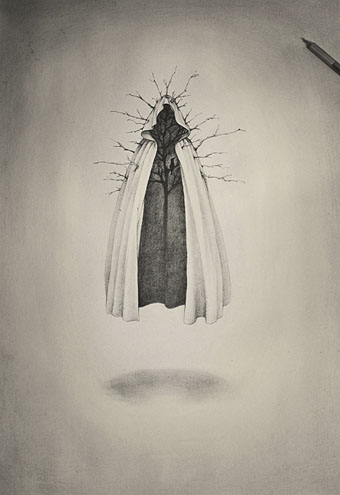
King’s Cloak (2012) by Alice Lin.

• The week in Finnegans Wake: illustrations by John Vernon Lord for a new Folio Society edition; The Guardian‘s review from 1939; Christina Scholz explores Joyce’s use of the Ant and the Grasshopper fable; Sheng Yun wonders when Dai Congrong will compete the first Chinese translation of the book; Stephanie Boland on riverrun, the latest theatrical adaptation.

• It’s Robert Aickman‘s centenary year so Faber are reissuing several volumes of his peerless “strange stories”. And it’s good to see the great Clark Ashton Smith finally receive the blessing of Penguin Classics.

• The Teenage Boyfriend of the Beat Generation: Marcus Ewart slept with Allen Ginsberg (who showed him how to give a proper blowjob), and had an eight-year relationship with William Burroughs.

Yet another advocate of shorter work time was JS Mill. He dismissed the ‘gospel of work’ proposed by Thomas Carlyle in part because it drew a veil over the real costs of work, including slave work that Carlyle sought to defend. Instead, Mill advocated a ‘gospel of leisure’, arguing that technology should be used to curtail work time as far as possible. This stress on technology as a means to shorten work time was later to feature in Bert­rand Russell’s 1932 essay, ‘In Praise of Idleness’.

David Spencer on The Case for Working Less

• More Steve Moore memorials: Mitch Jenkins put the pages from Unearthing online, while Pádraig Ó Méalóid posted a personal appreciation at The Beat.

Linda Marsa on how psychedelics are helping cancer patients deal with their illness.

• The Weird Album: art by Enrique Alcatena (including some Lovecraftian pieces).

• Didgeridoom: Director Ted Kotcheff talks to Robert Barry about Wake in Fright.

The Jealous God (1985), a comic strip by Alejandro Jodorowsky & Silvio Cadelo.

• The Dune in Your Head: Ethan Gilsdorf on the greatest SF film never made.

50 minutes of Kraftwerk on Rockpalast in 1970. Astonishing.

• At 50 Watts: Sheet-music covers from Sweden in the 1920s.

Harvard discovers old library books bound in human skin.

Same-sex marriage is now legal in England and Wales.

Wyrd Daze has reached issue 5.

Kaleidoscopes at Pinterest.

Flight From Ashiya (live on TV! 1967?) by Kaleidoscope (UK) | Lie To Me (1969) by Kaleidoscope (US) | Kaleidoscope (1984) by The Rain Parade
Wyrd Daze 1

wyrddaze.jpg

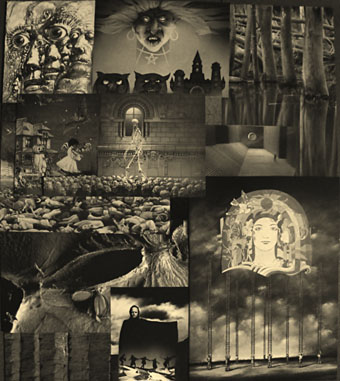
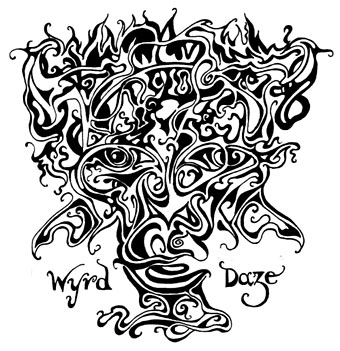
Wyrd Daze is a new digital zine edited by Leigh Wright, the first issue of which is now available via a subscription of $5 (Canadian) or about £3. For that you receive a 66-page pdf plus access to music mixes and podcast files. The contents are the kind of thing which finds particular favour here: the weird, the marginal, the spectral, the esoteric, and so on. In issue 1 there’s fiction from Gareth E. Rees and Phil Legard (aka Xenis Emputae Travelling Band), interviews with writers Berit Ellingsen and David Southwell (the latter talking about psychogeography and “strange England”), a piece about Laurel Halo and Demdike Stare, many curious photos and graphics, and a lot more. I may be contributing to a future issue so watch this space.

wyrddaze2.jpg

Artwork from issue 1 by Emma-Jane Rosenberg.

Previously on { feuilleton }
The Weird