Weekend links 624

griffiths.jpg

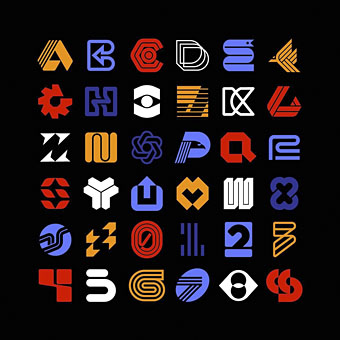
An alphabet designed by Ben Griffiths. Via.

• “From the cellular to the galactic, via Paleolithic cave markings to the trace impressions left by drone photography on our mind’s eye, incorporating dancing plagues, communist psychedelic witches, hyper-sexual fungi, chthonic descents, and skyward ascents, The Neon Hieroglyph weaves together a series of painterly and poetic considerations on a feminized history of the rye fungus Ergot, the chemical basis of LSD.” Coming soon from Strange Attractor: The Neon Hieroglyph, a book, LP and folio of prints by Tai Shani.

• “3rd From The Sun was the last album of Chrome’s imperial phase, and it cemented their status as one of the most inhuman and superhuman rock bands that America ever produced. More people need to recognize.” Agreed. (previously)

• “People often say, ‘How can you be so disciplined?’ It’s easy. Otherwise, I would have to go work for somebody else!” John Waters (again). Also here.

I’ve always thought that literature should be entertaining as well as instructive—a very old-fashioned idea but one that I adhere to. When I set out to write in this way—particularly in this way, a political way, if you want to call it that—I intend to make a donation, to try to give something. There doesn’t seem to me to be any point in giving more misery or exacerbating unhappiness through some kind of hyper-intellectual, pyrotechnical writing about unhappiness and the shit that we all find ourselves in. That’s been done plenty. I think first of all that it doesn’t need to be done any more and second of all there’s a kind of reactionary aspect to it which is that the emphasizing of misery without any anti-pessimism, as you put it, would be simply seduction into inactivity and political despair. In other words, to do politics at all on any level, especially on a revolutionary or on an insurrectionary level, there has to be some anti-pessimism—I won’t say optimism because that sounds so fatuous, futile; but anti-pessimism is a nice phrase. And there’s a deliberate attempt at that in the writing. Then again it’s a matter of my personality, I guess, inclined towards the notion of the healing laugh to some extent. We have an anarchist thinker in America, John Zerzan, who wrote an essay against humour which maybe is one of the things I was reacting against. Even if irony is counter-revolutionary which I think it might be to a certain extent I don’t see any way in which you could say that laughter itself is counter-revolutionary. This doesn’t make any sense to me unless you mean to get rid of language and thought altogether, which is just another form of nihilism. So as long as you’re going to accept culture on some level you’re certainly going to have to accept humour. And as long as you’re going to have to accept humour you might as well see humour as potentially revolutionary.

Peter Lamborn Wilson aka Hakim Bey, who died last month. Many of Wilson’s writings are available at The Anarchist Library. From 2008: A poem for Leonora Carrington

• “It’s such a fundamental question,” says Midori Takada, “why do humans need to make rhythm, and the space that structure creates?”

• “14 Warning Signs That You Are Living in a Society Without a Counterculture” by Ted Gioia.

• A trailer for Earwig, the new film from Lucile Hadžihalilović, based on a story by Brian Catling.

• New music: Aura by Hatis Noit, and Warmth Of The Sun by Pye Corner Audio.

• At Dennis Cooper’s: Spotlight on…SE Hinton Rumble Fish (1975).

• “Hear tracks from the 1980s Peruvian electronic underground”.

Intermittent Eyeball Fodder at Unquiet Things.

West Tulsa Story (1983) by Stewart Copeland | Kála/Assassins Of Hakim Bey (1997) by Coil | Neon Lights (2000) by Señor Coconut Y Su Conjunto
Weekend links 623

blot.jpg

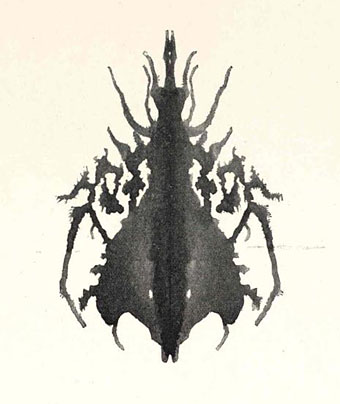
A symmetrical ink blot from Gobolinks, or Shadow Pictures for Young and Old (1896) by Ruth McEnery Stuart & Albert Bigelow Paine, a book where the blots are much more interesting than the interpretative verses that accompany them.

• “…within a year, they were on The Tube, performing their German-language extrapolation of Throbbing Gristle’s Discipline to a visibly nonplussed audience.” Alexis Petridis on the return of Propaganda. The group’s debut album, A Secret Wish (previously), has long been an obscure object of desire round here.

• RIP Alan White, drummer in Yes for much of the 1970s (see Sound Chaser for details), and also—although nobody mentioned this at the time—the originator of the drum sounds sampled on a Fairlight for Beat Box by the Art Of Noise.

• “For the anthropologist Stewart Guthrie, pareidolia is not a fringe phenomenon: it is at the core of religious experience.” Hunter Dukes on the interpretation of ink blots.

• “…self-righteousness is the one thing that I don’t agree with,” says John Waters. “We used humour to fight when I was young.”

• New music: October Cut Up by Black Glass Ensemble, and New Witness by Michael Begg.

• Also RIP Shiv Kumar Sharma, master of the santoor.

• “Scientists recreate Cleopatra’s favourite perfume.

Simon Fisher Turner’s favourite albums.

• At Dennis Cooper’s: Len Lye Day.

Cleopatra’s Barge (1962) by Alex North | Cleopatra’s Needle (1963) by Ahab And The Wailers | Cleopatra King Size (2002) by Jah Wobble & Temple Of Sound

Weekend links 548

aurora.jpg

The Aurora Borealis by Charles H. Whymper.

• “In 1829, when the celebrated Japanese artist Katsushika Hokusai was almost 70 years old, he created more than 100 drawings of a dazzling array of subjects: playful cats, serene landscapes, even severed heads. Hokusai’s fame continued to grow after his death in 1849, and the suite of small, elaborate drawings was last purchased a century later, at a Paris auction in 1948. Then it disappeared from the public eye.” The British Museum now has the drawings which may be seen here.

• The week in cover design: Emily Temple compares US and UK covers for the same books, while Vyki Hendy collects recent titles with objects as the main feature of the cover designs. One of my recent covers (which will appear here soon) is less minimal than these but also features an arrangement of objects.

• The compilation experts at Light In The Attic Records have put together another collection of obscure Japanese music. Somewhere Between: Mutant Pop, Electronic Minimalism & Shadow Sounds Of Japan 1980–1988 will be released in January.

“A Jamesian world is one of cursed artefacts, endlessly subsuming landscapes, forgotten manuscripts and tactile beings that punish the curious and intellectually arrogant.” Adam Scovell visits the grave of MR James.

• Dragons and Unicorns: John Boardley on the lost art of the Hieroglyphic Bible.

• I almost missed John Waters’ favourite films of the year.

• At Dennis Cooper’s: Sade’s Castle, Cardin’s House.

Northern lights photographer of the year.

Aurora Hominis (1970) by Beaver & Krause | Aurora (1971) by Tonto’s Expanding Head Band | Soft Aurora (1979) by Tod Dockstader

Weekend links 544

wright.jpg

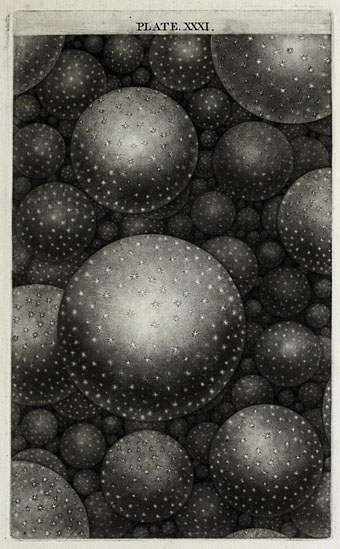
“You may if you please, call a partial View of Immensity, or without much Impropriety perhaps, a finite View of Infinity.” An illustration from Thomas Wright’s An Original Theory or New Hypothesis of the Universe (1750).

• If you read about electronic music for any length of time today you’ll eventually come across the term “pad”, referring to a feature of the music itself not the instrumentation. I’ve noticed increasing instances of this with no accompanying explanation of what the term actually refers to. Rob Wreglesworth has the answer.

• At Dangerous Minds: Richard H. Kirk talks to Oliver Hall about Cabaret Voltaire and Shadow Of Fear. No comment from Kirk as to why the new album warrants the CV name when the music is indistinguishable from his many solo works.

• Eyeball Fodder: The Art of the Occult Edition. S. Elizabeth presents artwork featured in her new book, together with links to artist interviews, including one to the interview we did for Coilhouse magazine a few years ago.

• More electronica: Music From Patch Cord Productions is a new compilation of music by Mort Garson that features some previously unreleased pieces. Great cover art by Robert Beatty as well.

• A trailer for Fireball: Visitors from Darker Worlds, a documentary film about meteorites by Werner Herzog and Clive Oppenheimer.

• From 2019: John Waters and Lynn Tillman in conversation. “The pair discussed Waters’s recent exhibitions and art career.”

Harlan Ellison’s The Last Dangerous Visions may finally be published, after a five-decade wait.

Turn your feline into a god with this cardboard Shinto shrine for cats.

• Mix of the week: XLR8R Podcast 670 by Dadub.

• At Dennis Cooper’s: Harry Dean Stanton Day.

John Cooper Clarke‘s favourite songs.

Meteor Storm (1994) by FFWD | The Third Chamber: Part 5 – 7pm Tokyo Shrine (1994) by Loop Guru | Fireball (1994) by Sun Dial

Weekend links 525

mademoiselle.jpg

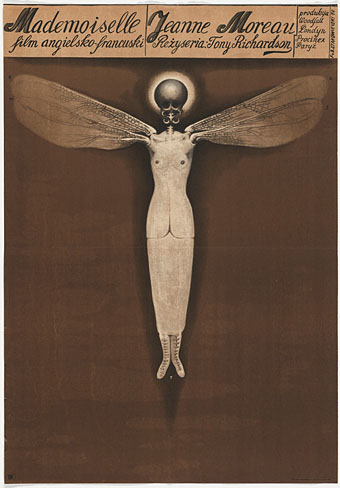
Polish poster by Franciszek Starowieyski, 1970.

• Tony Richardson’s Mademoiselle (1966) is one of those cult films that’s more written about than seen, despite having Jeanne Moreau in the lead role as a sociopathic schoolteacher, together with a screenplay by Marguerite Duras and Jean Genet, plus uncredited script-doctoring by David Rudkin. John Waters listed the film as a “guilty pleasure” in Crackpot but it’s been unavailable on disc for over a decade. The BFI will be releasing a restored print on blu-ray in September.

“While the hurdy-gurdy’s capacity to fill space with its unrelenting multi-tonal dirge is for some the absolute sonic dream, for others it is the stuff of nightmares.” Jennifer Lucy Allan on the pleasures and pains of a medieval musical instrument.

• “I truly believed”: Vicki Pollack of the San Francisco Diggers talking to Jay Babcock for the fifth installment of Jay’s verbal history of the hippie anarchists.

• “If you want to call yourself a composer, you follow every step of the instrumentation.” Ennio Morricone talking to Guido Bonsaver in 2006.

Dutchsteammachine converts jerky 12fps film from the NASA archive to 24fps. Here’s the Apollo 14 lunar mission: landing, EVA and liftoff.

• New music: Suddenly the World Had Dropped Away by David Toop; Skeleton and Unclean Spirit by John Carpenter; An Ascent by Scanner.

Peter Hujar’s illicit photographs of New York’s cruising utopia. Not to be confused with Alvin Batrop‘s photos of gay New York.

• Mixes of the week: XLR8R Podcast 651 by Dave Harrington, and Mr.K’s Side 1, Track 1’s #1 by radioShirley & Mr.K.

Simon Reynolds on the many electronic surprises to be found in the Smithsonian Folkways music archive.

The Gone Away by Belbury Poly will be the next release on the Ghost Box label.

• At Dennis Cooper’s: Ed Emshwiller Day.

Shirley Collins’ favourite music.

Mademoiselle Mabry (1969) by Miles Davis | Hurdy Gurdy Man (1970) by Eartha Kitt | Danger Cruising (1979) by Pyrolator