Weekend links 290

coin

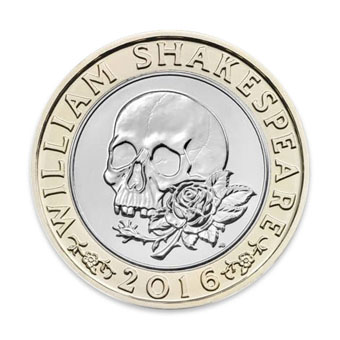
The Royal Mint celebrates 400 years of William Shakespeare with new £2 coins. The “Tragedies” design gives Britain the Gothiest coin of all time.

• “I hate successful films that travel on an easy wave of ‘good taste’: for me, that is simply anti-culture.” Cinematographer Luciano Tovoli talks to Alexandra Heller-Nicholas about photographing Dario Argento’s masterwork, Suspiria.

• Mixes of the week: Für die Liebe II, an hour of ambient drift by Matthew Dekay, and Carwyn Ellis Mixtape No. 354 by The Voice Of Cassandre.

• Americans in Europe: Frances Mayes on the enduring mystique of the Venetian lagoon, and David Farley on the trail of Kafka in Prague.

“We’d read that Brion Gysin and William Burroughs had played around with some scientific equipment from Columbia University,” [Jim] Jarmusch recalls. It was “some kind of strobe light that they claimed, by placing eidetic pulses on the outside of your eyelids, could cause states of hallucination and trance. We found out how to check out this machine and experimented with … not fantastic results! In a way though, Luc [Sante] channels ghosts: he’s able to imagine and mentally reconstruct events and places from the past and weave them into stories. He can cross influences like Blaise Cendrars and JG Ballard with James M Cain and Raymond Roussel.”

[…]

If New York celebrates amnesia, perpetual transformation, accelerated obsolescence – and offers newcomers a blank slate, a chance to be born again – then Sante offers a mordantly heretical vision of the city. For him it’s full of layers and depths, of echoes and eerie reverberations, of occult whispers. “The tech crowd thinks that we can’t afford the past to be sitting on our shoulders. It’s a burden, a dead weight. We’ve got to innovate constantly. We have to … disrupt. But the 20th century is littered with valuable stuff – writers, ideas, daily certainties – that gets discarded and that needs to be picked up and looked at again.”

Sukhdev Sandhu profiles writer Luc Sante

• The Edge Question for 2016: What do you consider the most interesting recent (scientific) news? What makes it important?

• Bradley L. Garrett’s foreword for Secret Tunnels of England: Folklore and Fact (2015), a book by Antony Clayton.

• Caitlin R. Green on the monstrous landscape of medieval Lincolnshire.

• Mistaken Memories of Mediaeval Manhattan by Brian Eno.

• Arche (live, 2013) by Master Musicians of Bukkake.

• A Year In The Country returns for another year.

• Kafka (1982) by Masami Tsuchiya | Manhattan (1984) by Seigen Ono | Tunnel (1997) by Biosphere

Weekend links 289

hermes.jpg

Fathomless Sounding (1932) by Gertrude Hermes.

• Over at Greydogtales (“weird fiction, weird art and even weirder lurchers”) I talk about art, design, the writing of this blog, and I also reveal more about my ongoing Axiom project. The latter currently stands at two novels, a couple of half-finished stories and a few pieces of artwork. I may be unveiling some of the art in the new year so watch this space.

• Howard Brookner’s Burroughs: The Movie (1983), a definitive film portrait of William Burroughs, is released at last on DVD/Blu-ray. US-only for the moment but further releases elsewhere are promised. The director’s nephew, Aaron Brookner, has a documentary about his uncle released next year.

• “…beautifully articulated bawdiness, perverse pleasures and a radical, though nondidactic, political view.” Melissa Anderson reviews Boyd McDonald’s Cruising the Movies: A Sexual Guide to Oldies.

The crisis, as Ellis and Silk tell it, is the wildly speculative nature of modern physics theories, which they say reflects a dangerous departure from the scientific method. Many of today’s theorists — chief among them the proponents of string theory and the multiverse hypothesis — appear convinced of their ideas on the grounds that they are beautiful or logically compelling, despite the impossibility of testing them. Ellis and Silk accused these theorists of “moving the goalposts” of science and blurring the line between physics and pseudoscience. “The imprimatur of science should be awarded only to a theory that is testable,” Ellis and Silk wrote, thereby disqualifying most of the leading theories of the past 40 years. “Only then can we defend science from attack.”

Natalie Wolchover on A Fight for the Soul of Science

• Mixes of the week: A mix by Front & Follow, and The Ivy-Strangled Path Vol. XIV by David Colohan.

• “Psychedelics can’t be tested using conventional clinical trials,” says Nicolas Langlitz.

• At Dangerous Minds: Ralph Steadman illustrates Ray Bradbury’s Fahrenheit 451.

• Why does Moby-Dick (sometimes) have a hyphen? Erin Blakemore investigates.

• My thanks again to Dennis Cooper for including this blog on his year-end list.

• Cian Traynor was given 20 minutes to ask Ennio Morricone some questions.

• Lolita at 60: Ten writers reconsider Nabokov’s novel, page by page.

• At Ballardian: High-Rise: Wheatley vs Cronenberg.

• Poison Ivy: The Queen of Psychobilly Punk

• The Cinema of Hotels: a list

• Solo intimacy DIY

• Moby Dick (1970) by Led Zeppelin | William Burroughs Don’t Play Guitar (1996) by Islamic Diggers | Physical (2001) by Goldfrapp

Weekend links 281

fini.jpg

Chimère du soir (1961) by Leonor Fini. Réalisme irréel is an exhibition of Fini’s work currently running at the Weinstein Gallery, San Francisco.

• ” ‘Paris invented the flâneur,’ he notes, ‘and continues to press all leisurely and attentive walkers into exercising that pursuit, which is an active and engaged form of interaction with the city, one that sharpens concentration and enlarges imaginative empathy and overrides mere tourism.’ ” David L. Ulin reviewing The Other Paris by Luc Sante.

• “A lot of posters promise so much that how can they ever deliver?” Nicolas Winding Refn talking to Mat Colegate about his book, The Act Of Seeing, a collection of posters for exploitation films.

• “Sexuality is present throughout and often subverts a narrative we might read entirely differently from a straight poet.” Callum James reviews Physical by Andrew McMillan.

This movie will lose a lot of people along the way, but then again, as far back as 1962, Ballard wrote a manifesto for a new form of science fiction, Which Way to Inner Space?, in which he insisted that “from now on, most of the hard work will fall, not on the writer, but on the readers. The onus is on them to accept a more oblique narrative style, understated themes, private symbols and vocabularies.” This is exactly what Wheatley wants from his audience.

Mike Holliday comparing Ben Wheatley’s forthcoming film of High-Rise with JG Ballard’s novel. Ballard’s suggestion for a new SF now seems increasingly like a road not taken. But that’s another discussion entirely…

• The Lost Library of John Dee, an exhibition of books owned by the Elizabethan magus, opens at the Royal College of Physicians museum, London, in January.

• Clive Hicks-Jenkins has been writing about his illustration heroes including Alexander Alexeieff.

• Cameron: Cinderella of the Wastelands. The exhibition has just finished but the art is still online.

• Mixes of the week: FACT Mix 518 by Fis, and Secret Thirteen Mix 165 by Damien Dubrovnik.

• At Dirge Magazine: Tenebrous Kate on Fantômas, the French King of Crime.

• Suitably seasonal: Polish Night Music by David Lynch & Marek Zebrowski.

• Kickin’ In, a previously unreleased EP of music by Patrick Cowley.

• Jean-Michel Jarre‘s favourite albums.

• Seeing It As You Really Are (1970) by Hawkwind | Seeing Out The Angel (1981) by Simple Minds | Seeing Red (1998) by Red Snapper

Weekend links 279

ray.jpg

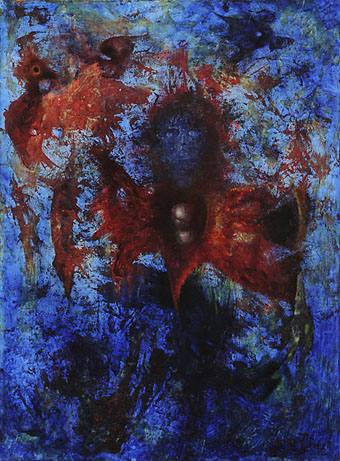
Untitled painting by Jen Ray.

• Lots of architecture links this week so it’s fitting that one of them is director Ben Wheatley talking to David Fear about his forthcoming film of JG Ballard’s High-Rise: “I was just thinking about this the other day, how hard it was to get a hold of stuff before the Internet. You really had to hunt down stuff or have someone who knew what was up to say, ‘You gotta read Naked Lunch, mate. You gotta read Crash.’ […] They were secretive things you had to ferret out, those books. It was the same with music and certain movies. And drugs.” Related: Souvenir d’un Futur, photographs by Laurent Kronental of the high-rise banlieues of Paris.

• “In Ancient Egypt, if a lowly official received the glyph of an owl from the Pharaoh, it was understood that the recipient should take his own life.” Carey McHugh in a brief history of the owl.

• I’d always thought the red buildings seen briefly in Blow-Up (1966) had been painted to Antonioni’s orders. Not so, says Another Nickel In The Machine.

He belongs right up there with Poe and Kafka. The best writer of weird fiction in the past half century. And the reason he belongs there is Ligotti’s both visceral and intellectual, formally experimental and able to tell a traditional horror story with equal ease. He’s also modernized the weird tale, from his early work on. The later workplace stories complete that process. The other thing he brings is a very dark sense of humor and a sense of the absurdity of the world—and a critique of that world that serves as subtext. All of these elements in harmony—symbiosis and contamination—equal genius. I read his work in a continuum that includes Kafka, Poe, Angela Carter, Bruno Schulz, Rikki Ducornet, and the great Caitlin R. Kiernan, but also absurdists and realists and flat-out surrealists. I appreciate that Ligotti stories can be revisited and reveal new dimensions.

Jeff VanderMeer on Thomas Ligotti

• David Ferry talks to the people trying to excavate the remains of sets from Cecil B. DeMille’s first film of The Ten Commandments.

• As part of the ongoing vinyl reissue deluge, Crammed Discs are releasing a 10-disc box of albums by the great Tuxedomoon.

• At Strange Flowers: I see for it is night, remembering Marie Cermínová, better known as Surrealist artist Toyen.

• Blue Sun Chiming, an animated video by Elisa Ambrogio for the song of that name by Six Organs of Admittance.

• At BLDGBLOG: Occult Infrastructure and the “Funerary Teleportation Grid” of Greater London.

• Enigmatic music makers Watch Repair are now selling their works at Bandcamp.

• Video by Harald Albrigtsen of whales basking under the Northern Lights.

• The urban explorations of Russian photographer Ralph Mirebs.

• Mix of the week: Secret Thirteen Mix 164 by Discipula.

• The lost rivers that lie beneath London

• Egypt (1985) by Tuxedomoon | Whales Tails (1986) by Cocteau Twins | London’s Lost Rivers (1996) by Coil

Weekend links 278

sanmartin.jpg

El Hotel Satina (2006) by Oscar Sanmartin.

• Andrew Kötting’s By Our Selves is “a melancholy, maverick film” says David Jays. With Toby Jones following in the footsteps of poet John Clare, Iain Sinclair in a goat mask, and Alan Moore warning about the “vision sump” of Northampton.

• “Shunga means ‘spring pictures’. They depict sometimes spectacular sexual contortions and come imbued with the power of taboo. For years they have largely been out of sight—until now.” Related: shunga prints at Ukiyoe Gallery.

• “Who else could link Smokey Robinson and JG Ballard, Iggy Pop and Josephine Baker, James Bond and Stephen Sondheim, Gary Numan and Johnny Cash, Tricky and Tom Moulton…” Grace Jones is the best, says Joe Muggs.

Ballardian space – what he called “inner space” to differentiate it from the science fiction that concerned itself with distant planets and space rockets – is in fact a fusion of inner and outer space. There is no “out there” totally separate from his characters; just as there is no exclusively private, isolated inner life. His most psychologically fulfilled characters look to transcend their physical surroundings, however hostile, by embracing them.

Chris Hall on High-Rise by JG Ballard

• “In March 1984, Jorge Luis Borges began a series of radio ‘dialogues’ with the Argentinian poet and essayist Osvaldo Ferrari, which have now been translated into English for the first time.”

• “I came up with a couple of tunes, literally in my bedroom. People think of bedroom recordings as a modern, laptop invention. It wasn’t.” Daniel Miller on the accidental success of Mute Records.

• “It was in Prague that I first awoke.” Strange Flowers on Gustav Meyrink’s life in Prague.

• At 50 Watts: Stencilled ornament and illustration by William Addison Dwiggins.

• Mix of the week: The Ivy-Strangled Path Vol. X by David Colohan.

• Wyrd Daze, Lvl2 Issue 4, is free and brimming with the weird.

• Mythology, a new series of drawings by Howard Hardiman.

• Spike Jones is the best, says MetaFilter.

• Peacocks at National Geographic.

• Warm Leatherette (1980) by Grace Jones | Warm Leatherette (1998) by Chicks On Speed | Warm Leatherette (2013) by Foetus