The Outer Church

outer1.jpg

Compilation albums: on the one hand they’re in the lowest echelon of the musical world, all those cheap pop collections you see in any supermarket; on the other they provide an introduction to zones of activity which might seem too rich or too obscure to easily investigate; Soul Jazz Records is a master at this kind of collection.

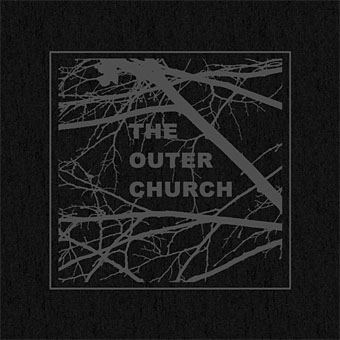
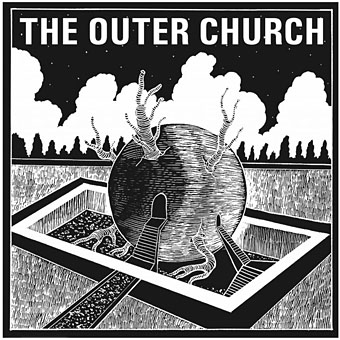
There’s also another level of compilation album where the collection becomes an opus in its own right, and which can also help to define a new movement or moment. In this category I’d think of favourites such as Kevin Martin’s Isolationism set from 1994 which first identified the emergence of what we now think of as Dark Ambient music; and Devendra Banhart’s The Golden Apples of the Sun (2004) which showcased a new generation of American folk artists. To these I’d add Joseph Stannard’s The Outer Church, a 2-CD set compiled for Front & Follow which is released this month. My hand-crafted, letterpressed edition just arrived so I’ve been relishing the new music after forcing myself to avoid the preview tracks which have been available for the past couple of weeks. Regular readers won’t be surprised to learn that the emphasis is very much on the Hauntological end of things; this blog nurses a Ghost Box fetish, and there are Ghost Box connections in the presence of Pye Corner Audio, Hong Kong In The 60s, and Baron Mordant. The latter pair and another artist, Robin The Fog, all provided tracks for the recent Restligeists, the cassette compilation that came with The Twilight Language of Nigel Kneale. Of the new collection, Joseph Stannard says in his notes:

Wind the tape all the way back to Brighton in 2009. The uncanny influence seeping into contemporary music from ‘elsewhere’ had become impossible to ignore. Magazine pieces I had written in my capacity as a music critic were revealed to contain subliminal memos for my own attention. Unusually vivid dreams and unsettling anonymous telephone calls imparted curious instructions. I was to establish a space in which various forms of unheimlich audio would converge with moving images of a similarly anomalous nature. Equipped only with a well-thumbed copy of The Beginner’s Guide To Psychic Architecture, I resolved to build a Church.

This compilation presents a selection of the artists who have performed at The Outer Church, with the exception of illustrious filmmaker and composer Graham Reznick, who lives in faraway Brooklyn and kindly permitted us to screen his tremendous psychedelic campfire tale, I Can See You, in Brighton and Dublin. All of the recordings here are previously unreleased. Together they advance the argument that something weird is stirring in modern music which resists categorisation, manifesting itself in unsettling cadences and temporal distortions across a wide variety of occult strategies.
outer2.jpg

Illustration by Alexander Tucker.

And they aren’t the only ones exploring this territory: Demdike Stare and the very excellent Haxan Cloak might also have been included here. I am, of course, especially partial to any kind of doom-laden timbres, whether electronic, orchestral or guitar-oriented, so I can’t be an unbiased reviewer. But it has been a relief to see contemporary electronica (in the UK at least) find a way out of the rut of abstraction into which it had fallen in the late 1990s. That’s it’s done this by delving into our nation’s long history of ghost and folk mythology is no bad thing. Not all the artists on The Outer Church are attempting to spook their audience; there are songs as well as drones. Hong Kong In The 60s produce the kind of uptempo pop you’d expect from a band with that name. It’s to Stannard’s credit that he manages to sequence things without the mix of styles being too disjunctive.
outer3.jpg

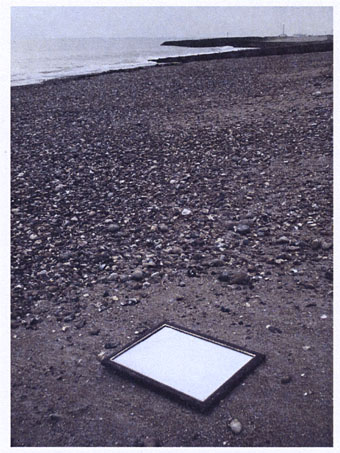
One of the mini-postcards inside the limited edition. Photo by Joseph Stannard.

The first edition of The Outer Church has been selling well so anyone looking for a copy is advised to make haste and use the links on this page. There’s a related event in Brighton this (Friday) evening, and another in Manchester on Saturday. I’m now looking forward to following some of the paths revealed by this opening of the portals.

Previously on { feuilleton }
The Ghost Box Study Series
A playlist for Halloween: Hauntology
The Séance at Hobs Lane
Ghost Box

Weekend links 170

macarthur.jpg

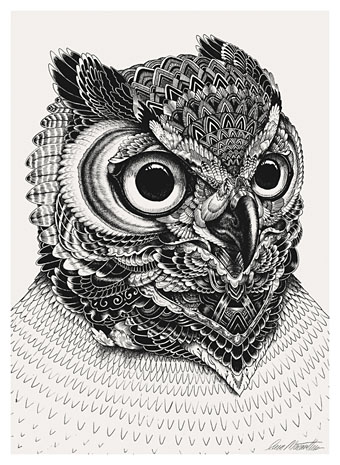
Owl portrait by Iain Macarthur.

• “Ghost Box is a glance through a window seeing something running alongside our version of reality. Like, what if Paul McCartney had made records with the Radiophonic Workshop?” Ghost Box designer and Mr Focus Group, Julian House is interviewed.

• “…that book with the girl with the hatchet in her head…” Dave Tompkins remembers Denis Gifford’s A Pictorial History of Horror Movies (1973), a formative influence of mine, and that of many other people, it seems.

Salvador Dalí’s 1946 illustrated edition of Macbeth. Related: From Macbeth to the Wizard of Oz: New exhibition explores the erotic side of witchcraft.

I do not want to live in a world where the government and a select few conservative feminists get to decide what we may and may not masturbate to, and use the bodies of murdered women or children as emotional pawns in that debate. It is supremely difficult to achieve radical ends by conservative means. Feminists and everyone who seeks to end sexual violence should be very cautious when their immediate goals seem to line up neatly with those of social conservatives and state censors.

Laurie Penny on the recent Tory policy of attempting to limit online pornography.

The Facebook page for The Wicker Man has details of the pursuit for a complete print of the film. A Blu-ray edition will be released in October.

Anne Billson visited the Hotel Thermae Palace in Ostend, the columnated location of Daughters of Darkness.

Kenneth Anger on how he made Lucifer Rising. The ICA in London is screening his films this weekend.

krenkel.jpg

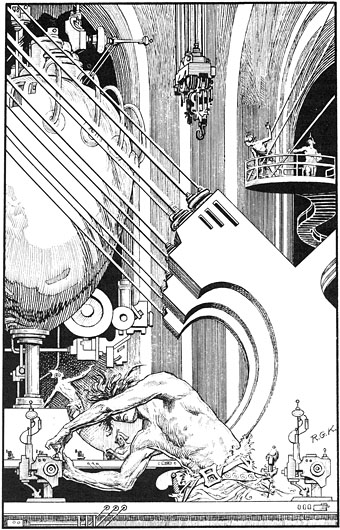
Roy Krenkel illustrates Tales of Three Planets by Edgar Rice Burroughs, 1964.

The Electric Banana Blows Your Mind: The soundtrack library alter ego of The Pretty Things.

• Mix of the week: an ambient (in the 90s’ sense of the word) DJ set by Surgeon.

Bernie Krause shares the happiest sounds he’s heard in nature.

• RIP Walter De Maria, sculptor and musician.

Sexodrome by Asia Argento with Morgan.

• Metabolist: Identify (1980) | Curly Wall (1980) | Ymuzgo/Pigface (1981)

Weekend links 166

foxxbelbury.jpg

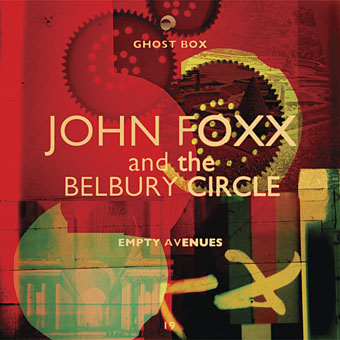
The Julian House cover art for the forthcoming collaboration between John Foxx and Belbury Poly (here renamed) has been revealed. Single no. 9 in the Ghost Box Listening Centre Study Series is now available.

• In addition to new Ghost Box records there’s more Hauntological (for want of a better term) cinema on the way this summer with the DVD/BR release of Ben Wheatley’s A Field in England. The potted description at Movie Mail is “a monochrome psychedelic trip into magic and madness set during the English Civil War”. Julian House has made a trailer. Meanwhile at Fangoria, there’s a PIF mixtape from The Advisory Circle. This accompanies an interview with John Krish, director of the most bizarre of the UK’s many strange and alarming public information films from the 1970s.

• More mixes: The hour-long OH/EX/OH show for The Geography Trip on Chorlton FM. “Expect slumber / tension / euphoria in almost equal measures.” It’s marvellous. At Self-Titled mag there’s DJ Food with O Is For Orange: Boards of Canada, Broadcast, The Books, etc.

Tangiers is a computer game based on the fiction of William Burroughs. Jim Rossignol talked to Alex Harvey about the development of the project.

walpurgisnacht.jpg

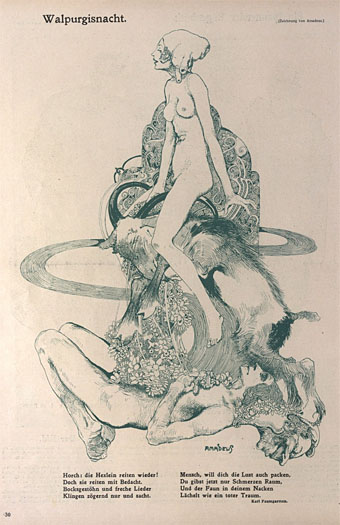
Walpurgisnacht (1917) by Amadeus. A drawing that could easily be from the late 1960s. If anyone knows the full name of the artist, please leave a comment. Via Beautiful Century.

Rebecca J. Rosen asks “What would the night sky look like if the other planets were as close as the moon?”

• The mystery of Charles Dellschau and the Sonora Aero Club.

The Surreal Cave Paintings Of Stockholm’s Metro Stations.

• At 50 Watts: More strange art from Marcus Behmer.

Ry Cooder in 1970. Directed by Van Dyke Parks!

The Post Office Tower: now you see it…

• At Little Augury: 99 Meninas.

Sartori In Tangier (1982) by King Crimson | City Of Mirage (2010) by John Foxx

Weekend links 157

focusgroup.jpg

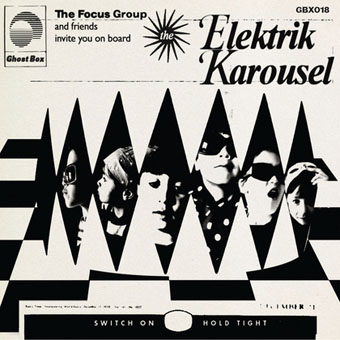
Elektrik Karousel, a new release on the Ghost Box label by The Focus Group. “For a clue to its moods, think Czech animation, Italian Giallo, early Radiophonics, HP Lovecraft stories, 1960s underground cinema, Lewis Carroll and baroque psych.” Julian House’s package design is “heavily inspired by 1960s underground press and conceived as a kind of mind altering DIY board game”.

Joseph Stannard of The Outer Church compiles a mix for Kit Records, and talks about rural psychedelia and malevolent lighthouses, among other things.

• At Sci-Fi-O-Rama: a sampling of Dan Nadel & Norman Hathaway’s Electrical Banana – Masters of Psychedelic Art (2012).

Stranger than Paradise: Tilda Swinton photographed by Tim Walker in the Surrealist Wonderland of Las Pozas, Mexico.

Whistler in Limehouse & Wapping: stunning etchings by the 25-year-old artist when he was newly arrived in London.

• The complete catalogue of Sunn O))) recordings is now on Bandcamp for preview and purchase.

La Danza de la Realidad: Alejandro Jodorowsky returns to his childhood in Tocopilla, Chile.

• Enjoy The Silence: Jude Rogers talks to Michael Rother about joy of quiet.

Dressing the Air, “the Bureau of Sensory Intelligence”, had a relaunch.

Fast forward – and press play again: Cassettes are back

The Lovecraft Expert: An Interview with S.T. Joshi

Book Graphics: an illustration blog.

Paint Box (1967) by Pink Floyd | Beat Box (1984) by Art of Noise | Glory Box (1994) by Portishead

Hodgsonian vibrations

utpatel.jpg

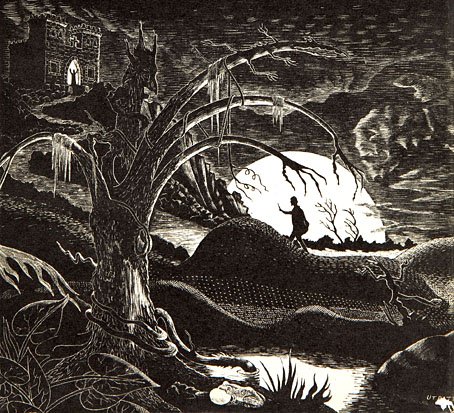
Illustration by Frank Utpatel from the 1947 Arkham House edition of Carnacki, the Ghost-Finder.

“Presently I got hold of myself a bit, and marked out a pentacle hurriedly with chalk on the polished floor; and there I sat in it almost until dawn. And all the time, away up the corridor, the door of the Grey Room thudded at solemn and horrid intervals. It was a miserable, brutal night.”

The Gateway of the Monster (1913) by William Hope Hodgson

“Word falling – Photo falling – Time falling – Break through in Grey Room”

The Ticket That Exploded (1962) by William S. Burroughs

Among other things, 2013 is the centenary of the first book publication of William Hope Hodgson’s collection of weird tales, Carnacki, the Ghost-Finder, and while I don’t believe that William Burroughs was referring to the supernatural eruption that occurs in Hodgson’s Grey Room it would be remiss of me to ignore the connection. Listening this week to Music for Thomas Carnacki by Jon Brooks (he of The Advisory Circle) had me wondering whether there’s any other Hodgson-derived music of note. Lovecraft has inspired hours of musical endeavour while Hodgson’s weird contemporaries, Algernon Blackwood and Arthur Machen, are referenced on some of the Ghost Box releases. Hodgson is the poor relation in these celebrations, often passed over despite the sonic potential of Carnacki stories such as The Whistling Room, The Horse of the Invisible, and especially The Hog, a tale whose manifestations are almost wholly perceived through the medium of sound. Searching around turned up the following examples.

tactile.jpg

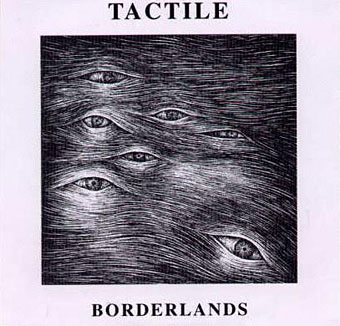
Borderlands (1999) by Tactile.

The House on the Borderland is the big favourite in this list, this album being a series of tracks by John Everall based on Hodgson’s novel. John Balance of Coil appears on the first track, Grief, reading the poem which opens the book.

Continue reading “Hodgsonian vibrations”