Weekend links 414

polackova-vyletalova.jpg

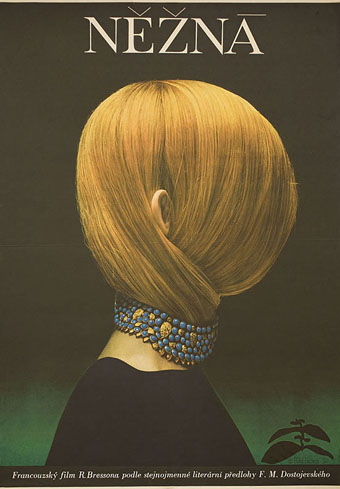
Czech poster for Robert Bresson’s Une Femme Douce (1969) by Olga Polácková-Vyletalová. There’s more about Polácková-Vyletalová’s striking poster designs (and this one in particular) at Mubi. See also the Polácková-Vyletalová collection at Terry Posters.

• “I heard that in Japan the tendency is to hammer down the nails that stick out. I think that Haruomi Hosono is a nail that sticks out. And has maintained that.” Van Dyke Parks on Haruomi Hosono, best known in the West for being one third of Yellow Magic Orchestra but a prolific artist in his own right. Hosono’s early solo albums are being reissued by Light In The Attic later this year.

Hua Hsu on The Spectacular Personal Mythology of Rammellzee. “Rammellzee will always feel like part of the underground,” says Geeta Dayal in a review of the Rammellzee exhibition currently showing in New York.

• Mixes of the week: Hassell’s Children, a Fourth World mix by Ban Ban Ton Ton, The Island of Bright Tombs by SeraphicManta, and a Radio Belbury mix by The Advisory Circle.

• More Robert Aickman: The Fully-Conducted Tour, a complete short story. Related: Matthew Cheney reviews the new Aickman collection, Compulsory Games.

• Another Kickstarter bid, this time for a reprint of Art Nouveau designs and illustrations by Carl Otto Czeschka.

Oliver Burkeman reviews How to Change Your Mind: The New Science of Psychedelics by Michael Pollan.

Art/design/architecture magazines online at the International Advertising & Design Database.

• Tonedeaf in our nose: Gerri Kimber on the musicality of James Joyce’s writing.

• More William Hope Hodgson: Greydogtales examines Hodgson’s poetry.

• The Art of Elsewhere: Jed Perl on the world of Edward Gorey.

• At Dennis Cooper’s: Records.

Beat Bop (1983) by Rammellzee vs. K-Rob | Equation (1989) by Material ft. Rammellzee | No Guts No Galaxy (1999) by Ramm Ell Zee & phonosycographDISK
Weekend links 387

liquidsky.jpg

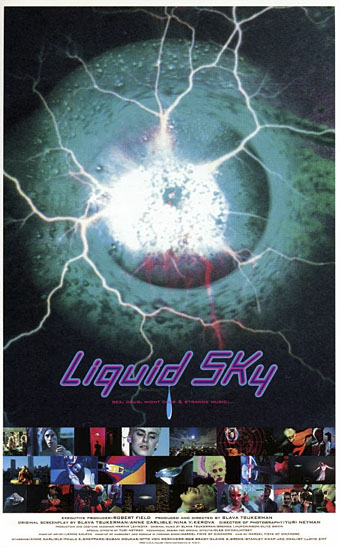
Japanese (?) poster for Liquid Sky (1982).

• The announcement this week of the death of Carl T. Ford, former editor of Dagon magazine, prompted a handful of memorial pieces. Dagon was notable for being a small British magazine devoted to Lovecraftian and other weird fiction (and the Call of Cthulhu games) at a time when the majority of such publications were American; it was also very well-produced, its later issues being typeset and filled with quality black-and-white illustration. Dagon interviewed many notable writers, including people such as Thomas Ligotti whose work at the time was still only known to a small group of enthusiasts. Mark Valentine posted a reminiscence at Wormwoodiana; Yog-Sothoth.com has an interview with Carl from 2010.

Michael “Dik Mik” Davies, manipulator of an audio generator and tape echo for Hawkwind, also died this week. Dik Mik’s primitive background electronics, augmented by Del Dettmar’s synthesizers, were an essential component of the early Hawkwind sound.

• Erik Davis talks to writer, photographer, and curator Joanna Ebenstein about Goth obsessions, memento mori, Santa Muerta, and her extraordinary new illustrated collection Death: A Graveside Companion.

• Slava Tsukerman’s cult film Liquid Sky (1982) finally gets a blu-ray release. From 2014: Punks, UFOs, and Heroin: Daniel Genis on how Liquid Sky became a cult movie.

Geeta Dayal explores the MOMA exhibition Thinking Machines: Art and Design in the Computer Age: 1959–1989.

You Should Come With Me Now is a collection of new fiction by M. John Harrison published this week.

VinylHub: “Our mission is to document every physical record shop and record event on the planet.”

Vladimir Nabokov‘s dream diary reveals experiments with “backwards timeflow”.

• Flawed Greatness: DB Jones on beauty and balance in John Ford’s The Searchers.

Irakli Kiziria on 9 synth artists who defined Eastern Europe’s post-Soviet sound.

• Edgar Allan Poe’s Hatchet Jobs: Mark Athitakis on Poe’s book reviews.

• Mix of the week: FACT mix 627 by Oneohtrix Point Never.

• At Creative Review: The design of Mute Records.

How generative music works.

Laraaji‘s favourite albums.

We Do It (1970) by Hawkwind | Adjust Me (1971) by Hawkwind | Electronic No. 1 (1973) by Hawkwind

Weekend links 383

nomata.jpg

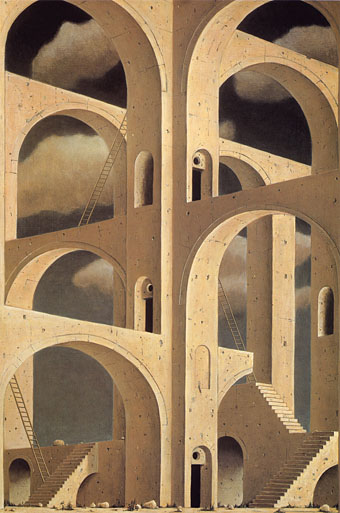
Arcadia-24 (1988) by Minoru Nomata.

Dark Entries and Honey Soundsystem Records release a video of edited moments from gay porn film Afternooners to promote the release of the film’s electronic soundtrack by Patrick Cowley. The album, which is the third and final collection of Cowley’s porn soundtracks, is out now.

Emily Temple looks at some of the art inspired by Italo Calvino’s Invisible Cities. I explored the same subject a couple of years ago in a week of Calvino art posts. From 2014: Peter Mendelsund on designing covers for Calvino.

Jim Downes on the late Charley Shively, a gay liberation activist who wasn’t interested in equality. Not an uncommon attitude in some gay circles but it’s one you seldom see aired in the mainstream press.

Geeta Dayal on A Little Electronic Milky Way of Sound by Roland Kayn, a 14-hour composition of “cybernetic music” which has been released in a lavish 16-CD box set by Frozen Reeds.

• An introduction to Henri-Georges Clouzot in seven films by Adam Scovell. Clouzot’s masterwork, The Wages of Fear (1953), is released on blu-ray by the BFI next week.

• Ubu Yorker: Menachem Feuer interviews Kenneth Goldsmith, writer and the man behind Ubuweb.

• Why Oscar-winning cinematographer Vittorio Storaro thinks the film vs. digital debate is bullshit.

David Barnett on supernatural fiction’s “best kept secret”, Robert Aickman.

Michèle Mendelssohn on how Oscar Wilde’s life imitates his art.

• Mix of the week: Secret Thirteen Mix 233 by Mick Harris.

Invisible Limits (1976) by Tangerine Dream | Invisible Cities (1990) by Jah Wobble’s Invaders Of The Heart | Invisible Architecture (1995) by John Foxx

Weekend links 378

belbury.jpg

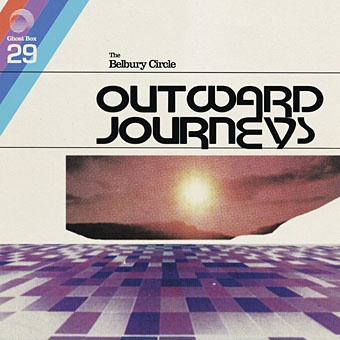
Outward Journeys, which will be released on November 3, is the second album on the Ghost Box label by The Belbury Circle (Belbury Poly with The Advisory Circle). As before, John Foxx is a guest vocalist, and as always, Julian House provides the graphic design.

• Music non-stop: Geeta Dayal in 2012 talking to Rebecca Allen about the challenges of turning Kraftwerk into computer animations.

• At the BFI: Jon Towlson on the sublimity of Close Encounters of the Third Kind; and Stephen King’s favourite films.

Bookogs is the Discogs concept applied to books. Stupid name (Bibliogs would be much better) but there it is.

belbury2.jpg

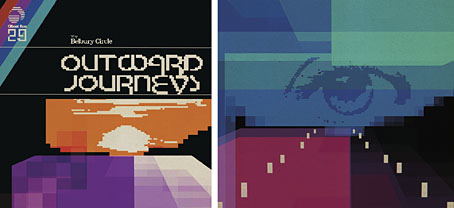
Julian House goes 8-bit. More artwork for The Belbury Circle.

Iain Sinclair‘s farewell to London. Sinclair talked to Alan Moore about his book earlier this month.

• At Dangerous Minds: Paul Gallagher on the occult art of Austin Osman Spare.

• The places where Cold War numbers stations broadcast spies’ secret codes.

• Rodney Brooks on the seven deadly sins of predicting the future of AI.

Nadja Spiegelman on the peculiar poetry of Paris’s Lost and Found.

• At Wormwoodiana: The rise of secondhand bookshops in Britain.

• RIP Grant Hart and Harry Dean Stanton. (And Dirge Magazine.)

• Mix of the week: FACT mix 618 by Tara Jane O’Neil.

• An introduction to Conny Plank in 10 records.

Reoccurring Dreams (1984) by Hüsker Dü | Canción Mixteca (1985) by Ry Cooder | You Don’t Miss Your Water (1993) by Harry Dean Stanton

Weekend links 377

czukay.jpg

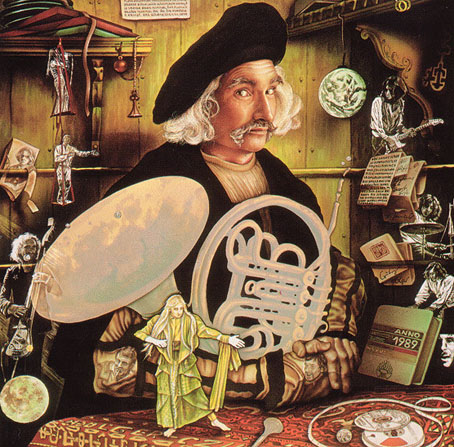
Holger Czukay by Ursula Kloss, from the cover of Czukay’s Moving Pictures (1993). (The painting is a pastiche of Holbein’s portrait of Georg Gisze.)

• RIP Holger Czukay. The obituaries have emphasised his role as the bass player for Can, of course, but he was just as important to the band as a sound engineer and producer: it was Czukay’s editing skills that shaped many of their extended jams into viable compositions. Post-Can he recorded 20 or so albums by himself or with collaborators, several of which can be counted among the best of all the Can solo works. Geeta Dayal and Jason Gross remembered their encounters with Czukay, while FACT reposted their 2009 interview. Czukay’s final interview was probably last year when he talked to Ian Harrison for Mojo magazine.

For my part, I was astonished when Czukay phoned me out of the blue one day in 1997 to thank me for sending him a video I’d made in the 1980s. This was a scratch production created with two VCRs that set 300 clips from feature films to Hollywood Symphony, the final piece on Czukay’s Movies album. Years later, MTV showed a couple of similar video collages that Czukay had made for Can so I sent a copy of my effort to Spoon Records thinking he might be amused. His public persona was often one of a wacky mad professor but the jokiness was allied to an impressive technical skill and curiosity. Most of our brief conversation was taken up with my answering his questions about my primitive video recording.

• “Every pebble can blow us sky-high”: A reconsideration by J. Hoberman of The Wages of Fear, directed by Henri-Georges Clouzot.

• Dario Argento’s masterpiece of horror cinema, Suspiria, is 40 years old. Martyn Conterio looks at five of its influences.

Mark Korven’s Apprehension Engine: an instrument designed to play the music of nightmares.

• The mystery of the Voynich Manuscript solved at last? Nicholas Gibbs thinks so.

• At Dangerous Minds: The macabre and disturbing sculptures of Emil Melmoth.

Jonathan Meades reviews A Place for All People by Richard Rogers.

• Mix of the week: Secret Thirteen Mix 229 by Erin Arthur.

• The ten creepiest objects in the Wellcome Collection.

Rob Chapman’s essential psychedelia reading list.

It’s Just A Fear (1966) by The Answers | Fear (1992) by Miranda Sex Garden | Constant Fear (2002) Bohren & Der Club Of Gore