Weekend links 669

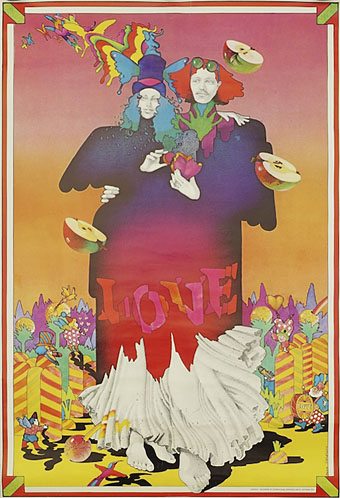
claveloux.jpg

Love (1973), a poster by Nicole Claveloux.

• “Warner Brothers had been keen on a Rolling Stones movie. Jagger was keen on being a movie star. But Donald Cammell’s script was no Beatles’ jolly japes musical comedy…” Des Barry examines the ninth minute of Cammell & Roeg’s Performance.

• “…part of what made his 1970s work so original was the degree to which his band cross-pollinated guitar with synthesizer.” Aquarium Drunkard explores the esoteric jazz-rock of Steve Hillage.

• Magma, the cosmic jazz-rock group from France, have been around for 50 years without making a music video. Hakëhn Deïs is their first.

There was half-Tarkovsky embedded in async, “Solari” and “Stakra” and “Walker”, a hand outstretched to those great poems of living and light that we call films. “I had a strange dream last night,” Andrey Tarkovsky wrote in one of the diary entries collected in Instant Light, “I was looking up at the sky and it was very, very light and soft; and high, high above me it seemed to be slowly boiling, like light that had materialised like the fibres of a sunlit fabric, like silken living stitches in a piece of Japanese embroidery.”

David Toop remembers Ryuichi Sakamoto

• “Floor796 is an ever-expanding animation scene showing the life of the 796th floor of the huge space station…”

• The Electrifying Dreamworld of The Green Hand: Dan Clowes on the comic-art of Nicole Claveloux.

• At Bandcamp: Andy Thomas on the post-punk pop subversion of David Cunningham.

• At Unquiet Things: An enigmatic baroness and her collection of skulls.

• New music: River Of Dreams by Romance & Dean Hurley.

• Steven Heller’s font of the month is Ray Gun.

• Mix of the week: DreamScenes – April 2023.

• RIP Al Jaffee.

Skulls Of Broken Hill (1996) by Bill Laswell | The Bees Made Honey In The Lion’s Skull (2008) by Earth | Black Skulls (2018) by Jóhann Jóhannsson
Weekend links 626

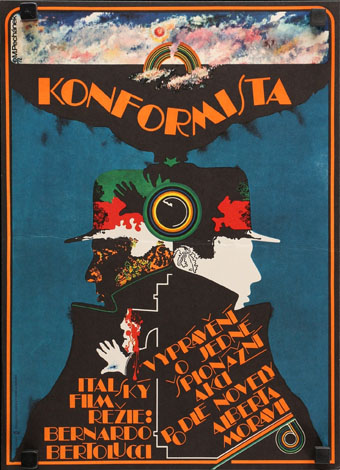
conformist.jpg

Czech poster for Bernardo Bertolucci’s The Conformist. Art and design by Miroslav Pechánek, 1972.

• “Acknowledgements are not part of the novel; in fact, they break the spell the author has spent 200 or more pages weaving. We should take a book on its merits, knowing as little about the author as possible. As one reader put it to me, ‘the end of a book is time for thinking about the book, not for an acceptance speech’.” John Self on dedications and acknowledgements.

• Mixes of the week: a Power Ambient mix by A Strangely Isolated Place, and a mix for The Wire by Nexcyia.

• At Spoon & Tamago: 3D-scanned stones create vessel for human-made interventions.

Weeks turned into months. Slowly it dawned on me that I was performing the role of Boswell for a man who might be: a) a put-on maestro or arcane troll; b) a fiction writer slash performance artist; or c) a lunatic. But by his own admission King had tagged me with a familiar spirit. Whether or not he was telling the truth was irrelevant at this point. I could feel something squatting on my soul. I needed to see what it was.

Kent Russell on looking for demons in a disenchanted world

• A trailer for Mad God, Phil Tippett’s 30-years-in-the-making animated feature.

• New music: Vesta by Azu Tiwaline, and Right, Right, Right by Nils Frahm.

• At Dennis Cooper’s: Max Hattler Day.

• “Marcel Duchamp was not a thief.”

• RIP Jean-Louis Trintignant.

Demons Of Rage (1972) by Nik Raicevic | Shall Come Forth The Demons (1991?) by Yuri Morozov | Angels Of Darkness, Demons Of Light (2011) by Earth

Weekend links 556

wilson.jpg

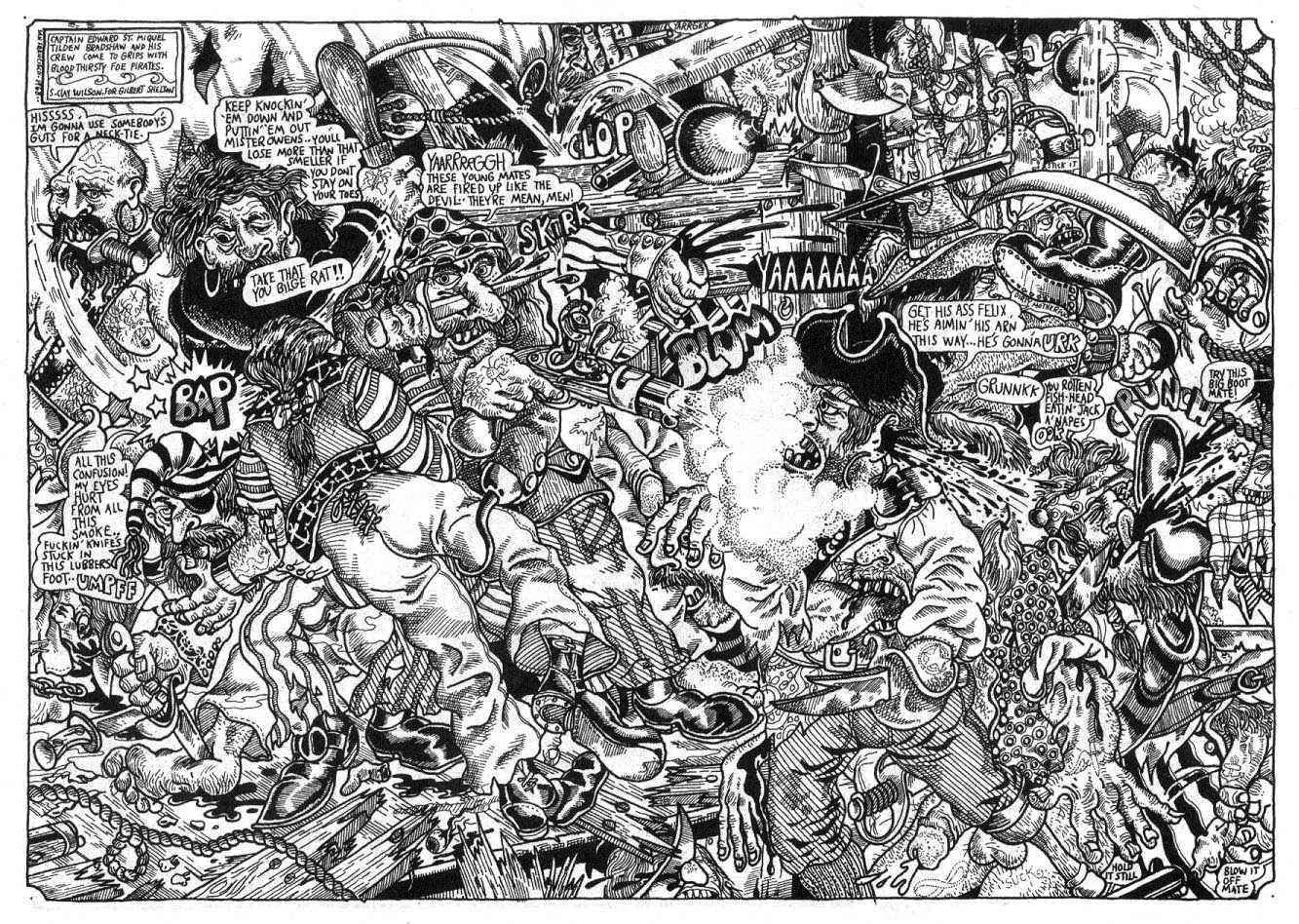
Captain Edward St. Miquel Tilden Bradshaw and his Crew Come to Grips with Bloodthirsty Foe Pirates by S. Clay Wilson, Zap Comix no. 3, 1968.

• RIP S. Clay Wilson, the wild man of American comics. The scene of mayhem above is typical in being barely coherent at a small size; click for a larger view. Patrick Rosenkranz at The Comics Journal describes Wilson as “the most influential artist of his generation…creating an extensive body of work that will defy authority and offend propriety until the end of days”. When Moebius was writing in the 1980s about the founding of Métal Hurlant he had this to say about the American undergrounds: “They were the first in the world to use comics as a means of communication, to express real emotions. Before, comics were used only to do stories, entertainment. They had some great moments but they were all very conventional. The American Underground showed us in Europe how to express true feelings, how to tell something to the reader through the comics. They blew the minds of the few professionals in Europe who saw them.” Also at TCJ, the S. Clay Wilson Interview. Wilson sent me a postcard once. I wish I knew what the hell I’d done with it.

• Michael Hoenig, synthesist for Agitation Free and (briefly) Tangerine Dream, plays one of the pieces from his debut album of electronic music, Departure From The Northern Wasteland, on a radio show in 1977. Hoenig’s album is long overdue a remastering and re-release.

• “My job, which the BBC has tasked me to do, is to provoke people and ask them, ‘Have you thought about looking at the world this way?'” Adam Curtis talks to Michael J. Brooks about his new TV series, Can’t Get You Out Of My Head.

m_chat.jpg

{ feuilleton } celebrates its 15th birthday today. Monsieur Chat, the mascot of this place, is happy about that but then Monsieur Chat is happy about most things.

• At Greydogtales: Opening The Book of Carnacki. A call for contributions to a collection of new stories about William Hope Hodgson’s occult detective. I’d be tempted if I didn’t already have more than enough to keep me occupied.

• “I’m being asked to talk about it a great deal at the moment, with the pandemic.” Roger Corman and Jane Asher on filming The Masque of the Red Death.

• New music: Cygnus Sutra by Mike Shannon, “a soundtrack to a fantasy/sci-fi epic not yet written”.

• A trailer for The Witch of King’s Cross, a documentary about occult artist Rosaleen Norton.

• At Dennis Cooper’s: Spotlight on…Hans Bellmer & Paul Eluard The Games of the Doll (1949).

• RIP also this week to Rowena Morrill, fantasy artist, and to Chick Corea.

• “Computers will never write good novels,” says Angus Fletcher.

• DJ Food on Zodiac posters by Funky Features, 1967.

• Mix of the week: Fact Mix 794 by Lutto Lento.

Annie Nightingale’s favourite music.

Zodiac (1984) by Boogie Boys | From The Zodiacal Light (2014) by Earth | Zodiac Black (2017) by Goldfrapp

Weekend links 510

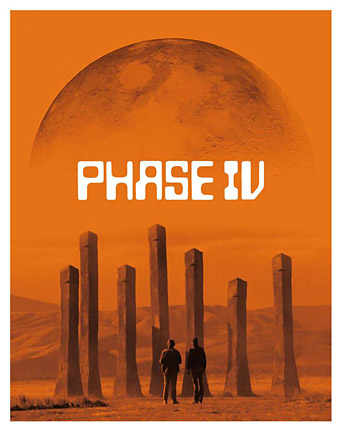
phaseiv.jpg

• Saul Bass’s cult science-fiction film, Phase IV, has received a very welcome (Region B) blu-ray release from 101 Films. Everything is a metaphor for the unavoidable just now, but a film about a group of scientists besieged by a tiny and insidious biological threat can’t help but have additional resonance. The new release includes the original (and seldom seen) cosmic ending plus another disc containing several of Bass’s short films. Previously: Directed by Saul Bass.

• Music at the Internet Archive: Live at Metro (2007) by Sora, and three rare cassette releases by French synth-rock duo Fondation: Metamorphoses (1980), Sans Etiquette (1980), and Le Vaisseau Blanc (1983).

• Mixes of the week: a Manu Dibango (RIP) mix from Aquarium Drunkard, and Industrial Synth Rave Isolation Mix by Moon Wiring Club.

We must talk about Nightwood. The novel that sits between those early and late phases of her writing life, the tale of Felix Volkbein, Robin Vote, Dr Matthew-Mighty-Grain-of-Salt-Dante-O’Connor and many others, caught between world wars and each other, in the decadent cities of Europe. The novel follows the journey of Robin Vote, who is more “earth-flesh, fungi, which smells of captured dampness” than person. Sleepwalking through life, she nonetheless wakes up her fellow characters Nora, Felix and Jenny, who each try and pin her down, to no avail. It is a novel that defies synopsis. It is unsurprising that this remarkable book has attracted a “burgeoning body of interpretations”, as Tyrus Miller here notes; yet it seems that there are still new ways to approach it. Julie Taylor offers an affective reading, for example; Joanne Winning concentrates on Nightwood’s collaborative origins, exploring the fruitful and often overlooked creative relationship between Barnes and her partner, Thelma Wood. This is not just a case of considering that relationship as source material for the novel, but unpacking what Winning describes as their “lesbian modernist grotesque”. It is particularly welcome that Winning treats Wood as a silver-point artist in her own right.

Jade French reviews Shattered Objects: Djuna Barnes’s Modernism

• Ben Beaumont-Thomas on where to start with Kraftwerk, and Jennifer Lucy Allan on where to start with Alice Coltrane.

• The BBC’s Culture page discovers Tom of Finland but can’t bring itself to show much of his artwork.

• The art of Asterix: illustrator Albert Uderzo (RIP) at work.

Clive Hicks-Jenkins on “a marvel of clockwork ingenuity”.

• The films Wes Anderson is watching during isolation.

Greydogtales on six more strange tales that linger.

Adrian Searle‘s favourite online art galleries.

• The Ghost Box label is now at Bandcamp.

Twin Flames (Edit) by Lustmord.

• At Dennis Cooper’s: Flamboyant.

Phase By Phase (1976) by Peter Baumann | Phase 3: Agni Detonating Over The Thar Desert… (1995) by Earth | Phase Draft (2003) by Bill Laswell

Weekend links 466

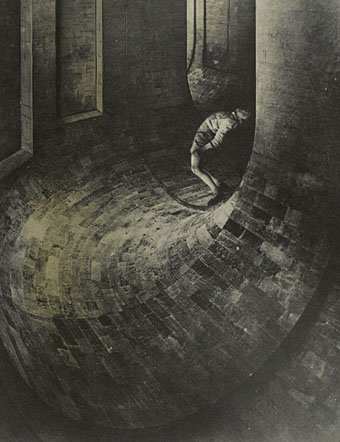
maar.jpg

The Simulator (1936) by Dora Maar.

• Surprise of the week for me was the discovery of a new album, Kshatrya – The Eye Of The Bird, by cult French composer Igor Wakhévitch. This had been out for a while but I’d managed to miss the announcements. The music was recorded in 1999 so isn’t exactly new but it’s the first new Wakhévitch release (as opposed to a reissue or compilation) since Let’s Start in 1979. Very good it is too, almost completely electronic but not as discordant as his synth-dominated Hathor album.

• “Popol Vuh is a Mass for the heart.” Gerhard Augustin talks to Florian Fricke about Popol Vuh’s music in a “rare” (lost? previously unseen?) interview. Undated but the City Raga album is referred to as a recent release so it’s probably around 1995.

Brian Dillon on the voraciousness and oddity of Dora Maar’s pictures. Related: Rick Poynor on The Simulator by Dora Maar.

The Secret Ceremonies: Critical Essays on Arthur Machen, edited by Mark Valentine and Timothy J. Jarvis.

Juliette Goodrich on the tale of the Buchla synthesizer, the repair engineer, and a dormant drop of LSD.

Scott Tobias on Midnight Cowboy at 50: why the X-rated best picture winner endures.

• A Hidden History of Women and Psychedelics by Mariavittoria Mangini.

• Previews of Chords, the new album by composer Ellen Arkbro.

• Mix of the week: Secret Thirteen Mix 290 by Mark Stewart.

• “Somehow I became respectable,” says John Waters.

• At Dennis Cooper’s: Walerian Borowczyk Day.

• The Bandcamp Guide to Earth.

Gén #1 by Ray Kunimoto.

Secret Ceremony (Theme From Brond) (1987) by Scala (Bill Nelson & Daryl Runswick) | Healing Ceremony (1990) by African Head Charge | Ceremony Behind Screens (1995) by David Toop