Typefaces of the occult revival

mmm.jpg

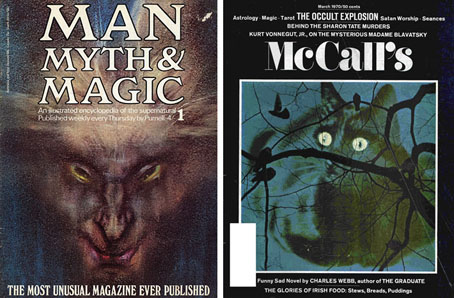
Man, Myth & Magic #1, January 1970; McCall’s, March 1970.

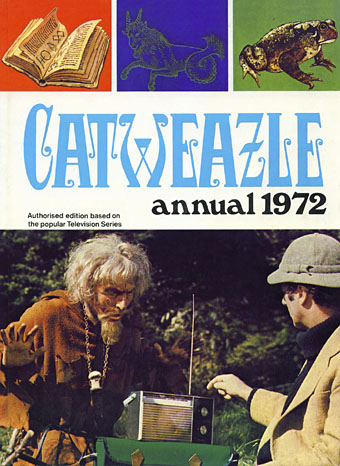
The announcement last week of the death of British character actor Geoffrey Bayldon prompted some discussion here about the typeface used for the titles of Bayldon’s TV series from the early 1970s, Catweazle. This was a humorous drama in which the actor portrayed a warlock transplanted by a time portal from the Norman era to the present day, a comic counterpart to another occult-themed series, Ace of Wands (1970–72). Being aimed at children, both Catweazle and Ace of Wands are at the lighter end of the great flourishing of occult-related media that runs in parallel with the rise and fall of psychedelic culture, a period roughly spanning the years 1965 to 1975. The two trends reflected and fed off each other; the hippie movement stimulated interest in the occult (Aleister Crowley is on the cover of Sgt Pepper) while giving to the commercial propagators of the supernatural a range of aesthetics lifted from the 19th century.
occult.jpg

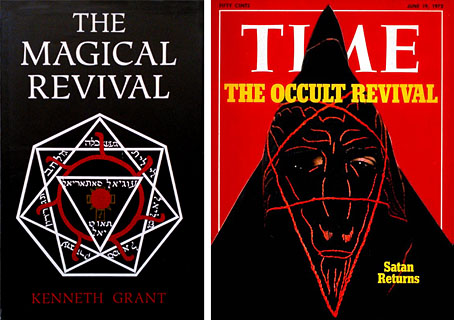
Muller, 1972; TIME, June 1972.

Among the graphic signifiers is a small collection of typefaces from the Victorian or Edwardian eras, designs which vanished from sight after 1920 only to surface 50 years later in very different settings to their previous deployment. I’m always fascinated by the way context changes the perception of a typeface; the repurposing of Art Nouveau fonts—which hadn’t previously been associated with diabolism—to signify witchcraft or sorcery is a good example of this. In the case of the occult revival this was partly opportunism: the commercial application of post-psychedelic style made the previously untouchable trendy again, decoration and elaborate stylisation was no longer taboo. But it was also a solution to the problem of signifying the sorcerous with typography when there were no off-the-peg solutions as there were for, say, Westerns or stories about the Space Race. As well as carrying with them a flavour of old books, some of the more curious letterforms were reminiscent of the glyphs of magical alphabets which no doubt explains their popularity.

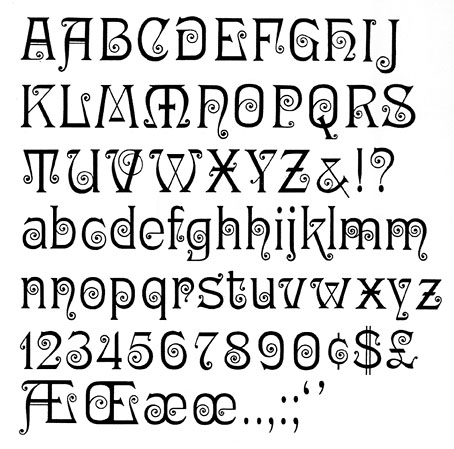
What follows is a chronological selection of the more striking examples (or my favourites…) which conveniently begins with Ringlet, the Catweazle font. With the trend being towards Art Nouveau you find popular Nouveau styles such as Arnold Bocklin also being used in the 1970s but I’ve avoided these in favour of the less common choices.


Ringlet (1882) by Hermann Ihlenburg
ringlet3.jpg

jullian08.jpg

Pall Mall, 1971.

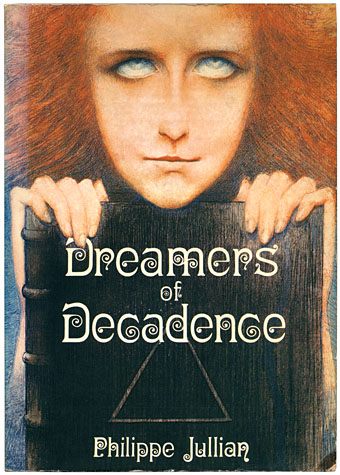
Jullian’s landmark study of the Symbolist movement isn’t an occult text but it is a great favourite of mine whose original title—Esthètes et Magiciens—puts it in the right sphere. Inside, the author touches on the spiritual concerns of many of the artists which included Theosophy and fashionable Satanism.
ringlet1.jpg

ringlet2.jpg

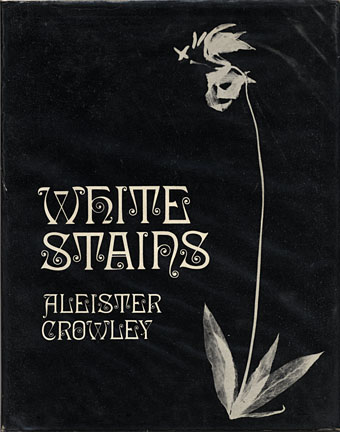
Duckworth, 1973.

Aleister Crowley is represented here with the first reprinting of his erotic poetry, produced in a limited run by the venerable London house of Duckworth.
ringlet4.jpg

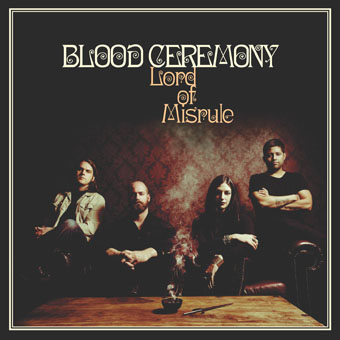
Rise Above Records, 2016.

Blood Ceremony are Canadians devoted to the occult rock of previous decades. Their presentation matches songs with titles like The Great God Pan and Morning Of The Magicians.


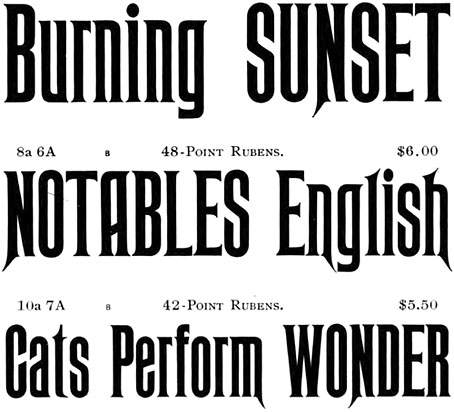
Rubens (1884) by John K. Rogers
rubens2.jpg

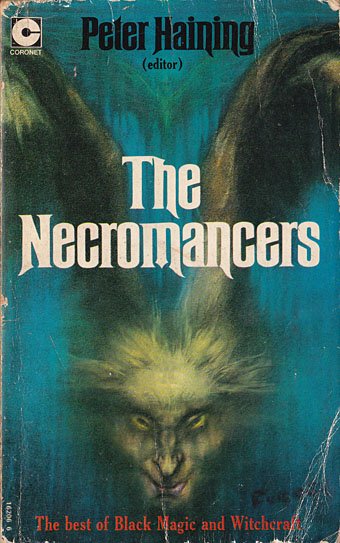
Rubens has long been a favourite of mine even though it gets used a great deal on horror novels and the like. Many Americans also regard it as “the Haunted Mansion font” owing to its use in Disney theme parks.

Peter Haining’s collection combined supernatural fiction with short non-fiction accounts of magical operations. The cover art is the full version of the drawing by Austin Osman Spare—The Elemental aka The Vampires are Coming—seen in detail on the cover of the first issue of Man, Myth & Magic.
rubens1.jpg

Coronet Books, 1972.


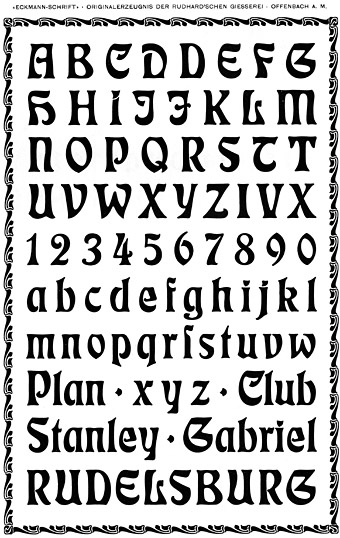
Eckmann (1900) by Otto Eckmann
eckmann2.jpg

eckmann1.jpg

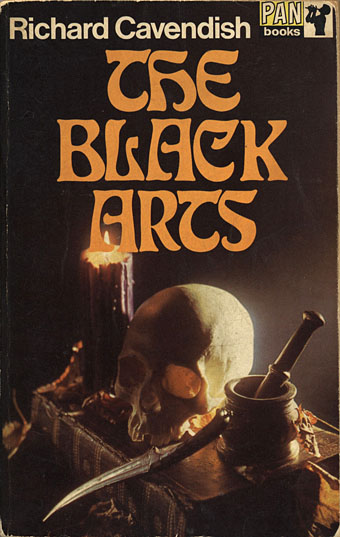
Pan Books, 1969.

Many of the examples in this post tend towards the exploitational (see below…) but Cavendish’s overview of occult theory and history is a serious study, even if the cover does beckon to the Dennis Wheatley readership. My mother was among the latter which no doubt explains why she had a copy of this paperback; in due course it found its way into my hands. Richard Cavendish was enough of an authority to be hired by Purnell as editor-in-chief of Man, Myth & Magic.


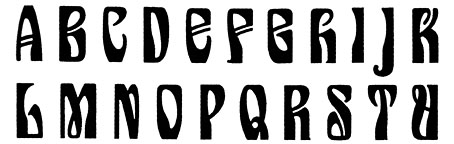
Siegfried (c. 1900) by Wilhelm Woellmer
siegfried2.jpg

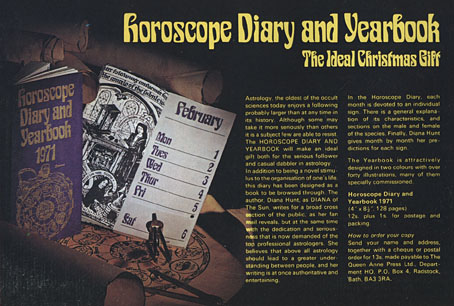
And speaking of which…Purnell offered their readership a sidereal start to 1971.
siegfried1.jpg

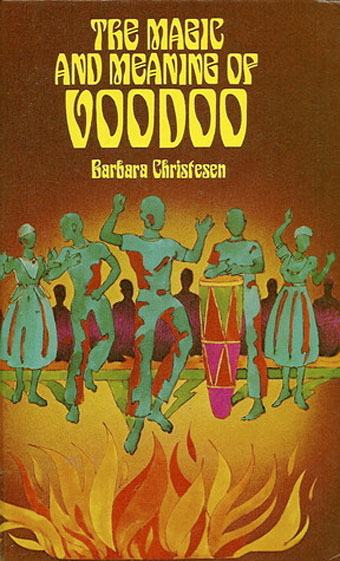
Man, Myth and Magic, 1970.

voodoo.jpg

Heinemann, 1977.


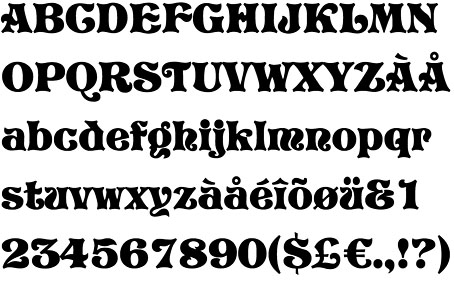
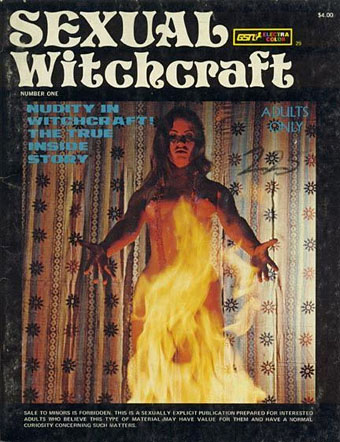
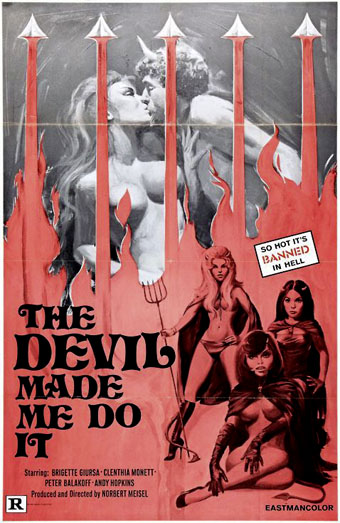
Pretorian (c. 1900) by PM Shanks & Sons
pretoria2.jpg

pretoria1.jpg

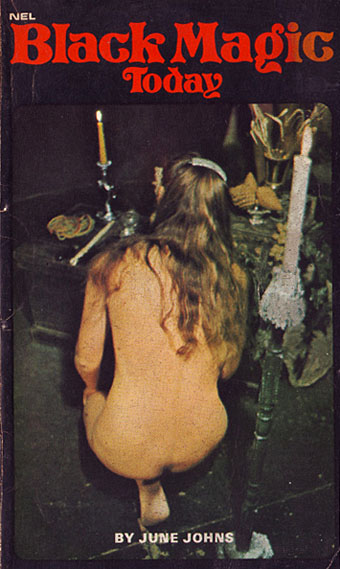
NEL, 1971.

This is where things shift from anthropology, history and children’s television to Satanic exploitation and hardcore porn. “Black magic” ceremonies in previous centuries were often a kind of orgiastic cosplay so it’s no surprise to find the same thing happening in the 20th century. New English Library dominated the British book world of the 1970s with a wide range of genre novels, as well as salaciously-packaged reprints of serious occult studies by Francis King and this volume by June Johns.
pretoria3.jpg

Undated.

Sexual Witchcraft and The Devil Made Me Do It are two works whose pornographic nature means their origin remains obscure; nobody seems to have any information about the latter title.
pretoria5.jpg

Undated.

pretoria6.jpg

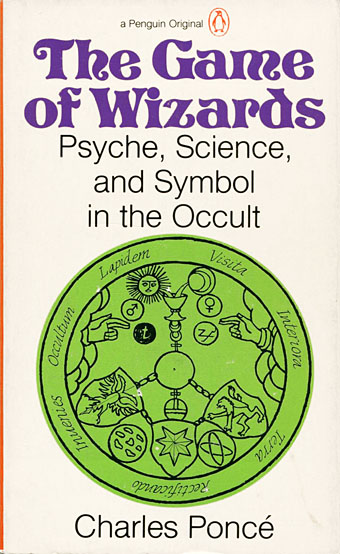
Penguin, 1975.

pretoria4.jpg

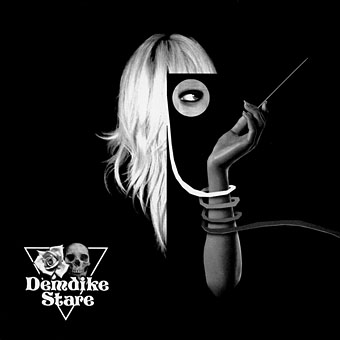
Symbiosis by Demdike Stare. Modern Love, 2009.

Mancunian duo Demdike Stare hark back to the heyday of Ouija boards and witchcraft with sinister electronics and the monochrome art and design of Andy Votel. Pretorian is used on all their early releases.


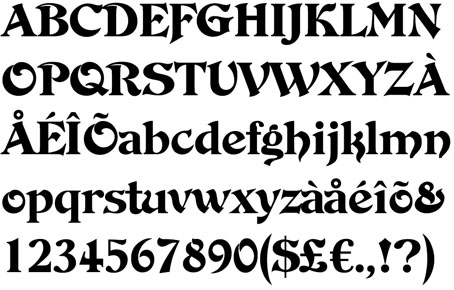
De Vinne Ornamental (1900) by Nicholas J. Werner
devinne1.jpg

devinne2.jpg

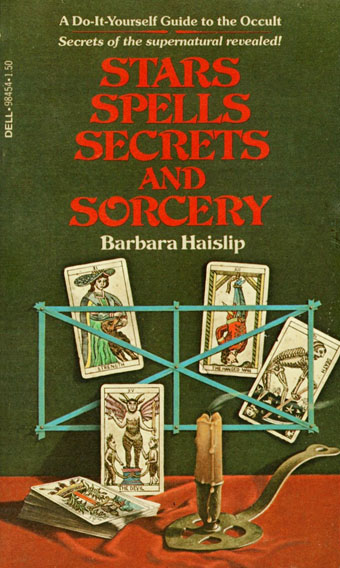
Dell, 1978.

devinne3.jpg

Holt, Rinehart and Winston, 1984.


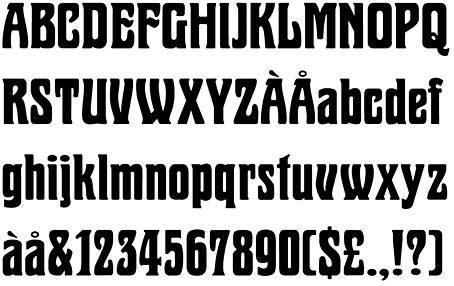
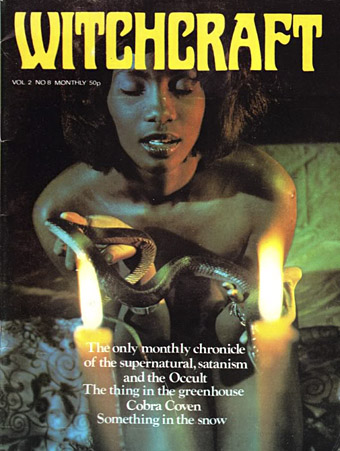
Marschall (1905) by Wilhelm Woellmer
marshall2.jpg

marshall3.jpg

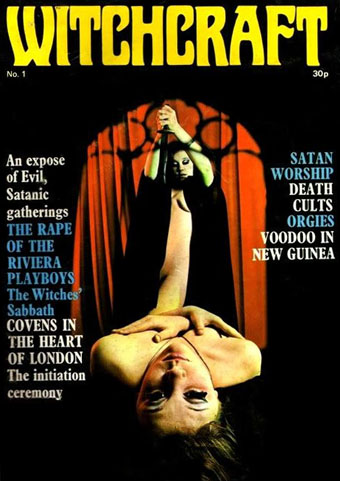
Witchcraft magazine was a UK publication (dates unknown) whose revelatory stories ran alongside many photographs of naked ladies. There was a brief fad for this kind of thing, a diabolic counterpart to all those beefcake mags pretending to be devoted to body-building. Witchcraft did at least manage more than a single issue.
marshall1.jpg


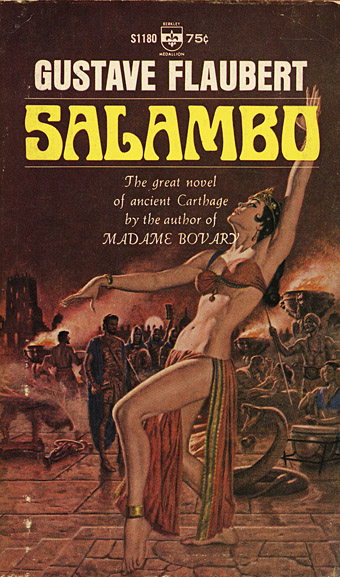
Roberta (1962) by Robert Trogman

roberta1.jpg

Trogman’s type was based on a Belgian restaurant sign so this may be another Art Nouveau derivation. Not so the use to which it was put, however. Flaubert’s novel doesn’t feature any overt occultism (although there is a whole chapter of human sacrifice) but the cover is one of the first to establish Roberta as a signifier of the exotic/erotic .
roberta4.jpg

Berkley Medallion, 1966.

roberta2.jpg

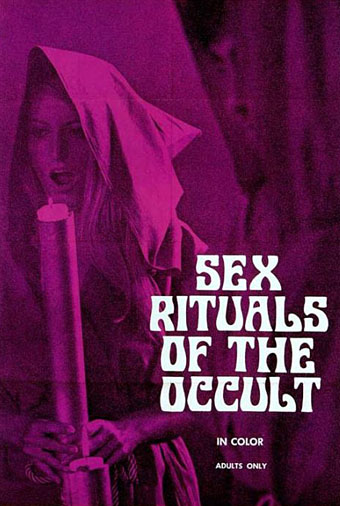
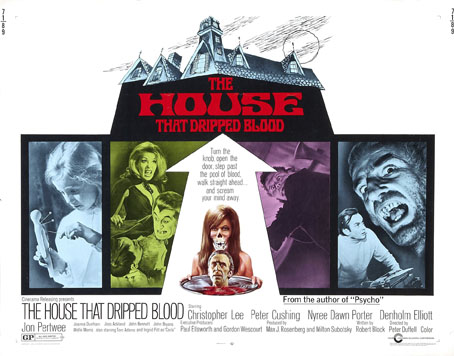
The film equivalent of Witchcraft magazine from 1970. According to this review, Sex Rituals of the Occult also features some gay sex from the male performers, a rare thing in these boob-fests.
roberta3.jpg

Amicus Productions, 1971.


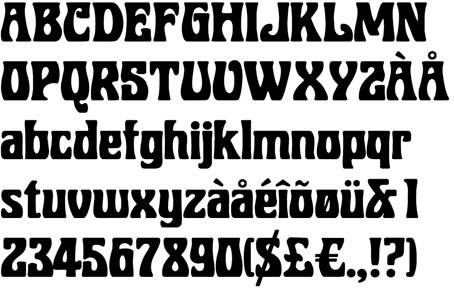
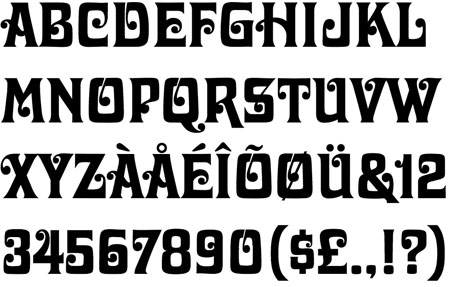
Davida (1965) by Louis Minott
davida1.jpg

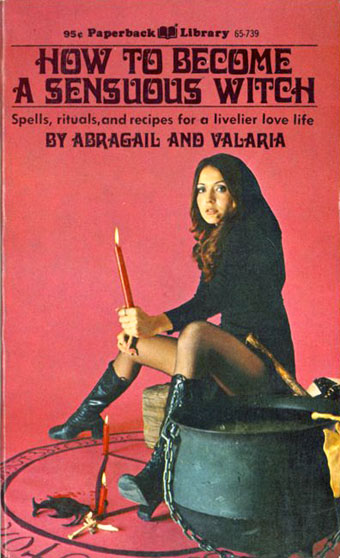
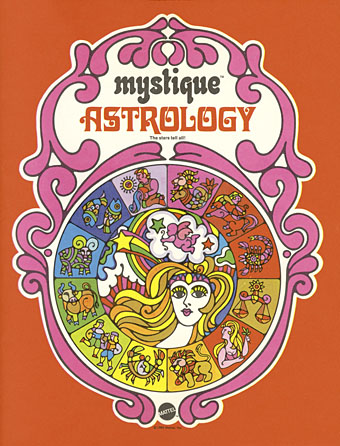
Davida is one of those typefaces from the 60s that was very popular in the following decade so it’s no surprise to find one or two occult titles using it. I’ve included it here for the way its style refers back to Ringlet, and for Abragail and Valaria’s book of recipes.
davida3.jpg

Mattel, 1969.

davida2.jpg

Coronet Communications, 1971.

Previously on { feuilleton }
MMM in IT
The Book of the Lost
The Occult Explosion
Forbidden volumes
The Sapphire Museum of Magic and Occultism
Occultism for kids

Weekend links 195

ethellerossignol.jpg

Untitled painting (c. 1920–1933) by Ethel le Rossignol depicting “the Sphere of the Spirit”. An exhibition of  Ethel le Rossignol’s channelled paintings takes place at the Horse Hospital, London, next month.

• “It’s always disconcerting to discover a favourite writer was kind of a jerk. How does this realization effect our understanding of Walter Benjamin’s work?” asks Morgan Meis.

• Mixes of the week: Georges Vert (aka Jon Brooks) presents The Pan-Europa Mix. Mr Brooks also unveiled another seasonal mix which he calls Winter Velvet.

Knopheria by Chrome Hoof ft. Shingai Shoniwa. A video from the band’s latest album.

Without sci-fi trappings of any kind, The Metamorphosis forces us to think in terms of analogy, of reflexive interpretation, though it is revealing that none of the characters in the story, including Gregor, ever does think that way. There is no meditation on a family secret or sin that might have induced such a monstrous reprisal by God or the Fates, no search for meaning even on the most basic existential plane. The bizarre event is dealt with in a perfunctory, petty, materialistic way, and it arouses the narrowest range of emotional response imaginable, almost immediately assuming the tone of an unfortunate natural family occurrence with which one must reluctantly contend.

David Cronenberg on Franz Kafka’s story.

• “I was very much into now-ism.” Laraaji talks to Bobby Barry about his music.

The Edge Question for 2014: “What scientific idea is ready for retirement?”

Storybook Apocalypse: Beasts, Comets, and Other Signs of the End Times.

• Return of the wunderkammer: Philip Hoare on cabinets of curiosities.

• Birditis: Ian Penman on the “full catastrophe” of Charlie Parker.

Rick Poynor on The Compulsively Visual World of Pinterest.

• RIP psychedelic poster artist Gary Grimshaw.

• At PingMag: The automaton clocks of Tokyo.

Dust & Grooves: Vinyl music culture.

Wunderkammern at Pinterest.

Ligeti: String Quartet No. 1 “Metamorphoses nocturnes” (recorded 1978) The Arditti Quartet | Thru Metamorphic Rocks (1979) by Tangerine Dream | Metamorphosis (2012) by Demdike Stare

Wyrd Daze 1

wyrddaze.jpg

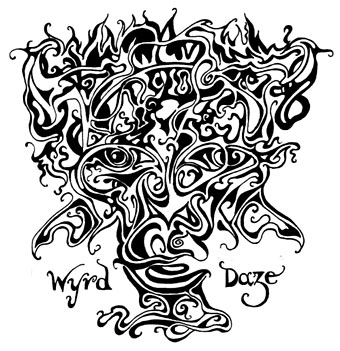
Wyrd Daze is a new digital zine edited by Leigh Wright, the first issue of which is now available via a subscription of $5 (Canadian) or about £3. For that you receive a 66-page pdf plus access to music mixes and podcast files. The contents are the kind of thing which finds particular favour here: the weird, the marginal, the spectral, the esoteric, and so on. In issue 1 there’s fiction from Gareth E. Rees and Phil Legard (aka Xenis Emputae Travelling Band), interviews with writers Berit Ellingsen and David Southwell (the latter talking about psychogeography and “strange England”), a piece about Laurel Halo and Demdike Stare, many curious photos and graphics, and a lot more. I may be contributing to a future issue so watch this space.

wyrddaze2.jpg

Artwork from issue 1 by Emma-Jane Rosenberg.

Previously on { feuilleton }
The Weird

Weekend links 174

ikuma.jpg

Dress (2012) by Nao Ikuma.

• Two of my Cthulhu artworks can currently be seen in the Ars Necronomica exhibition at the Cohen Gallery, Brown University, Providence, RI. The exhibition is part of NecronomiCon, and runs to September 13th. In related news, my steampunk illustration has been nominated in the Visual category of this year’s Airship Awards. Winners will be announced at Steamcon V in October.

• “…the story of how a small cabal of British jazz obsessives conducting a besotted affair with the style arcana of Europe and America somehow became an army of scooter-borne rock fans…” Ian Penman looks back at the culture of Mod for the LRB.

• “What is it about the writer in the First World that wants the Third World writer to be nakedly political, a blunt instrument bludgeoning his world’s ills?” Gina Apostol on Borges, Politics, and the Postcolonial.

If someone had designed a work regime perfectly suited to maintaining the power of finance capital, it’s hard to see how they could have done a better job. Real, productive workers are relentlessly squeezed and exploited. The remainder are divided between a terrorised stratum of the, universally reviled, unemployed and a larger stratum who are basically paid to do nothing, in positions designed to make them identify with the perspectives and sensibilities of the ruling class (managers, administrators, etc) – and particularly its financial avatars – but, at the same time, foster a simmering resentment against anyone whose work has clear and undeniable social value. Clearly, the system was never consciously designed. It emerged from almost a century of trial and error. But it is the only explanation for why, despite our technological capacities, we are not all working 3–4 hour days.

On the Phenomenon of Bullshit Jobs by David Graeber

Ron Rosenbaum talks to Al Pacino about all the usual stuff, and reveals some detail about the actor’s obsessive interest in Oscar Wilde’s Salomé.

• More queer history: The Brixton Fairies and the South London Gay Community Centre, Brixton 1974–6.

• At Dangerous Minds: Anthony Burgess and the Top Secret Code in A Clockwork Orange

• Every day for 100 days, Jessica Svendsen redesigned a Josef Müller-Brockmann poster.

LondonTypographica: Mapping the typographic landscape of London.

• Mix of the week: Secret Thirteen Mix 083 by Demdike Stare.

• At Strange Flowers: Alfred Kubin the writer.

Derek Jarman’s sketchbooks.

Rick Poynor on Collage Now.

• Thomas Leer: Private Plane (1978) | Tight As A Drum (1981) | Heartbeat (1985)

The Outer Church

outer1.jpg

Compilation albums: on the one hand they’re in the lowest echelon of the musical world, all those cheap pop collections you see in any supermarket; on the other they provide an introduction to zones of activity which might seem too rich or too obscure to easily investigate; Soul Jazz Records is a master at this kind of collection.

There’s also another level of compilation album where the collection becomes an opus in its own right, and which can also help to define a new movement or moment. In this category I’d think of favourites such as Kevin Martin’s Isolationism set from 1994 which first identified the emergence of what we now think of as Dark Ambient music; and Devendra Banhart’s The Golden Apples of the Sun (2004) which showcased a new generation of American folk artists. To these I’d add Joseph Stannard’s The Outer Church, a 2-CD set compiled for Front & Follow which is released this month. My hand-crafted, letterpressed edition just arrived so I’ve been relishing the new music after forcing myself to avoid the preview tracks which have been available for the past couple of weeks. Regular readers won’t be surprised to learn that the emphasis is very much on the Hauntological end of things; this blog nurses a Ghost Box fetish, and there are Ghost Box connections in the presence of Pye Corner Audio, Hong Kong In The 60s, and Baron Mordant. The latter pair and another artist, Robin The Fog, all provided tracks for the recent Restligeists, the cassette compilation that came with The Twilight Language of Nigel Kneale. Of the new collection, Joseph Stannard says in his notes:

Wind the tape all the way back to Brighton in 2009. The uncanny influence seeping into contemporary music from ‘elsewhere’ had become impossible to ignore. Magazine pieces I had written in my capacity as a music critic were revealed to contain subliminal memos for my own attention. Unusually vivid dreams and unsettling anonymous telephone calls imparted curious instructions. I was to establish a space in which various forms of unheimlich audio would converge with moving images of a similarly anomalous nature. Equipped only with a well-thumbed copy of The Beginner’s Guide To Psychic Architecture, I resolved to build a Church.

This compilation presents a selection of the artists who have performed at The Outer Church, with the exception of illustrious filmmaker and composer Graham Reznick, who lives in faraway Brooklyn and kindly permitted us to screen his tremendous psychedelic campfire tale, I Can See You, in Brighton and Dublin. All of the recordings here are previously unreleased. Together they advance the argument that something weird is stirring in modern music which resists categorisation, manifesting itself in unsettling cadences and temporal distortions across a wide variety of occult strategies.

outer2.jpg

Illustration by Alexander Tucker.

And they aren’t the only ones exploring this territory: Demdike Stare and the very excellent Haxan Cloak might also have been included here. I am, of course, especially partial to any kind of doom-laden timbres, whether electronic, orchestral or guitar-oriented, so I can’t be an unbiased reviewer. But it has been a relief to see contemporary electronica (in the UK at least) find a way out of the rut of abstraction into which it had fallen in the late 1990s. That’s it’s done this by delving into our nation’s long history of ghost and folk mythology is no bad thing. Not all the artists on The Outer Church are attempting to spook their audience; there are songs as well as drones. Hong Kong In The 60s produce the kind of uptempo pop you’d expect from a band with that name. It’s to Stannard’s credit that he manages to sequence things without the mix of styles being too disjunctive.

outer3.jpg

One of the mini-postcards inside the limited edition. Photo by Joseph Stannard.

The first edition of The Outer Church has been selling well so anyone looking for a copy is advised to make haste and use the links on this page. There’s a related event in Brighton this (Friday) evening, and another in Manchester on Saturday. I’m now looking forward to following some of the paths revealed by this opening of the portals.

Previously on { feuilleton }
The Ghost Box Study Series
A playlist for Halloween: Hauntology
The Séance at Hobs Lane
Ghost Box