Weekend links 384

muljat.jpg

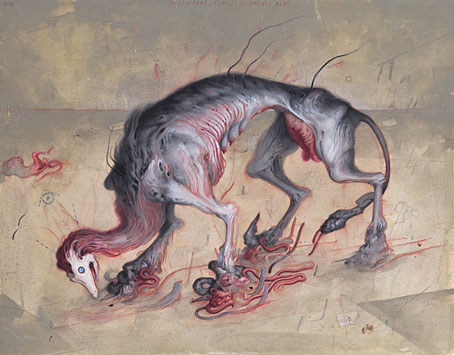
Sultans of Swing by Samantha Muljat.

• Pain & Pleasure, Indivisible: Mat Colegate talks to Stephen Thrower (Coil, Cyclobe) about the meeting between Coil and Clive Barker that would have led to Coil scoring Barker’s Hellraiser if the studio hadn’t rejected the music.

• “From Arsedestroyer to Zoogz Rift: 50 underground albums you’ve never heard of” The usual presumption—I’ve been listening to The Groundhogs since the mid-1980s—but it’s a good list.

• More magazines at the Internet Archive: an incomplete run of British science-fiction monthly Interzone; and a complete (?) run of the film magazine for horror (and gore) obsessives, Fangoria.

• “…it’s background music, is what it is. But there’s nothing wrong with that. I’m very proud of it.” John Carpenter discussing his soundtrack music and his new album, Anthology.

• Mixes of the week: Aral Mix 05 by Ellen Arkbro, Secret Thirteen Mix 234 by FOQL, and Samhain Séance Six: Triffid Witch by The Ephemeral Man.

• Dallas Killers Club: Nicholson Baker reads a stack of books about the Kennedy assassinations then draws his own conclusions.

Michael Flanagan on searching for LGB histories of Neopaganism, the paranormal and the occult in San Francisco.

• At Lounge Books: author Amelia Mangan on horror, old and new, and her favourite things.

• At Monoskop: the (almost) complete works of James Joyce in one convenient epub.

Jillian Steinhauer on Duchamp’s last riddle.

Hell Raiser (1973) by Sweet | Hell’s Bells (1989) by Rhythm Devils | Hell’s Winter (2011) by Earth

Two albums

mu1.jpg

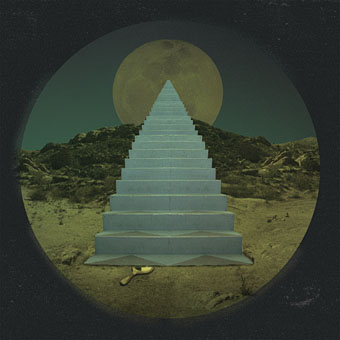
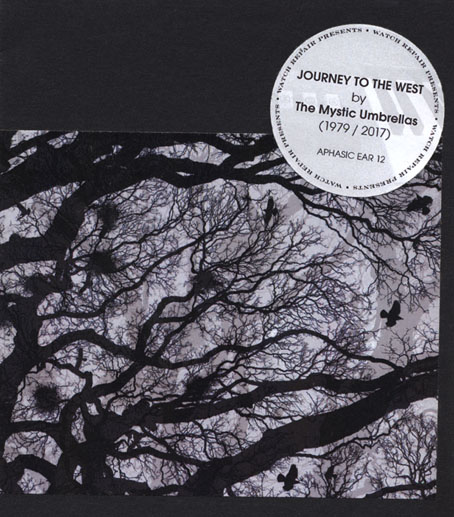
A pair of albums by friends of mine are released this month: the first, Journey to the West (1979–2017) by Watch Repair presents The Mystic Umbrellas, has been gestating for several years; the second, Dreaming Dangerous Rainbows by Albatross Project, came together very quickly earlier this year after song sketches led to an album that none of the participants had originally planned. I designed both releases so I have more than a passing interest.
mu3.jpg

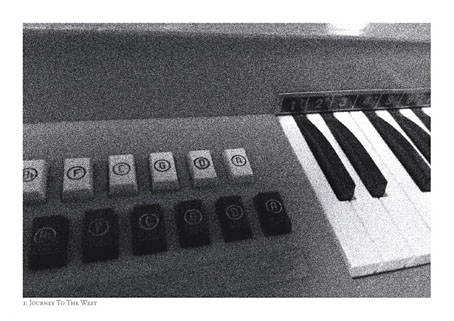
The Mystic Umbrellas project will probably be of most interest to regular readers since it evolved from a couple of very minimal organ recordings made in 1979 by Mark Valentine. Mark is well-known today as a writer of weird fiction, and also an editor and publisher of the same, but in the early 1980s he was involved briefly with the British wing of the independent cassette scene, a micro-budget offshoot of the post-punk DIY ethos which spurred many amateur (or non-) musicians to create and release their own musical works on limited-edition cassettes. The UK manifestation of this scene tended either to imitate higher profile post-punk artists (some of the better examples may be heard on the recent Cherry Red compilation, Close To The Noise Floor) or indulge in a very British form of what might be called Low Surrealism, although “absurdity” is probably a more accurate definition. (A UK label of the time was even named Absurd Records.)
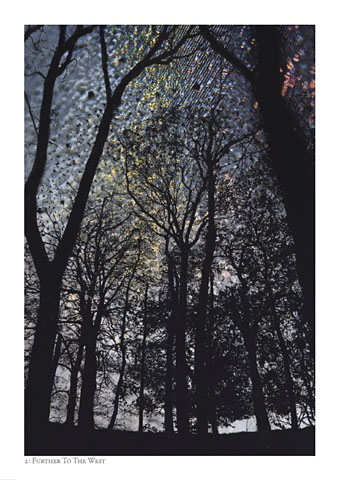
mu4.jpg

Photocard by Deborah Judd.

Mark’s Mystic Umbrellas pieces—Journey To The West, Radio Dromedary (a short-wave radio capture) and Rainsborough’s Grave 1 & 2—were released on separate cassette compilations, Deleted Funtime (1980) and National Grid (1981). My friend in Watch Repair (who is happy to remain otherwise anonymous) bought both cassettes, and marked out the Mystic Umbrellas pieces as favourites for their qualities of melancholy and restraint; the organ recordings were very different from the post-punk fumblings or the absurdity in evidence elsewhere. The cassettes sat in a box for years until the same friend decided to try using them as source material for some of his sound processing experiments; these experiments eventually yielded a suite of marvellously atmospheric extensions/transmutations which mutate the recordings beyond recognition but which remain faithful to the haunting qualities of the originals. The precedence for this kind of repurposing would include Jon Hassell’s Magic Realism (1983) and some of the recent works of Thomas Köner, but Mystic Umbrellas and Watch Repair are in a territory of their own.
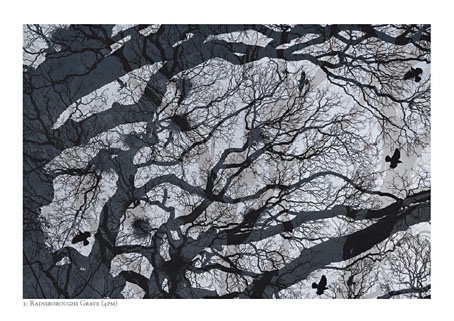
mu5.jpg

Photocard by Deborah Judd.

While working on the design for this release I kept ruminating on the curious net of connection and coincidence around these recordings. After buying the Deleted Funtime cassette my Watch Repair friend contacted one of the other artists, “Stabmental”, to ask about similar recordings. Stabmental was a name used by Geoff Rushton for his post-Throbbing Gristle musical experiments and an Industrial music fanzine; a couple of years later he joined Psychic TV and changed his name to John Balance. Geoff/John was later in Coil, of course, and a decade after this was in correspondence with me having been greatly impressed with my Lovecraft art in The Starry Wisdom anthology. My earlier Lovecraft story, The Haunter of the Dark, had been published in a large-format edition in 1988 by Caermaen Books, an imprint run by a pair of Arthur Machen enthusiasts, Roger Dobson and Mark Valentine. It was shortly after my first meeting with Mark and Roger that my Watch Repair friend realised that Mark must be the Mystic Umbrellas person so the Lovecraft artwork helped remind us of the Deleted Funtime cassette. The same cassette surfaced again a few years ago when it was sold to an obsessive Coil collector who wanted it for the Stabmental piece. That sale led to the cassette being digitised before it was let go, and the digitisation process led to these recordings.
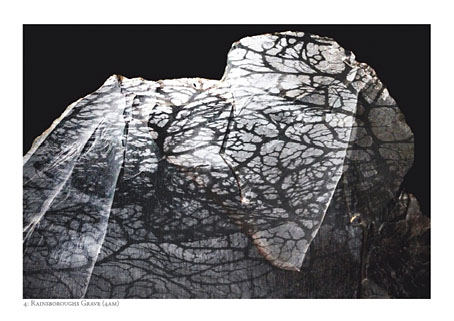
mu6.jpg

Photocard by Deborah Judd.

Things got even more tangled earlier this year when I was working on the final layout while also reading the expanded edition of England’s Hidden Reverse, David Keenan’s fascinating history of Coil, Current 93 and Nurse With Wound. Keenan discusses the independent cassette scene (and mentions Stabmental) so all the above was circling in my head once more; but I really wasn’t expecting the instance when Keenan goes into David Tibet’s enthusiasm for Arthur Machen by including a page of explanation from a Machen expert…Mark Valentine. In Mark’s notes for the Watch Repair release he describes the origin of the Mystic Umbrellas name which came about during a rainy day-trip to Glastonbury. Somerset’s most mystical town includes Chalice Well among its complement of New Age tourist traps; shortly after finishing England’s Hidden Reverse I was re-reading a typically wild interview with Alejandro Jodorowsky in which he proposes that the humble umbrella is in fact a black chalice, and that the knights of the Round Table are searching for a Holy Grail that’s actually an umbrella. A mystic umbrella, in other words. Elsewhere in the same interview he expounds on the symbolism of the Black Sun, a favourite symbol of Coil’s. (And Coil for a short while had a Chalice record label…) By this point I’d ceased to be surprised, the endless chain of connections seemed inevitable.

albatross1.jpg

After all the above the album by Albatross Project risks seeming a little mundane, although grounded (one meaning of “mundane”) would be better. The origin this time was a series of poems written by Roger (that’s him on the cover) from 1972 to 1986. These were set to music by Dan of Warper’s Moss and Watch Repair. (Nobody in this group is offering their surnames so you’ll have to accept the circumspection.) Everyone involved was surprised by the quality of the resulting songs, not least Roger who wrote the words sporadically while travelling the world in his youth. Dan and friends have been writing songs and playing in bands since the 1980s which is why they were able to produce such an accomplished album in a matter of months. Musically, this is quite straightforward: well-crafted songs in a rock idiom which had me thinking at times of Pink Floyd circa 1972 (fitting since several of the musicians are from the Floyd-worshipping environs of Merseyside). But it also owes something to the Elektra years of the early 70s (as does my design), and the period flavour harks back to the time and experiences that Roger was writing about.
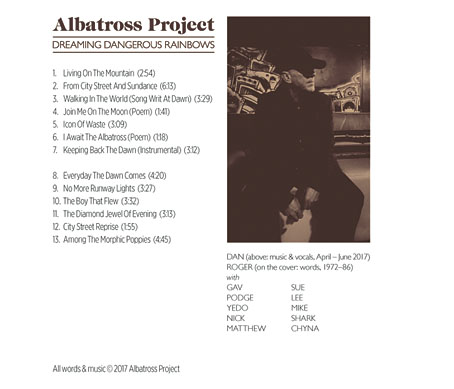
albatross2.jpg

Both albums are available via Bandcamp. The hard format of Dreaming Dangerous Rainbows is a CD-R in a jewel case while the Mystic Umbrellas hard format is a lavish hand-crafted package that includes copious notes and four art cards, three of which feature Deborah Judd’s evocative photo montages. The latter package will be strictly limited. Original copies of the Deleted Funtime cassette command high prices among Coil collectors but the curious (or foolhardy) may download a copy at Die or DIY?

Previously on { feuilleton }
The Polarities by Watch Repair
Seven Harps by Warper’s Moss
The Tidal Path by Watch Repair
Watch Repair

Being PrEPared

prepdiaries.jpg

I don’t know when I first noticed that the word “introvert” contains the word “invert” but if I require a shorthand self-identification beyond the vocational then “introvert invert” is a suitable candidate. Being an introvert isn’t always easy in a resolutely extrovert world, but being an introvert invert has considerable drawbacks, such as how you meet anyone like yourself when the available meeting places—club and bars—inspire severe loathing. Clubbing is no longer the only option now that we have online dating (and gay clubs have been dying off in any case…) but the options were few in the 1980s. It’s impossible for me to think about any of this without considering that if I wasn’t such an introvert I might not be alive today. I was 20 in 1982 when the AIDS epidemic was starting to travel the world; had I been more gregarious I might have been investigating all those wretched clubs and bars instead of sitting at home, listening to music and drawing pictures.

aids.jpg

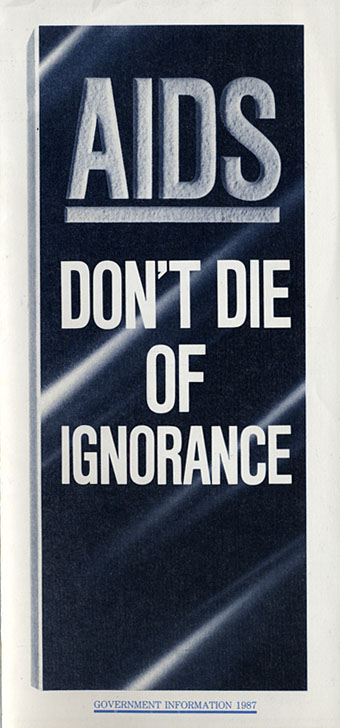
The Thatcher government only started to get serious about HIV/AIDS in 1987 when this information leaflet was delivered to every household in Britain. (See scans of the whole thing here and here.) There was also an accompanying public information film narrated by John Hurt, and directed by Nicolas Roeg, of all people. It was quickly replaced with other films that were less apocalyptic.

Whatever your attitude to nightlife, if you were gay in the 1980s then AIDS was omnipresent even before it became an issue that politicians dared to discuss in public. I remember when Patrick Cowley died (November 1982); I remember when Klaus Nomi died (August 1983); I bought the Panic/Tainted Love single by Coil when it was released (May 1985), the profits of which went to AIDS charity The Terrence Higgins Trust (the first record release to make such a donation). Coil’s doom-laden Horse Rotovator album from 1986 was shaped by the group’s experience of watching many of their friends succumb to illness and death. There were many other such responses, one of the greatest being the monumental Masque Of The Red Death album cycle by Diamanda Galás, dedicated to Galás’s brother and her friends who were killed by the epidemic. I can’t think of artist and writer Philip Core without remembering the interview he gave to The Late Show from his hospital bed in 1989, a hollow-eyed ghost of his former self. The accumulated fear and paranoia of a dark decade lingered into the 1990s even after condom-use had become widespread and HIV became manageable with drug treatments.

aidsad.jpg

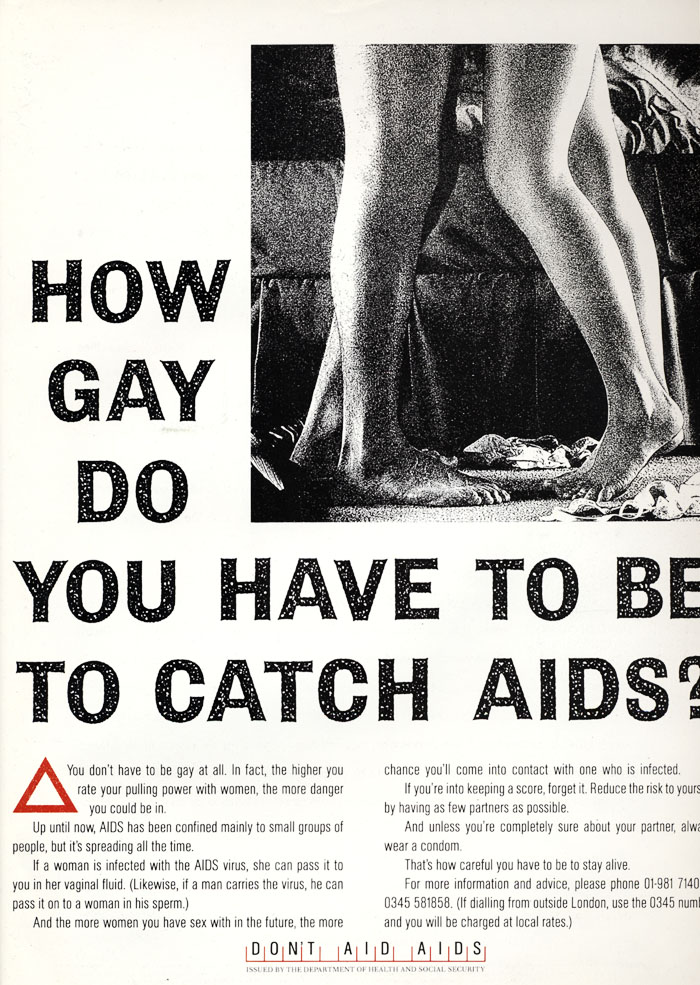
More from the fun decade. A government health ad from The Face magazine, February 1987.

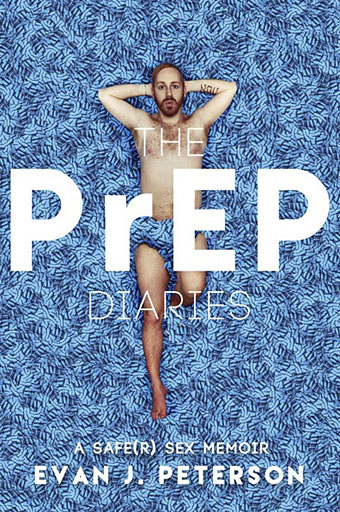
The paranoia of the 1990s is one of the first things that Evan J. Peterson discusses in The PrEP Diaries, an account of growing up gay in America at a time when HIV was treatable but still something to be worried about. Evan is a friend whose previous books have been mentioned here (one of which I contributed to), but this is his first non-fiction title, a witty and enlightening combination of erotic memoir and public service declaration. “PrEP” refers to the drug marketed in America as Truvada, a pre-exposure prophylaxis anti-viral medication which has been gaining use in the US as a preventative treatment for HIV. The drug’s use is recommended primarily to partners of those who are HIV+ but it’s also being recommended to gay men with active sex lives as an additional safeguard against HIV. I’ve been aware of Truvada for several years but since it still isn’t easily available in the UK I’ve not followed the discussion around its use or effectiveness very closely.

One of the reasons for Evan writing The PrEP Diaries was to widen the discussion about PrEP/Truvada by showing how his own use of the medication has helped dispel the paranoia he felt about HIV risks, a paranoia that had been with him since childhood. He was born in 1982, the year that AIDS first began to make headlines so he’s of a generation that has never known a time without the risk of HIV. One of the notable things about his book is the way it shows the substantial differences of experience between the gay and straight worlds, differences that persist even as legislative equality grows. Sexual risk is one of these differences, something you’re always aware of if you’re gay or bisexual but which the straight world seldom considers at all. I have a half-brother who’s a few years older than Evan, and two nephews who are a decade younger; all are straight, and I doubt that any of them have given more than a moment’s thought to the idea that sexual activity could have life-changing consequences even though viruses don’t care about your sexuality. HIV can be kept under control today yet it continues to spread, in part because the serious concerns of previous decades are no longer prevalent. You can’t go on any gay dating site without eventually seeing someone with “poz” in their name or some other indication (usually a + symbol) of their HIV status. One of the benefits of PrEP that Evan discusses is its helping people who are HIV+ to find more partners as well as protecting those partners from infection. He also emphasises something you seldom see mentioned in general discussion of HIV, that positive status doesn’t describe a single condition; some people are positive but undetectable, meaning that their viral load is extremely small.

Continue reading “Being PrEPared”

Weekend links 363

sommers.jpg

The Constant Drumbeat of Terrible News (no date) by Allison Sommers.

• Nadia Khomami on Gay UK: Love, Law and Liberty, an exhibition at the British Library. Related: Simon McCallum‘s potted history of LGB characters on British screens. Elsewhere: writer and philanthropist Chuck Forester on gay sex in the 1970s.

The Panic Fables: Mystic Teachings and Initiatory Tales by Alejandro Jodorowsky. Finally available in English, a collection of all the comic strips written and illustrated by Jodorowsky when he was living in Mexico in the 1960s.

• A trailer for the restored print of The Fabulous Baron Munchausen (1961) by Karel Zeman. Related: collage designs by Graphic Manipulator for a Japanese collection of Zeman’s films.

• “Whether divining ancient wisdoms or elevating the art of cold reading, Tarot is a form of therapy, much like psychoanalysis,” says James McConnachie.

James Reith on “the Icelandic publisher that only prints books during a full moon – then burns them”.

• Mixes of the week: Wire 400 Mix #6 by Emptyset, and Secret Thirteen Mix 223 by Constantine.

• Mud And Flame: Penda’s Fen re-examined by Matthew Harle and James Machin.

Tilda Swinton in a Leonora Carrington-inspired fashion shoot for i-D magazine.

• At Dennis Cooper’s: Spotlight on William Burroughs’ The Wild Boys.

Applied Ballardianism: A Theory of Nothing by Simon Sellars.

• At Dangerous Minds: The Dark Rift by Jim Jarmusch’s Sqürl.

French Underground Rock: 1967–1980; a Discogs list.

Suzanne Ciani‘s favourite albums.

Infinite artwork: Untitled, 2017

Rip, Rig And Panic (1965) by The Roland Kirk Quartet | Panic (1984) by Coil | Flash Of Panic (1994) by Axiom Ambient

Weekend links 362

yoshi47.jpg

A mural for Forest For The Trees, 2016, by Yoshi47.

• “Who’s the real cunt?” Andrew O’Hagan on the Daily Mail‘s hypocrisies, Little England bigotries and omni-outrage in a review of Mail Men: The Unauthorised Story of the ‘Daily Mail’, the Paper that Divided and Conquered Britain by Adrian Addison.

Deutschlandspiegel 198/1971: a short film at the German Federal Archive which includes footage of Popol Vuh (still in their electronic phase) six minutes in.

• A meeting of remarkable minds: a live radio discussion between Annea Lockwood and Pauline Oliveros from December 1972.

The House In The Woods (aka Martin Jenkins of Pye Corner Audio) at Rare Air, Seattle, 14th May 2017.

• “Peaceful but not to be messed with.” Tony Naylor on how the bee came to symbolise Manchester.

• Mixes of the week: FACT Mix 602 by Deathprod, and Secret Thirteen Mix 222 by Yuji Kondo.

Emptyset and Mouse On Mars’s Jan St Werner on space, time and the evolution of sound.

• At Indiegogo, a funding call for Subotnick: Portrait of an Electronic Music Pioneer.

Shannon Taggart’s Camera Fantastica: an interview by Peter Bebergal.

Study finds mushrooms are the safest recreational drug.

Mary Anne Hobbs‘ favourite albums.

Bumble Bee Bolero (1957) by Harry Breuer | Bee Stings (1998) by Coil | The Bees Made Honey In The Lion’s Skull (2008) by Earth