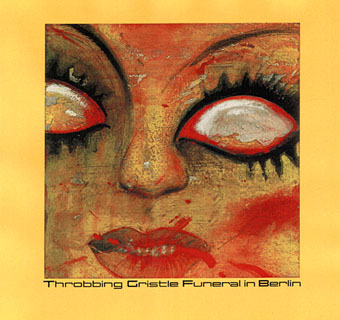
Val Denham album covers

denham01.jpg

Funeral In Berlin (1981) by Throbbing Gristle.

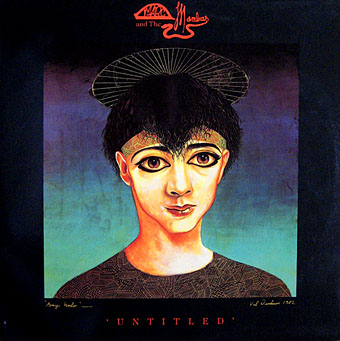
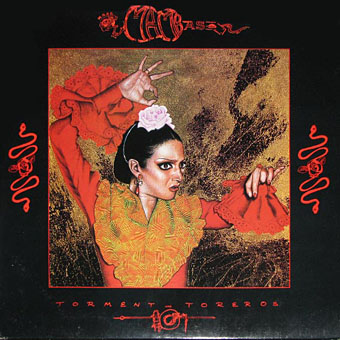
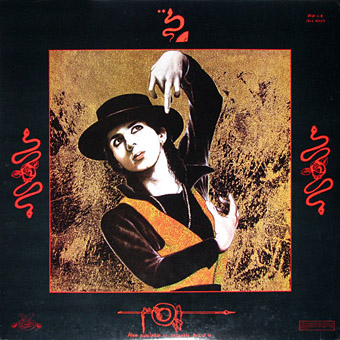
British artist and musician Val Denham was mentioned in yesterday’s post so I thought it worthwhile following up with a selection of the painter’s record sleeves. Denham’s art stood out for me when I first saw the cover of Throbbing Gristle’s Funeral In Berlin album, and for its visceral immediacy this is still a big favourite. The early 1980s were the perfect time for Denham’s paintings to appear on record sleeves, the diminished area of CD packages providing a poor stage for work that’s this vivid and dramatic. Her associations with Throbbing Gristle extended to work with Marc Almond, a cover for the Some Bizzare compilation If You Can’t Please Yourself You Can’t, Please Your Soul which featured ex-TG members Coil and Psychic TV, and further associations with Coil via allies Black Sun Productions. Many of these connections can be explored at Denham’s detailed website which has a great gallery section showing work in a variety of media from the past thirty years. Her art is surreal, intense, often disturbing, and deeply personal in its exploration of shifting gender boundaries. Isn’t it time someone published a Val Denham book?

Some cover samples follow. More can be seen at the artist’s website.
denham02.jpg

Untitled (1982) by Marc and The Mambas. Design by Huw Feather.
denham03.jpg

Torment And Toreros (front, 1983) by Marc and The Mambas. Design by Huw Feather.
denham04.jpg

Torment And Toreros (back, 1983) by Marc and The Mambas. Design by Huw Feather.
Continue reading “Val Denham album covers”

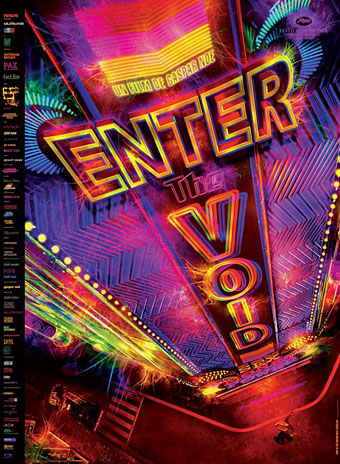
Enter the Void

etv01.jpg

It’s taken me a while to see this but the long search for a genuinely psychedelic feature film is over. That’s genuinely psychedelic not in the debased sense of a handful of garish or trippy visuals, but in the full-spectrum expanded-consciousness sense for which Humphrey Osmond invented the term in 1956:

I have tried to find an appropriate name for the agents [psilocybin, mescaline, LSD, etc] under discussion: a name that will include the concepts of enriching the mind and enlarging the vision. My choice, because it is clear, euphonious, and uncontaminated by other associations, is psychedelic, mind-manifesting.

Other films have given us flashes of this kind of unfiltered experience—Chas’s mushroom trip in Performance (1970), for example—or attempted to relay LSD states through Hollywood conventions: The Trip (1967) and Altered States (1980). Then there are inadvertently psychedelic moments such as the Star Gate sequence in 2001: A Space Odyssey (1968). Some of the most successful works from a psychedelic perspective have almost always been abstract, micro-budget films such as those made by James Whitney, Jordan Belson, Ira Cohen and others. But until very recently no-one had attempted to combine the narrative-free intensity of abstract cinema with a film narrative that would warrant placing psychedelic experience at the heart of the story. I was hoping A Scanner Darkly (2006) might do it but, good as it was, it didn’t really get there. Gaspar Noé’s Enter the Void is the film that gets everything right.

etv02.jpg

Linda and Oscar.

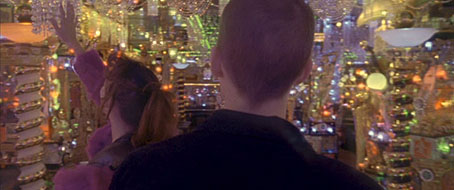
The narrative is a simple one (Noé calls his story a “psychedelic melodrama”): Oscar, a young American drug-dealer living in Tokyo smokes DMT, trips out for a while then goes to exchange some goods with a customer in a small club called The Void. While there he’s shot and killed in a police raid. His disembodied consciousness leaves his body, and for the next two hours wanders the streets and buildings following his beloved sister, Linda, and his friends while they cope with the aftermath. Later on he starts to re-experience memorable (and traumatic) moments from his life. The Big Signifying Text in all of this is introduced in the opening scene: The Tibetan Book of the Dead. Oscar hasn’t read much of it so his friend Alex quickly relates (for the benefit of the audience) the book’s description of what happens to the soul between the time of death and rebirth into a fresh human body. A few minutes later we’re with Oscar experiencing this very process in dizzying, miraculously-filmed detail. Flicking through my own copy of The Tibetan Book of the Dead (OUP, 1960) one paragraph in the introduction had particular relevance:

The deceased human being becomes the sole spectator of a marvellous panorama of hallucinatory visions; each seed of thought in his consciousness-content karmically revives; and he, like a wonder-struck child watching moving pictures cast upon a screen, looks on, unaware, unless previously an adept in yoga, of the non-reality of what he sees dawn and set.

WY Evans-Wentz

etv07.jpg

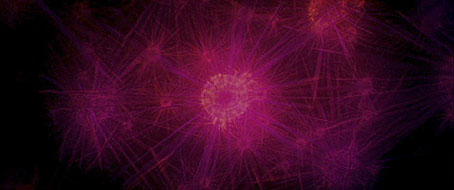
This is your brain on drugs: the DMT trip.

Continue reading “Enter the Void”

Weekend links 86

alastair.jpg

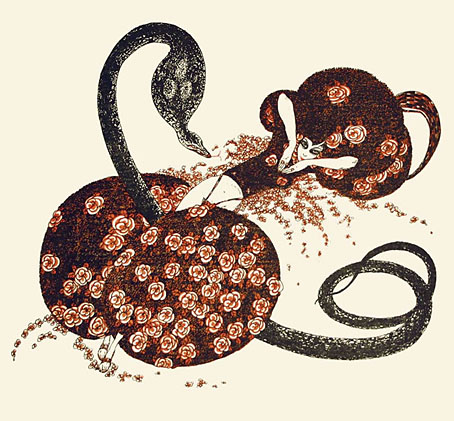
Salammbô by Alastair (Hans Henning Voigt) from Harry Crosby‘s Red Skeletons (1927). Dover published a new collection of Alastair’s drawings in September.

A Taste of Honey showed working-class women from a working-class woman’s point of view, had a gay man as a central and sympathetic figure, and a black character who was neither idealised nor a racial stereotype.” RIP Shelagh Delaney. Related: Shelagh Delaney’s Salford (1960), directed by Ken Russell, and all 47 minutes (!) of The White Bus (1967), Lindsay Anderson’s strange, pre-If…. short, written by Shelagh Delaney, filmed in and around Manchester.

Since birth I’ve craved all things psychedelic, the energy and beauty of it. The pleasure… […] But in the US the exploration of consciousness and its powers—or really any curiosity about anything at all—is actively discouraged, because the system is so corrupt that it depends on people being virtually unconscious all the time. Burroughs cracked that code long ago. Spirituality here equals money; no one seems to be able to think, never mind explore their own consciousness.

Laurie Weeks: Making Magic Out of the Real

• Ian Albinson shows us The Title Design of Saul Bass while Ace Jet 170 has a copy of the new Bass monograph.

Kris Kool (1970) at 50 Watts, Philip Caza’s lurid, erotic, psychedelic comic strip.

lilien.jpg

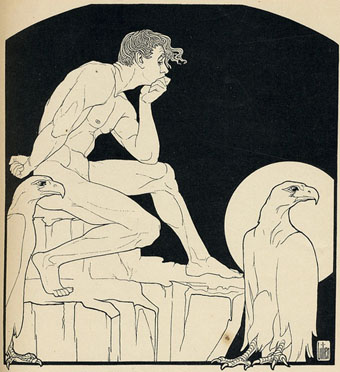
Götz Krafft by EM Lilien from a collection at Flickr.

Serious Listeners: The Strange and Frightening World of Coil.

The Octopus Chronicles, a new blog at Scientific American.

• We now live in a world where there are Ghost Box badges.

Kilian Eng interviewed at Sci-Fi-O-Rama.

Dalí Planet

Bedabbled!

A Taste of Honey (1962) by Acker Bilk | A Taste of Honey (1965) by Herb Alpert’s Tijuana Brass | A Taste of Honey (Moog version) (1969) by Martin Denny.

Weekend links 72

lesyeux.jpg

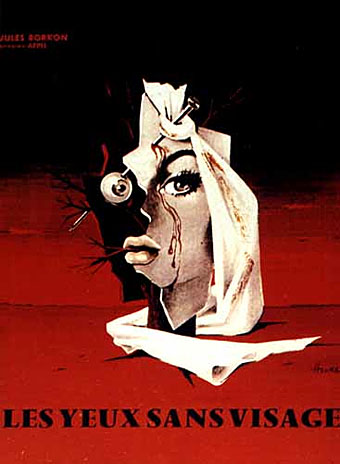
If Jean Cocteau had made a horror film it might have resembled George Franju’s dreamy and disturbing body-horror masterwork Les Yeux Sans Visage (1960). I’ve not been able to trace the artist for this poster but it’s a good example of the diluted Surrealism which was still prevalent in poster graphics at this time.

If I were asked what’s needed today, I’d say innovation, and greater timbral variety. If you truly want the audience to experience the clammy thrill of the grotesque, the uncanny and the fearful, you have to reach for the unfamilar, the perplexing, even the ugly; there’s an infinite Lovecraftian sound-world out there waiting to be explored. We need new combinations, new textures in film scoring. Horror has a licence to be weird – it’s supposed to mess with our heads. (more)

Stephen Thrower.

Stephen Thrower is an ex-member of Coil, a current member of Cyclobe, was the editor of a great magazine, Eyeball, devoted to horror cinema and what Kim Newman (casting about for a wider, non-generic label) calls “nightmare movies”, and is the author of Nightmare USA and Beyond Terror: The Films of Lucio Fulci. In other words, he’s more than qualified to write about horror film soundtracks. The reason is an event at the South Bank Centre, London, two weeks from now, Sound of Fear: The Musical Universe of Horror, one of the highlights of which will be a performance by John Carpenter’s soundtrack collaborator Alan Howarth. Related: my post about Italian horror soundtracks from 2008.

lovato.jpg

Art by Justin Lovato.

Mind Over Matter: Alan Fletcher’s The Art of Looking Sideways. “The Art of Looking Sideways captures the sensory overload of contemporary visual culture, while also acting as a primer in visual intelligence.” Related: Alan Fletcher profiled at the Design Museum.

• More music and more psychedelia: Past Present Future Space-Time “Wysing Arts Centre explores the legacy of psychedelia in this year’s annual music event”.

The Coilhouse International Silent Auction is GO and ends Sunday night if you want to bid for some rare and special things.

The Garden of Kama and Other Love Lyrics from India (1901), illustrated by John Byam Shaw.

• Chris Marker’s take on the recent London riots: Overnight.

• Bristol’s graffiti artists are redecorating the city’s streets.

• Women and knives: a Dario Argento poster gallery.

Inferno (1993) by Miranda Sex Garden, from their album Suspiria.

Weekend links: fifth anniversary edition

demuth.jpg

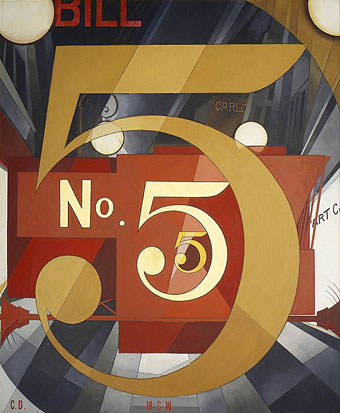
The Figure 5 in Gold (1928) by Charles Demuth.

It’s a little surprising to find I’ve been doing this for five whole years yet here we are. Having seen a number of blogs call it quits at the five-year point I should note that I don’t feel quite that exhausted although maintaining a discipline of daily posting can be a chore at times, especially when you’re pressured by work. On the whole the advantages continue to outweigh the disadvantages. Some of the discoveries here have fed back into things I’ve been working on or opened avenues for future exploration. Researching something for an audience (however slight that audience or the resulting post) encourages you to look more deeply into a given subject; sometimes you learn more as a result and occasionally make surprising discoveries. Obsessions are teased out which might otherwise have lain dormant. Yes, it’s an extra bout of work but I’ve spent much of my life saying to people “if you like that, you may like this”, and that’s all many of these posts are doing.

This year promises to be an interesting one so watch this space. And, as always, thanks for reading!

John x

On to the links…

Cathedral Scan translates the architectural plans of Gothic cathedrals into open-ended musical scores via custom software. There’s more at Blake Carrington‘s website.

Forty-three William Burroughs recordings (tape experiments and readings) at the Ubuweb archives.

• The opening scene of Deadlock (1970), an obscure German film with a theme by the mighty Can.

Strange Lands: A Field-Guide to the Celtic Otherworld, a new book by Andrew L Paciorek.

• The enduring nature of Frankenstein, currently on stage at the National Theatre, London.

shimojo.jpg

Owl One (2004) by Yuri Shimojo.

¡Activista! by Sonny Smith: Drag Queens, Borders, Rivers, Death and Transformation.

• Estonian sculptor Mati Karmin makes furniture out of Russian anti-submarine mines.

Alan Moore’s contribution to the Save Our Libraries campaign.

• Innsmouth Free Press is raising funds for their running costs.

A history of queer street art (Facebook link, unfortunately).

Illuminated book design for Heston’s Fantastical Feasts.

Physica Sacra, an engraving set at Flickr.

Egypt (1985) by Tuxedomoon | Egyptian Basses (1998) by Coil | Soleil D’Egypte (2001) by Natacha Atlas.