I:MAGE: An Exhibition of Esoteric Artists

francov.jpg

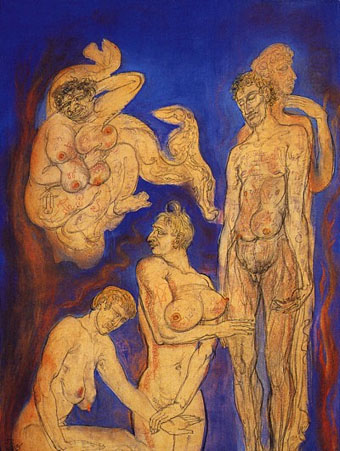
El Trigono de las lesiones (2010) by Cristina Francov.

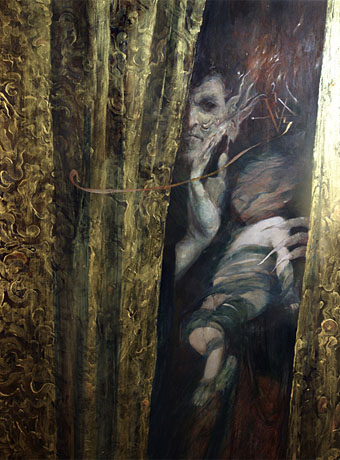
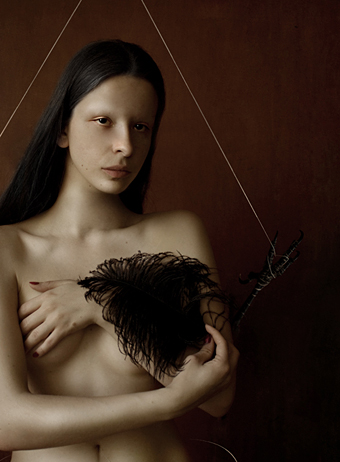
I:MAGE is an exhibition of occult-inspired art which opens a week on Sunday, 19th May at the Store Street Gallery, Bloomsbury, London. As exhibitions go it’s modest in scale but with an impressive roster of contributors old and new: Agostino Arrivabene, Ithell Colquhoun, Denis Forkas Kostromitin, Steffi Grant, Orryelle, David Chaim Smith, Michael Bertiaux, Andrew Chumbley, Cristina Francov, Barry William Hale, Francesco Parisi, Austin Osman Spare, Jesse Bransford, Peter Dyde, Rik Garrett, Noko, Residue, and Michael Strum. A few examples of the work on display are shown here, some of which will be available for purchase.

The event is being organised by Fulgur Esoterica, and their website has details of some related events including John Constable’s one-man play, Spare (about artist Austin Osman Spare), a one-off performance which will be held at Treadwell’s, London, on the 24th. This catches my attention because Constable was responsible for the acclaimed theatre adaptation of Mervyn Peake’s Gormenghast which David Glass and company staged in the 1990s. It’s always good to find one’s favourite people joined through these lateral connections.
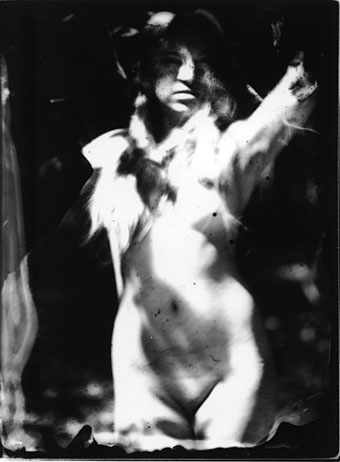
garrett.jpg

The Earth Magic Series (2012) by Rik Garrett.
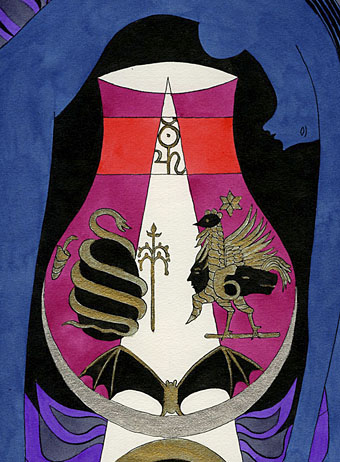
grant.jpg

Steffi Grant.

kostromitin.jpg

Demon by Denis Forkas Kostromitin.
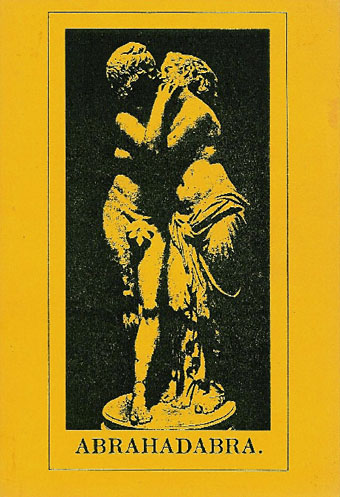
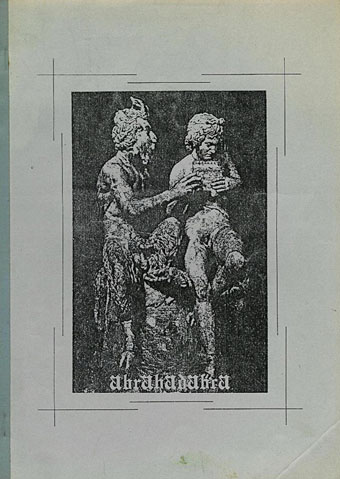
Abrahadabra

abrahadabra01.jpg

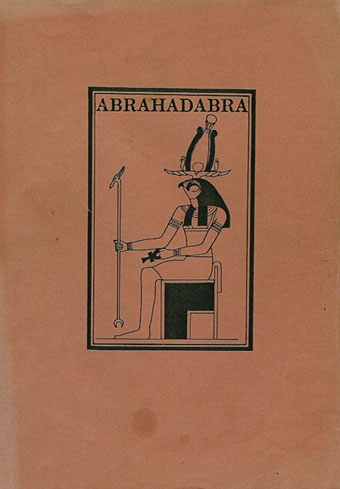
01 First (1985).

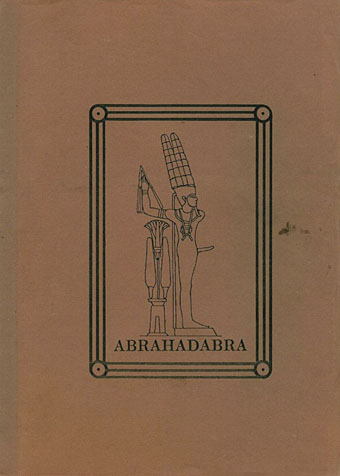
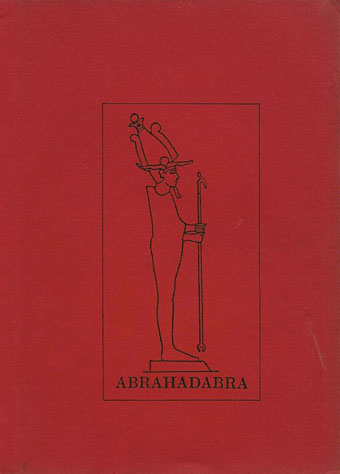
I’ve linked to so many publications at the Internet Archive I’m a little surprised it’s taken me this long to find something featuring my own work. Abrahadabra was a Dutch periodical covering subjects familiar to readers of the esoteric magazines of the 1980s (RE/Search, Rapid Eye, etc): Industrial music of the TG/Psychic TV/Coil variety, transgressive writers such as Burroughs, Ballard and Bataille, weird fiction of the Lovecraft/Machen school, and a heavy emphasis on occultism. My friend Ed was one of the contributors which is how my Pan drawing ended up in the Witches issue in 1987.

For a publication with minimal resources the production was often impressive, the drawing on the cover of the Austin Spare issue, for instance, being printed in silver ink on black paper. The contents were mostly in Dutch but each issue featured interesting and often original graphics. I also drew a small Horus head for issue 11 (which I’d forgotten about until I saw it again), whose title design was used on the cover of issue 12. Some of the other issues I hadn’t seen before so it’s good to find them scanned and easily available. The 1980s was the last time print was used as the primary medium for underground culture to talk to and disseminate itself. By the end of the decade many of the small magazines had either evolved—both RE/Search and Rapid Eye turned into books—or expired. The final Abrahadabra is dated 1990.

abrahadabra02.jpg

02 Second (1985).

abrahadabra03.jpg

03 Third (1985).

abrahadabra04.jpg

04 Sex (1985).

abrahadabra05.jpg

05 Derangement (1985).

Continue reading “Abrahadabra”

Green Pipes: Poems and Pictures

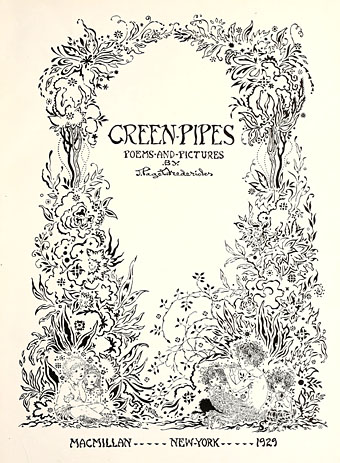
jpf01.jpg

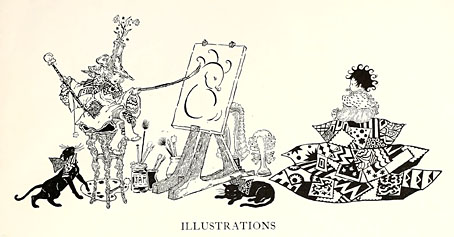
This is a strange book. Green Pipes: Poems and Pictures (1929) was written and illustrated by Joseph Rous Paget-Fredericks (1903–1963), a man better known these days for a substantial collection of memorabilia and archive material related to 20th-century dance. Paget-Fredericks studied with Léon Bakst then went on to create his own costume designs as well as producing some books for children of which this is an example. In style the poems aim at AA Milne’s When We Were Very Young but succumb to tweeness with a superfluity of fairies and pixies. At first glance the illustrations seem just as twee until you notice remarkable details such as costumes and foliage created from a wealth of disconnected lines and squiggles. The drawing of a Smoke Sprite is closer to something by Alastair than EH Shepard, while the Snow Fairy is the vaguest outline in a dress composed of circles, lines and dots. The Green Pipes of the title are the pipes of Pan, and so we get a late eruption of that peculiar flourishing of Pan Mania that extends from the 1890s to the 1930s. A book of children’s poetry isn’t the place you’d expect to encounter flower children kneeling before a piping faun but after the openly Pantheist chapter of The Wind in the Willows anything is possible. Far more out of place among all the fairies is a painting of a pirate brandishing a bloody cutlass. And what are we to make of the lines at the end of Elfin Children?

Then from the windowed heights we stream
By silent starlit mire…

The Starlit Mire (1911) was a book of epigrams by James Bertram & F. Russell illustrated by Austin Osman Spare (with a head of Pan blocked onto the cover). It’s not at all a book for children so the occurrence of that phrase in Paget-Fredericks’ poem is very surprising. Is “starlit mire” a quote that precedes the Bertram & Russell book? Please leave a comment if you know.

Read Green Pipes online here or download it here.

jpf02.jpg

jpf03.jpg

Continue reading “Green Pipes: Poems and Pictures”

Weekend links 84

enok.jpg

Regeneration (2011) by Toshiyuki Enoki. Via.

HIDE/SEEK: Difference and Desire in American Portraiture, the art exhibition that caused such a fuss last year at the Smithsonian Institution, opens at the Brooklyn Museum, NYC, on November 18th. Among the events associated with the show is a screening of James Bidgood’s lusciously erotic Pink Narcissus. David Wojnarowicz’s video piece, A Fire in My Belly, is still a part of the exhibition so the New York Daily News reached for the outrage stick to prod some reaction from people who’d never heard of the artist or his work before. Will history repeat itself? Does the Pope shit in the woods? Watch this space…

Magic is not simply a matter of the occult arts, but a whole way of thinking, of dreaming the impossible. As such it has tremendous force in opening the mind to new realms of achievement: imagination precedes the fact. It used to be associated with wisdom, understanding the powers of nature, and with technical ingenuity that could let men do things they had never dreamed of before. The supreme fiction of this magical thinking is The Arabian Nights, with its flying carpets, hidden treasure and sudden revelations…

Marina Warner, whose new book, Stranger Magic: Charmed States and the Arabian Nights, is reviewed here and here.

• Those Americans who adore big business but loathe the idea of gay marriage will be dizzy with cognitive dissonance at the news that 70 major US companies—including CBS, Google, Microsoft and Starbucks—have signed a statement saying the Defense of Marriage Act (DOMA) is bad for business. Mark Morford at SFGate says this now means that real homophobes don’t Google.

Divining with shadows and dreams, tears and blood: S. Elizabeth talks to JL Schnabel of BloodMilk about her “supernatural jewels for surrealist darlings“.

Earth: Inferno (2003), a short film by Mor Navón & Julián Moguillansky based on the book by Austin Osman Spare. Via form is void.

finlay.jpg

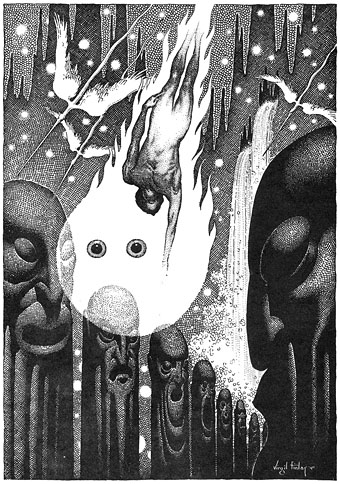
Illustration by Virgil Finlay for A. Merritt’s The Face in the Abyss. From a 1942 Finlay portfolio at Golden Age Comic Book Stories.

The Mute Synth as created by Dirty Electronics & designed by Adrian Shaughnessy.

Phil Baker reviews two new Aleister Crowley biographies at the TLS.

A Brief Rant on the Future of Interaction Design

The Most Amazing Room In Queens, NYC.

Brian Eno on composers as gardeners.

Alan Turing is Alan Garner’s hero.

• Paintings by Guy Denning.

Static (1998) by Redshift | The Owl Service (2000) by Pram | Lover’s Ghost (2010) by The Owl Service.

Murmur Become Ceaseless and Myriad

spare.jpg

Efflaration (1952) by Austin Osman Spare.

The Austin Spare revival continues with another exhibition, Murmur Become Ceaseless and Myriad at Flat Time House, London, curated by Mark Titchner. Unless I’ve missed something this is a significant moment since it’s the first time Spare’s work has been paired with that of a more contemporary artist, the late John Latham (1921–2006) whose former home provides the exhibition space.

Biographically, the artists have a lot in common: a reticence to engage with the art establishment or the commercial art market; superficial correspondences with the work of their contemporaries but isolation by force of their ideas. The artistic genius of both these artists was, in the main, recognised by their peers, even if the subject of their work was not entirely understood.

In spite of this, discussion of Spare’s practice has largely related to arcana and magic, despite his training in fine art and early mainstream successes. Conversely, Latham’s work has been understood primarily in relation to the conceptual art practices of the 1960s and 70s. This exhibition broadens these perspectives, presenting their work in the context of two parallel experimental practices. (more)

There’s also a somewhat tenuous connection between the pair in the figure of Alan Moore, a Spare enthusiast who in 1992 appeared with John Latham and a number of other literary and artistic types in The Cardinal and the Corpse, a TV film by Iain Sinclair and Chris Petit which really ought to be on YouTube but isn’t. It’s worth a watch if you can find a copy. Murmur Become Ceaseless and Myriad runs until 30th October.

Previously on { feuilleton }
Kenneth Grant, 1924–2011
New Austin Spare grimoires
Austin Spare absinthe
Austin Spare’s Behind the Veil
Austin Osman Spare