Crystal worlds

finlay.jpg

The Crystal World by JG Ballard. An illustration by Virgil Finlay for the Summer–August 1966 issue of Things To Come, the Science Fiction Book Club mailer.

1: Crystal words

JG Ballard didn’t have a pleasant experience with LSD when Michael Moorcock procured a dose of the drug for him in 1967, describing his acid trip in later years as a “psychotic nightmare”. I’ve often wondered how Ballard’s fiction might have developed in the 1970s if his experience had been a more positive one, something I was thinking about again when re-reading The Illuminated Man, a story collected in The Terminal Beach which was later reworked as The Crystal World, the fourth book in Ballard’s disaster quartet. There’s a psychedelic strain to Ballard’s writing which has long been overwhelmed by the popular enthusiasm for the condensed fictions of The Atrocity Exhibition and the three “concrete” novels of the 1970s: Crash, Concrete Island and High-Rise. The Crystal World was published in 1966 when LSD was still legally available in Britain, and even though the genesis of the book pre-dates the decade’s psychedelic fervour, the bejewelled prose chimes so well with the mood of the time it’s easy to assume it was inspired by psychedelic experience. Many readers thought as much, and in interviews Ballard had to emphasise that the novel was a product of his imagination and nothing more.

illuminated.jpg

The Magazine of Fantasy and Science Fiction, May 1964. Cover art by Ed Emshwiller.

After devastating the planet with plausible disasters in his first three novels, Ballard in The Crystal World offers a distinctly fantastic scenario, in which an interstellar phenomenon (“the Hubble Effect”) is manifesting on Earth as the spontaneous crystallisation of all objects, animate or inanimate. The process begins in isolated areas before spreading worldwide; in keeping with many other Ballard stories from this period, time is responsible for the changes taking place:

Just as a supersaturated solution will discharge itself into a crystalline mass, so the supersaturation of matter in a continuum of depleted time leads to its appearance in a parallel spatial matrix. As more and more time “leaks” away, the process of supersaturation continues, the original atoms and molecules producing spatial replicas of themselves, substance without mass, in an attempt to increase their foothold upon existence.

The Illuminated Man

As with other Ballard stories, the scientific hand-waving is merely a pretext. In The Illuminated Man and The Crystal World “leaking time” provides an excuse to transform areas of Florida swamp and African jungle into glittering arcades of prismatic foliage, where birds are crystallised in mid-flight, reptiles transmute into heraldic emblems, and everything fluoresces with an iridescent radiance. The Illuminated Man is a sketch of the novel, with a different location but similar events, in which a hazardous mutating landscape becomes the stage for a small group characters pursuing each other and their own obsessions. Landscape is the important factor in The Drowned World, The Drought and The Crystal World; all three novels are essentially Surrealist landscapes whose reflections of interior states are the primary interest of the novelist, the narrative and the characters being very much secondary elements. In this respect it’s disappointing that The Crystal World has yet to be brought to life by an inspired illustrator, as we’ll see below. And while the novel may seem to be the least realistic of Ballard’s disasters it has a connection to future events. The Illuminated Man offers one of the first examples in science fiction (maybe the first) of an isolated zone which is being transformed by an extraterrestrial phenomenon, a concept usually credited to the Strugatsky Brothers in their novel Roadside Picnic (1972), and popularised by Andrei Tarkovsky in Stalker (1979). (Algis Budrys had done something similar in an earlier novel, Rogue Moon, but Budrys’s infected zone isn’t located on the Earth.) Tarkovsky’s film would subsequently provide the containment zone around the irradiated region of Pripyat in Ukraine with a template for unauthorised behaviour, where the illicit guides to the region took to describing themselves as “stalkers”. Until my re-read of The Illuminated Man I hadn’t registered Ballard’s reference to an additional outbreak of crystallisation occurring in the Pripet Marshes in what was then the Soviet Union, a vast region that includes the irradiated zone of Pripyat. The Soviet scientists attempt to deal with outbreak in their usual inefficient manner but for the world at large efficiency proves to be of little consequence either way; Ballard’s disasters aren’t problems to be solved, as they would have been for an earlier generation of writers. Global calamity is dealt with by gradual accommodation, and a reconfiguring of the human psyche which eventually comes to accept the altered landscape.


2: Crystal visions

venosa.jpg

Celestial Tree (1976) by Robert Venosa.

The most obvious psychedelic elements of The Crystal World are the novel’s emphasis on rainbow spectra and brilliant lights, the endless descriptions of prismatic diffractions and iridescence. But jewels and crystals are an important feature of psychedelic and visionary experience, a quality that Aldous Huxley explored at length in Heaven and Hell (1956):

Men have spent enormous amounts of time, energy and money on the finding, mining and cutting of coloured pebbles. Why? The utilitarian can offer no explanation for such fantastic behaviour. But as soon as we take into account the facts of visionary experience, everything becomes clear. In vision, men perceive a profusion of what Ezekiel calls “stones of fire,” of what Weir Mitchell describes as “transparent fruit.” These things are self-luminous, exhibit a preternatural brilliance of colour and possess a preternatural significance. The material objects which most nearly resemble these sources of visionary illumination are gem stones. To acquire such a stone is to acquire something whose preciousness is guaranteed by the fact that it exists in the Other World.

Hence man’s otherwise inexplicable passion for gems and hence his attribution to precious stones of therapeutic and magical virtue. The causal chain, I am convinced, begins in the psychological Other World of visionary experience, descends to earth and mounts again to the theological Other World of heaven. In this context the words of Socrates, in the Phaedo, take on a new significance. There exists, he tells us, an ideal world above and beyond the world of matter. “In this other earth the colours are much purer and much more brilliant than they are down here…. The very mountains, the very stones have a richer gloss, a lovelier transparency and intensity of hue. The precious stones of this lower world, our highly prized cornelians, jaspers, emeralds and all the rest, are but the tiny fragments of these stones above. In the other earth there is no stone but is precious and exceeds in beauty every gem of ours.”

In The Illuminated Man Ballard extends his own thoughts about precious stones to touch on the numinous:

Perhaps it is this gift of time which accounts for the eternal appeal of precious gems, as well as of all baroque painting and architecture? Their intricate crests and cartouches, occupying more than their own volume of space, so contain a greater ambient time, providing that unmistakable premonition of immortality sensed within St Peter’s or the palace at Nymphenburg. By contrast the architecture of the 20th century, characteristically one of rectangular unornamented facades, of simple Euclidean space and time, is that of the New World, confident of its firm footing in the future and indifferent to those pangs of mortality which haunt the mind of old Europe.

moreau.jpg

A moment of frozen time: Salome Dancing Before Herod (1876) by Gustave Moreau.

There’s an overt spirituality to The Illuminated Man and The Crystal World (both stories feature priests among their small cast of characters), which again seems psychedelic when placed in the context of crystalline transmutation, and which is diametrically opposed to the hard-edged materialism of the late novels. The second part of The Crystal World takes its title from the short story, with “illuminated” here referring to a process of psychological (or even spiritual) illumination in addition to the more obvious generation of light.

myths.jpg

A late manifestation of the Symbolist Ballard, 1982. Cover art by Bill Botten.

I think of this side of Ballard’s work as less religious than Symbolist, an expression of his enthusiasm for Symbolist art and artists; the opening chapter of The Crystal World has the priest with an artist’s surname, Father Balthus, comparing the gloomy light around Port Matarre to the impending storm in Arnold Böcklin’s Isle of the Dead. The painting chosen to wrap the covers of the first edition of The Crystal World was The Eye of Silence by Max Ernst, a choice almost certainly suggested by Ballard himself who included the same picture in a list of favourite Surrealist paintings for New Worlds. The painting is the closest that Ernst gets to the jewelled settings of Gustave Moreau, an artist whose Byzantine architectures are studded with precious stones.

The Symbolist Ballard surfaced in occasional short stories throughout the late 60s and the concrete 70s but didn’t return in full until 1979 with the publication of The Unlimited Dream Company. The novel is such a dramatic break with the concrete novels it suggests a sudden release of pressure, as the Symbolist Ballard erupts into life with another story about the wholesale transformation of a circumscribed zone. The locus this time is Ballard’s home territory of Shepperton which is turned into a tropical paradise by the arrival of a wounded pilot (significantly named Blake) whose small plane has crashed into the River Thames. Blake may be suffering from brain damage, he may be imagining all the novel’s events in the moments before his death, or he may even be a new messiah; as with The Crystal World, the explanation is a side issue, the author is more interested in the transformed environment and its effect on the inhabitants of the town.

Continue reading “Crystal worlds”

The Golden Hind: A Quarterly Magazine of Art and Literature

golden01.jpg

Well, here we are at last… After years of waiting for scanned copies of The Golden Hind to turn up, now that they have done I’m still frustrated. The magazine was one of the many small arts periodicals being published in Britain during the 1920s. It had an erratic, eight-issue run from 1922 to 1924, and remains notable for being the second (and last) magazine to be co-edited by Austin Osman Spare. The artist’s first magazine venture, Form, had been edited by Spare and “Francis Marsden” (Frederick Carter), with the pair publishing two issues before the outbreak of the First World War, followed by a final issue in 1921. Spare co-edited The Golden Hind with writer Clifford Bax, creating a publication whose contents were less mystical than Form had been, while also providing more of a showcase for artists other than Spare himself.

golden02.jpg

Inevitably, it’s the artists that interest me the most in The Golden Hind, even though the magazine was running pieces by writers like Aldous Huxley and Edith Sitwell. Many of the artists have been featured here before, some of them on many occasions: Alastair (Hans Henning Voigt), John Austen, Harry Clarke, Garth Jones, Henry Keen, and Allan Odle. Spare’s own drawings have since been recycled in various books but most of the other drawings, woodcuts, linocuts and prints remain exclusive to the magazine. The John Austen contributions are especially fine, further examples of his decorated style which borrows heavily from Aubrey Beardsley and Harry Clarke, and which he used so well in his illustrated Hamlet. The spirit of Beardsley’s 1890s is very much in evidence in The Golden Hind, a demonstration, perhaps, that Spare was once again looking back to The Savoy magazine as an example to be followed; one of the essays concerns the poety of The Savoy‘s literary editor, Arthur Symons.

golden03.jpg

In addition to artists whose popular works are still reprinted today there are less well-known figures like Sidney Hunt whose drawings owed more to contemporary trends than many of the other contributors. Hunt later edited an avant-garde magazine of his own, Ray, while producing his own brand of homoerotic prints like the Ganymede with Zeus which may be seen in The Golden Hind’s final issue.

golden04.jpg

The frustration I referred to above is my usual complaint about image quality. All the copies of the magazine have been taken from microfilm archives which means the pages aren’t grey enough to be illegible but their general murkiness is enough to destroy a lot of the artwork, especially the lithographs and other prints. The samples you see here have been brightened a little which does improve some of the line art but can do nothing for the rest. But I’m not going to complain too much. It’s taken a long time to be able to browse a complete run of this magazine, and I feel fortunate to do so even in this compromised manner. Better copies may still surface eventually. Fingers crossed.

golden05.jpg

Continue reading “The Golden Hind: A Quarterly Magazine of Art and Literature”

Weekend links 601

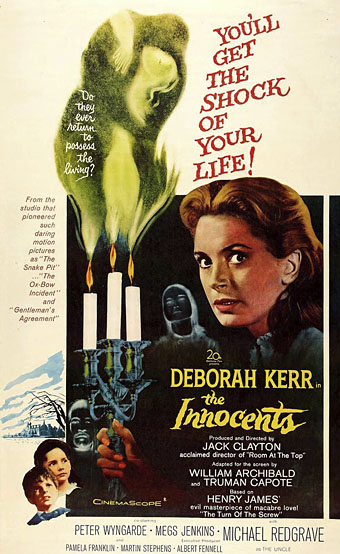
innocents.jpg

The Innocents (1961), one of the great cinematic ghost stories.

• “Out of the many adaptations, Jack Clayton’s [The Innocents] is considered the benchmark. The film celebrated its 60th anniversary this year, having premiered in London on the 24th of November, 1961. Considering the sheer number of competitors to Clayton’s version, it is telling of the film’s qualities that it still stands far and above its many peers. In fact, it is difficult to see James’s story without those stark black-and-white images of the film coming to mind, as well as its stunning central performance by Deborah Kerr. Suffice to say, 60 years on, James’s screen ghosts still haunt.” Adam Scovell on the many adaptations of The Turn of the Screw by Henry James.

• “I wanted to turn sex into art because art makes sense of life.” Jack Fritscher talks to photographer Rick Castro about gay S&M fetishes, Drummer magazine, Robert Mapplethorpe, and his BDSM porn studio, Palm Drive Video.

• “Fela was a very good human resources manager.” Lemi Ghariokwu, creator of over 2,000 album covers, talks to Nathan Evans about his time working for Fela Kuti.

I’ve been approached several times to ‘make an NFT’. So far nothing has convinced me that there is anything worth making in that arena. ‘Worth making’ for me implies bringing something into existence that adds value to the world, not just to a bank account. If I had primarily wanted to make money I would have had a different career as a different kind of person. I probably wouldn’t have chosen to be an artist. NFTs seem to me just a way for artists to get a little piece of the action from global capitalism, our own cute little version of financialisation. How sweet—now artists can become little capitalist assholes as well.

Brian Eno on the fool’s-goldrush du jour

• At Vimeo: The Snail on the Slope, a film of generative processes by Vladimir Todorovic based on the strange science-fiction novel by Arkady and Boris Strugatsky.

• At Dangerous Minds: an exploration of Eight Songs for a Mad King by Peter Maxwell Davies, “one of the most insane pieces of music ever written”.

• “This is how one ought to see, how things really are.” Ido Hartogsohn on Aldous Huxley’s mescaline experiments.

• Always an essential guide: The Wire magazine’s releases of year.

• The end of December brings us Alan Bennett’s diary at the LRB.

• At Dennis Cooper’s: Ryoji Ikeda Day.

Innocenti (1992) by Brian Eno | Innocent Square [excerpt] (2011) by Christian Skjødt Hasselstrøm | First In An Innocent World (2016) by The Pattern Forms

Weekend links 419

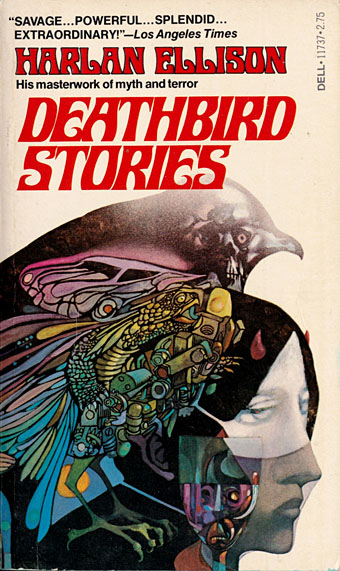
ellison.jpg

Cover art by Leo & Diane Dillon, 1975.

Art is not supposed to be easier! There are a lot of things in life that are supposed to be easier. Ridding the world of heart attacks, making the roads smoother, making old people more comfortable in the winter, but not Art. Art should always be tough. Art should demand something of you. Art should involve foot-pounds of energy being expended. It’s not supposed to be easier, and those who want it easier should not be artists. They should be out selling public relations copy.

Typical of the late Harlan Ellison to describe his vocation in terms of difficulty and struggle even when his prolific output made writing seem effortless. When my colleagues at Savoy Books published a Savoy issue of New Worlds magazine in 1979 one of the features they ran was an introduction by Michael Moorcock to an Ellison story collection. (They also published two books of Ellison’s around this time.) A copy of the magazine was duly sent to the subject of the essay since Ellison always liked to keep track of his print appearances. The back page of that particular issue is blank but for a few words in bold type from singer PJ Proby: “I am an artist; and should be exempt from shit.” Ellison cut this slogan from the magazine then glued it to his typewriter, no doubt transferring it to later models since it was still visible in the 2008 Ellison documentary, Dreams With Sharp Teeth.

My first encounter with Ellison’s work was also my first encounter with what became labelled the new wave of science fiction, via a reprint of I Have No Mouth, and I Must Scream in a book in the school library. I was only about 12 or 13 at the time, and found Ellison’s story so shocking and disturbing that it overpowered everything else in the collection. The only other story that made an equivalent impression at the time was The Colour Out of Space by HP Lovecraft, so it’s perhaps fitting that Ellison gave my work a favourable mention in his introduction to the huge Centipede Press collection of Lovecraft artwork, A Lovecraft Retrospective: Artists Inspired by HP Lovecraft. I still haven’t got over that one. After the initial encounter, the Ellison-edited Dangerous Visions and Again, Dangerous Visions were just as important for me as the paperback reprints of stories from the Moorcock-edited New Worlds: a handful of books that showed science fiction to be a literary form of limitless possibilities, as opposed to the stereotype of space adventure and future technology. The Ellison and Moorcock anthologies led me to William Burroughs, James Joyce and all points beyond; they also soured for me the preoccupation with space adventure and future technology which persists today.

My final connection with Ellison replayed his compliment in a small way, when editor Jill Roberts and I took extra care with the typesetting of Jeffty is Five for The Very Best of Fantasy & Science Fiction, Volume 2. Ellison was the only author I’ve encountered in the digital age whose corrections were still handwritten comments on printed sheets; these had to be faxed to San Francisco then scanned and emailed to me (to this day I still don’t know why the oft-reprinted story required so many adjustments). It was awkward but amusingly so, a benign taste of a legendary bloody-mindedness and insistence on precision.

• “Laughing about an acid trip with members of Can and opening up about some of the ‘scars’ left from his association with Brian Eno and David Byrne’s My Life In the Bush of Ghosts, [Jon] Hassell is candid in a way that comes naturally to those who’ve lived life on their own terms.”

• Drone Metal Mysticism: Erik Davis talks with music scholar and ethnographer Owen Coggins about amplifier worship, sonic pilgrimage, “as if” listening, metal humour, and his new book Mysticism, Ritual and Religion in Drone Metal.

Psychedelic Prophets: The Letters of Aldous Huxley and Humphry Osmond; “Letters between the men who coined the term ‘psychedelic’ and opened doors to a different way of thinking about human consciousness.”

Artaud 1937 Apocalypse: Letters from Ireland by Antonin Artaud; translated and edited by Stephen Barber.

• “I thought female sexuality was an OK thing?” says writer and porn performer, Stoya.

• “How did a major label manage to lose a John Coltrane record?” asks Ted Gioia.

• Welcome to the dollhouse: Alex Denney on a century of cinematic cutaways.

• The trailer for Mandy, a new (and much-awaited) film by Panos Cosmatos.

• Rest in Anger, Harlan Ellison (1934–2018) by Nick Mamatas.

• Mix of the week: FACT Mix 659 by BD1982.

Emily Gosling on library music design.

Record Label Logos

The Deathbird Song (1997) by The Forbidden Dimension | Eidolons (2017) by Deathbird Stories | Deathbird (2017) by Tempos De Morte

Weekend links 405

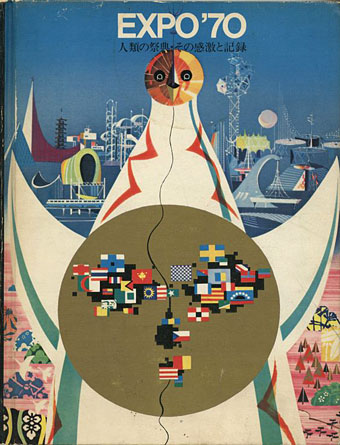
expo70.jpg

Taro Okamoto’s Tower of the Sun on the cover of an Expo ’70 guide.

• Last week I was watching the restored print of Howard Brookner’s excellent William Burroughs documentary, Burroughs. Among the later scenes are shots of the writer visiting Britain in the autumn of 1982 for the Final Academy events, a visit also recorded on Super-8 by Derek Jarman, and by the video cameras of the Haçienda nightclub at a reading I was fortunate to attend. Included in the Brookner film are brief snatches of an interview with Burroughs for BBC Radio 1 by John Peel’s producer, John Walters, something I missed when it was first broadcast.

• Taro Okamoto’s Tower of the Sun was built in Osaka for Expo ’70, and unlike many one-off expo buildings has managed to survive years of neglect and threats of demolition. Visitors to the Tower may now explore the restored “Tree of Life” interior, although places are limited so it’s necessary to book in advance. Related: Expo ’70 at ExpoMuseum, and Tower Of The Sun (1997) by Shonen Knife.

• Also at Dangerous Minds this week: a 1969 TV recording of Krzysztof Penderecki’s notorious The Devils of Loudon, an opera based on the same Aldous Huxley book as Ken Russell’s The Devils, and which includes (among other things) a singing nun enduring a forced enema.

• The new Cavern Of Anti-Matter album, Hormone Lemonade, is released this week. XLR8R has a preview. Related: an old/undated mix by Tim Gane for The Brain radio show here.

Milton Glaser on some of his favourite posters. Milton Glaser Posters, a book collecting 427 poster designs, is published this week by Abrams.

• The Ghosts of Empty Moments: Christopher Burke reviews M. John Harrison’s You Should Come with Me Now.

• Mixes of the week: FACT mix 644 by Susanna, and XLR8R Podcast 534 by Pär Grindvik.

Emily Temple found 25 of the most expensive books you can buy on the internet.

Towers Of Dub (1992) The Orb | Tower Of Our Tuning (2001) by Broadcast | Television Tower (2001) by Monolake