Weekend links 84

enok.jpg

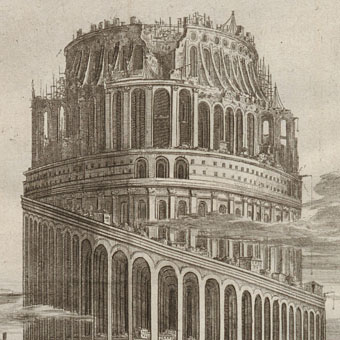
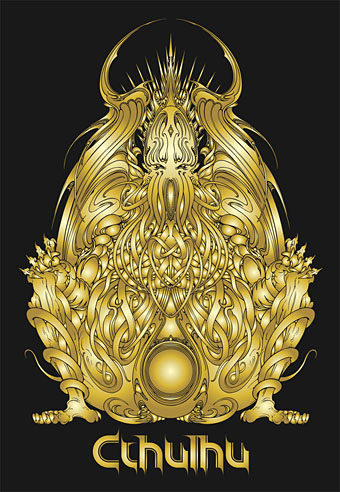
Regeneration (2011) by Toshiyuki Enoki. Via.

HIDE/SEEK: Difference and Desire in American Portraiture, the art exhibition that caused such a fuss last year at the Smithsonian Institution, opens at the Brooklyn Museum, NYC, on November 18th. Among the events associated with the show is a screening of James Bidgood’s lusciously erotic Pink Narcissus. David Wojnarowicz’s video piece, A Fire in My Belly, is still a part of the exhibition so the New York Daily News reached for the outrage stick to prod some reaction from people who’d never heard of the artist or his work before. Will history repeat itself? Does the Pope shit in the woods? Watch this space…

Magic is not simply a matter of the occult arts, but a whole way of thinking, of dreaming the impossible. As such it has tremendous force in opening the mind to new realms of achievement: imagination precedes the fact. It used to be associated with wisdom, understanding the powers of nature, and with technical ingenuity that could let men do things they had never dreamed of before. The supreme fiction of this magical thinking is The Arabian Nights, with its flying carpets, hidden treasure and sudden revelations…

Marina Warner, whose new book, Stranger Magic: Charmed States and the Arabian Nights, is reviewed here and here.

• Those Americans who adore big business but loathe the idea of gay marriage will be dizzy with cognitive dissonance at the news that 70 major US companies—including CBS, Google, Microsoft and Starbucks—have signed a statement saying the Defense of Marriage Act (DOMA) is bad for business. Mark Morford at SFGate says this now means that real homophobes don’t Google.

Divining with shadows and dreams, tears and blood: S. Elizabeth talks to JL Schnabel of BloodMilk about her “supernatural jewels for surrealist darlings“.

Earth: Inferno (2003), a short film by Mor Navón & Julián Moguillansky based on the book by Austin Osman Spare. Via form is void.

finlay.jpg

Illustration by Virgil Finlay for A. Merritt’s The Face in the Abyss. From a 1942 Finlay portfolio at Golden Age Comic Book Stories.

The Mute Synth as created by Dirty Electronics & designed by Adrian Shaughnessy.

Phil Baker reviews two new Aleister Crowley biographies at the TLS.

A Brief Rant on the Future of Interaction Design

The Most Amazing Room In Queens, NYC.

Brian Eno on composers as gardeners.

Alan Turing is Alan Garner’s hero.

• Paintings by Guy Denning.

Static (1998) by Redshift | The Owl Service (2000) by Pram | Lover’s Ghost (2010) by The Owl Service.

Pádraig Ó Méalóid talks to Steve Moore

somnium.jpg

Author Steve Moore discusses Somnium, his occult novel for which I provided a cover illustration, with Pádraig Ó Méalóid at the Forbidden Planet site. In addition to examining his comics work and long friendship with Alan Moore, Steve also tells us something about his novel and his lunar obsession:

Without giving away too much of the plot, it’s a historical fantasy about a young man called Kit Morley in 1803 who, fleeing an impossible romance, arrives at an inn on Shooters Hill, where he’s intent on writing a story set in Elizabethan times, titled Somnium, which means ‘a dream’. In that story, a courtier named Sir Endimion Lee arrives on Shooters Hill and finds a lunar dream-palace called Somnium, where he encounters someone who appears to be a moon-goddess. Then there are various other stories embedded within these, set at various times, written in various styles and providing a number of layers, while Morley himself starts to question the nature of the world he’s living in. So it’s a fantasy, but a long way away from the sort of Tolkien-type adventure that a lot of people think of as fantasy.

As to what it’s about … myth (particularly that of the moon-goddess Selene and her mortal lover Endymion) and dream and the fluid nature of reality … lost love and redemption … the psychogeography and psychohistory of Shooters Hill, where I’ve lived all my life … about writing, and real and imaginary books … and goddesses, and Romantic Idealism. It’s poetic, and it’s very, very pagan …

Somnium, as mentioned before, is available direct from that splendid cabinet of curiosities, Strange Attractor.

Previously on { feuilleton }
Somnium by Steve Moore

Saul Bass album covers

bass1.jpg

Frank Sinatra Conducts Tone Poems Of Color (1956).

The great designer and filmmaker Saul Bass is the subject of renewed attention with the publication this month of Saul Bass: A Life In Film & Design by Jennifer Bass and Pat Kirkham, the first comprehensive examination of the man’s work. A post at AnOther has an extract from Martin Scorsese’s foreword, and also a small selection of designs from the book among which was this tremendous Sinatra album cover that I’d not seen before. The album was a limited edition release in which a number of Sinatra’s composer friends produced pieces of music based on colour-themed poems by Norman Sickel. Sinatra had appeared in Otto Preminger’s The Man With the Golden Arm the year before, the film for which Saul Bass designed a title sequence and a poster that’s probably more visible (and imitated) these days than the film itself. (The arm from the poster is the main graphic on the cover of the new book.) Bass designed the posters, titles and ads for many other Preminger films, more than for any other director. A number of those films had soundtrack albums, of course, as did other films featuring Bass’s work. Usually the poster design was adapted for the album sleeve (something you can see at this Flickr set) but the Sinatra album had me wondering whether there were more albums with Saul Bass covers that aren’t film spin-offs.

bass2.jpg

Freedom Is Frightening (1973) by Stomu Yamash’ta’s East Wind.

Searching around turned up a few more surprises: two covers a decade apart for Japanese jazz musician Stomu Yamash’ta, and a one-off for The Smithereens who were audacious enough to ask for a cover design in 1991, right at the time when Bass’s work was being noticed again thanks to Martin Scorsese. Outside of the soundtrack albums this seems to be all there is—unless you know better. As for Mr Scorsese, the Telegraph had more of his foreword from the new monograph. And speaking of books, here’s another Bass link: Henri’s Walk to Paris, a children’s picture book that I wish someone had bought me in the 1960s.

bass3.jpg

Sea And Sky (1984) by Stomu Yamash’ta.

bass4.jpg

Blow Up (1991) by The Smithereens.

Elsewhere on { feuilleton }
The album covers archive

Previously on { feuilleton }
Pablo Ferro on YouTube

Ver Sacrum, 1901

vs-1901-01.jpg

Continuing the series of posts about Ver Sacrum, the art journal of the Viennese Secession. After a somewhat lacklustre collection for 1900 the journal finds its vitality again, the painters of happy Teutonic peasants having been dropped in favour of more remarkable prints and graphics from Vienna’s finest. The contents for this year parallel some of the works being featured in Deutsche Kunst und Dekoration for the same period. Gustav Klimt is given a great deal of attention, beginning with the calendar piece below. There’s also work from the Symbolist sculptor George Minne and a feature on the Glasgow School artists Charles Rennie Mackintosh and Margaret MacDonald. Throughout the year each issue tends to concentrate on a single artist or exhibition. There’s so much good stuff in this year it’s not possible to present more than a small sample. Those interested are encouraged to browse all 432 pages or download the entire volume here.

vs-1901-02.jpg

vs-1901-03.jpg

Continue reading “Ver Sacrum, 1901”

A hustle here, a hustle there…

gedney1.jpg

Male hustler standing on street corner (1967) photographed by William Gale Gedney.

One of those irresistible confluences of disparate things occurred this week. Watching Todd Haynes’ fabulous Velvet Goldmine for about the tenth time at the weekend had me listening to Lou Reed’s Transformer album the day after. The sight of these New York street photos by William Gale Gedney a couple of days later immediately brought to mind the lyrics of Walk On The Wild Side. The Guardian brought things full circle by posting the 1973 Lester Bangs interview with Lou Reed in which Transformer is discussed, and Reed gives the quote about the glam trend of appearing gay which Ewan McGregor’s Curt Wild character—an amalgam of small parts of Reed and a huge dose of Iggy Pop—paraphrases in Velvet Goldmine:

Wax eloquent, for once and finally, he did. Listen kids, you may think you’ve got your identity crises and sexual lateral squeeze plays touchdown cold just because you came out in rouge ‘n’ glitter for Dave Bowie’s latest show, but listen to your Papa Lou. He’s gotta nother think for you punk knowitalls: “The makeup thing is just a style thing now, like platform shoes. If people have homosexuality in them, it won’t necessarily involve makeup in the first place. You can’t fake being gay, because being gay means you’re going to have to suck cock, or get fucked. I think there’s a very basic thing in a guy if he’s straight where he’s just going to say no: ‘I’ll act gay, I’ll do this and I’ll do that, but I can’t do that.’ Just like a gay person if they wanted to act straight and everything, but if you said, ‘Okay, go ahead, go to bed with a girl,’ they’re going to have to get an erection first, and they can’t do that.”

Never one to mince words is our Lou. YouTube has a video of Reed’s song which sets the music to shots of the real-life people mentioned in his lyrics, hustling Little Joe included. Those of a sensitive disposition should be warned that the surrounding videos seem to be filled with penises. The William Gedney photos are from a substantial collection at Duke University among which there’s a set from a gay march and rally commemorating the tenth anniversary of the Stonewall Riot in 1979.

gedney2.jpg

Male hustler standing on street corner and lighting cigarette; has shirt open (1967) photographed by William Gale Gedney.

Previously on { feuilleton }
Lonesome Cowboys
Les Demi Dieux revisited
Les Demi Dieux