Spellbinders in Suspense

spellbinders1.jpg

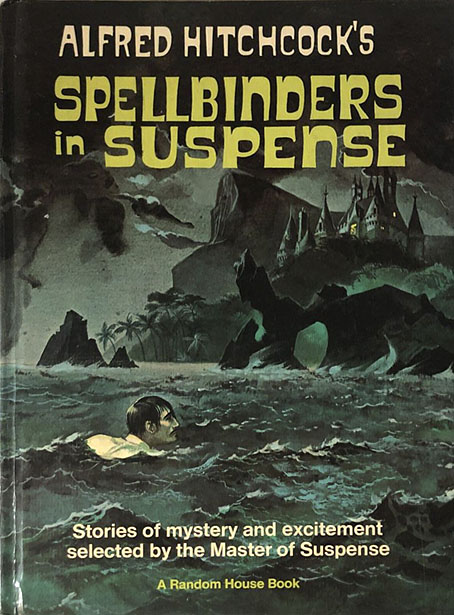
Cover art by Harold Isen, 1967.

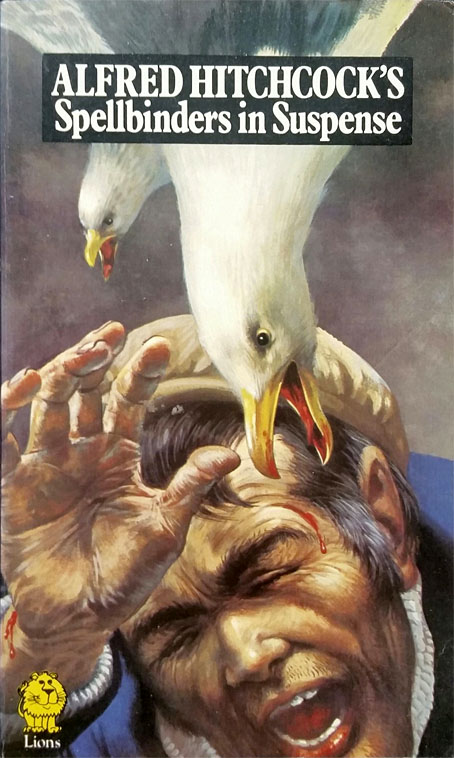
I watched Alfred Hitchcock’s The Birds again recently, after which I went looking for the contents list of the collection where I first read Daphne du Maurier’s story. The book in question, Alfred Hitchcock’s Spellbinders in Suspense, is one of the many anthologies that used the director’s name to lure potential purchasers, even though Hitchcock didn’t choose any of the stories and didn’t write any of the introductory notes or mini essays that these volumes usually contain. Spellbinders in Suspense was first published in 1967, and is one of the few such collections to feature a story that relates to one of Hitchcock’s films, so it’s odd that Random House chose to depict a scene from Richard Connell’s The Most Dangerous Game on the cover. The copy that I owned was a Fontana Lions paperback from 1974 which rectified this with a cover that certainly stimulated my interest; growing up in a seaside town I didn’t need much convincing about the viciousness of the common seagull. The book has two further Hitchcock connections via Roald Dahl’s The Man from the South, which had been dramatised in 1960 for the Alfred Hitchcock Presents TV series, and Yours Truly, Jack the Ripper, a story by Psycho author Robert Bloch that first appeared in Weird Tales and which turns up in many anthologies.
spellbinders2.jpg

Cover artist unknown, 1974.

I don’t know when I first saw The Birds but it must have preceded my reading of the book since I remember being surprised at how different du Maurier’s story was to the film. Hitchcock and screenwriter Evan Hunter kept the basic idea of inexplicable bird attacks but moved the location from Cornwall to northern California, retaining a single incident in the scene where a dead seagull is found on a doorstep. The page for Spellbinders in Suspense at the Hitchcock Zone—an excellent information resource—has some of the illustrations by Harold Isen that appeared in the hardback edition, including a drawing of yet more marauding seagulls.
birds.jpg

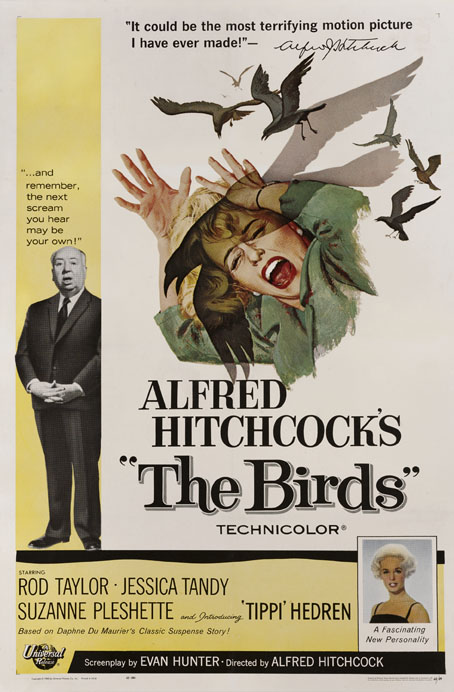
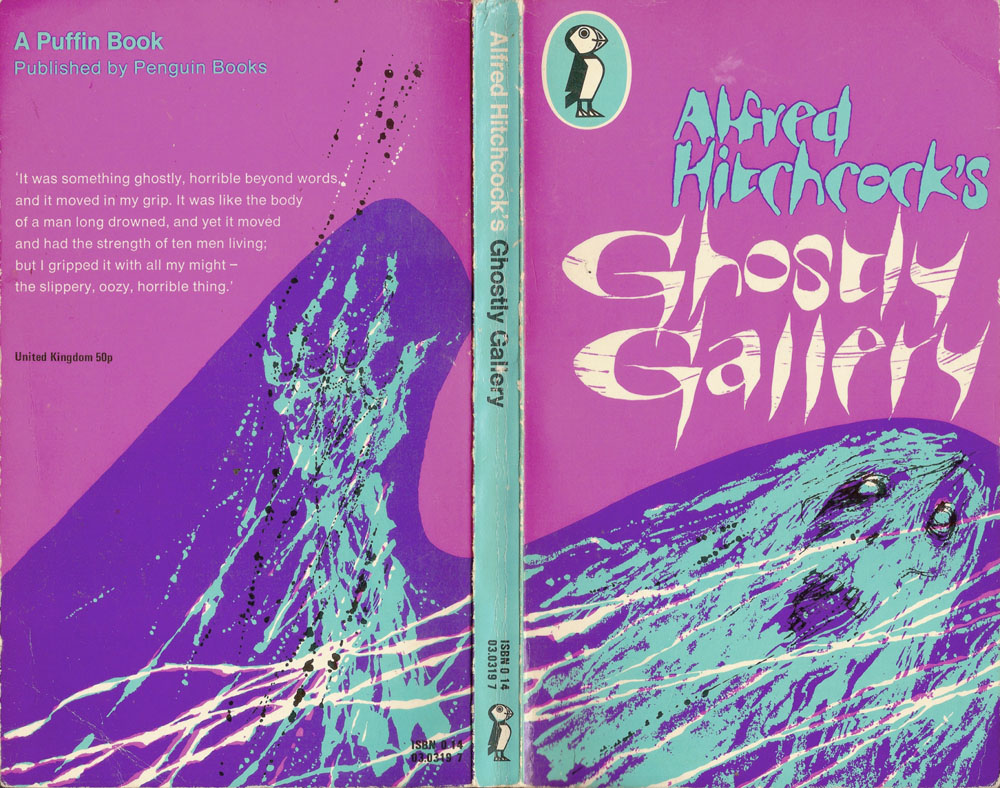
If you want an idea of Hitchcock’s personal popularity and the power of the Hitchcock brand, look no further than the US poster for The Birds in which the director’s name is almost as large as the title (and much more prominent than those of the actors), while the man himself is also there to offer further enticement. Hitchcock was the first film director I became aware of by name, although when I was 10 or 11 I doubt I could have told you what it was that a film director actually did. The ubiquity of the Hitchcock brand made his presence unavoidable in the 1950s, 60s and 70s in a manner more usually reserved for film stars and pop stars; in addition to books, radio shows and the TV series there was Alfred Hitchcock’s Mystery Magazine, which launched in 1956 and was still running 50 years later; also a long-playing record, Music To Be Murdered By, in which the director’s familiar drawl delivers snatches of black humour between each musical selection. In the book department, the Hitchcock Zone lists 127 Hitchcock-themed anthologies, many of which (like Spellbinders in Suspense) received multiple reprints. And those 127 volumes are just the collections. There’s also Robert Arthur’s mystery novels for younger readers, Alfred Hitchcock and the Three Investigators (1964–87), a 43-volume series in which a trio of Californian boys undertake investigations—many of them with a spooky flavour—whose outcome they report to Mr Hitchcock at the end of each story. I read the first few books in the series, also another story collection compiled by Robert Arthur, Alfred Hitchcock’s Ghostly Gallery (1962), a book which in its Puffin reprint gave me my first encounter with The Upper Berth, F. Marion Crawford’s frequently anthologised tale of clammy nautical horror. Ghostly Gallery was another illustrated collection, with scratchy drawings by Barry Wilkinson.
ghostly.jpg

Cover art by Barry Wilkinson. The Puffin edition dates from 1967 but this edition has a decimal price which places it circa 1971.

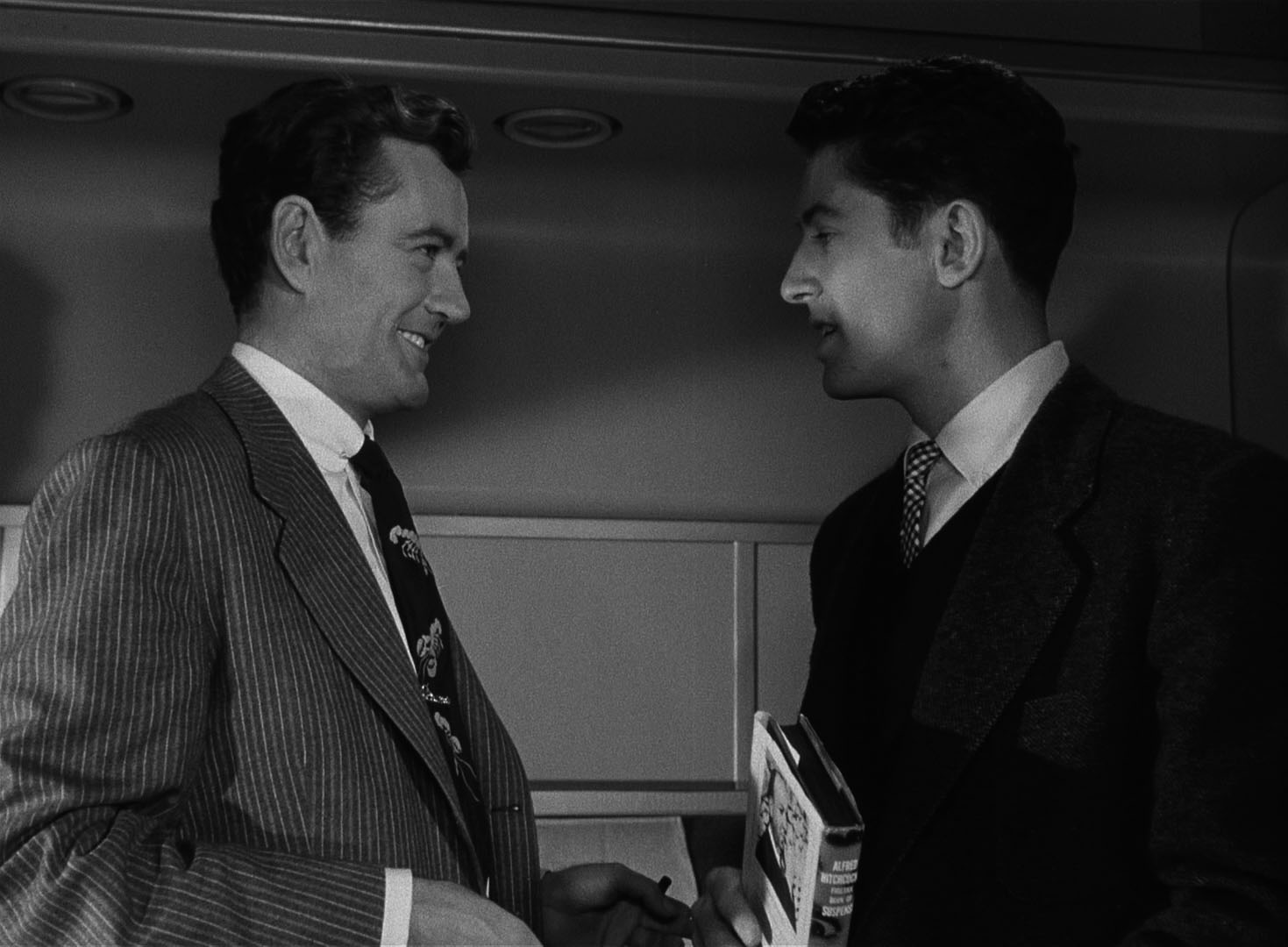
The extension of the Hitchcock brand into books aimed at children is a curious thing when none of his films are intended for a young audience. My edition of Spellbinders in Suspense was published by a juvenile imprint yet all the stories are ostensibly adult fare. Children in Hitchcock’s cinema are either treated as a nuisance (the small boy who has his balloon burst by Bruno in Strangers on a Train) or end up in serious peril, as they do in The Birds, The Man Who Knew Too Much (kidnapped and threatened with murder), Strangers on a Train (an out-of-control merry-go-around), and, notoriously, in Sabotage, where another small boy is made to unwittingly carry a time-bomb that blows him and a busload of passengers to pieces. Strangers on a Train also reinforces the Hitchcock brand by showing Farley Granger’s character with one of the earliest anthologies, Alfred Hitchcock’s Fireside Book of Suspense Stories, in the scenes on the train at the beginning of the film.
strangers.jpg

Product placement: Robert Walker and Farley Granger in Strangers on a Train (1951).

All of this retrospection has had me wondering whether Hitchcock might have been interested in adapting another Daphne du Maurier story, Don’t Look Now, since The Birds was his second adaptation after Rebecca. Supernatural stories turn up in the Hitchcock TV series, and there are several more anthologies like Ghostly Gallery yet the films mostly avoid the paranormal (although Vertigo toys with the idea for its first half hour or so). Nevertheless, the subject is given ambivalent treatment in du Maurier’s story which has other qualities that might have appealed. The story wasn’t published until late 1970, however, by which time Hitchcock was planning his return to London with Frenzy. And besides which, the film we have is more than adequate, as well as being a much more faithful adaptation than Melanie Daniels’ journey into avian nightmare.

Previously on { feuilleton }
Painted devils
The poster art of Josef Vyletal
The Magic Shop by HG Wells

Weekend links 696

hornel.jpg

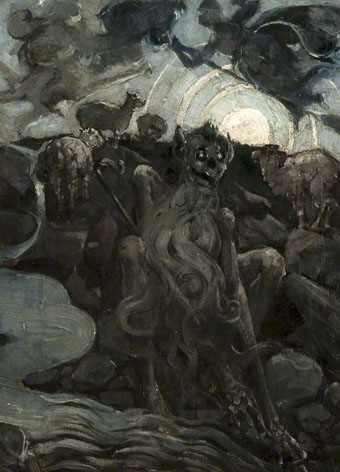
The Brownie of Blednoch (1889) by Edward Atkinson Hornel.

• “None of the theatrics of most films are available in Bresson, because in some ways Bresson’s characters, along with Dreyer’s and Cassavetes’s are the most inscrutable in motion pictures—maybe since their creators are the best believers in suggestion.” Greg Gerke explores the later films of Robert Bresson.

Iizuna Fair is a short animated film by Sumito Sakakibara that will be viewable at Vimeo for the next few months.

• Occult scholar Mitch Horowitz returns to the Aquarium Drunkard podcast for a wide-ranging discussion.

Marty [Scorsese] went to the Edinburgh Film Festival in 1974 to collect an award for Alice Doesn’t Live Here Anymore. They asked him who he wanted to present it to him, and he said Michael Powell. They had no idea who he was. No one did, but I found an American doing publicity for Kubrick’s 2001 who knew where he was. He introduced Michael to Marty at a lunch where Marty bombarded Michael with questions about how he did this and how he did that. Michael writes in his autobiography that the blood started to run in his veins again, it had been so long that he and Emeric had been living in oblivion.

Marty brought Michael to America, where we had already started working on Raging Bull. Marty had been educating me about Powell and Pressburger’s films, sending me home with VHSs. I had fallen in love with them, and then he said that Michael Powell was coming for dinner one night and asked if I would like to meet him. That’s how we met and eventually became involved, all thanks to Marty.

Thelma Schoonmaker remembering her husband, Michael Powell, and discussing the ongoing restoration of his films. Good to hear that plans are afoot to resurrect Gone to Earth

Whole Earth Index is a near-complete archive of the Whole Earth Catalog and its related publications.

• At the Daily Heller: David Byrd, the East Coast’s psychedelic poster man.

• See the winners of the Nikon 2023 Photomicrography Competition.

• New music: Golden Feelings by Better Weather.

Mikrostruktury (1963) by Wlodzimierz Kotonski | La Chasse Aux Microbes (1977) by Michael Bundt | Microscopic (1995) by Gas

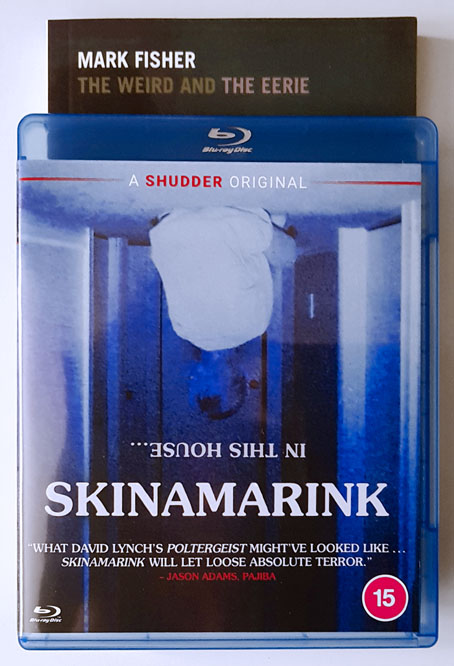
In this house…

skinamarink.jpg

The feeling of the eerie is very different from that of the weird. The simplest way to get to this difference is by thinking about the (highly metaphysically freighted) opposition—perhaps it is the most fundamental opposition of all—between presence and absence. As we have seen, the weird is constituted by a presence—the presence of that which does not belong. In some cases of the weird (those with which Lovecraft was obsessed) the weird is marked by an exorbitant presence, a teeming which exceeds our capacity to represent it. The eerie, by contrast, is constituted by a failure of absence or by a failure of presence. The sensation of the eerie occurs either when there is something present where there should be nothing, or [if] there is nothing present when there should be something.

Mark Fisher, The Weird and the Eerie (2016)

The blurb on the box draws a comparison with David Lynch but I’d say Kyle Edward Ball’s film is closer to a collaboration between Robert Bresson and Mark Snow. More like this, please.

Previously on { feuilleton }
Wavelength

Weekend links 695

pirner.jpg

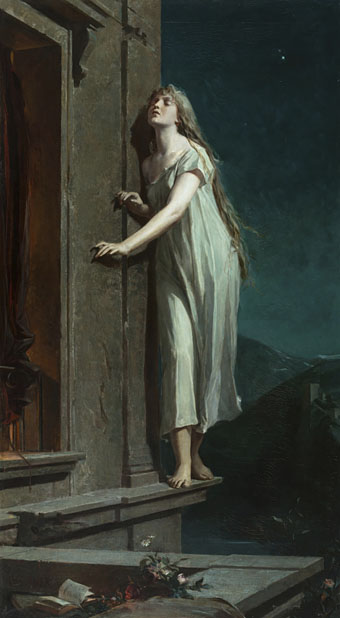
The Sleepwalker (1878) by Maximilián Pirner. Via.

• The latest non-fiction book from A Year In The Country is Threshold Tales, “an exploration of the edgelands, borderlands and liminal places in film; of the places whether literal, in the mind, cultural or amongst the paranormal realm where the boundaries between worlds, ways of life, the past and the future become thin and porous.” Featuring some useful viewing tips for the Spook Season, no doubt.

• Spoon & Tamago reports on VHS cafe opening in Tokyo’s Shimokitazawa district. I was happy to see the end of VHS format but I admire the Japanese dedication to redundant technology.

• There are more seasonal viewing (and reading) recommendations at Unquiet Things where Ms. E. has been blogging her way through the month. Begin here.

• At Public Domain Review: Edmund Fry’s Pantographia: A Specimen Book of All the Alphabets Known on Earth (1799).

See 12 winning images from the Wildlife Photographer of the Year Contest.

Wyrd mail (and further links to other things) for autumn from Wyrd Daze.

• At The Daily Heller: The Art of Invented Scripts, Meaning Optional.

• Mix of the week is DreamScenes – October 2023 at Ambientblog.

• New music: N/Y by The Haxan Cloak.

Sleepwalker’s Timeless Bridge (1972) by Amon Düül II | Sleepwalkers Woman (1983) by Scott Walker | Sleepwalking (1985) by Cabaret Voltaire

Very tasty

final1.jpg

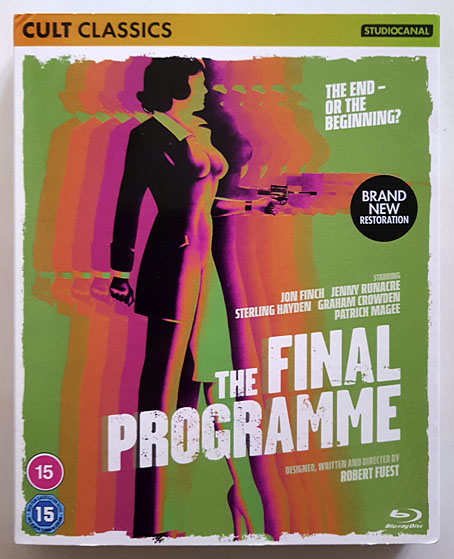
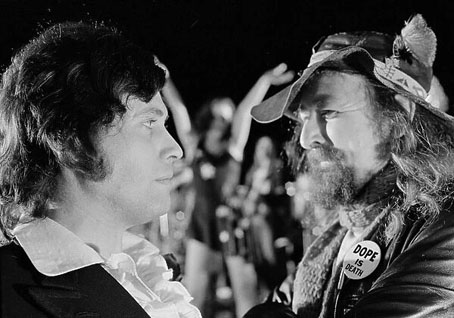
StudioCanal’s blu-ray of The Final Programme seems to have been out for a few months but I only spotted it this week on a visit to Fopp, a welcome upgrade for my old Anchor Bay DVD. Not everything labelled as “cult” would go on my cult list but the term is warranted for this one, still the only feature film based on any of Michael Moorcock’s novels. Moorcock has been persistently vocal about his dislike of Robert Fuest’s adaptation but his readers continue to fly the cult flag. Some films deliver a unique thrill when they present an incursion into the cinematic world of an uncommon cultural component, the less likely, the better: Frank Maxwell in The Haunted Palace intoning the names “Cthulhu” and “Yog-Sothoth”; Florian Fricke of Popol Vuh appearing as a blind piano player in Werner Herzog’s The Enigma of Kaspar Hauser; the credit at the beginning of The Final Programme: “starring Jon Finch as Jerry Cornelius”.

final2.jpg

Jerry Cornelius meets his maker, with what appears to be Stacia from Hawkwind gesturing in the background. StudioCanal has many more such stills, most of which I hadn’t seen before.

Cult, yes; perfect, no. If you’re familiar with the Cornelius novels the film doesn’t capture the spirit of Moorcock’s barbed ironies (although it hits the mark in places), but we live in a world where you wouldn’t expect a Jerry Cornelius feature to exist at all, especially one with such an extraordinary cast: Jenny Runacre, Hugh Griffith, Patrick Magee, Sterling Hayden, Ronald Lacey, Harry Andrews, Graham Crowden, George Coulouris, etc. I always wish that Fuest had let Hawkwind perform at least one song in the arcade scene (or even let us see the group for longer than half a second), while also doing more with some of the settings. But Hawkwind in 1973 were too heavy—sonically, visually, politically—for a film intended for a general audience, and the budget was paltry by today’s standards (£222,000) which makes the existence of the thing seem even less likely. Given this, it’s amazing it looks as good as it does.

final3.jpg

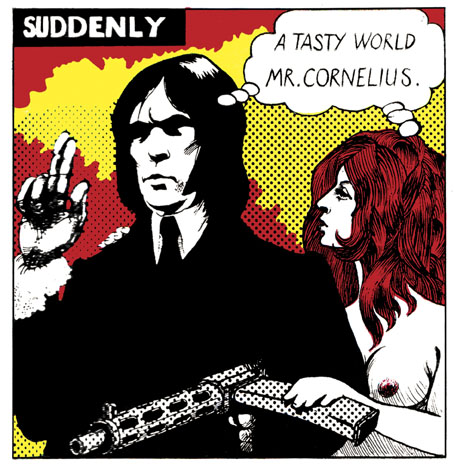
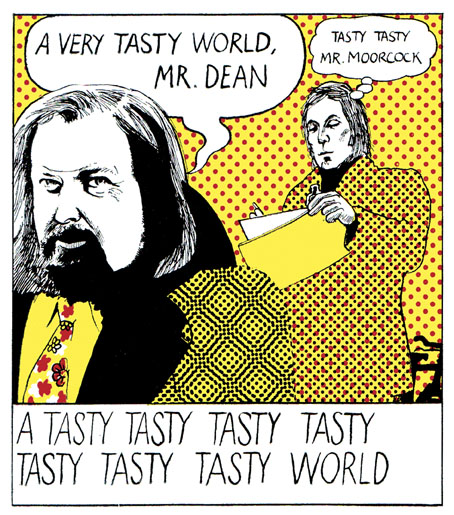
Above and below: panels by Mal Dean from the first UK edition of The Final Programme, 1969.

The main highlight for me among the disc extras is an interview with Kim Newman which I’m looking forward to seeing. I don’t usually listen to commentary tracks but I did listen to the one on the DVD where Fuest mentions that the score by Beaver & Krause was prompted by his hearing the second side of the pair’s Gandharva album. Gerry Mulligan’s lugubrious sax playing doesn’t really suit a Cornelius story but the lineage is another factor that adds to the film’s cult value.

Watch the trailer

final4.jpg

Previously on { feuilleton }
Strange Adventures: a film list
Moorcock: Faith, Hope and Anxiety
Eduardo Paolozzi at New Worlds
Into the Media Web by Michael Moorcock
The Best of Michael Moorcock