
Weekend links 681

hunter.jpg

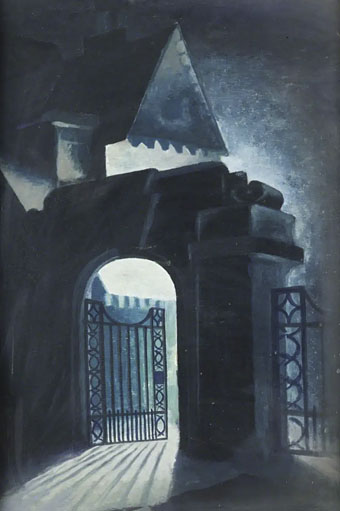
All Cats are Grey At Night (2009) by Kenny Hunter.

“They found ways to do the impossible”: Hipgnosis, the designers who changed the record sleeve for ever. Lee Campbell talks to Anton Corbijn about Squaring the Circle, Corbijn’s documentary about the Hipgnosis design team. Peter Christopherson is shown in the accompanying photo but Campbell doesn’t mention him at all, despite his having been an equal partner with Storm Thorgerson and Aubrey Powell from the mid-70s on. Many of those famous covers were photographed by Christopherson’s camera.

• A new book by Stephen Prince at A Year In The Country: “Lost Transmissions weaves amongst brambled pathways to take in the haunted soundscapes of electronica, the rise of the occult in the 1970s, cinema and television’s dystopian dreamscapes and hauntological work which creates and gives a glimpse into parallel worlds…”

• New music: Ambient Bass Guitar by John von Seggern, and Sturgeon Moon/Beaver Moon by Missing Scenes.

• How Samuel R. Delany Reimagined Sci-Fi, Sex, and the City.

• Mix of the week: Tranquility by A Strangely Isolated Place.

Galerie Dennis Cooper presents…Snow Globalists.

• The Strange World of…African Head Charge.

• Steven Heller’s font of the month is Baudot.

Nights on Earth.

Transmission (1979) by Joy Division | Clandestine Transmission (1994) by Richard H. Kirk | Transmission (1996) by Low

György Ligeti, a film by Michel Follin

ligeti1.jpg

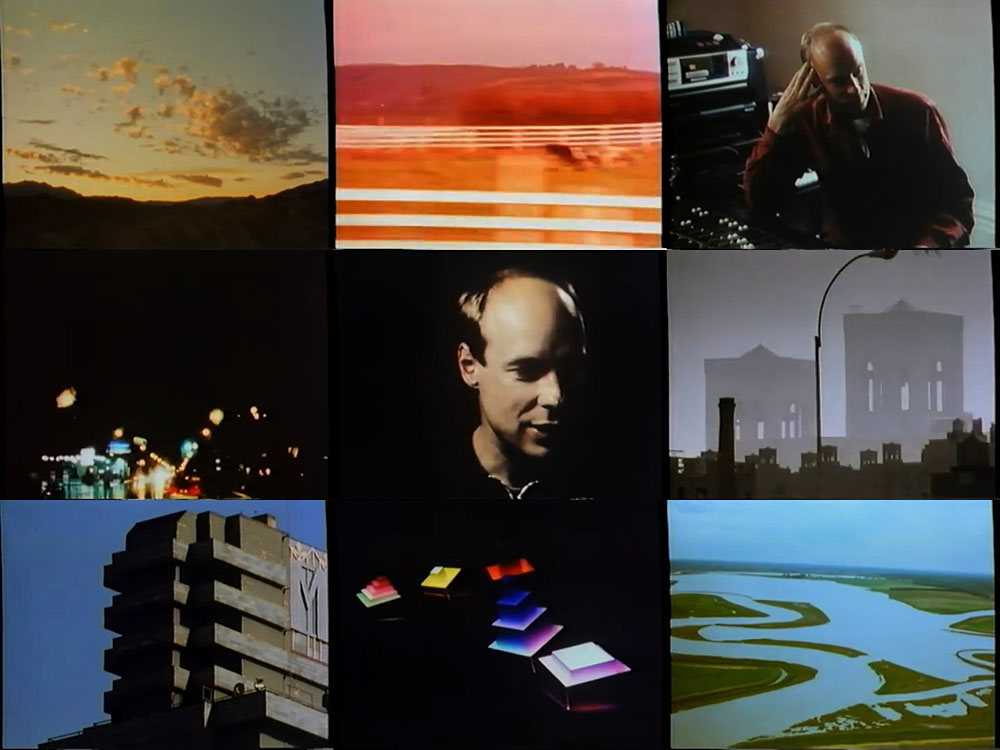
2023 is the centenary of György Ligeti’s birth so here’s an hour-long French documentary about the composer directed by Michel Follin. György Ligeti was made in 1993, two years after Leslie Megahey’s BBC crew had paid a return visit to Ligeti’s apartment to film an update to the Omnibus profile from 1976, All Clouds Are Clocks. The two documentaries complement each other rather well, although you’ll have to take my word for this since Megahey’s film has yet to appear on any video site. Both films interview Ligeti at the studio table where he wrote many of his compositions, and where he talks about his musical interests and intentions.

ligeti2.jpg

The two films differ in their approach to the world outside Ligeti’s window. Megahey concentrated on the music, illustrating a number of lengthy recording extracts with footage of melting clocks, a wooden puppet, etc, whereas Follin attends to the biography, with Ligeti relating his personal history while also describing the evolution of his musical ideas. Ligeti’s youth was a tumultuous one, encompassing the upheavals of the Second World War, during which he lost half his family to the Holocaust, and the later Communist years in Hungary when the kinds of modern music that he was trying to write were proscribed by the State. It’s good to see him confirm the importance of Bartók’s music to his growth as a composer. Ligeti’s oeuvre contains many Bartók-like moments but I’ve often thought that regarding these as any kind of influence or reference might be a lazy comparison based on a shared nationality.

All of this reminds me that I recently picked up a copy of the 5-disc Ligeti Project in a charity shop but still haven’t listened to it all the way through. Charity shops can be useful (and cheap!) sources of modern composition if you don’t mind trawling week after week through iterations of the classics. Secondhand shops were my first introduction to music like this, providing the opportunity to sample the recordings of those mysterious names at a bargain price. Bargains are still to be found if you’re patient, as with the Ligeti box. Other recent discoveries include Without Sinking by Hildur Guðnadóttir, and Memoryhouse, the first album by Max Richter, both of which were bought for a fraction of their usual asking price.

(A note about the film subtitles. These are an amateur translation which fails to recognise the names of Gyula Krúdy—the writer whose work Ligeti describes finding at an early age—and Paul Hindemith, the German composer.)

Previously on { feuilleton }
Le Grand Macabre
A playlist for Halloween: Orchestral and electro-acoustic
Metronomes

Weekend links 679

gay.jpg

All this and the best tunes. Via.

• As noted last month, Space Ritual by Hawkwind turned 50 this year so here comes the inevitable reissue which in its most lavish edition will run to 11 discs. This isn’t as immediately attractive for me as the recent Calvert-era collection—I already own four different copies of Space Ritual, including the original vinyl—but I may feel differently a few months from now.

• At Wormwoodiana: Mark Valentine explores The Prophecies of N’Gai, something which sounds like a story from Weird Tales but isn’t.

• “Is function in the eye or mind of the beholder?” Steven Heller on Jacques Carelman’s Catalogue of Impossible Objects.

• At Spoon & Tamago: Yoko Tada began painting in her 80s. At 100 she’s publishing her first book.

• “The Magnificent Ambersons: rebirth for ruined Orson Welles masterpiece that rivalled Citizen Kane.”

At Wyrd Daze: Disco Rd 3: 23 pages 23 minutes. Free PDF, music mix, Discordianism, etc.

• A (brief) conversation with Milena Canonero, Wes Anderson’s costume designer.

• At Public Domain Review: Specimens of Fancy Turning (1869).

• New music: Móatún 7: Tetsu Inoue by Various Artists.

Arik Roper’s favourite album artwork.

• RIP Peter Brötzmann.

Table Turning (1973) by The Upsetters | Forever Turning (1995) by Scorn | Turning Towards Us (2008) by Redshift

Landscape with the Fall of Icarus

1: Landscape with the Fall of Icarus, c.1560

bruegel.jpg

A painting (or a copy of the same) by Pieter Bruegel the Elder.


2: Musée des Beaux Arts, 1938

auden.jpg

A poem by WH Auden.


3: Landscape with the Fall of Icarus, 1962

A poem by William Carlos Williams.


4: The Man Who Fell to Earth, 1963

tevis.jpg

A novel by Walter Tevis.


5: The Man Who Fell to Earth, 1977

mwfte.jpg

A feature film written by Paul Mayersberg and directed by Nicolas Roeg.


6: La Chute d’Icare, 1988

ferneyhough.jpg

A composition by Brian Ferneyhough.


7: Upon Viewing Bruegel’s “Landscape With The Fall Of Icarus”, 2007

A song by Titus Andronicus.

Previously on { feuilleton }
The Fall of the Magician
Bruegel’s sins
Proverbial details
Babel details
Three stages of Icarus

Weekend links 678

hablik.jpg

Interior of a Cathedral (1921) by Wenzel Hablik.

• The inevitable Cormac McCarthy features: “Cormac McCarthy took us beneath the surface,” says Kevin Berger at Nautilus magazine, publishers of McCarthy’s essay about the origins of language. At The Paris Review, three writers reminisce about reading McCarthy’s fiction.

• At Bajo el Signo de Libra: Bhupen Khakhar (1934–2003). “Su obra examina las implicaciones políticas y socioculturales de la homosexualidad en la India.”

Dennis Cooper’s favourite fiction, poetry, non-fiction, film, art, and internet of 2023 so far. Thanks again for the link here!

• New music: Telepathic Heights by Hawksmoor, and Golden Apples of the Sun by Suzanne Ciani & Jonathan Fitoussi.

• Mixes of the week: DreamScenes – June 2023, and isolatedmix 121: Oslated & Huinali Showcase mixed by S-Pill.

• At Unquiet Things: Crystal Castles and Harmonious Heavens: Wenzel Hablik’s Glittering Utopias.

• At Public Domain Review: Wonder and Pleasure in the Oude Doolhof of Amsterdam.

• At Spoon & Tamago: Exploring Tokyo’s Hidden Shrines.

• At Aquarium Drunkard: Bush Tetras interviewed.

Ben Chasny’s favourite albums.

• RIP Glenda Jackson.

Utopiat No. 1 (1973) by Utopia | Utopia (2000) by Goldfrapp | Utopia (2013) by Brown Reininger Bodson