Weekend links 420

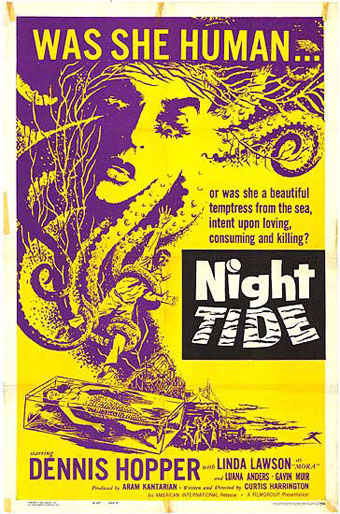
nighttide.jpg

• I’ve wondered for years why there was such a difference in quality between Plight & Premonition (1988) and Flux + Mutability (1989), a pair of instrumental albums by David Sylvian and Holger Czukay. The former warrants repeated listening while the latter…doesn’t. David Sylvian‘s reminiscences about the recording sessions are enlightening.

• “There’s something evil and dangerous that is too old to comprehend.” Justin Benson and Aaron Moorhead, directors of The Endless, talk to Virginie Sélavy about the creepiness of recorded media, the science of the supernatural and their belated readings of HP Lovecraft.

• “I hope my site will inspire people to see the world a different way,” says Nicolas Winding Refn, writing about the forthcoming launch of byNWR.com, a home for his collection of restored cult films. Good to see Night Tide (1961) by Curtis Harrington among the titles.

Dennis Cooper‘s favourite fiction, poetry, non-fiction, film, art, and internet of 2018 so far. Thanks again for the link here! Also: Laura Dern Day.

• Mixes of the week: FACT Mix 660 by 7FO, and Light Entertainment Programme: PRExotica 1914–1952 by Jesús Bacalão.

David Bennun on thirty years of the animated masterpiece that is Katsuhiro Otomo’s Akira.

Diane Mehta on the rare women in the rare book trade. Related: Pyewacket Books.

• At Greydogtales: One hundred years of Philip José Farmer.

• In Paris, an omnivorous Asian phantasmagoria.

• The Strange World of…Jon Hassell.

Night Tide (1994) by Scorn | Dark Noontide (2002) by Six Organs Of Admittance | Flowery Noontide (2004) by Espers

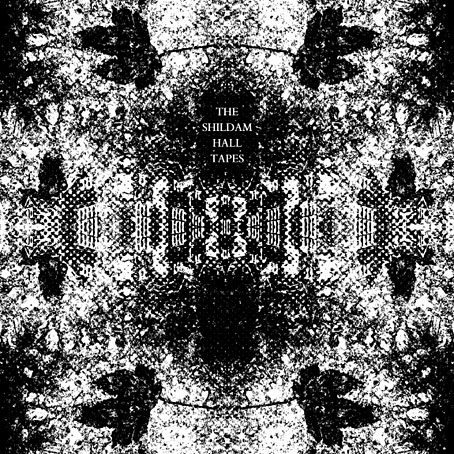
The Shildam Hall Tapes

shildam.jpg

The conceit of a “soundtrack for an imaginary film” dates back at least as far as Gandharva by Beaver & Krause, although only the second half of that album was the imaginary soundtrack, and a rather vague one at that. (A variation on the Gandharva suite did become genuine soundtrack music, however, when Robert Fuest asked Gerry Mulligan to rework his sax improvisation for The Final Programme in 1973.) The imaginary soundtrack idea didn’t really catch on until the late 80s and early 90s, with serious efforts such as Barry Adamson’s excellent Moss Side Story emerging alongside an increasing and often lazy use of the term “imaginary soundtrack” as a descriptor employed by journalists writing about instrumental electronic albums.

The Shildam Hall Tapes is neither lazy nor mis-labelled being the latest in this year’s themed compilation albums from A Year In The Country, and a collection described as “reflections on an imaginary film.”

In the late 1960s a film crew began work on a well-funded feature film in a country mansion, having been granted permission by the young heir of the estate. Amidst rumours of aristocratic decadence, psychedelic use and even possibly dabbling in the occult, the film production collapsed, although it is said that a rough cut of it and the accompanying soundtrack were completed but they are thought to have been filed away and lost amongst storage vaults.

Few of the cast or crew have spoken about the events since and any reports from then seem to contradict one another and vary wildly in terms of what actually happened on the set. A large number of those involved, including a number of industry figures who at the time were considered to have bright futures, simply seemed to disappear or step aside from the film industry following the film’s collapse, their careers seemingly derailed or cast adrift by their experiences.

Little is known of the film’s plot but several unedited sections of the film and its soundtrack have surfaced, found amongst old film stock sold as a job lot at auction—although how they came to be there is unknown. The fragments of footage and audio that have appeared seem to show a film which was attempting to interweave and reflect the heady cultural mix of the times; of experiments and explorations in new ways of living, a burgeoning counter culture, a growing interest in and reinterpretation of folk culture and music, early electronic music experimentation, high fashion, psychedelia and the crossing over of the worlds of the aristocracy with pop/counter culture and elements of the underworld.

The Shildam Hall Tapes takes those fragments as its starting point and imagines what the completed soundtrack may have sounded like; creating a soundtrack for a film that never was.

Track list:
1) Gavino Morretti—Dawn of a New Generation
2) Sproatly Smith—Galloping Backwards
3) Field Lines Cartographer—The Computer
4) Vic Mars—Ext – Day – Overgrown Garden
5) Circle/Temple—Maze Sequence
6) A Year In The Country—Day 12, Scene 2, Take 3; Hoffman’s Fall
7) The Heartwood Institute—Shildam Hall Seance
8) David Colohan—How We’ll Go Out
9) Listening Center—Cultivation I
10) Pulselovers—The Green Leaves of Shildam Hall

I’ve always enjoyed this kind of thing when it’s done well, as in Barry Adamson’s case, so was already predisposed to the new collection even before hearing it. The cumulative effect is much better than anticipated, thanks in part to a few deviations from earlier A Year In The Country compilations. The opening piece is by Gavino Morretti, a newcomer to the AYITC stable, and a musician whose albums to date are all in the imaginary soundtrack sub-genre. Morretti provides a marvellous piece in the Goblin/Fabio Frizzi manner that effortlessly conjures a title sequence of mists, coloured filters and Art Nouveau typefaces.

The following contributions range from the spookily atmospheric (Sproatly Smith, A Year In The Country, The Heartwood Institute) to electronic numbers such as The Computer by Field Lines Cartographer which suggests some kind of paranormal investigation like those in The Stone Tape and The Legend of Hell House. The biggest surprise for me was David Colohan’s How We’ll Go Out which is another electronic work, and very different to his earlier folk-oriented compositions. If, like me, you’ve been missing the “ghost” quotient among the recent releases on the Ghost Box label, then The Shildam Hall Tapes is a very welcome substitute: sinister, perfectly-pitched and leaving enough gaps in the scenario for the imagination to operate. I’m no doubt biased towards the format but for me this is the best A Year In The Country compilation to date so I’m now wondering what the follow-up will be like.

The Shildam Hall Tapes will be available for pre-order at Bandcamp from 10th July, and released on the 31st.

Previously on { feuilleton }
Audio Albion
A Year In The Country: the book
All The Merry Year Round
The Quietened Cosmologists
Undercurrents
From The Furthest Signals
The Restless Field
The Marks Upon The Land
The Forest / The Wald
The Quietened Bunker
Fractures

Weekend links 419

ellison.jpg

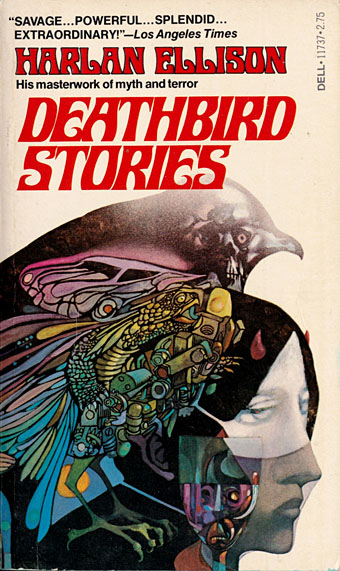
Cover art by Leo & Diane Dillon, 1975.

Art is not supposed to be easier! There are a lot of things in life that are supposed to be easier. Ridding the world of heart attacks, making the roads smoother, making old people more comfortable in the winter, but not Art. Art should always be tough. Art should demand something of you. Art should involve foot-pounds of energy being expended. It’s not supposed to be easier, and those who want it easier should not be artists. They should be out selling public relations copy.

Typical of the late Harlan Ellison to describe his vocation in terms of difficulty and struggle even when his prolific output made writing seem effortless. When my colleagues at Savoy Books published a Savoy issue of New Worlds magazine in 1979 one of the features they ran was an introduction by Michael Moorcock to an Ellison story collection. (They also published two books of Ellison’s around this time.) A copy of the magazine was duly sent to the subject of the essay since Ellison always liked to keep track of his print appearances. The back page of that particular issue is blank but for a few words in bold type from singer PJ Proby: “I am an artist; and should be exempt from shit.” Ellison cut this slogan from the magazine then glued it to his typewriter, no doubt transferring it to later models since it was still visible in the 2008 Ellison documentary, Dreams With Sharp Teeth.

My first encounter with Ellison’s work was also my first encounter with what became labelled the new wave of science fiction, via a reprint of I Have No Mouth, and I Must Scream in a book in the school library. I was only about 12 or 13 at the time, and found Ellison’s story so shocking and disturbing that it overpowered everything else in the collection. The only other story that made an equivalent impression at the time was The Colour Out of Space by HP Lovecraft, so it’s perhaps fitting that Ellison gave my work a favourable mention in his introduction to the huge Centipede Press collection of Lovecraft artwork, A Lovecraft Retrospective: Artists Inspired by HP Lovecraft. I still haven’t got over that one. After the initial encounter, the Ellison-edited Dangerous Visions and Again, Dangerous Visions were just as important for me as the paperback reprints of stories from the Moorcock-edited New Worlds: a handful of books that showed science fiction to be a literary form of limitless possibilities, as opposed to the stereotype of space adventure and future technology. The Ellison and Moorcock anthologies led me to William Burroughs, James Joyce and all points beyond; they also soured for me the preoccupation with space adventure and future technology which persists today.

My final connection with Ellison replayed his compliment in a small way, when editor Jill Roberts and I took extra care with the typesetting of Jeffty is Five for The Very Best of Fantasy & Science Fiction, Volume 2. Ellison was the only author I’ve encountered in the digital age whose corrections were still handwritten comments on printed sheets; these had to be faxed to San Francisco then scanned and emailed to me (to this day I still don’t know why the oft-reprinted story required so many adjustments). It was awkward but amusingly so, a benign taste of a legendary bloody-mindedness and insistence on precision.

• “Laughing about an acid trip with members of Can and opening up about some of the ‘scars’ left from his association with Brian Eno and David Byrne’s My Life In the Bush of Ghosts, [Jon] Hassell is candid in a way that comes naturally to those who’ve lived life on their own terms.”

• Drone Metal Mysticism: Erik Davis talks with music scholar and ethnographer Owen Coggins about amplifier worship, sonic pilgrimage, “as if” listening, metal humour, and his new book Mysticism, Ritual and Religion in Drone Metal.

Psychedelic Prophets: The Letters of Aldous Huxley and Humphry Osmond; “Letters between the men who coined the term ‘psychedelic’ and opened doors to a different way of thinking about human consciousness.”

Artaud 1937 Apocalypse: Letters from Ireland by Antonin Artaud; translated and edited by Stephen Barber.

• “I thought female sexuality was an OK thing?” says writer and porn performer, Stoya.

• “How did a major label manage to lose a John Coltrane record?” asks Ted Gioia.

• Welcome to the dollhouse: Alex Denney on a century of cinematic cutaways.

• The trailer for Mandy, a new (and much-awaited) film by Panos Cosmatos.

• Rest in Anger, Harlan Ellison (1934–2018) by Nick Mamatas.

• Mix of the week: FACT Mix 659 by BD1982.

Emily Gosling on library music design.

Record Label Logos

The Deathbird Song (1997) by The Forbidden Dimension | Eidolons (2017) by Deathbird Stories | Deathbird (2017) by Tempos De Morte
The Mercenaries of the Stolen Moon

mercenaries.jpg

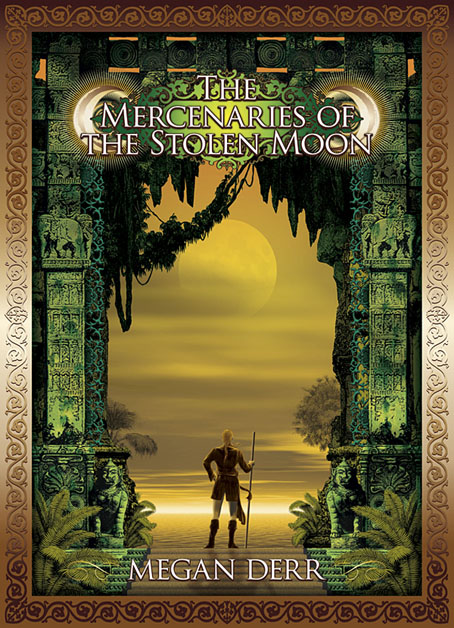
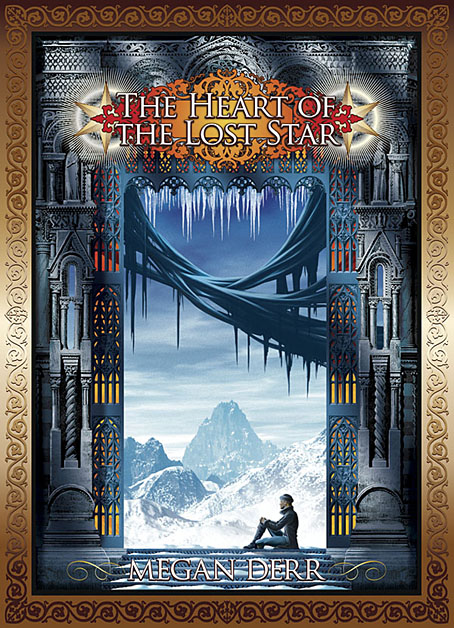
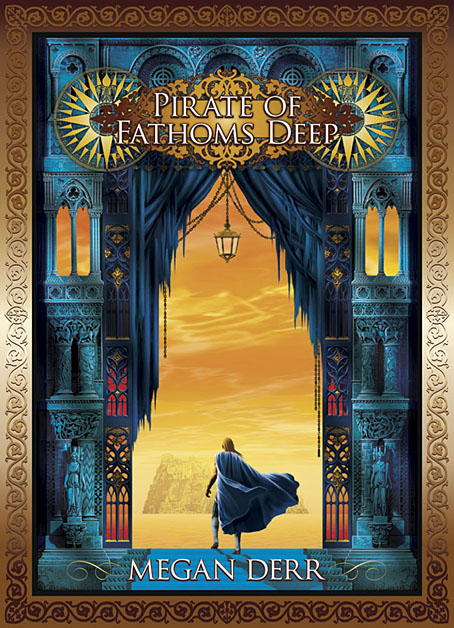
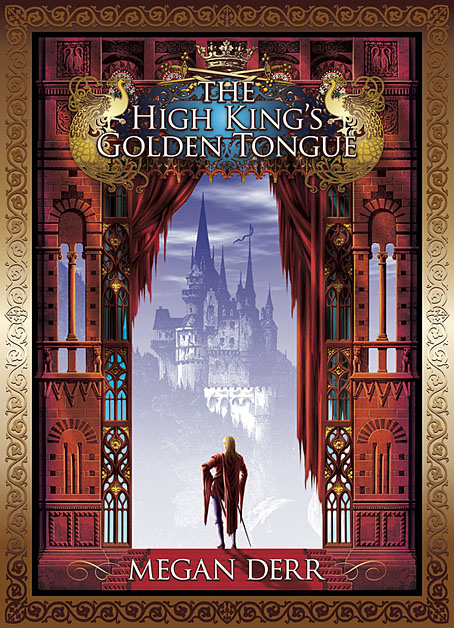
As promised last week, here’s my latest cover for Megan Derr’s gay fantasy series, Tales of the High Court. The first book wasn’t intended to have this many sequels so my initial cover design also wasn’t planned as something that might be a template for later volumes. The previous books (below) borrowed bits and pieces from a set of early Viollet-le-Duc illustrations, a decision that posed problems as the series evolved when I began to run out of usable material. The new book required a different setting so I was able to dispense with the medieval architecture in favour of a hybrid of Indian and Cambodian stonework. I’ve always enjoyed the ruined-jungle-temple aesthetic so this was fun to work on, and made a break from all the black-and-white illustration I’ve been producing for the past year or so. The Mercenaries of the Stolen Moon will be published by Less Than Three Press later this year.

loststar.jpg

derr2.jpg

derr1.jpg

Previously on { feuilleton }
The Heart of the Lost Star
Tales of the High Court

Weekend links 418

vertigo.jpg

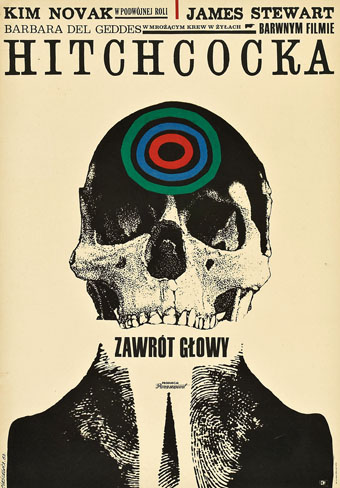
Poster by Roman Cieślewicz for the 1963 Polish release of Vertigo. Via The Hitchcock Zone.

• Alfred Hitchcock’s Vertigo is sixty years old this year. It’s a film I’ve always found to be preposterous and very over-rated, despite the considerable strengths of its cast, production, etc; consequently, any claims to its being an unalloyed masterpiece (such as being voted the best film of all time in the 2012 Sight & Sound poll) have been difficult to accept. For the latest anniversary, David Thomson examined the film in the light of changing social attitudes.

• Currently seeking funding at Unbound: Stars, Fools and Lovers: An illustrated guide to the art and history of the Tarot by Joanna Ebenstein, Laetitia Barbier and Mark Pilkington. Another Tarot-related book, Pamela Colman Smith: The Untold Story by Stuart R. Kaplan with Mary K. Greer, Elizabeth Foley O’Connor and Melinda Boyd Parsons, will be published next month.

• Everybody wants to talk to Jon Hassell at the moment, which is no bad thing: recent interviews have appeared at The Vinyl Factory, Red Bull Radio and Vice.

• Coming soon from Lazarus Corporation: England’s Dark Dreaming by Paul Watson.

• Sean Kitching on The Strange World of Charles Hayward (This Heat et al).

• At Dennis Copper’s: The title sequences of 56 mostly horror movies.

• Stone circles: Adam Scovell chooses 10 notable cinematic examples.

• “You gotta be selfish. It’s a terrible thing,” says David Lynch.

Wolf’s Kompaktkiste shows off a serious record collection.

Boy with Cat (1966), a short film by Donald Richie.

• Mix of the week: Secret Thirteen Mix 256 by Nina.

Tank (2018), a short film by Stu Maschwitz.

Phantom Islands—A Sonic Atlas

Letraset, design and music

• Vertigo (1988) by Flash Cero | Psyko (Themes from Psycho and Vertigo) (1993) by Laika & The Cosmonauts | Vértigo Magnético (2014) by Liquidarlo Celuloide