L’Autoportrait d’un Pornographe

pornographe1.jpg

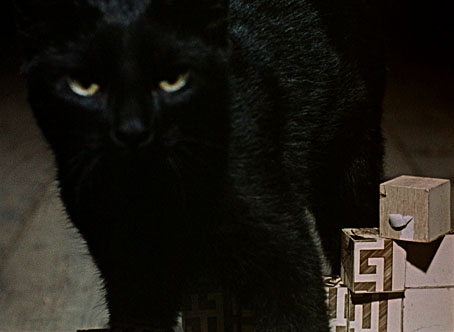
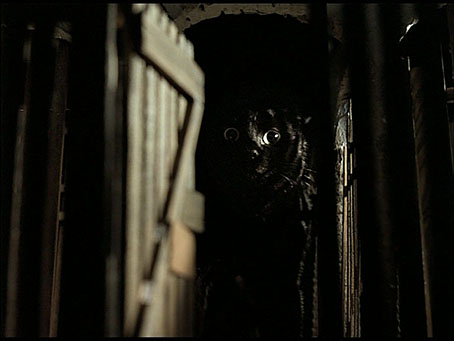
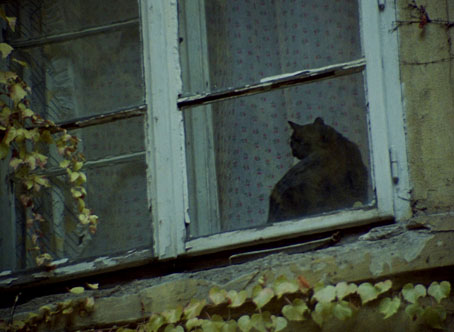
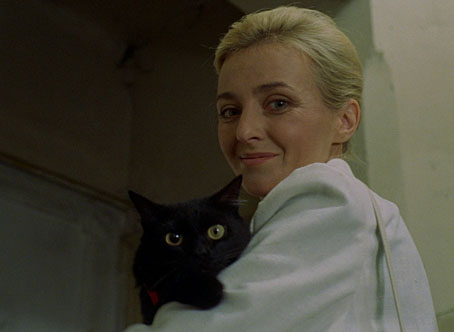
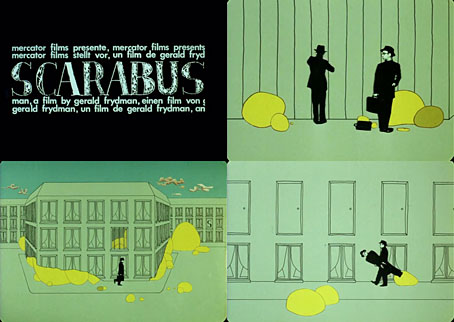
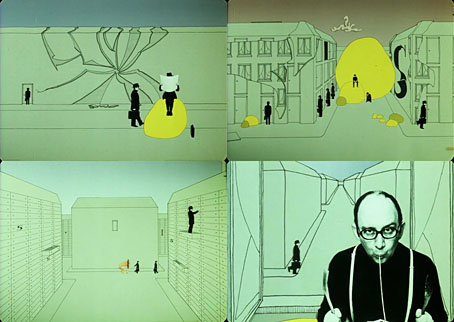
L’Autoportrait d’un Pornographe (1972) is a short film co-written by director Robert Swaim and Roland Topor in which Topor’s Surrealist cruelties and black humour are tempered to present a sardonic and sentimental tribute to a dying breed, the small-time Parisian pornographer. Daniel Langlet is the photographer who also sells his views of unclothed women from a coat whose lining is pocketed with prints.

pornographe2.jpg

Swaim and Topor compare this declining trade to the vanished street merchants of the city; the film dates from a time when “le sex shop” was a new arrival on the streets of Paris, and a competitor with which a purveyor of black-and-white soft porn could never hope to compete. Topor himself makes a cameo appearance, and there’s a possible reference to Cocteau’s Orphée (and another vanishing trade) in the glass cutter we see in the street.

Previously on { feuilleton }
Les Temps Morts by René Laloux

Weekend links 500

provensal.jpg

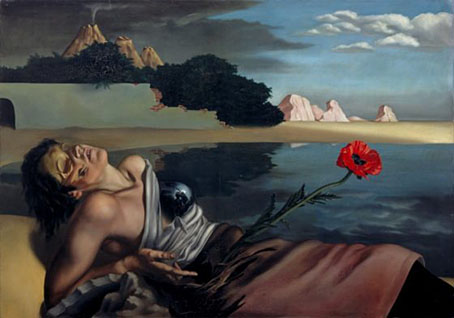
Projet onirique (tombeau pour un poète) (1901) by Henry Provensal.

• “20 years later, Sexy Beast remains something of an oddity…It offers a deconstruction of the genre, which is then reconstructed to marry the unhinged, convulsive beauty of surrealism with sturdy, universal storytelling.” Thomas H. Sheriff looks back at Jonathan Glazer’s debut feature.

Blau Gers, a new piece by The Alvaret Ensemble: Greg Haines (piano), Jan Kleefstra (voice, poems), Romke Kleefstra (guitar, bass and effects) and Sytze Pruiksma (percussion).

Wendy Carlos: A Biography by Amanda Sewell, the first study of the life and work of the electronic composer, is out in March.

The prejudice against writing sex in Anglo-American literature is something that utterly baffles me. What a bizarre thing it is to claim that this central, profound territory of human life is off-limits to literary or artistic representation. Sex seems to me one of the densest and most intense human phenomena, one of the things I find it hardest to think about—and so something I want to think about in art. The biggest surprise to me about the reception of my first book—other than the fact of there being any reception at all—was how much discussion there was about the sex in it. There isn’t very much sex in it! It said something about the culture of mainstream publishing in America in 2016 that a novel with maybe three or four pages of explicit sex between men could seem surprising.

Garth Greenwell talking to Ilya Kaminsky about literature and life

• Some (but not all) of the museums of Paris have made thousands of artworks available for free online.

• The Work of Fate: AS Hamrah introduces a screening of Jean Cocteau’s Orphée.

La Labyrinthèque: Histoire de l’art jouissive & enchantements littéraires.

Clive Hicks-Jenkins on the art of the (book) cover.

Tom Huddleston on 10 great stressful films.

• At Dennis Cooper’s: Malcolm Le Grice Day.

François de Nomé’s Imaginary Ruins.

Sexy Sadie (1968) by The Beatles | Sexy Photograph (1995) by Ui | Sexy Boy (1998) by Air

Weekend links 499

konoike.jpg

Wild Things – Hachilympic, a poster by Tomoko Konoike for the Tokyo 2020 Olympics.

• Hidden Jewels in ‘The Garden of Orchids’: Steve Toase on Der Orchideengarten (1919–1921), the German magazine of fantastic art and literature. Since the article doesn’t mention it, I’ll note again that the first Anglophone appraisal of the magazine (and also the place where it was drawn to the attention of myself and 50 Watts) was in Franz Rottensteiner’s The Fantasy Book (Thames & Hudson/Collier, 1978).

• “In its furtive, sotto-voce way, Gorey’s work is in conversation with gay history, gay literary influences, and, now and then, the gay-straight tensions of his time.” Mark Dery on the attempts by Edward Gorey’s readers and critics to ignore the obvious signs of a personal sexuality in his work.

• The Apotheosis of the Grotesque: illustrator Sidney Sime interviewed by Arthur H. Lawrence in The Idler, January 1898.

Goff would experiment with form, material, structure and ornament to almost absurd degrees. Materials he used in his buildings included aviation parts, goose feathers, oil rig equipment, orange artificial turf (on the roof), lumps of coal, and any kind of glass he could get his hands on. His 1948 Ledbetter House, also in Oklahoma, features a recurring motif of vertical lines of diamond-shaped glass studs set into doors and columns. In fact they are dime-store glass ashtrays.

Steve Rose on the restoration of “outsider architect” Bruce Goff

• At the BFI: Adam Scovell on where to begin with Delphine Seyrig; Kat Ellinger on giving Fellini’s later films their due; and Matthew Thrift on 10 great Acid Westerns.

• RIP Ivan Passer and Neil Peart. A reminder that John Patterson described Passer’s Cutter’s Way as a cinematic masterpiece. So it is.

Geeta Dayal on musician/composer Arthur Russell and yet another posthumous release.

Haunted And Known, a new recording by Six Organs Of Admittance.

• At Dennis Cooper’s: Hidden.

2112 (1976) by Rush | Xanadu (1977) by Rush | La Villa Strangiato (1978) by Rush

Weekend links 498

mead.jpg

The Sentinel 280, a car design by Syd Mead from 1964.

• “Boris Dolgov did not exist. The man who bore that name may have existed, but there never was a man in the United States with that name until 1956, too late for Weird Tales.” Teller of Weird Tales on the mysterious identity of a magazine artist.

• Saying goodbye to 2019 also meant saying farewell to Vaughan Oliver, Neil Innes and Syd Mead. Related: Vaughan Oliver at Discogs; I’m The Urban Spaceman; a look back at Syd Mead’s vehicle designs.

Lanre Bakare on how ambient music became cool. (Again. This begs the question of when it became uncool, especially when a ten-year-old Brian Eno piece about “the death of uncool” is being quoted.)

Westerners interpreted the peyote experience very differently from the practitioners of the peyote religion, where the focus was “ritual, song and prayer, and to dissect one’s private sensations was to miss the point”. Writers such as Havelock Ellis, who published an essay on his peyote experiences in the Lancet in 1897 (it’s likely that he also administered the substance to his friends W.B. Yeats and Arthur Symons), instead tended to focus on its visual effects. Ellis described “the brilliance, delicacy and variety of the colours” and “their lovely and various textures”. Peyote reached Europe in tandem with the X-ray, cinema and electric lights, Jay notes, and “nothing delighted the eye of the mescal eater so much as the new electrical sublime”.

Emily Witt reviewing Mescaline: A Global History of the First Psychedelic by Mike Jay

Peter Bradshaw takes on the thankless task of ranking Federico Fellini’s feature films.

Geoff Manaugh on when Russia and America coöperated to avert a Y2K apocalypse.

• “Music is an ideal medium for interstellar communication,” says Daniel Oberhaus.

Keith Allison on Karel Zeman, a creator of remarkable cinematic fantasies.

•  Japanese Designer New Year’s Cards of 2020.

• At Dennis Cooper’s: Vera Chytilová Day.

2020 in public domain.

Sentinel (1992) by Mike Oldfield | Sentinels (2001) by Cyclobe | Sentinel (2004) by Transglobal Underground

Weekend links 497

roma.jpg

Poster by Zdeněk Ziegler for Roma (1972), a film by Federico Fellini.

• At Dennis Cooper’s: a short history of Straight to Hell, a long-running fanzine launched by Boyd McDonald in 1971 dedicated to true stories of men having sex with other men. The post gives an idea of the contents but for a deep dive I’d suggest Meat (1994) at the Internet Archive, a collection of the best of the early editions of STH. Related: “Straight to Hell was an immensely popular underground publication. John Waters, William S. Burroughs, and Robert Mapplethorpe were fans; Gore Vidal called it ‘one of the best radical papers in the country.'” Erin Sheehy on Boyd McDonald’s determination to kick against the pricks.

• RIP psychedelic voyager and spiritual guide Richard Alpert/(Baba) Ram Dass. The Alpert/Ram Dass bibliography includes The Psychedelic Experience: A Manual Based on the Tibetan Book of the Dead (1964), an acid-trip manual written in collaboration with Timothy Leary and Ralph Metzner from which John Lennon borrowed lines for the lyrics of Tomorrow Never Knows. But the most celebrated Ram Dass volume is Be Here Now (1971), a fixture of countless hippy bookshelves whose first editions were all handmade.

• “An Einstein among Neanderthals”: the tragic prince of LA counterculture. Gabriel Szatan talks to David Lynch, Devo and others about the eccentric songwriter, performer and voice of Lynch’s Lady in the Radiator, Peter Ivers.

• For the forthcoming centenary of Federico Fellini’s birth Stephen Puddicombe offers suggestions for where to begin with the director’s “exuberant extravaganzas”. Related: Samuel Wigley on 8½ films inspired by .

• “I met resident Tony Notarberardino for the first time in 2015 and entering his apartment was like crossing into another dimension.” Collin Miller explores the Chelsea Hotel.

• “More green tea, professor?” The haunted academic, a reading list by Peter Meinertzhagen. Related: Our Haunted Year: 2019 by Swan River Press.

• “30 July, Yorkshire. Thunder, which is somehow old-fashioned.” Alan Bennett’s 2019 diary.

• More acid trips: Joan Harvey on the resurgence of interest in psychedelic drugs.

• At Lithub: Werner Herzog’s prose script for Nosferatu the Vampyre.

Tief gesunken, a new recording by Bohren & Der Club Of Gore.

In Heaven (1979) by Tuxedomoon | Die Nacht Der Himmel (1979) by Popol Vuh | Roma (1981) by Steve Lacy