Weekend links 594

klinger.jpg

Eva und die Zukunft (1898) by Max Klinger.

• “It is no exaggeration to say that MAD invented the modern, postwar American takedown.” Thomas Larson reviews Seeing MAD: Essays on Mad Magazine’s Humor and Legacy.

• At the Internet Archive: Cartoon Modern: Style And Design In Fifties Animation (2006) by Amid Amidi, a book which has been made available as a free download by its author.

• New music: A preview of Metta, Benevolence by Sunn O))), recorded live in the Mary Anne Hobbs’ radio show in 2019; Veils by Víz; The Mountain (Blakkat Dub) by Ladytron.

• At Public Domain Review: Claude Mellan’s The Sudarium of Saint Veronica (1649), an engraving made with a single continuous line.

• “For Harry Houdini, séances and Spiritualism were just an illusion,” says Bryan Greene.

TheStencil is Steven Heller’s font of the month.

• At Dennis Cooper’s: Derek Jarman Day.

Nicky Mao’s favourite music.

Mad Man Blues (1951) by John Lee Hooker | Mad Pierrot (1978) by Yellow Magic Orchestra | Mad Keys (2002) by Al-Pha-X

Weekend links 591

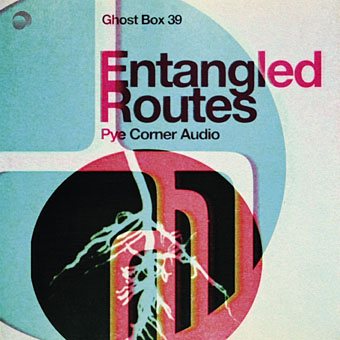
entangled.jpg

Ghost Box 39. Design, as always, is by Julian House.

Entangled Routes by Pye Corner Audio will be the next album on the Ghost Box label, due for release on 26th November. This will be Pye Corner Audio’s fourth album for Ghost Box, and one which forms the final part of a trilogy of imaginary soundtracks for science-fiction scenarios, “the latest installment of which plays with the idea of mycorrhizal networks and attempts by humans to listen in and communicate”.

• “…for every ten projects I start, nine will probably fall by the way side—they just don’t get made. Nothing happens, you can’t find the tapes, you can’t find the rights holders, the tapes were destroyed, no one’s interested.” Jonny Trunk interviewed at Aquarium Drunkard.

• At Unquiet Things: S. Elizabeth is celebrating the first anniversary of The Art Of The Occult (previously) by giving away a signed copy of her book to one of the commenters on this post.

• “Sand is not only temporary, it is also the most temporised form of matter.” Steven Connor on the dust that measures all our time.

• Mixes of the week: Autumn Hymnal: A Mixtape by Aquarium Drunkard, and In Estonia with Bart de Paepe by David Colohan.

• “Touched by the hand of Ithell: my fascination with a forgotten surrealist.” Stewart Lee on Ithell Colquhoun.

• Skin trade: a playlist of percussion at the outer limits; Valentina Magaletti surveys alternatives to the conventional kit.

• At Wormwoodiana: Mark Valentine reviews The Devil At Saxon Wall by Gladys Mitchell.

• “The Show: Alan Moore brings vaudevillian dazzle to Northampton noir,” says Phil Hoad.

• At Bandcamp: A Guide to the Eclectic Funk Music of Bernie Worrell by John Morrison.

• At Dennis Cooper’s: Spotlight on…Octave Mirbeau The Torture Garden (1899).

• At Spine: Vera Drmanovski on redesigning the novels of Hermann Hesse.

• New music: Music For Psychedelic Therapy by Jon Hopkins.

South To The Dust (1990) by Ginger Baker | Into Dust (1993) by Mazzy Star | Photon Dust (2020) by Pye Corner Audio

Crank book covers

kolosimo2.jpg

Cover art by Tony Roberts, 1974. A book I received as a present for Christmas, 1974. Also the first place I encountered the words “Popol Vuh”, before discovering the music of Florian Fricke and co. a few years later.

Yes, “crank” is a pejorative word but it’s used with some degree of affection, as in “harmless crank”. It’s also a convenient umbrella term for the books referred to in the weekend post which embrace diverse subjects, from lost continents and “Earth energy” to ancient astronauts and flying saucers.

The prime crank decade was the 1970s, a period when publishers were falling over themselves to cash-in on the massive popularity of Erich von Däniken’s dubious investigations, while also catering to the by-products of the hippy era and the occult revival. Books by Charles Fort, Immanuel Velikovsky and James Churchward (the Mu series) all received reprints, with some appearing in paperback for the first time. The British editions of these books were published by imprints like Corgi, Panther and Sphere who were also publishing large quantities of science fiction, a situation that led to many crank titles being packaged as though they were fiction or fantasy. Sphere was in the vanguard, presenting a wide range of books with the same cover designs, cover artists and Novel Gothic typeface as their SF titles. A cynical move, no doubt, but it also makes the crank books seem more like fiction than their authors might have intended.

This post presents a selection of crank titles with cover art by SF artists but there are many more examples out there. (Watch the skies!) I’ve limited the selection to British publishers but the same syndrome was evident in American publishing, as documented at Absolute Elsewhere. And I’ve included a couple of books by sceptics John Sladek and Dr. Christopher Evans. These were intended to dismantle the claims of L. Ron Hubbard, Erich von Däniken and co. but were still packaged in paperback to resemble the books they were attacking. The major demolition of Von Däniken is Ronald Story’s The Space Gods Revealed but covers for that one have always been relatively restrained.

Missing from this list are three paintings by SF artist Peter Jones for books by Dr. Celia Green. The art may be seen in Jones’s Solar Wind collection but I couldn’t find any of the printed covers, which suggests they had a limited run if they were printed at all. These are odd for being typical fantasy imagery attached to serious studies of lucid dreaming and out-of-body experiences. Dr. Green is a philosopher and science researcher (she coined the term “out-of-body experience”) so she doesn’t belong on a crank list in any case. Also absent is the most popular British cover illustrator of the decade, Chris Foss, who would have been too busy working through his fiction commissions and creating designs for feature films.

kolosimo1.jpg

Cover art by Tony Roberts (?), 1974.

evans.jpg

Cover art by Bruce Pennington, 1974.

Evans was a computer scientist, an occasional contributor to New Worlds magazine, and also the model for the deranged Vaughan in JG Ballard’s Crash. Cults of Unreason investigates crank sects such as the flying-saucer worshippers of the Aetherius Society (hence the cover art), and the Scientologists who caused a stir in Britain in the 1960s when L. Ron Hubbard set up an outpost at East Grinstead.

fort2.jpg

Cover art by Colin Hay, 1974.

fort1.jpg

Cover art by Angus McKie, 1979.

Continue reading “Crank book covers”

Weekend links 589

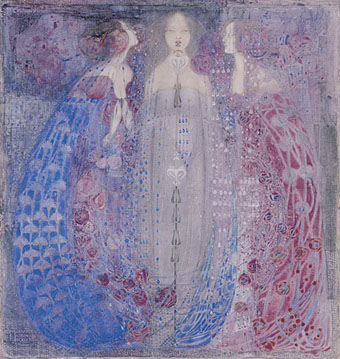
mackintosh.jpg

The Three Perfumes (1912) by Margaret Macdonald Mackintosh.

• “…we have empowered this monopoly to strike fear into the hearts of authors. And that may be unprecedented in history. Through our own complicity as consumers, their market share only grows.” Dave Eggers talking to Rachel Krantz about the dominance of Amazon, and his new novel, The Every.

• “People will readily flock to yoga and Pilates classes, but how many show up for soundscape therapy or take a sound-walk?” Bernie Krause on the healing powers of quietude, the Ba’Aka tribe, and Japanese forest bathing.

• “Difficulty is my drug of choice, I guess.” Dennis Cooper (again) talking to Troy James Weaver about his new novel, I Wished.

• At Wormwoodiana: Mark Valentine reviews Shadows of London by Jonathan Wood.

• Robert Fripp’s drive to 1981: Joe Banks on Discipline and the return of King Crimson.

• End times and rapture: Ken Hollings remembers Richard H. Kirk.

• Daniel Spicer on The Strange (Parallel) World of Miles Davis.

• Mix of the week: XLR8R Podcast 715 by Uffe.

• Steven Heller’s font of the month is Oposta.

Perfumed Metal (1981) by Chrome | Ode To Perfume (1982) by Holger Czukay | Perfume (2006) by Sparks

Born for Trouble

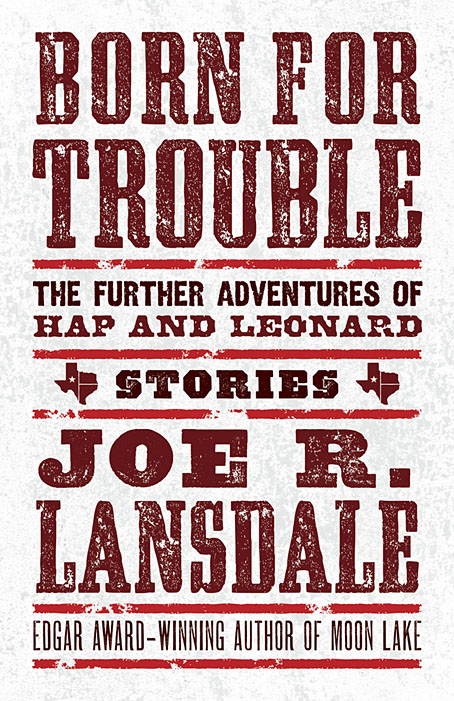
trouble.jpg

I said at the weekend that I’d recently designed an all-type cover, and here it is. This is my second design for Joe R. Lansdale’s detective duo, and like the earlier Of Mice and Minestrone this one went through more iterations than usual. It’s often the case that the more popular a book is likely to be, the more constraints will be imposed on the cover design. Hap and Leonard are very popular characters so this commission arrived with a number of prerequisites regarding the amount of text, the size of the type and so on. It also required the inclusion of the word “Stories” to emphasise that the book is a story collection rather than a novel. The latter feature is a recent trend in American publishing, one that follows the not-so-recent trend of appending the words “A Novel” to the covers of…novels. As a reader I find these labels to be superfluous and even mildly insulting but as a designer I have to follow the brief, and the brief was to present all of this information in a suitably harmonious manner. Most of the early iterations tried to do this with the addition of some illustrative graphics but the results were persistently unsatisfactory, hence the decision to let the type do the work.

Born for Trouble will be published by Tachyon in March 2022.

Previously on { feuilleton }
Foiled at last
Of Mice and Minestrone