
Weekend links 262

rozich.jpg

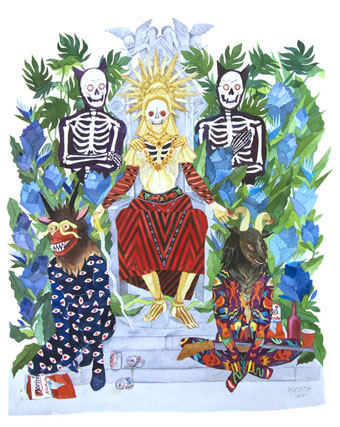
You’ll Never Be Alone, Even In Death (2014) by Stacey Rozich.

• “But the CD-R format, which eventually replaced the mix tape, turned out to be a technological letdown. ‘CD-Rs are just such an unstable format,’ Margolis says. ‘When you made 10 cassettes, the 10 cassettes generally played. If you made 10 CD-Rs, 8 of them played and 2 of ’em skipped. So that partially explains why people are going back to cassettes—it’s a cheap format that actually works.'” A huge article by Lisa Hix on the history and resilience of cassette tapes.

• “The word speculative comes from speculum, or mirror, and with speculative music the goal is to mirror the hidden processes of nature in sound.” David Metcalfe on Hawthonn, Coil and imaginal landscapes.

• Mixes of the week: FACT Mix 498 by The Cyclist, and Adventures In Sound And Music 28 May 2015 compiled by Joseph Stannard.

Nabokov was an intimate writer. His reticences, his formal estrangements, his denial of interest in any reality beyond the text all need to be measured against that. Maximum closeness: not the closeness of ostentatious empathy but the closeness of one mind addressing another in the most thrilling terms. He speaks into the ear, sometimes dripping a little poison. He contrives to have a reader identify intimately with a protagonist or narrator, but even that is not enough; the reader receives secret handshakes from the author himself, behind a narrator’s back.

Michael Dirda quoting from Nabokov in America by Robert Roper

• Books old and new: The Encyclopedia of the Dead by Danilo Kis, and Stranger Days by Rachel Kendall.

• At Dangerous Minds: Il caso Valdemar (1936), a short Italian adaptation of the Edgar Allan Poe story.

Lustpiel is “a new online magazine for gay, lustful literature”. And a fair amount of art and porn.

• “Q: Is there any subject that is never acceptable to joke about?” No, says Curtis Brown.

Machines Are Obsolete, a new piece by Pye Corner Audio for the Ghost Box label.

• Ishbelle Bee (see yesterday’s post) is interviewed at SFFWorld and Book Swoon.

Laura June on the life of Djuna Barnes, stunt reporter and shocking modernist.

• Stream the debut LP from Ghost Harmonic, a new John Foxx project.

• Portraits of the BDSM community by Natasha Gornik.

Rainer Werner Fassbinder: 10 essential films

Loplop

Mirrorball (2009) by John Foxx & Robin Guthrie | Mirror (2012) by Emptyset | Mirrored (2013) by Silje Nes

Weekend links 254

scdc.jpg

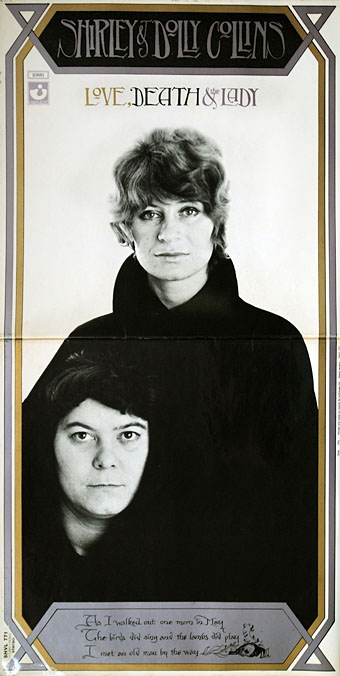
Gatefold sleeve for Love, Death and the Lady (1970) by Shirley & Dolly Collins. Photo by Allan Willmoth. No designer credited.

• “When you look at a lot of modern album covers, the art school obsession with the Helvetica kind of undermines it. So instead of looking at an artefact that comes from another place entirely, you are looking at an artefact that has been caught and tamed and made corporate.” Roger Dean talking to Liv Siddall about cover design in the 1970s.

• Erik Davis talks to Stephen Finley, author of Esotericism in African American Religious Experience, about hoodoo and metaphysical blackness. Related: Sun Ra’s Afrofuturist masterwork, Space Is The Place, has been reissued by Harte Recordings as a limited DVD, CD and hardcover book.

• “…she has managed to unearth a coal-seam of neglected songs and stories, incantations of the working people from across the English-speaking planet with their edge of discord left intact, the harmonies frayed by hard-won experience.” Alan Moore on the great Shirley Collins.

[MR] James’s influence, or his example, has rarely been more strongly with us than now. For there is presently apparent, across what might broadly be called landscape culture, a fascination with these Jamesian ideas of unsettlement and displacement. In music, literature, art, film and photography, as well as in new and hybrid forms and media, the English eerie is on the rise. A loose but substantial body of work is emerging that explores the English landscape in terms of its anomalies rather than its continuities, that is sceptical of comfortable notions of “dwelling” and “belonging”, and of the packagings of the past as “heritage”, and that locates itself within a spectred rather than a sceptred isle.

Such concerns are not new, but there is a distinctive intensity and variety to their contemporary address. This eerie counter-culture—this occulture—is drawing in experimental film-makers, folk singers, folklorists, academics, avant-garde antiquaries, landscape historians, utopians, collectives, mainstreamers and Arch-Droods alike, in a magnificent mash-up of hauntology, geological sentience and political activism. The hedgerows, fields, ruins, hills and saltings of England have been set seething.

Robert Macfarlane on the eerieness of the English countryside

• Lots of mixes to choose from this week: Songs from a Railway Station at Dusk by Abigail Ward; mix series The Ivy-Strangled Path by David Colohan is now up to Volume IV; a trove of occult psychedelia from The Ghost of the Weed Garden.

• “Blood Meridian was released on April 28, 1985 to little initial acclaim, but would later gain recognition as one of the most significant novels of the late 20th century.” Ted Gioia on the rise and fall of the Western.

• From the past week’s zones of research: the Gregory Pendennis Library Of Black Sorcery, and Vault Of Evil: Brit Horror Pulp Plus!

• At Dangerous Minds: Zappa meets claymation in the wonderful VHS rarity The Amazing Mr. Bickford.

Synthesizer manuals at the Internet Archive.

• Pages from The Graphic Canon at Pinterest.

Sabbath, a new song by Jenny Hval

French book covers

The Cruel Mother (1967) by Shirley Collins | The Unquiet Grave (1968) by Shirley Collins | Go From My Window (1970) by Shirley & Dolly Collins

German gear

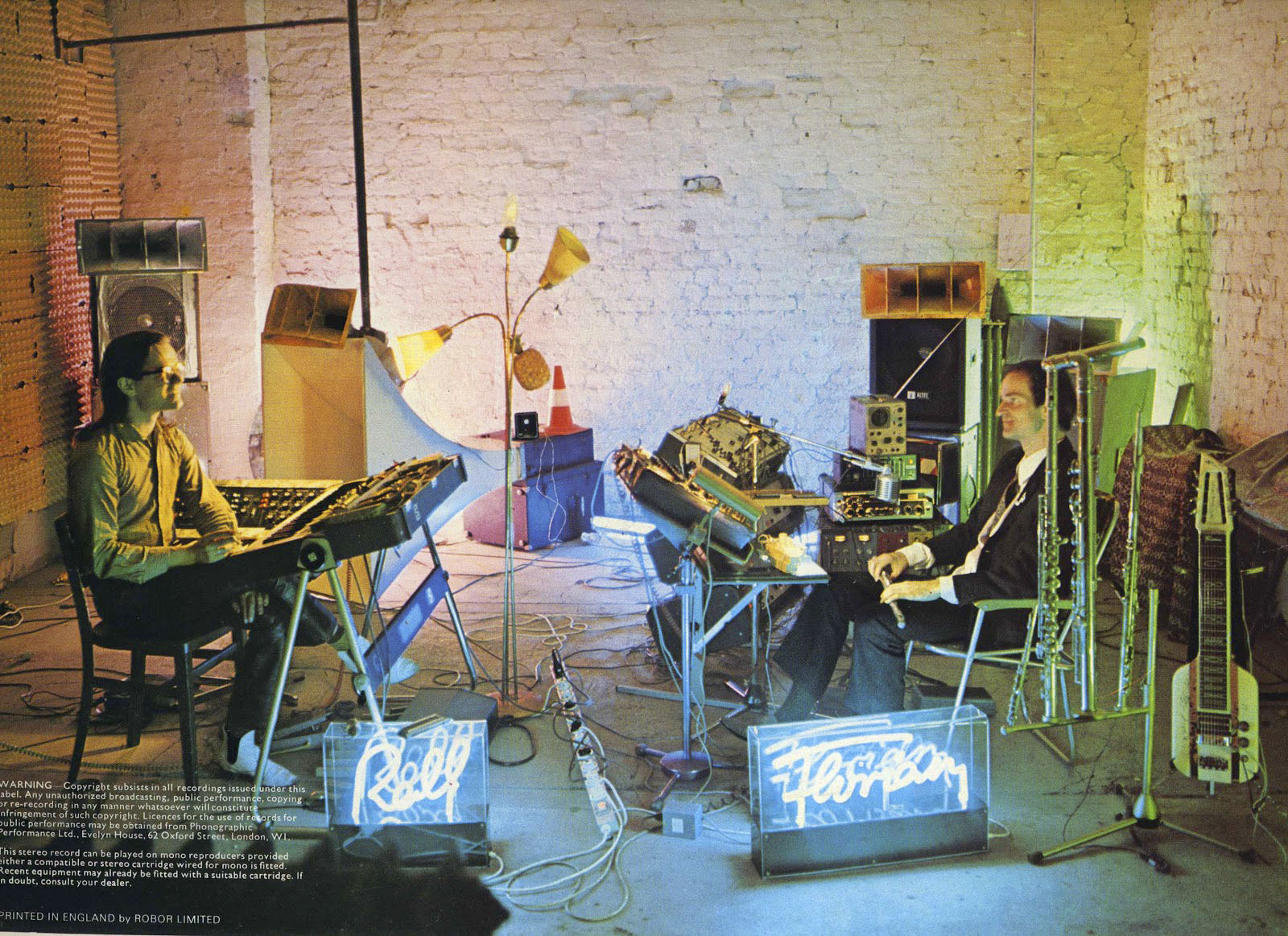
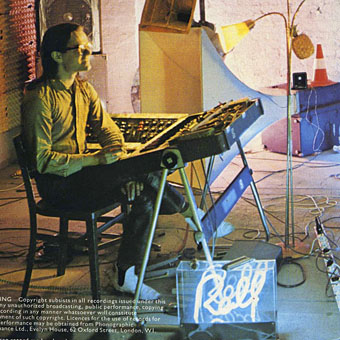
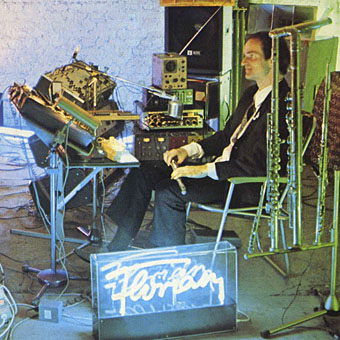
Ralf and Florian, 1973. Back cover photo by Barbara Niemöller.

At that time, Kling Klang Studio was far from the technological hub it would become. “The studio was a big room in an old factory building with brick walls,” recalls [Wolfgang] Flür. “There were big home-made speakers, amplifiers and so on. Florian had his side, with his flutes and one of the very first ARP Odyssey synthesizers, while Ralf’s side had Hammond and Farfisa organs and a Minimoog synthesizer.”

Andy Gill, Mojo magazine, April 1997

Last week’s Autobahn post prompted a week of revisiting Kraftwerk’s three pre-Autobahn albums, all of which remain unreissued. The photo that fills out the back cover of the third album, Ralf & Florian (1973), has appeared here twice before so if you want an example of an obsession look no further. I only have a bootleg CD of this one, a package that doesn’t do much for the photograph so I went searching for a larger copy.

ralf.jpg

The attractions, if you have to list them, are multiple: Ralf & Florian is Kraftwerk’s most human album, and the cover photos reflect this. Trans-Europe Express originally had pictures of the group on its sleeve (now replaced by the TEE train) but they were airbrushed, idealised portraits; the showroom-dummy personas they adopt there would turn into robots on the album that followed. There’s an overt sense of camp about the Ralf & Florian cover shots that runs counter to the tenor of rock music in 1973. The charts in Britain might have been filled with glam acts but for all their flirtatious androgyny they were selling the same assertive macho sexuality as the big rock bands of the time. One of the things I enjoy about this cover photo is its refusal to follow that crowd: the neon name signs, the standard lamp from a 1950s’ living room, Florian’s semiquaver brooch; all are effete enough to give Deep Purple the vapours. (The first UK release of Ralf and Florian replaced the cover photo of the pair with a printed circuit.) The closest comparison in the same year would be the sleeve for Brian Eno’s Here Come The Warm Jets with its shelves of dead flowers and junk-shop discoveries. But this wasn’t so surprising for an ex-member of Roxy Music, and Eno’s album is still very much a rock production.

florian.jpg

Then there’s the details: the egg-box soundproofing (Can used old mattresses to soundproof their studio); the enormous white speaker; the traffic cone that nods back to the sleeves of the first two albums and forward to the automotive theme of the next; Ralf’s white shoes (and is he wearing leather trousers?); Florian’s oscilloscope, his mysterious tone generators and that peculiar stringed instrument. This diverse range of gear somehow produced the music you’re listening to.

Continue reading “German gear”

Weekend links 243

burgoyne.jpg

Genesia (2011) by Bette Burgoyne.

• “…so I started buying these old gay porn novels, just for the covers and kept on collecting them.” Maitland McDonagh on the underexamined world of gay pulp. McDonagh’s 120 Days Books is reprinting some of these scarce titles. More gay erotica: Plans are afoot to republish Des Grieux, the rare prequel to Teleny or The Reverse of the Medal (1893), a novel often attributed (without much evidence) to Oscar Wilde.

Merricat is the name under which the Turrell Brothers, John & Tom, produce their atmospheric “nacht music”. Albums with titles such as Oneiros, Widdershins and Zerkalo give an idea of the spheres of interest. They also make short films, clips from which may be seen here.

• “Fascists don’t like satire. They don’t like it at all. And they especially don’t enjoy visual satire. Because of its unique power to communicate.” Ralph Steadman talking to Robert Chalmers about recent events.

There is an unexamined commonplace now floating around the social media, which has it that satire derogates its proper function when it stops targeting the powerful, and targets the relatively powerless instead. Theodor Adorno has also been cited here and there with his remarks on satire in the Minima Moralia of 1951, but few have noticed that the account he offers there stands in direct contradiction to the current received wisdom. For Adorno, satire is in its essence wistful and traditionalist. It looks back to something that has been lost, and dismisses the straight-facedness of everyone who attempts, against all evidence, to maintain the illusion that there is anything respect-worthy about the present state of things. It targets not just elected officials, but the yokels who elected them; not just the honcho who runs the saloon, but the sucker who hands over his last possessions at the poker table. There is a need for this: the yokels and the suckers need it most of all. There is redemption in it, and I confess to harboring whatever amount of traditionalism it takes to appreciate this redemptive quality.

Paris, 2015: a lengthy meditation by Justin EH Smith on the responses of left and right to the Charlie Hebdo killings

• “When the surface of the world is so overloaded with competing narratives…there is an understandable impulse to go underground.” Iain Sinclair on the excavation of London.

• More German music: Sinai Desert (1981) and Kailash, Pilgerfahrt Zum Thron Der Götter (no date), two films with music by Popol Vuh.

Kim Fowley: Sins & Secrets of the Silver Sixties. UglyThings Magazine makes available its definitive Fowley interview from 2001.

• More electronica and mix of the week: the FACT guide to the Yellow Magic Orchestra and associates.

• Vegetable-snake Undersea Beings: Allen Ginsberg writes to the Paris Review about LSD in 1966.

• The Edge Question for 2015: What do you think about machines that think?

Life of Cats: Selections from the Hiraki Ukiyo-e Collection.

Lake Baikal frozen over

Serial Killer Barbie

NGC 891 (1974) by Edgar Froese | Overture (1974) by Tangerine Dream | PA 701 (1976) by Edgar Froese

Weekend links 239

crystal.jpg

The Crystal Gazer (or The Magic Crystal, 1904) by Gertrude Käsebier.

• “I had to resort to extreme violence”: how Hipgnosis revolutionised the album sleeve. Aubrey Powell, last surviving member of the design team, talks to Joe Muggs.

• Mixes of the week: Radio Belbury: Programme 14; The Conjurer’s Hexmas by SeraphicManta; Secret Mix 139 by A Closer Listen.

• Social progress, high-speed transport and electricity everywhere: Iwan Rhys Morus on how the Victorians invented the future.

• At Cinephilia & Beyond: “The most complete investigation into the origins and making of Citizen Kane.”

Poor Souls’ Light: seven curious tales for the end of the year, and a dedication to Robert Aickman.

• Music and the Occult: Stuart Maconie and Rob Young spend an hour in the magick circle.

Alejandro Jodorowsky and Iain Sinclair in conversation at the British Library, July 2014.

• From 1972: An unpublished Victor Moscoso interview by Patrick Rosenkranz.

The Spooky Story Behind Hollywood’s Favourite Mansion.

The Lost World of British Tape Recording Clubs.

• 2014 was a year of outrage.

Wyrd Daze issue 11

Inspirograph

• Pepper-Tree (1984) by Cocteau Twins | Otterley (1984) by Cocteau Twins | Aikea-Guinea (1985) by Cocteau Twins