Peculiar Shocks

bodyshocks02.jpg

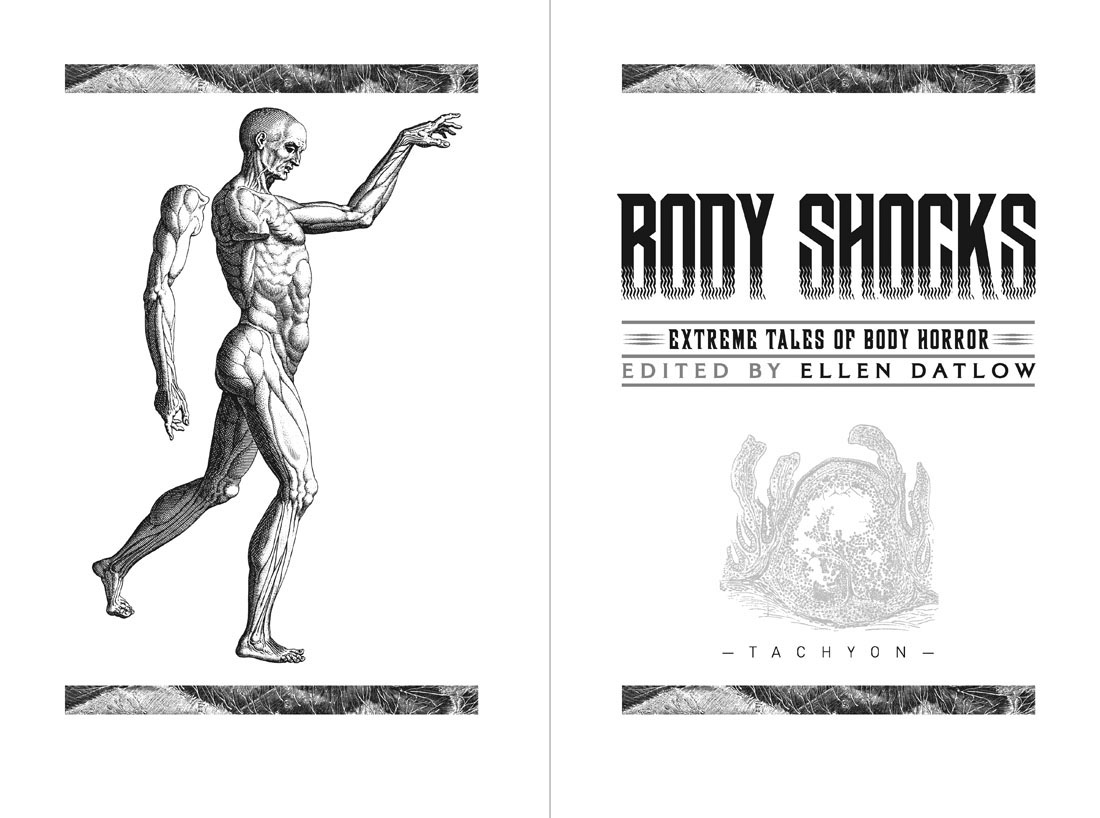
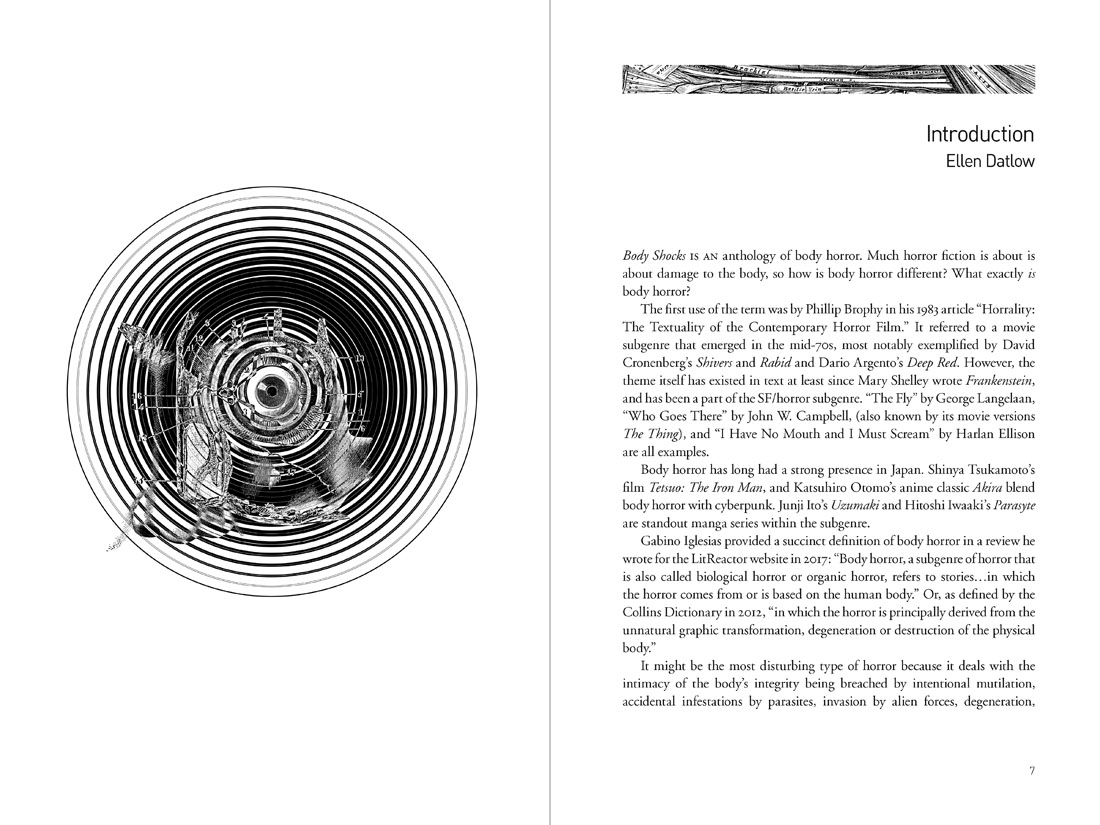
My cover design for Body Shocks, the body-horror story collection edited by Ellen Datlow, appeared here back in March. Now that the book is out from Tachyon I can show some of the interior design. In the earlier post I mentioned cover drafts that featured anatomical illustrations, none of which worked as well as the eyeball collage that became the final cover. The rejected pieces were better suited to the interior which combines engraved illustrations with the kind of sans-serif typography you might find on modern medical labels.

bodyshocks03.jpg

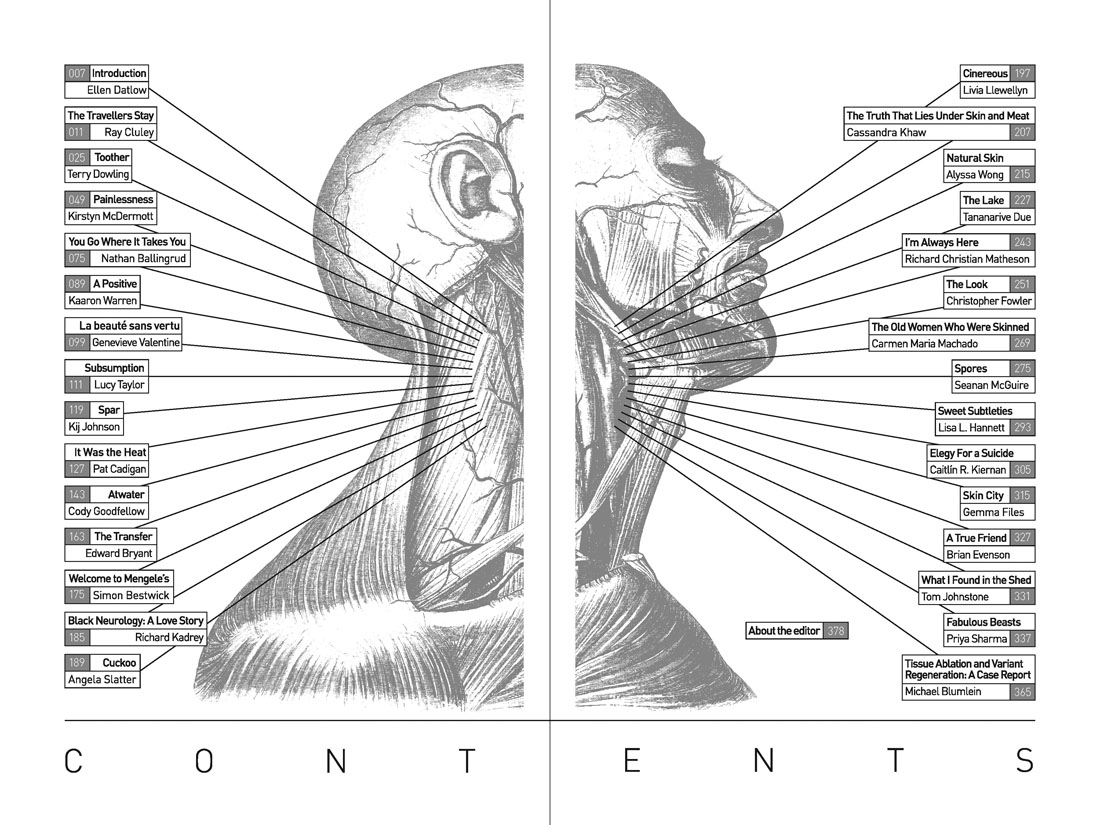
The diagram of veins that fills out the contents spread looks like an illustration from a 19th-century edition of Gray’s Anatomy but it’s actually an illustration from a book about massage whose title I don’t seem to have made a note of. Gray’s is a thorough volume, being a complete guide to the human body, but the illustrations aren’t as large or as detailed as those you can find elsewhere. The header bands used to indicate the beginning of each story are from Gray’s, however, while many of the stories end with full-page plates from The Anatomy of Humane Bodies by William Cowper. These are mostly engravings of autopsies which I processed by inverting the images then overlaying them with parallel lines. You can still tell the pictures are medical illustrations but they’re not as obtrusive as they would be if they’d been left untreated.

bodyshocks04.jpg

Continue reading “Peculiar Shocks”

Crank book covers

kolosimo2.jpg

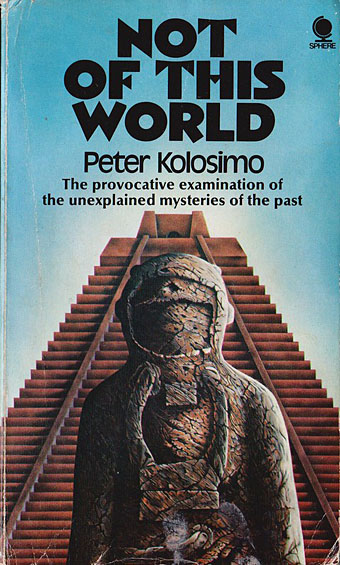
Cover art by Tony Roberts, 1974. A book I received as a present for Christmas, 1974. Also the first place I encountered the words “Popol Vuh”, before discovering the music of Florian Fricke and co. a few years later.

Yes, “crank” is a pejorative word but it’s used with some degree of affection, as in “harmless crank”. It’s also a convenient umbrella term for the books referred to in the weekend post which embrace diverse subjects, from lost continents and “Earth energy” to ancient astronauts and flying saucers.

The prime crank decade was the 1970s, a period when publishers were falling over themselves to cash-in on the massive popularity of Erich von Däniken’s dubious investigations, while also catering to the by-products of the hippy era and the occult revival. Books by Charles Fort, Immanuel Velikovsky and James Churchward (the Mu series) all received reprints, with some appearing in paperback for the first time. The British editions of these books were published by imprints like Corgi, Panther and Sphere who were also publishing large quantities of science fiction, a situation that led to many crank titles being packaged as though they were fiction or fantasy. Sphere was in the vanguard, presenting a wide range of books with the same cover designs, cover artists and Novel Gothic typeface as their SF titles. A cynical move, no doubt, but it also makes the crank books seem more like fiction than their authors might have intended.

This post presents a selection of crank titles with cover art by SF artists but there are many more examples out there. (Watch the skies!) I’ve limited the selection to British publishers but the same syndrome was evident in American publishing, as documented at Absolute Elsewhere. And I’ve included a couple of books by sceptics John Sladek and Dr. Christopher Evans. These were intended to dismantle the claims of L. Ron Hubbard, Erich von Däniken and co. but were still packaged in paperback to resemble the books they were attacking. The major demolition of Von Däniken is Ronald Story’s The Space Gods Revealed but covers for that one have always been relatively restrained.

Missing from this list are three paintings by SF artist Peter Jones for books by Dr. Celia Green. The art may be seen in Jones’s Solar Wind collection but I couldn’t find any of the printed covers, which suggests they had a limited run if they were printed at all. These are odd for being typical fantasy imagery attached to serious studies of lucid dreaming and out-of-body experiences. Dr. Green is a philosopher and science researcher (she coined the term “out-of-body experience”) so she doesn’t belong on a crank list in any case. Also absent is the most popular British cover illustrator of the decade, Chris Foss, who would have been too busy working through his fiction commissions and creating designs for feature films.

kolosimo1.jpg

Cover art by Tony Roberts (?), 1974.

evans.jpg

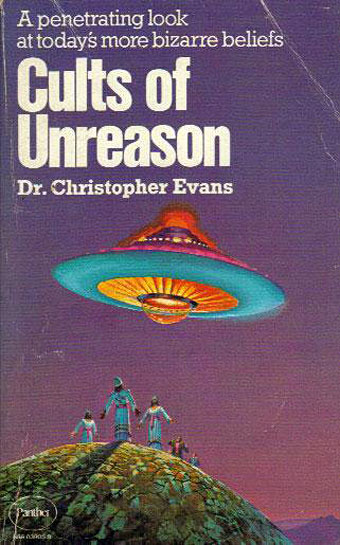
Cover art by Bruce Pennington, 1974.

Evans was a computer scientist, an occasional contributor to New Worlds magazine, and also the model for the deranged Vaughan in JG Ballard’s Crash. Cults of Unreason investigates crank sects such as the flying-saucer worshippers of the Aetherius Society (hence the cover art), and the Scientologists who caused a stir in Britain in the 1960s when L. Ron Hubbard set up an outpost at East Grinstead.

fort2.jpg

Cover art by Colin Hay, 1974.

fort1.jpg

Cover art by Angus McKie, 1979.

Continue reading “Crank book covers”

Weekend links 586

ertz.jpg

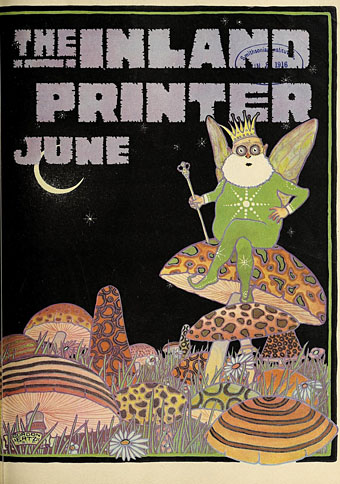
Cover by Gordon Ertz for The Inland Printer, June 1916.

• “I worry that enthusiasm is being mistaken for a moral virtue, and negative criticism for a character flaw.” Dorian Lynskey on the dying art of the hatchet job. Also a reminder (not that we require it) that the word “fan” in this context has always been an abbreviation of “fanatic”.

• Culture.pl explores the work of Stanisław Lem, the science-fiction writer “whose works, abilities and quirky sense of humor convinced Philip K. Dick that he was too brilliant to exist and must have actually been a committee of people”.

• The electronic music of Paul Schütze receives a reappraisal on Phantom Limb in November with a compilation album, The Second Law.

Aliya Whiteley on Amanita Muscaria, the hallucinogenic mushroom seen in hundreds of fairy-tale illustrations.

• Stuart Firestein talks to Roger Payne about changing the world’s attitude to whales by recording their songs.

• Jennifer Lucy Allan talks to Sam Underwood about his unique Acoustic Modular Synth.

Jóna G. Kolbrúnardóttir sings Odi Et Amo from Englabörn by Jóhann Jóhannsson.

• A forthcoming release on Dark Entries: Back Up: Mexican Tecno Pop 1980–1989.

• Luc Sante looks at Jim Jarmusch’s collages.

John Grant‘s favourite albums.

• RIP Michael Chapman.

• The Divination Of The Bowhead Whale (1978) by David Toop & Max Eastley | Keflavik: The Whale Dance (1980) by Richard Pinhas | Ballet For A Blue Whale (1983) by Adrian Belew

Weekend links 584

crowley.jpg

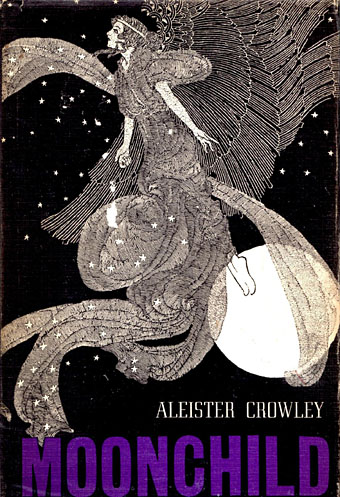
Cover for the 1970 US edition of Moonchild by Aleister Crowley. No artist credited (unless you know better…). Update: The artist is Dugald Stewart Walker, and the drawing is from a 1914 edition of Hans Christian Andersen’s fairy tales. Thanks to Mr TjZ!

• “…a very mid-Seventies cauldron of Cold War technology, ESP, sociology, black magic and white magic, experimental science and standing stones, secret radar and satanic rituals, whirring aerials and wild moors: a seething potion of Wyndham and Wheatley.” Mark Valentine on The Twelve Maidens, a novel by Stewart Farrar.

• “The line in the song ‘feed your head’ is both about reading and psychedelics. I was talking about feeding your head by paying attention: read some books, pay attention.” Grace Slick explains why those three little words have been attached to these pages since 2006.

Freddie deBoer reposted his “Planet of Cops” polemic, a piece I linked to when it first appeared in 2017, and which used to come to mind all the time before I absented myself from the poisonous sump of negativity that we call social media.

• RIP Charlie Watts. The Rolling Stones’ last moment of psychedelic strangeness is Child Of The Moon, a promo film by Michael Lindsay-Hogg featuring an uncredited Eileen Atkins and Sylvia Coleridge.

• Old music: A live performance by John Coltrane and ensemble of A Love Supreme from Seattle in 1965 that’s somehow managed to remain unreleased until now.

• A short film about Suzanne Cianni which sees her creating electronic sounds and music for the Xenon pinball machine in the early 1980s.

• “I’ll be in another world”: A rediscovered interview with Jorge Luis Borges.

Steven Heller explains why Magnat is his font of the month.

Clive Hicks-Jenkins on the allure of toy theatre.

• New music: Vexed by The Bug ft. Moor Mother.

• At Dennis Cooper’s: Nikola Tesla Festschrift.

Moon Child (1964) by The Ventures | Moonchild (1969) by King Crimson | Moonchild (1992) by Shakespears Sister

Weekend links 581

oz33.jpg

The back cover of Oz 33, February 1971. Art by Norman Lindsay.

Walker Mimms looks back 50 years to the trial of the editors/publishers of Oz magazine, in which the trio were accused of “conspiracy to corrupt public morals” following the appearance of Oz 28, the “Schoolkids Issue”, in May 1970. Elsewhere: corrupt your own morals by reading the offending issue; then see Hugh Grant in a hippie wig in The Trials of Oz, a BBC dramatisation of the courtroom drama; after which you can watch the real editors—Richard Neville, Jim Anderson and Felix Dennis—discuss the whole affair with other interested parties 20 years on (and also see Germaine Greer shame Jonathan Dimbleby into saying the word “cunt” on live TV).

• New music: Caves – A Compilation Of Silences by Other People (“This collection of silences and music can be used as timers for cooking, meditation, running, walking, sleeping or anything you want”), and Vaganten by ToiToiToi, the next release on the Ghost Box label.

Chris Carter‘s favourite albums. I think I own more of the albums listed here (including the ABBA) than any other entry in this long-running series. Which isn’t really surprising…

What I would say about that in general is what I’ve written in the new introduction to Teenage, which is that the 60s youth culture that we’ve been talking about, the progressive, critical side of it came as a complete surprise to adults. And once they identified what was going on, they were incredibly hostile, and authorities were incredibly hostile to it. And from the Thatcher government in the 80s you have a series of measures, a series of laws, a series of attitudes, a series of structures put in place to make sure that that never happens again. So youth itself has been deliberately depoliticised and also had a lot of the opportunities for any kind of autonomy taken away from it. That is, it has been a deliberate government policy right the way through, including Blair, and definitely with the current lot.

Echoes of the Oz debate in this discussion between Jon Savage and Owen Hatherley

• At Perfect Sound Forever: RIP Jon Hassell: honouring a one-of-kind musician/composer.

• At Spoon & Tamago: Edward Luper’s 36 Views of the BT Tower (after Hokusai).

• At Unquiet Things: Doorways into Awareness: An interview with Century Guild.

• Mix of the week: The Ivy-Strangled Path Vol. XXIV by David Colohan.

• Ghost notes: Michio Kurihara‘s favourite guitar solos.

• “Future space travel might require mushrooms.”

• At Dennis Cooper’s: Alexander Hammid Day.

Wyrd Daze Lvl.4 FIVE STAR is live.

Like A Tear (1968) by The World Of Oz | Return To Oz (2004) by Scissor Sisters | Il Pavone Di Oz (Praslesh Remix) (2014) by Verrina & Ventura