Golden apples and silver apples

yeats.jpg

The Wind Among the Reeds (1899). Cover design by Althea Gyles.

1: The Song of Wandering Aengus by WB Yeats.

I went out to the hazel wood,
Because a fire was in my head,
And cut and peeled a hazel wand,
And hooked a berry to a thread;
And when white moths were on the wing,
And moth-like stars were flickering out,
I dropped the berry in a stream
And caught a little silver trout.

When I had laid it on the floor
I went to blow the fire a-flame,
But something rustled on the floor,
And someone called me by my name:
It had become a glimmering girl
With apple blossom in her hair
Who called me by my name and ran
And faded through the brightening air.

Though I am old with wandering
Through hollow lands and hilly lands,
I will find out where she has gone,
And kiss her lips and take her hands;
And walk among long dappled grass,
And pluck till time and times are done,
The silver apples of the moon,
The golden apples of the sun.


bradbury.jpg

Illustration by Joe Mugnaini.

2: The Golden Apples of the Sun (1953), a story collection by Ray Bradbury.


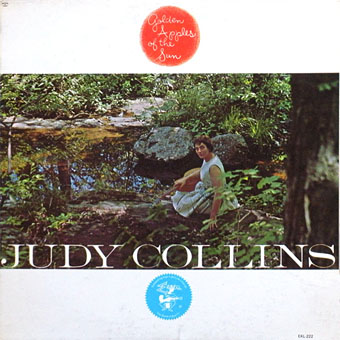
judycollins.jpg

Cover design by William S. Harvey.

3: Golden Apples of the Sun (1962), the debut album by Judy Collins. The first track is her setting of The Song of Wandering Aengus.


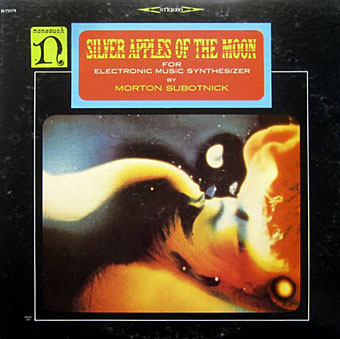
subotnick.jpg

Cover design by William S. Harvey. Artwork by Anthony Martin.

4: The Silver Apples of the Moon (1967), an album of electronic music by Morton Subotnick.


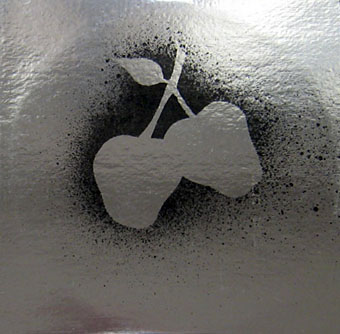
silverapples.jpg

Artwork by Anonymous Arts.

5: Silver Apples (1968), an album of electronic music by Silver Apples.


donovan.jpg

Art Direction by Sid Maurer. Artwork by Patrick.

6: HMS Donovan (1971), a double album of poems for children set to music by Donovan. The second song on side four is The Song of Wandering Aengus.


goldenapples.jpg

Cover by Devendra Banhart.

7: The Golden Apples of the Sun (2004), a freak folk compilation selected by Devendra Banhart for Arthur magazine‘s Bastet label.

Previously on { feuilleton }
The Golden Apples of the Sun

Weekend links 125

cme.jpg

Coronal Mass Ejection from the surface of the Sun, August 31st, 2012.

• “Most of the main parts were recorded in a single day using Vangelis’s famous technique: try to play as many synths as possible at once.” Simon Drax on the prolific musical output of Zali Krishna. The new Krishna opus is Bremsstrahlung Sommerwind, free to download at the Internet Archive.

• The Northants International Comics Expo (N.I.C.E.) opens on September 22nd. Among the many attendees there will be Mr Alan Moore making his first convention appearance since 1987.

• “Isolated for one night in a boat overlooking the Thames, Geoff Dyer explores representations of reality through the lens of Joseph Conrad’s Heart of Darkness.”

Now seems the right time to revisit this secret archive of public broadcasting. It’s an antidote to the celebrity-led, format-driven nature of so many arts documentaries made today. It shows that it’s possible to produce TV that is both populist and experimental. And it also refutes the cliché that the 1970s was a decade only of crisis and downturn. “Feminism, political theatre, Ways of Seeing: I wasn’t thinking, ‘what a terrible time’. It was very dynamic, activist, political. Creatively it was very exciting. Yet all they show on those television retrospectives are episodes of Top of the Pops.”

Sukhdev Sandhu talks to Mike Dibb, the director of Ways of Seeing.

• From 1999: Colm Tóibín reviews A History of Gay Literature: The Male Tradition by Gregory Woods.

What We See: a song by Julia Holter & Nite Jewel with a film by Delaney Bishop & Jose Wolff.

Rick Poynor on The crash test dummy: from subcultural fringes to pop culture mainstream.

In his 1973 book on Joyce, Joysprick, Burgess made a provocative distinction between what he calls the “A” novelist and the “B” novelist: the A novelist is interested in plot, character and psychological insight, whereas the B novelist is interested, above all, in the play of words. The most famous B novel is Finnegans Wake, which Nabokov aptly described as “a cold pudding of a book, a persistent snore in the next room.” The B novel, as a genre, is now utterly defunct; and A Clockwork Orange may be its only long-term survivor.

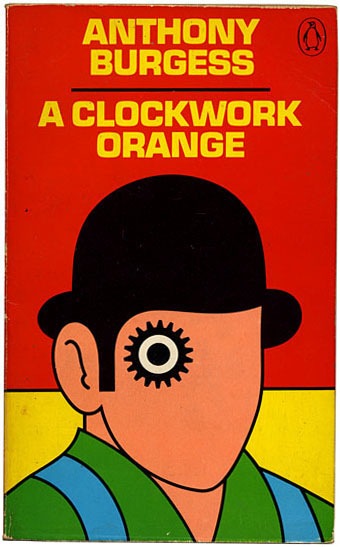
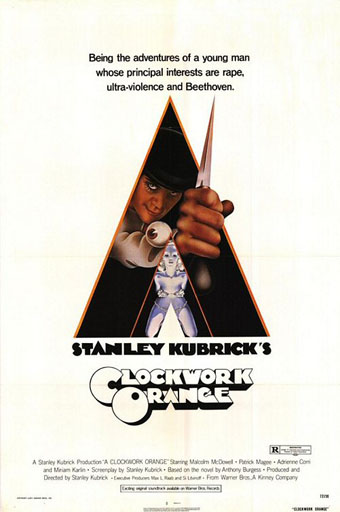
Martin Amis on A Clockwork Orange, fifty years on. My old post about the film’s record shop scene continues to be one of the most popular pages here.

• Wild Boys: David Bowie and William Burroughs in 1974, hand-coloured by DB.

Alfred Kubin‘s illustrations for Haschisch (1902) by Oscar AH Schmitz.

• Revolution off: industrial ruins photographed by Thomas Jorion.

• Tetrahedra of Space: 22 pulp illustrations by Frank R. Paul.

The Blue Boy Studiolo: a Tumblr.

Marina Warner visits Hell.

• The art of Casey Weldon.

RainyMood.com

Third Stone From The Sun (1967) by The Jimi Hendrix Experience | Sunrise In The Third System (1971) by Tangerine Dream | 3rd From The Sun (1982) by Chrome.

The Bookman Histories

bookman.jpg

Now that Angry Robot books has revealed the cover design which kept me busy throughout July I can do the same here. The Bookman Histories is an omnibus reprinting of Lavie Tidhar‘s steampunk trilogy which comprises The Bookman, Camera Obscura and The Great Game. The stories are frenetic, crowded with incident and feature a huge range of characters that find real people such as Jules Verne and Harry Houdini encountering contemporaries—both human and non-human—from the fiction of the late 19th century. All the requisite steampunk boxes are ticked. David Icke will be thrilled to know that in these books the British royal family are a bunch of lizards from space…

My initial impulse when faced with far too much material was to cram every square centimetre of the cover with detail but if I’d have done that I’d probably still be working on it, and would also have run the risk of it turning into an incoherent mess. So this layout, which is crowded enough, is something of a compromise. I also wanted to save some space for the title design.

bookman2.jpg

The main body of the title isn’t a font but was created from scratch based on letterforms and decorative elements from this fantastic set of fire insurance title pages. I’d been wanting to try something based on these hand-drawn designs ever since Mr Peacay posted them at BibliOdyssey last year. This particular design provided the basic letter shapes although I had to invent several of missing characters.

bookman3.jpg

In the third part of the trilogy the Martians from HG Wells’ War of the Worlds invade, so I spent rather too much time fashioning a Martian tripod from lots of tiny bits of machinery. This is one of the earlier drafts. It was an odd thing finishing this cover (which includes the planet Mars in the background) whilst the world was getting excited by the real landing on Mars of the Curiosity Rover.

The Bookman Histories will be published in March next year. Meanwhile there’s more steampunk design on its way. Watch this space.

Previously on { feuilleton }
Aether Cola
Crafting steampunk illustrations
SteamPunk Magazine
Morlocks, airships and curious cabinets
The Steampunk Bible
Steampunk Reloaded
Steampunk overloaded!
More Steampunk and the Crawling Chaos
Steampunk Redux
Steampunk framed
Steampunk Horror Shortcuts

Raymond Bertrand’s science fiction covers

bertrand01.jpg

Work by the elusive French artist Raymond Bertrand has appeared here before although the art continues to be more visible (if obscure) than the man himself. Bertrand’s most famous drawings are the naked women that appeared on the cover of issue 28 of Oz magazine, the notorious School Kids Issue, but I don’t think he was credited for the usage and his name is never mentioned when the magazine is discussed. Looking for information about the Chute Libre books at French SF site Noosfere led me to an entry for Bertrand’s work. The list doesn’t include any of the book collections of his drawings but does have these magazine covers which feature some pieces I hadn’t seen before.

bertrand02.jpg

Fiction was the leading French SF magazine, and sported a fascinating range of cover art especially from the mid-60s on. Artists at that time included Philippe Druillet and Philippe Caza, both of whom would become big names in the comics world a few years later. Galaxie was the French edition of American magazine Galaxy, and featured unique material among its translations of Anglophone works. Being French, there’s a greater amount of flesh on display than you’d find on magazine covers in the US and UK; some of this is as salacious as anything else from the period although at least one of the artists drawing naked females was a woman, Sophie Busson. Naked females emerging from—or being absorbed by—strange vegetation, polyps or aquatic organisms were Bertrand’s métier so that’s mostly what one finds here. Few of the covers seem to relate to the magazine’s contents, the artists appear to have been free to draw what they liked; in the case of Druillet that means his usual Lovecraftian architecture. An exception is issue 198 of Fiction which has an article about Bertrand’s work by Jacques Chambon: Raymond Bertrand ou de l’amour de l’art à l’art de l’amour. I’m hoping now that someone might be good enough to translate that piece for us lazy Anglophones.

And speaking of former Oz artists, Renaud Leon left a message recently with news that YouTube now has a channel featuring many examples of Jim Leon’s remarkable paintings.

bertrand03.jpg

bertrand04.jpg

Continue reading “Raymond Bertrand’s science fiction covers”

Chute Libre science fiction

chutelibre01.jpg

La Jungle Nue (A Feast Unknown, 1974). Illustration de Alain Le Saux.

Chute libre means “free fall” in French, and here refers to an imprint of French publisher Champ Libre that from 1974 to 1978 reprinted a series of science fiction titles under that name. The imprint is notable for a number of reasons, not least the striking covers which impress with their uniform design and bold imagery. The combination of black cover with vivid artwork is very similar to the covers Penguin were producing for their SF titles a few years earlier but since there’s little written anywhere about the French books I can’t say whether this was an influence or merely coincidence. I’ve not been able to find a complete list of all the illustrators either. At least two of the covers are the work of Moebius, rare examples of him being commissioned outside the comics medium.

The other notable aspect of the imprint is the books themselves which are an odd mix of the outrageous and sexually provocative end of SF spectrum, together with more usual fare. Some of the covers play to the provocation more than is necessary: Michael Moorcock has always been pleased by the attention his work receives in France but I’ll bet he hates that cover. Several of these titles appeared as SF in the 1970s because of other work by their authors despite there being nothing overtly science fictional about The Atrocity Exhibition or Breakfast in the Ruins. Farmer’s A Feast Unknown and The Image of the Beast/Blown are violent and sexually excessive, and feature little genre material, but managed to slide onto the SF shelves for the same reason. Every so often I wonder whether any of these books (or books like them) would be offered to, or accepted by, genre publishers today.

As usual, if anyone can supply information about the missing illustrators then please leave a comment.

chutelibre02.jpg

Comme une Bête (Image of the Beast, 1974). Illustration by Moebius.

chutelibre03.jpg

Les Culbuteurs de l’Enfer (Damnation Alley, 1974). Illustration by Jean-Claude Castelli.

chutelibre04.jpg

Le Chaos Final (The Men in the Jungle, 1974).

Continue reading “Chute Libre science fiction”