Weekend links 343

carrington.jpg

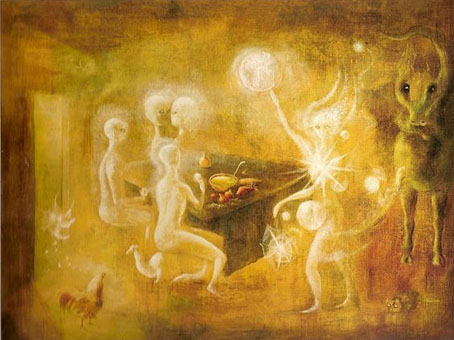
Sidhe, the white people of the Tuatha Dé Danann (1954) by Leonora Carrington.

• January brings a wealth of recommended-reading lists for the new year, together with the feeling that many of those lists are merely clones of each other. Not so the recommendations at Strange Flowers which also includes links to forthcoming events such as this exhibition of Symbolist art at the Guggenheim, New York.

Some Ceremonies are Better than Others, an exhibition of sound objects and drawings by Matthias König & Ibrahim R. Ineke inspired by Arthur Machen’s The White People, at The Bries Space, Borgerhout, Belgium, from 21st January. Previously: Ineke’s comic-strip adaptation of the Machen story.

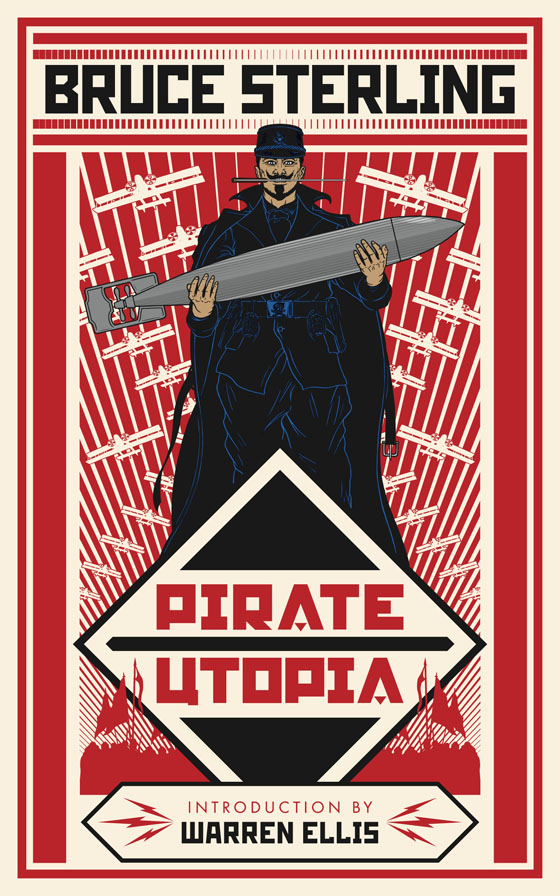
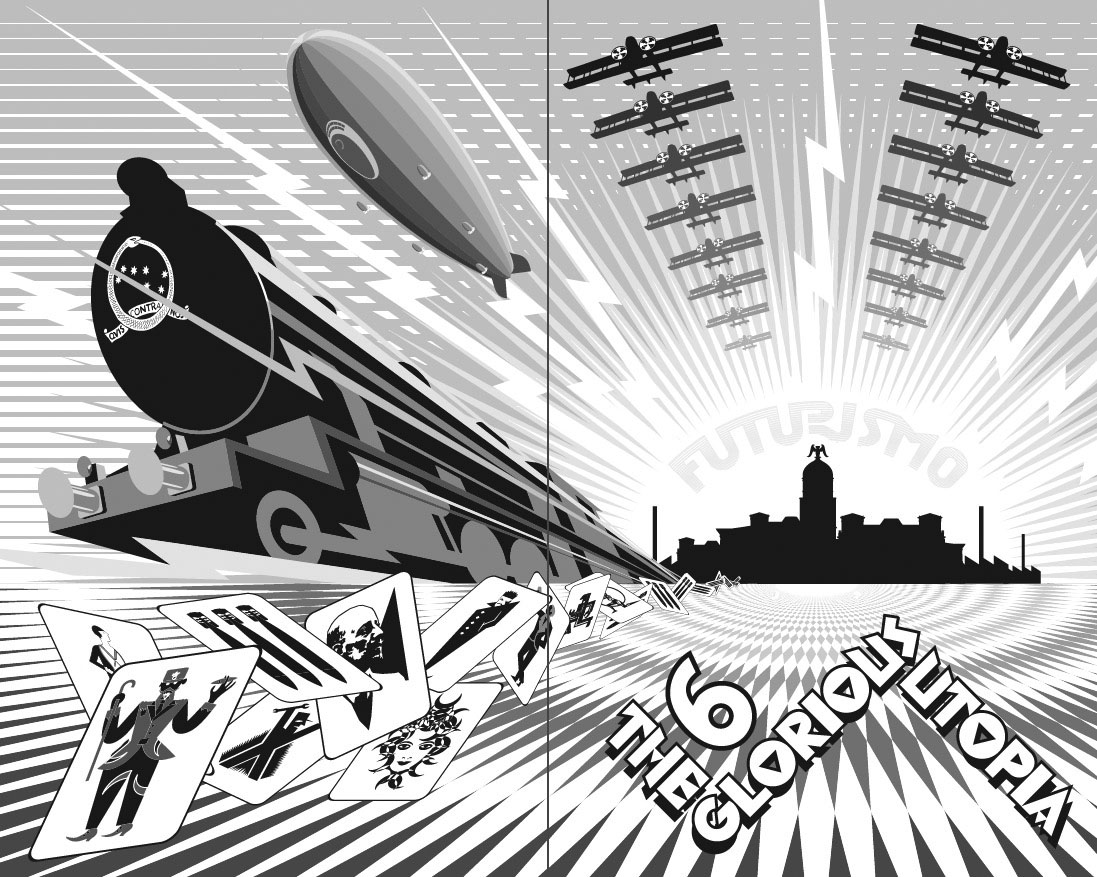
• “These must-reads explore Dada, Futurism, Surrealism, and the art of opposition,” says Carol Cooper. One of the titles under discussion is the Bruce Sterling book I designed and illustrated last year, Pirate Utopia. Sterling talked to Wired about the book and its relation to the present moment.

RIP Mark Fisher, a cultural theorist whose death was announced just as extracts from his latest book, The Weird and the Eerie, were beginning to appear. One of those extracts is at The Quietus. Related: Fisher’s k-punk blog and its earlier incarnation.

James Cargill (ex of Broadcast) announces a debut release by his new group, Children of Alice. Related: Jonathan Miller’s 1966 TV film of Alice in Wonderland rescored with Broadcast songs.

We are the Martians: the Legacy of Nigel Kneale, a collection of Kneale-related essays and appreciations edited by Neil Snowdon, is finally appearing in print from PS Publishing.

• Pursuing paths hauntological, The Electric Pentacle offers “an unholy stew of library music, Kosmische, arcane ritual electronica, modular synthesisers and shortwave radio”.

• Mixes of the week: The Ivy-Strangled Path Vol. XVI by David Colohan, and Low Visibility Across Sunken Village by The Geography Trip.

• “With Reflection, [Brian Eno] offers generative music for a turbulent time,” says Geeta Dayal.

Anna Biller, director of The Love Witch, talks to New Jack Witch about her film.

• The story behind Gay Bob, the world’s first out-and-proud doll.

Alice (1969) by Jon Plum | Alice (1982) by The Sisters of Mercy | Alice (2009) by Sunn O)))

Weekend links 341

fountaingod.jpg

Fountain (1917) by R. Mutt (Marcel Duchamp), and God (1917) by Elsa von Freytag-Loringhoven.

• “What is there left to know about David Bowie? What is there left to unearth?” asks Ian Penman whose lengthy review of recent Bowie books is better by far than a shelf full of cash-in doorstops.

Strázci z hlubin casu is a collection of stories by HP Lovecraft and August Derleth from Czech publisher Volvox Globator. The book reprints artwork of mine on the cover and inside.

• Mixes of the week: Through December by David Colohan, At Alien Altars: A Conjurer’s Hexmas by Seraphic Manta, and Secret Thirteen Mix 204 by James Welburn.

• “Something vindictive resides in soot.” Timothy Jarvis on the weird fiction of Stefan Grabiński. From 2003: China Miéville on Grabiński.

• Paintings by Jakub Rozalski of eastern European peasants with mechas and werewolves.

Colm Tóibín on James Joyce’s A Portrait of the Artist as a Young Man, 100 years on.

Jesse Singal on why straight rural men (in the USA) have “bud-sex” with each other.

Mark Valentine recommends books on tasseography, or divination by tea leaves.

• “Northampton Calling: A Conversation with Alan Moore,” by Rob Vollmar.

Bill Schutt at Scientific American asks what human flesh tastes like.

Gwendolyn Nix on the Tritone, aka The Devil’s Musical Interval.

• At Dennis Cooper’s: _Black_Acrylic presents…Penda’s Fen Day.

• The latest Buddha Machine from FM3 is Philip Glass-themed.

Listen to The Wire’s top 50 releases of 2016

Tritone (Musica Diablo) (1980) by Tuxedomoon | Diabolus In Musica (1987) by The Foetus All Nude Review | Tritone (Musica Diablo) (2016) by Aksak Maboul

The George Dower Trilogy by KW Jeter

infernal.jpg

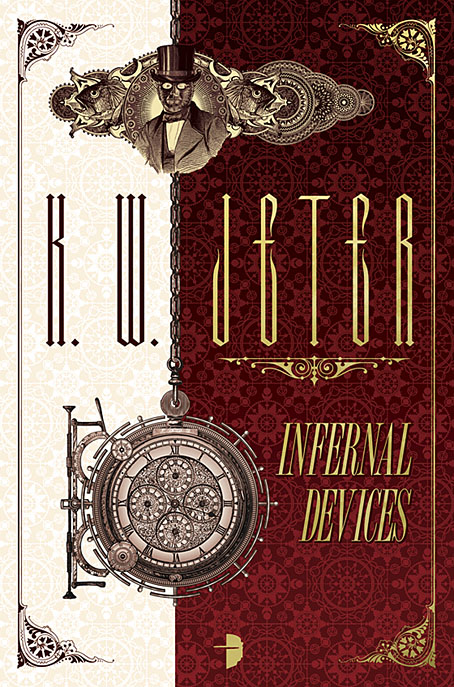
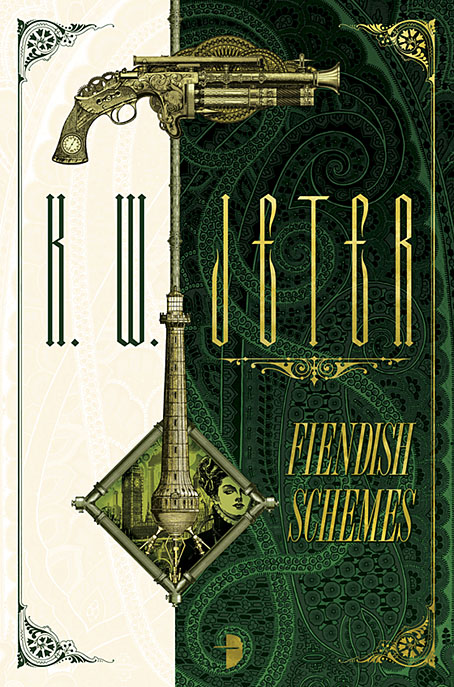
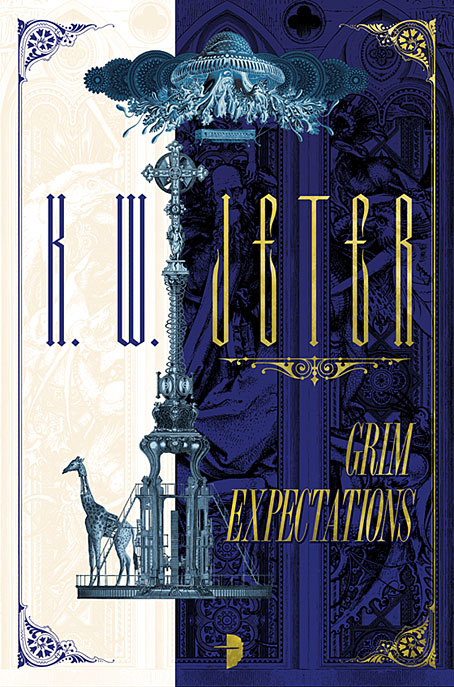
My latest covers for Angry Robot are a return to the world of steampunk, and also a return to the novels of KW Jeter, the man who not only wrote some of the pioneering novels of the sub-genre but also invented the term steampunk in the first place. Infernal Devices was one of the pioneering texts, and it’s a book that’s been very good to me in its earlier Angry Robot edition, with a cover design that’s been well-received around the world. (It still pops up regularly on the front page of Goodreads.)

infernal.jpg

The brief for the republication was to create fresh covers for Infernal Devices and for its two sequels; the second of these, Fiendish Schemes, was first published by Tor with (at the author’s request) another cover of mine that matched the Angry Robot design. Grim Expectations is a new novel which makes George Dower’s adventures in an alternate-history Britain into a trilogy. The request for the new designs was to avoid the detailed Victoriana of the earlier editions in favour of something that would suit the content but be a little more restrained. Mention was made of the Picador covers for Italo Calvino that Gary Day-Ellison designed with the Quay Brothers in the 1980s. Those covers are personal favourites so I was happy to use a similar vertical division with small illustrative elements, the details of which relate to the stories but without being too literal. My designs are a lot more florid in comparison to the Calvinos but then the content demanded a shift of emphasis. After having created a lot of steampunk art emblazoned with cogs of all shapes and sizes the one thing I didn’t want to do was use more cogs on these covers. So the background pattern for Infernal Devices is cog-like but is actually an abstract design I found in a book of 19th-century decoration. Similarly, the circle motifs at the top of each cover are also cog-like but are more Victorian embellishments.

infernal.jpg

All three books will be published in June 2017; a long time to wait but there’s more about the new novel—and the series as a whole—at Tor.com.

Previously on { feuilleton }
Steampunk in the Tank
More vapour trails
Steampunk catalogued
Steampunk: The Art of Victorian Futurism
Steampunk Calendar
Words and pictures
Nathanial Krill at the Time Node
Fiendish Schemes
Ghosts in Gaslight, Monsters in Steam
Steampunk Revolution
The Bookman Histories
Aether Cola
Crafting steampunk illustrations
SteamPunk Magazine
Morlocks, airships and curious cabinets
The Steampunk Bible
Steampunk Reloaded
Steampunk overloaded!
More Steampunk and the Crawling Chaos
Steampunk Redux
Steampunk framed
Steampunk Horror Shortcuts

Things

thing01.jpg

Art by Drew Struzan.

One of my current commissions is a piece of art for a book based on John Carpenter’s The Thing, due to be published next year. This was a request I agreed to immediately, having been astonished by the film when it appeared in 1982 (I saw it three times), and having rated it ever since as Carpenter’s best, as well as one of my all-time favourite horror films. I haven’t started on the planned piece just yet but the commission encouraged me to upgrade my DVD copy of the film to the Blu-ray version, and to also read for the first time John W. Campbell’s “Who Goes There?”, the short story that was the origin of both Carpenter’s film and The Thing From Another World (1951) directed by Christian Nyby. Reading the story set me hunting around for other interpretations of Campbell’s alien.

thing02.jpg

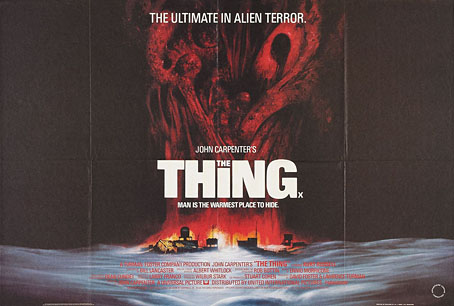
UK poster. Art by Les Edwards.

The story was instructive in several ways, the first being how closely Bill Lancaster’s script for the Carpenter film follows the story’s outline. The paperback collection I was reading has an introduction by James Blish which complains about the Howard Hawks/Christian Nyby production turning the polymorphous alien into another clone of Frankenstein’s monster. That’s true but the Nyby film still scared me to death when I first saw it aged 11 or so, and it has its merits. Lancaster not only stayed closer to the original shape-shifting premise but also kept many of the character names, plus details such as the blood test and the Thing’s attempt at the end to build a machine to escape from the encampment. The unforgettable opening, however, with the lone helicopter pursuing the dog, is all Lancaster’s.

thing03.jpg

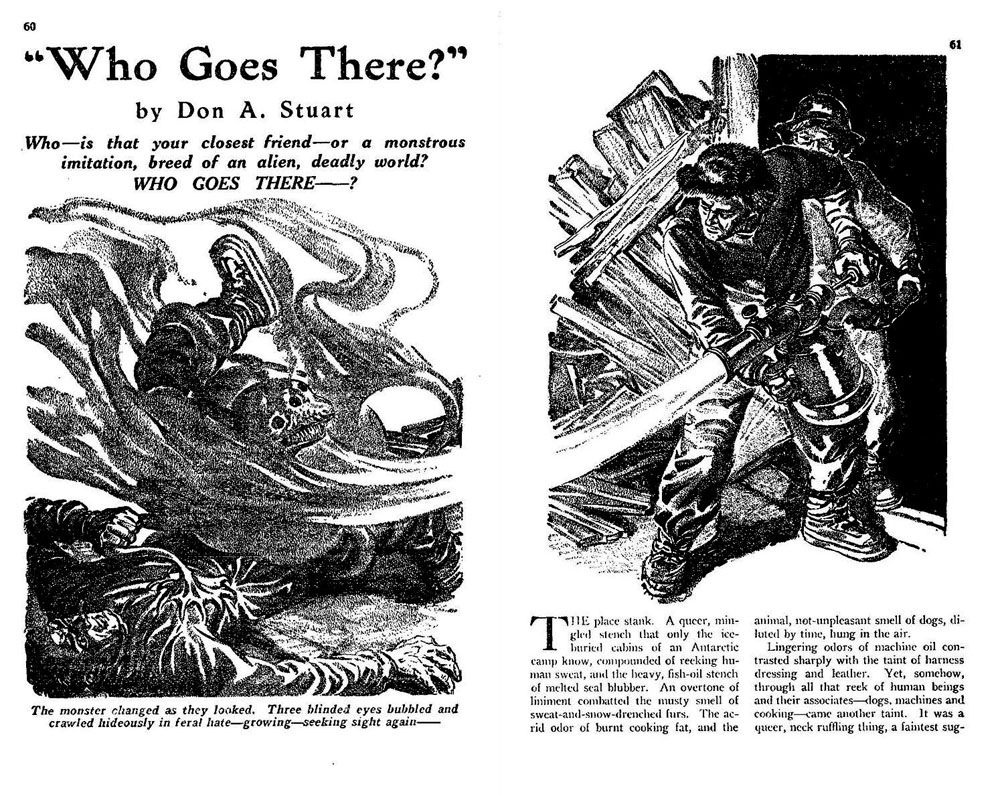
Astounding Science-Fiction, August 1938; artist unknown. “Don A. Stuart” was a pseudonym for John W. Campbell, at that time the newly appointed editor of Astounding. Campbell’s editorship changed the name of the magazine from Astounding Stories to Astounding Science-Fiction.

It was face up there on the plain, greasy planks of the table. The broken haft of the bronze ice-axe was still buried in the queer skull. Three mad, hate-filled eyes blazed up with a living fire, bright as fresh-spilled blood, from a face ringed with a writhing, loathsome nest of worms, blue, mobile worms that crawled where hair should grow—

Campbell’s description of the ice-bound alien is better than some of his writing elsewhere. I’m used to tempering my judgement when visiting stories written for the pulps but Campbell’s writing is really awful, and a reminder of why I never got very far with the early SF writers. Weird Tales magazine had its share of ham-fisted journeymen (and women), but Campbell’s contemporaries such as Clark Ashton Smith and HP Lovecraft read like the most finessed and mandarin prose stylists in comparison. Well, The Thing isn’t the first great film to be based on a poor-quality story so we can at least thank Campbell for his scenario, although how much of it was his own has never been clear. The idea of ancient aliens in Antarctica (some of which are amorphous shape-shifters) had already been explored by HP Lovecraft in At the Mountains of Madness; Lovecraft’s story was published in 1936 by Astounding Stories, the same magazine that published “Who Goes There?” two years later. This lineage, and the possible influence, makes The Thing one of the foremost Lovecraftian films even without all of its tentacled abominations.

thing04.jpg

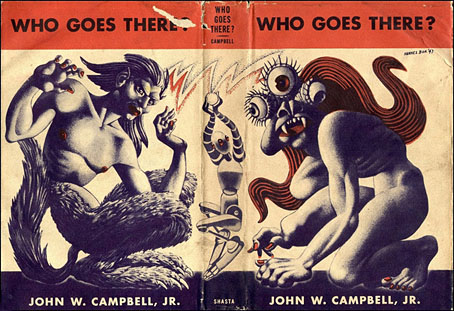
Art by Hannes Bok.

The story provided the title of Campbell’s debut collection of short fiction in 1948. I’ve known the Hannes Bok cover art for many years but hadn’t realised until recently that the three-eyed monster on the front was a Bokian rendering of Campbell’s alien. The figure on the back is presumably a human/husky hybrid, while I’d guess the robot relates to one of the author’s other stories.

Continue reading “Things”

Pirate Utopia by Bruce Sterling

pirateutopia.jpg

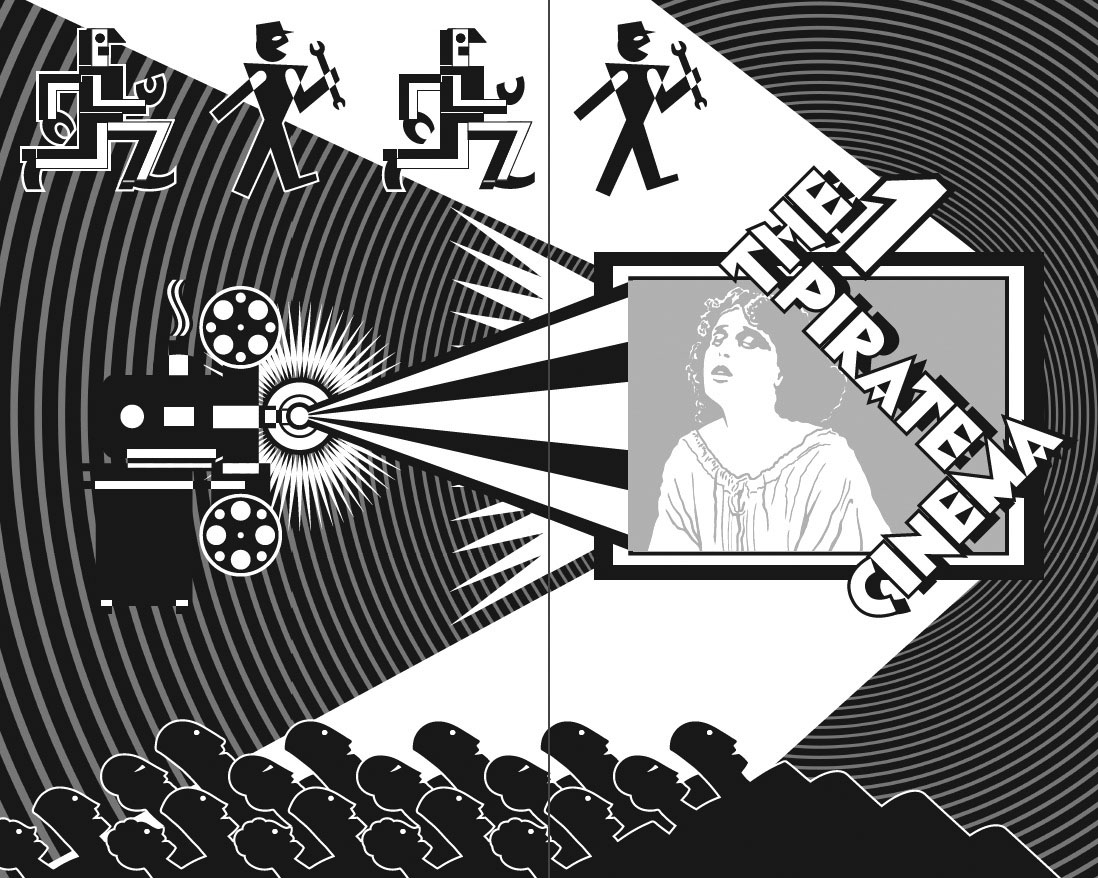
Here at last is the small hardback book I spent most of February and March working on. Pirate Utopia is published this week, and I’m pleased that it’s been very well received, with reviews drawing attention to the illustration and design as well as the text. This is a dieselpunk alternate history which begins in 1920:

WHO are these bold revolutionaries pillaging their confused European neighbours? The Futurists! Utopian outlaws of Italy’s tiny Regency of Carnaro, unlikely scourge of the Adriatic Sea!

It is the end of the Great War, and yet there is unrest in newly formed Carnaro. Carnaro is utterly in thrall to all things new, no matter how impractical or improbable. Futurism unites artists, pirates, propagandists, veterans, scientists, and libertines alike; military innovation and unabashed gratification rule the day. No one will rest until they crush Europe’s communists, capitalists, fascists, and bewildered coastal townsfolk.

But some have theorized that the Soldier-Citizens of Carnaro are not completely sane. At the dawn of mutiny, they are led by on ever-changing, passionate coterie, which may include:

* Lorenzo Secondari, the infamous Pirate Engineer, leader of ferocious Croatian raiders (and theatre enthusiasts)
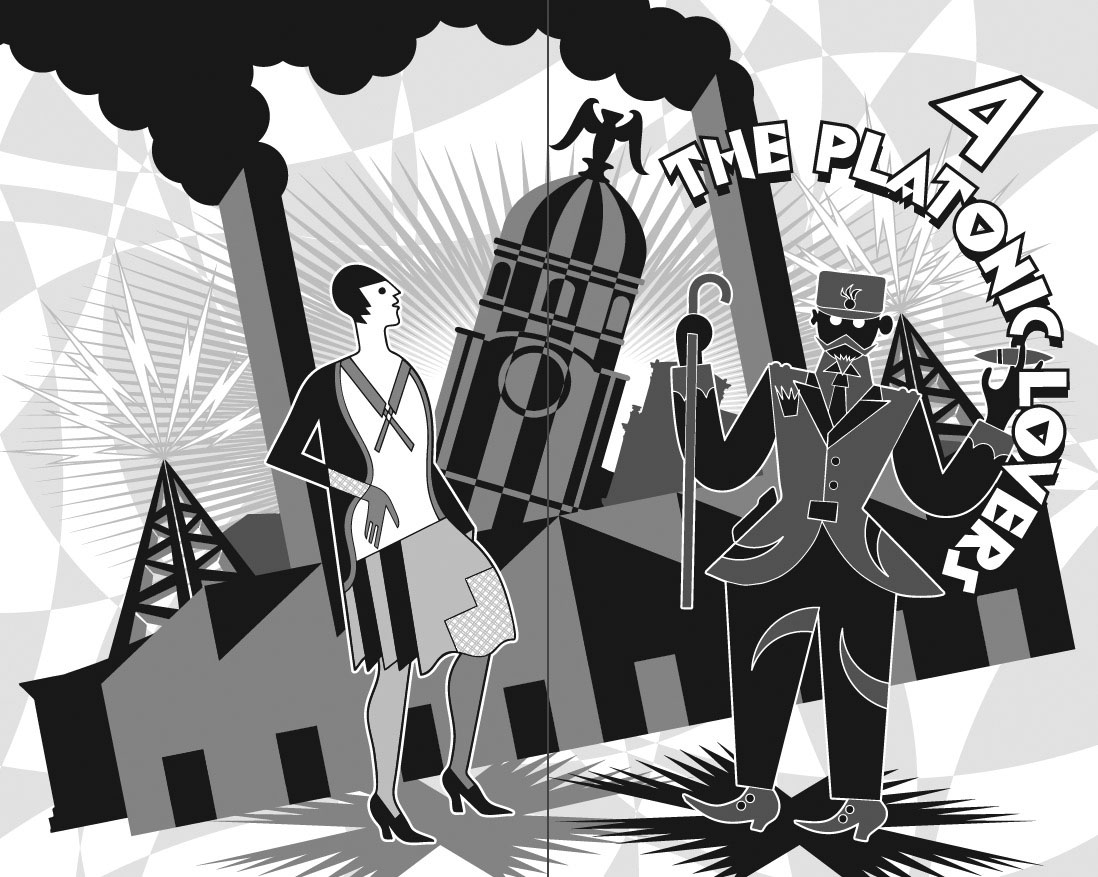
* Blanka Piffer, staunch patriot and smartly clad Syndicalist manager of a torpedo factory staffed exclusively by women
* The Prophet, charismatic warrior-poet ruthless dictator, and very active proponent of free love
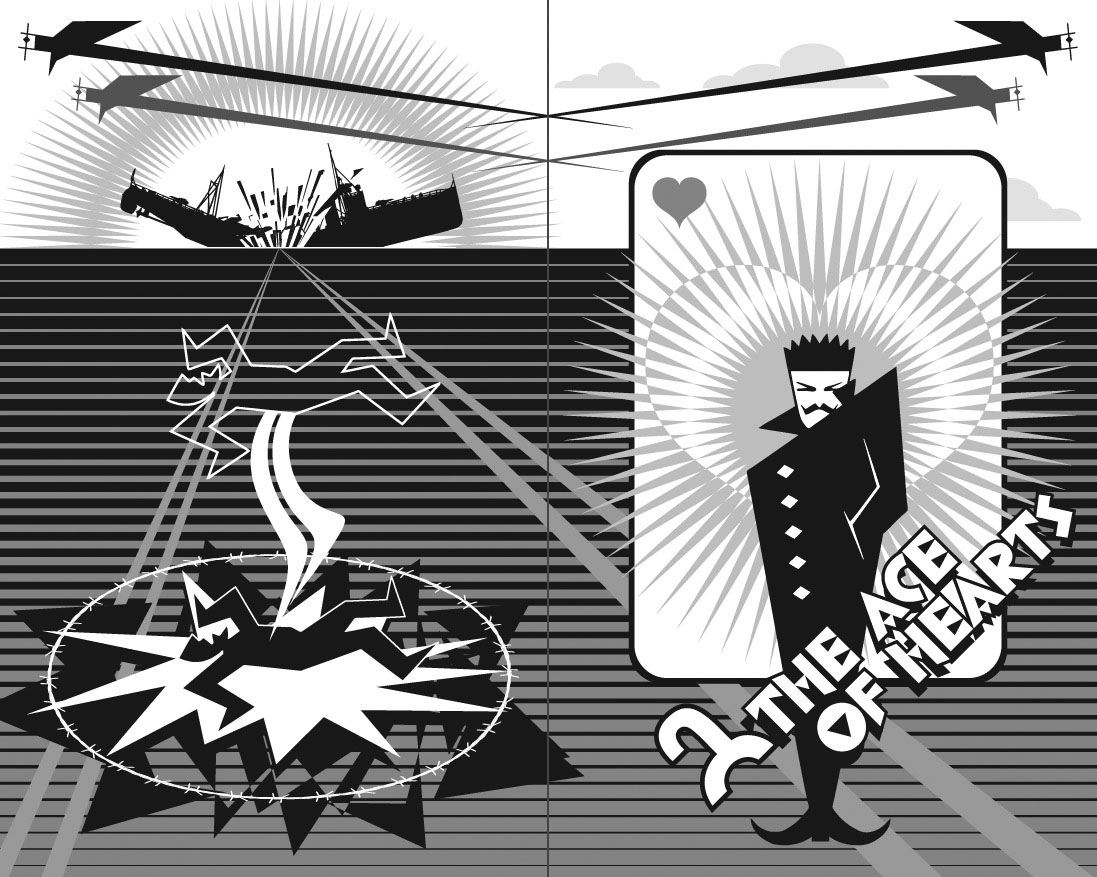
* The Ace of Hearts, dashing aristocrat spy, yogi, drug pusher, and combat pilot
* The Art Witch, the compelling Milanese millionairesse in the inner circle and mysterious, avid occultist

Two infamous Americans have arrived in Carnaro offering a Faustian bargain. Will HP Lovecraft and Houdini betray their own nation, and lead the Futurists to international glory?

No need to emphasis the pertinence of a story of global political turmoil appearing at this point in time. Back in March the traumas of Brexit and the US election were mere possibilities rather than the unavoidable facts they are today. Pirate Utopia doesn’t necessarily reflect the present moment but some of the resonances are, shall we say, suggestive. Bruce Sterling, as noted earlier, is a futurist (as distinct from a Futurist), and had this to say recently about the current state of affairs.

pirate1.jpg

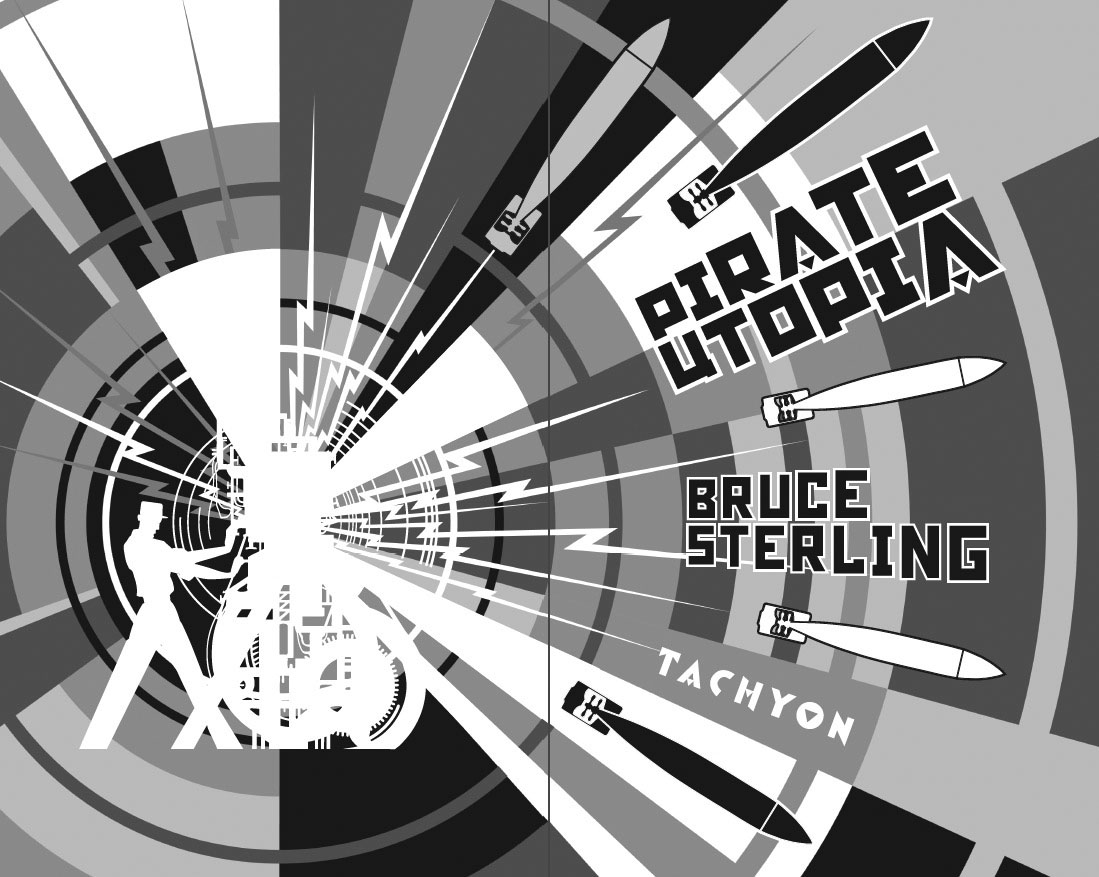
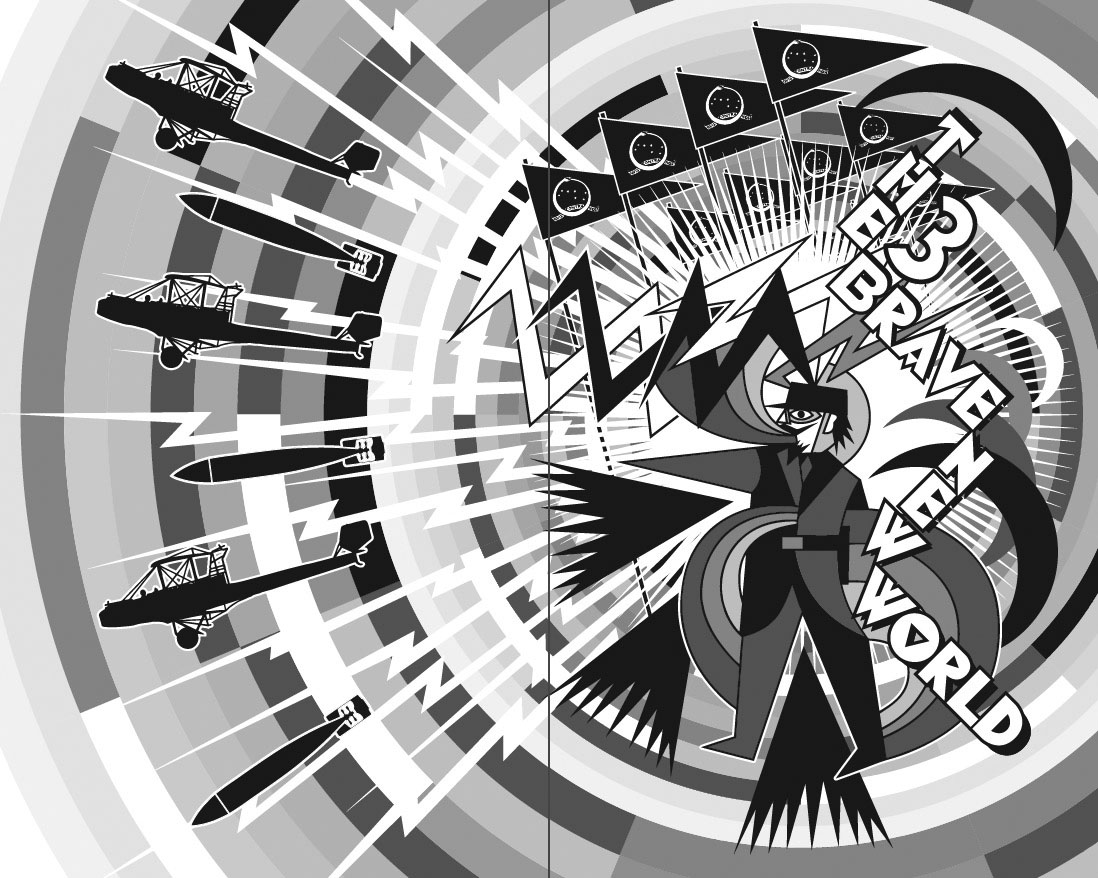
The chapter spreads and other interior graphics run variations of the works of Fortunato Depero and others. Depero was an ideal choice not only because his work tends to the cartoonish—this is a humorous book about serious matters—but much of it is bold and monochromatic, ideal for deployment as black-and-white graphics. Ordinarily I’d write a little more about the art influences, but since I already did so inside the book itself it seems better to encourage those who want to know more to buy a copy. You can, however, see a few more of the page layouts here. A book about Interesting Times for Interesting Times. Join the Futurist Revolution!

pirate2.jpg

pirate3.jpg

pirate4.jpg

pirate5.jpg

pirate6.jpg

pirate7.jpg

Previously on { feuilleton }
Futurismo!