Weekend links 460

treister.jpg

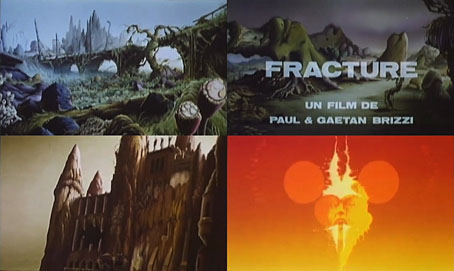
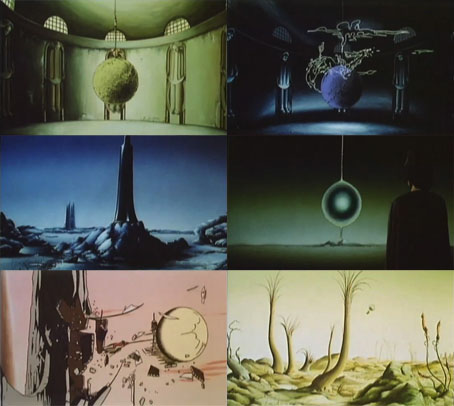
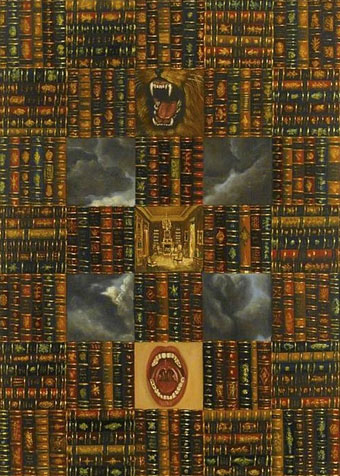
Black Hole (1987) by Suzanne Treister.

• “Most people who are considered heroes are always to be found messing about in someone else’s affairs, and I don’t think that’s very heroic.” Robert Altman talking in 1974 to Jan Dawson about The Long Goodbye.

• “Tea is calming, but alerting at the same time.” Natasha Gilbert on the science of tea’s mood-altering magic.

• Alien spaceship, Hammer horror? Philip Hoare on the pulsating visions of Harry Clarke.

“…world cinema, particularly European cinema…hasn’t shied away from sex and, in fact, has often found ways of using sex to tell a story. Movies like The Duke of Burgundy or Sauvage or BPM gracefully integrate eroticism into the narrative—even when the sex itself is far from graceful. Even the American films that have focused on sex tend to do it with a leer and luridness, regarding sex with a certain narrative fetishism, as opposed to matter-of-factly.”

Rich Juzwiak talking to Catherine Shoard about the current state of sex in the cinema

• Chernobyl again: photographs by David McMillan from inside the exclusion zone.

Lasting Marks: the 16 men put on trial for sadomasochism in Thatcher’s Britain.

• Before Tarkovsky: Michael Brooke on the Russian TV adaptation of Solaris.

• Mix of the week: XLR8R Podcast 588 by Rouge Mécanique.

• Dustin Krcatovich on The Strange World of Mark Stewart.

• Your Surrealist literature starter kit by Emily Temple.

John Peel’s Archive Things (1970)

5fathom: Things rich and strange

Hole In The Sky (1975) by Black Sabbath | Thru The Black Hole (1979) by Metabolist | Black Hole (1993) by Total Eclipse

Design as virus 19: Akira variations

akira0.jpg

Continuing an occasional series. Looking for Akira posters at the weekend reminded me of the way this poster in particular has birthed a long (and growing) series of copyists. The film of Akira went through a few poster designs, with the Japanese ones emphasising the futuristic setting and its apocalyptic scenario. The first poster for US audiences somewhat predictably (and tiresomely) simplified one of the Japanese designs showing Kaneda holding a big gun. The motorcycle design was later reworked for the US in a form which has provided the basis for many subsequent copies, and is very effective even if it communicates next to nothing of the complex storyline. Thirty years after the film’s release, Kaneda’s motorcycle is now familiar enough to be recognisable even to people who haven’t yet seen the film, hence the variations. One consequence of the popularity of this design is that it seems to have shunted the big-gun design into the background.

akira1.jpg

The rules for the variants is to present a familiar character striding towards a similar form of transport, inanimate or otherwise, with a suitable title below the figure (and, where possible, an overlaid title in Japanese). This trend hasn’t been active for very long but the amount of amateur (or professional) artists with time on their hands means there are too many examples to easily feature here. Most of the examples on the pages here and here are characters from computer games or popular films but the Red Bull ad below shows that the poster design is now familiar enough to function as an advert. As for the Kaneda and his bike, they’re subjected to the inevitable Lego treatment here.

akira3.jpg

Japanese Grand Prix ad by Red Bull

akira2.jpg

Art by Dominik Figlhuber

Previously on { feuilleton }
Design as virus 18: Sound Effects
Design as virus 17: Boris and Roger Dean
Design as virus 16: Prisms
Design as virus 15: David Pelham’s Clockwork Orange
Design as virus 14: Curse of the Dead
Design as virus 13: Tsunehisa Kimura
Design as virus 12: Barney’s faces
Design as virus 11: Burne Hogarth
Design as virus 10: Victor Moscoso
Design as virus 9: Mondrian fashions
Design as virus 8: Keep Calm and Carry On
Design as virus 7: eyes and triangles
Design as virus 6: Cassandre
Design as virus 5: Gideon Glaser
Design as virus 4: Metamorphoses
Design as virus 3: the sincerest form of flattery
Design as virus 2: album covers
Design as virus 1: Victorian borders

Weekend links 459

akira.jpg

• “Their graves were covered with cement tiles to block the radiation emanating from their corpses.” Sophie Pinkham reviews three books about the Chernobyl nuclear disaster.

• At Dangerous Minds: Julius Eastman: The resurrection of the visionary minimalist composer continues; at The Quietus: The Strange World of Julius Eastman.

• Mixes of the week: a Dune-inspired Secret Thirteen Mix 286 by Coeden, and ’94–95 Mirrorverse by The Ephemeral Man.

Nabokov had meanwhile acquired a literary agent in New York. She made no headway placing translations of his Russian novels. His latest, she informed him, was “dazzlingly brilliant” and hence wholly without promise for the American market. She suggested something more topical, an idea that left her client hyperventilating. “Nothing,” he would roar later, “bores me more than political novels and the literature of social unrest.” He was, he enlightened his representative, neither Sinclair Lewis nor Upton Sinclair. (Ultimately he tossed the two over the cliff together, as “Upton Lewis.”) Weeks later, in the bathroom of a Paris studio apartment, he began — “a champion figure skater switching to roller skates,” as he complained, speaking for whole cadres of displaced professionals — to write in English.

Stacy Schiff on Vladimir Nabokov, literary refugee

Iain Sinclair on Ghosts of a Ghost: William Burroughs, time surgery and the death of the image.

ST Joshi remembers Lovecraftian writer Wilum Pugmire (RIP).

The Conspirators: A Borgean Tribute to Jorge Luis Borges.

Jasper Sharp on where to begin with Japanese cyberpunk.

Greg Anderson on the new Sunn O))) album, Life Metal.

Drew Daniel of Matmos picks his Bandcamp favourites.

• The Kraken surfaces for Clive Hicks-Jenkins.

• An interview with Brian Eno by Suite (212).

Apocalypse Now: Final Cut

The Book of Weirdo

Conspiracy Of Silence (1994) by Cypher 7 | The Vodun Conspiracy (1996) by The Sidewinder | Machine Conspiracy (2010) by Conforce

The art of James Marsh

marsh14.jpg

Laughing Stock (1991).

The paintings of James Marsh came to mind this week following news of the death of Talk Talk singer Mark Hollis. Marsh’s art was a feature of all the Talk Talk releases, singles as well as albums, but his work was equally prominent throughout the 1980s on a range of book covers, particularly the series he produced for Angela Carter and JG Ballard. The hard-edged, post-Surrealist style favoured by Marsh was a popular one in the 70s and 80s (among British illustrators, Peter Goodfellow and the late John Holmes worked in a similar manner), and I’ve often had to look twice to see whether a cover is one of his. But while the Magritte-like visual games may be replicated elsewhere, Marsh has a preoccupation with animals—birds and butterflies especially—that sets his paintings apart.

marsh15.jpg

The Bloody Chamber (1981).

I never saw Mark Hollis discuss Marsh’s work but the use of the paintings across all the Talk Talk releases has given the group’s output a coherent look lacking in many of their fashion-chasing contemporaries. The consistency also meant that the cover art was unlikely to overly influence prior perception of their music; there was little warning in 1988 of the musical gulf separating The Colour Of Spring from Spirit Of Eden until stylus met vinyl. Mark Hollis was remembered this week by Rob Young who interviewed him in 1998 when his one and only solo album was released. More from James Marsh’s prolific career may be seen at his website.

marsh12.jpg

The Infernal Desire Machines of Doctor Hoffman (1982).

marsh01.jpg

The Terminal Beach (1984).

marsh04.jpg

Talk Talk (laserdisc, 1984).

Continue reading “The art of James Marsh”

Weekend links 450

redon.jpg

Orpheus (c. 1903–1910) by Odilon Redon. One of 30,000 public-domain images from the Cleveland Museum of Art’s collection.

• Network DVD has announced the premiere home release of Orson Welles’ Great Mysteries, a British TV series that ran from 1973 to 74. Welles’ involvement was limited to introducing each episode but the series itself was one I enjoyed a great deal: 26 short adaptations of period mystery stories that featured a wealth of British and American acting talent. The theme by John Barry was an additional bonus.

• The trailer for Apollo 11, a documentary by Todd Douglas Miller which presents for the first time the 70mm footage recording the Earth-bound parts of the Moon mission. Related: Michelle Santiago Cortés on how NASA used art to shape our vision of the future.

• At Dangerous Minds: a preview of Third Noise Principle, the latest in an excellent series of electronic music compilations from Cherry Red, and Cosey Fanni Tutti talks about her first solo album since 1983.

“The way I understood theory, primarily through popular culture, is generally detested in universities,” Mark [Fisher] told me in 2005, when I interviewed him for the Village Voice. “Most dealings with the academy have been literally clinically depressing.” He darkly surmised that his blog, K-Punk, and the surrounding blogosphere, “seemed like the space—the only space—in which to maintain a kind of discourse that had started in the music press and the art schools, but which had all but died out, with appalling cultural and political consequences.” Mark and the Village Voice are both dead now, leaving unfathomable voids in their wake.

Geeta Dayal on Mark Fisher

• At The Witch Wave: Peter Bebergal and Pam Grossman discuss Bebergal’s latest book (also my current reading), Strange Frequencies: The Extraordinary Story of the Technological Quest for the Supernatural.

• At Bandcamp: another release from the retro-synth cosmos of Jenzeits, and Ufology , an investigation of Britain’s flying-saucer landscape by Grey Frequency.

• Surprising collaboration of the week: Beth Gibbons and Krzysztof Penderecki have made a new recording of Henryk Górecki’s Third Symphony.

Alchemy (1969) the debut album by the Third Ear Band, receives an expanded reissue next month.

The Burn: a science-fiction story by Peter Tieryas with illustrations by Arik Roper.

• Mix of the week: Self-Titled Needle Exchange 275 by Black To Comm.

Amy Turk plays Bach’s Toccata and Fugue in D Minor on her harp.

Chrismarker.org is seeking donations.

Mystery Train (1955) by Elvis Presley | Mystery R.P.S. (No 8) (1981) by Holger Czukay, Jah Wobble, Jaki Liebezeit | Mystery Room (1985) by Helios Creed