Weekend links 546

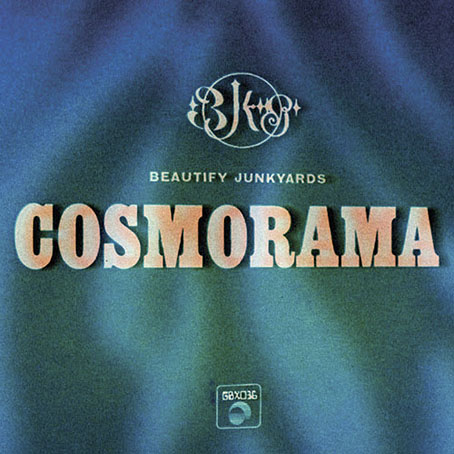
cosmorama.jpg

The next release on the Ghost Box label, Cosmorama is “tropicalia tinged psychedelic dream pop” by Beautify Junkyards. The album will be available in January. Design, as always, is by Julian House.

• Reading a review of John Gray’s Straw Dogs several years ago I remember thinking facetiously that Gray should write a follow-up about cats. (Straw Dogs isn’t a book about dogs.) The joke is on me with the publication of Gray’s latest, Feline Philosophy: Cats and the Meaning of Life. I should set up as a literary agent.

• All you need is doom: Plague Notes, Unnamed, Unknown, A Finger Dragged Through Dust, the debut album from My Heart, an Inverted Flame, is released on the 11th of this month. “Absolutely NO guitars were used in the casting of these drone metal voidscapes.” Excellent work.

• What a difference a week makes: “A Utah monolith enchanted millions and then it was gone, leaving mysteries behind.”

• En Pleine Mer: The underwater landscapes of Eugen von Ransonnet-Villez, 1867.

• Imaginative drawings of travel during a pandemic lockdown by Oscar Oiwa.

• The beauty of starling murmurations as photographed by Søren Solkær.

• Cosmic Dancer: Alice Finney on the strange world of Michael Clark.

• Mix of the week: Invaders by The Ephemeral Man.

Cosmos (1972) by Bruno Menny | Gliding Thru The Cosmophonic Dome (1981) by Bernard Xolotl | Radio Cosmos (1981) by Ippu-Do

Weekend links 541

finlay.jpg

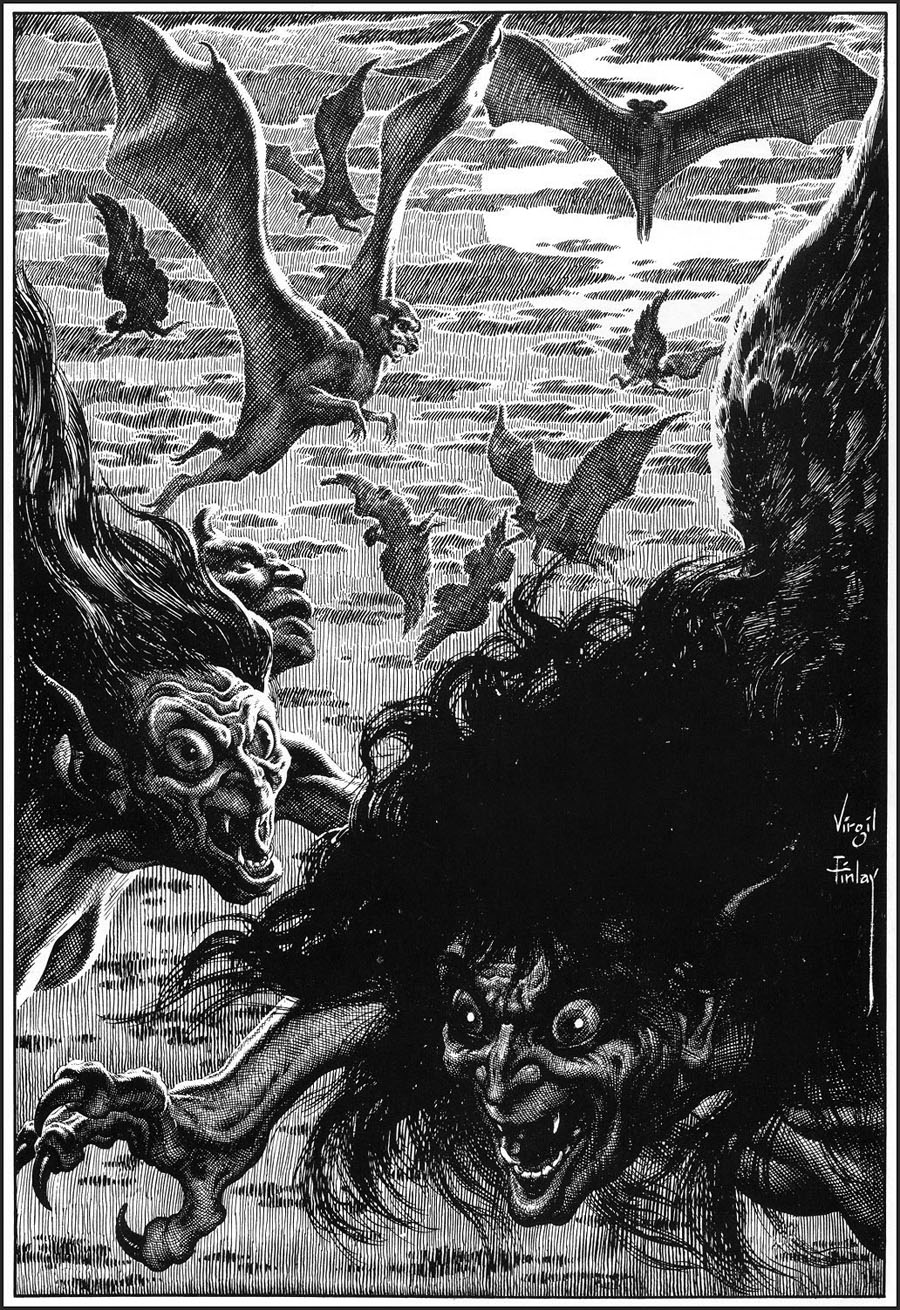
Virgil Finlay illustrates Hallowe’en in a Suburb by HP Lovecraft for Weird Tales, September 1952.

• Literary Hub does Halloween with an abundance with Draculas, a lazy option but the pieces are good ones nonetheless: Olivia Rutigliano attempts to rank the 50 best (screen) Draculas, and also recalls the Broadway production designed by Edward Gorey. At the same site, Katie Yee discovers that The Addams Family (1991) is really about the importance of books.

• The inevitable film lists: the always reliable Anne Billson selects the scariest ghosts in cinema; at Dennis Cooper’s, TheNeanderthalSkull curates…DC’s Weirdo Halloween Horror Movie Marathon, a list featuring a couple of oddities which have appeared in previous weekend links.

• More books bound with human skin: Megan Rosenbloom, author of Dark Archives: A Librarian’s Investigation into the Science and History of Books Bound in Human Skin discusses the subject with S. Elizabeth.

Beyond all this, however, readers are most likely to read De Quincey for his compellingly strange writing on opium and its effect on the mind. For it is opium, rather than the opium-eater, he writes in Confessions, who “is the true hero of the tale”. He explains the drug cannot of itself create imaginative visions—the man “whose talk is of oxen” will probably dream about oxen. But for De Quincey, with his love for reverie, it gives “an inner eye and power of intuition for the vision and the mysteries of our human nature”. Wine “robs a man of his self-possession: opium greatly invigorates it”. It “gives an expansion to the heart and the benevolent affections”. “This”, he claims, “is the doctrine of the true church on the subject of opium: of which church I acknowledge myself to be the only member.”

“Thomas De Quincey’s revelatory writing deserves greater attention,” says Jane Darcy

• New music: Weeping Ghost by John Carpenter is a preview of the forthcoming Lost Themes III; Moments Of Clarity is a new album of psychedelic(ish) songs from Professor Yaffle.

• “How now, you secret, black, and midnight hags!” Sean Connery (RIP) was often playing kings in later life but he started early with this performance as Macbeth in 1961. (Ta to TjZ for the link!)

• Mixes of the week: a (non-Halloween) guest mix by Paul Schütze for Toneshift, and the by-now traditional Samhain Séance Mix from The Ephemeral Man.

Clive Hicks-Jenkins’ big new adventure: an illustrated “reinvention” of Jean Cocteau’s La Belle et la Bête.

Drew McDowall (of Coil, et al) talks Musick, magick and sacred materiality.

• “No one loves the smell of a Kindle,” says Thomas O’Dwyer.

Brüder des Schattens (1979) by Popol Vuh | Nosferatu (1988) by Art Zoyd | Vampires At Large (2012) by John Zorn

Weekend links 538

greenaway.jpg

The Elf Ring by Kate Greenaway.

• “Is it possible that the Victorian fairy tradition, beneath its innocent exterior, operated as a conduit for a hidden tradition of psychedelic knowledge?” Just in time for the British mushroom season, Mike Jay explores the connections between psychedelic mushrooms, folklore and fairy tales.

• “This second coming of Prince’s greatest album is the immaculate execution of a flawed conception: the belief that you can never have too much of a good thing.” Simon Reynolds on Prince and the expanded, multi-disc reissue of Sign O’ The Times.

• “An extraordinary stash of more than 400 erotic drawings by Duncan Grant that was long thought to have been destroyed has come to light, secretly passed down over decades from friend to friend and lover to lover.” Mark Brown on a trove of gay erotica.

• New art exhibitions: Wessel + O’Connor celebrates 35 years of homoerotic exhibitionism with 35 works by different artists; “masks a must”. And New Framing at Museum More includes a great painting by Jan Ouwersloot of trams manoeuvring at night.

• There is no Prog, only Zeuhl: A guide to one of rock’s most imaginative subgenres by Jim Allen. I recommend the Weidorje album.

The Power (Of Their Knowledge), another preview of the forthcoming album by Cabaret Voltaire (or Richard Kirk solo).

• RIP Eddie Van Halen. Annie Zaleski selects 10 of his best songs (really 9 plus an instrumental…).

• At Dennis Cooper’s: Spotlight on…Leonora Carrington The Hearing Trumpet (1976).

• Mix of the week: Autumn and Wise (The Fall) by The Ephemeral Man.

Abandoned Isle of Wight

Dark Side Of The Mushroom (1967) by Chocolate Watch Band | Mushroom (1971) by Can | Growing Mushrooms Of Potency (2011) by Expo ’70

Weekend links 536

peake.jpg

Jim Hawkins in Treasure Island. An illustration by Mervyn Peake, 1949.

• “Since it was 1967 when I became a teenager, I suspected that the Now would stir together rock ’n’ roll bands and mod girls and cigarettes and bearded poets and sunglasses and Italian movie stars and pointy shoes and spies.” Luc Sante on hs youthful search for The Now.

• “…in response to listener requests to play ‘more music like This Heat’, [John] Peel responded that he couldn’t because ‘nobody else sounds like them’.” Alexis Petridis on the mighty This Heat, the band who tried to change everything.

• “While I hesitate to deploy the overused and near-devalued word shamanic here, it does smell right. Or rite.” Ian Penman on the polychromatic delirium of Parliament and Funkadelic in 1970.

Anyway, we knew this new culture was there, we knew this phenomenon was occurring, centered in the Haight-Ashbury, so after this event, we dramaturges sat together and tried to think it out. What is this, in terms of breaking down the fourth wall? How is this a historical follow-through for Antonin Artaud on one hand and Bertrolt Brecht on the other? How did these two come together in this? What do you call this, when you provoke riots and use the audience as members of the cast? When you can stage events that brings the audience on the stage—but there is no formal stage? But it’s a theatricalized event…? It’s all new. So I called it ‘guerrilla theater.’ And Ronnie heard that phrase, and wrote an essay about doing Left provocative theater. That wasn’t what I saw. I saw it as being deeper than that. And I began writing plays that now were for sure plays except that a lot of the dialogue was spontaneously derived from the performers—we had some really great performers at the Mime Troupe at the time, I’d say there were at least a dozen good performers, and a couple who were really brilliant. Anyways, put these people together, I gave them a context, and we began improvising dialogue.

Peter Berg of the San Francisco Diggers talking to Jay Babcock for the sixth installment of Jay’s verbal history of the hippie anarchists

• “I love improvisation. I still do. For me it’s the way I like to be acting, you see.” RIP Michael Lonsdale, talking in 2015 about Jacques Rivette’s Out 1.

• “Would you find this bookstore beautiful or terrifying? Or both,” asks Jonny Diamond.

Yukino Ohmura uses stationery store stickers to create dazzling nightscapes.

• At Spine: Penguin Books celebrates 85 years with original artworks.

Strange Selectors by Various Artists on Werra Foxma Records.

Daisy Dunn on the gentle genius of Mervyn Peake.

• This Heat: Rimp Ramp Romp (1977) | Repeat (1979) | Makeshift Swahili (1981)

Weekend links 523

miller.jpg

One of Ian Miller‘s drawings from the illustrated edition of Ray Bradbury’s The Martian Chronicles, 1979.

• “I always said we were kind of an electronic punk band, really. We were never New Romantics, I don’t like it when we get lumped in with that.” Dave Ball of Soft Cell and The Grid talking to Duncan Seaman about his autobiography, Electronic Boy: My Life In and Out of Soft Cell. I’ll now be waiting impatiently for the unreleased Robert Fripp/Grid album to appear.

• “[Patricia] Highsmith’s writing—often eviscerating, always uncomfortable—has never been more relevant,” says Sarah Hilary.

• Ron Peck’s debut feature, Nighthawks (1978), is “a nuanced look at gay life in London,” says Melissa Anderson.

And then there are those figures who seem to flit around the edges of movements without ever being fully involved in any of them, who pursue their own eccentric paths no matter what is going on around them. These are the writers who make up the secret history of literature, the hidden history that’s not easily reduced to movements or trends, and who always waver on the verge of invisibility until you stumble by accident onto one of their books and realize how good they actually are, and wonder, Why wasn’t I told to read this before? But of course you already know the answer: You were not told because it doesn’t fit smoothly into the story those in authority made up about what literature is—it disrupts, it can’t be reduced to the literary equivalent of a meme.

That’s the kind of writer Pierre Klossowski (1905–2001) is. He is not a joiner. He has his own particular and often peculiar concerns, and pursues them. He does not particularly welcome you in. The content of his writing, too, has the feel of a gnostic text, as if you are reading something that, if only you were properly initiated, you would understand in a different way. In that sense his work has an esoteric or occult quality to it—and likewise in the sense that it returns again and again to the intersection of religion and pornography, the sacred and the profane.

Brian Evenson on The Suspended Vocation by Pierre Klossowski

• Chad Van Gaalen creates a psychedelic animation for Seductive Fantasy by the Sun Ra Arkestra.

• More sneak peeks from the forthcoming The Art Of The Occult by S. Elizabeth.

• More Robert Fripp: Richard Metzger on Fripp’s sui generis solo album, Exposure.

Pamela Hutchinson on the pleasures of David Lynch’s YouTube channel.

• Mix of the week: a second Jon Hassell tribute mix by Dave Maier.

• At Dennis Cooper’s: Ferdinand presents…Dark Entries Day.

15 fascinating art documentaries to watch now.

Soft Power by Patten.

• RIP Milton Glaser.

hauntología

Aquarium (1992) by The Grid (with Robert Fripp) | Soft Power (2005) by Ladytron | The Martian Chronicles (2007) by Dimension X