Weekend links 291

brooks.jpg

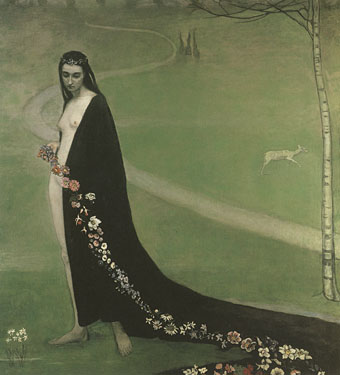
Femme avec des fleurs (1912) by Romaine Brooks.

• This week’s anniversary of the Charlie Hebdo murders was noted by some of those who defended the magazine last year. “I don’t write about Charlie Hebdo in France,” said Robert McLiam Wilson, “they have plenty of people who can do that. But I’ll do almost anything I’m asked to do in the anglosphere. Why? Well, two reasons. Because none of the other Charlie people bothers to do it. And because, really, that’s where all the bullshit lives.” A year on, and the bullshit-mongers seem to have fallen silent, what with knee-jerk outrage being a short-lived affair, and the Bataclan massacre having demolished one of the main criticisms, namely that the magazine wouldn’t have been attacked if the artists and writers had shown some respect. “[Charlie Hebdo‘s] real crime is not racism but its challenge to what has become an unbreakable commandment for many contemporary liberals: ‘Thou shalt not cause offence’,” says Kenan Malik. At Literary Hub Adam Gopnik explored the same issue in a foreword for Stéphane Charbonnier’s Open Letter.

• “Immersion in the past is no escape from the present, but it supplies a constant corrective to the narrative spit out daily by media, advertising, politics, and all those other forces that attempt to mould our thinking like jelly in a pan.” Luc Sante (again) talking to Simone Wolff about his books, Low Life and The Other Paris.

• “…throwing a lot of money behind vintage equipment? Well, that’s just a millionaire’s game. Dave Grohl can do that, but David Bowie doesn’t care about that. Just stick a microphone in front of him and he’s really happy.” Tony Visconti talking to Allyson McCabe about the music business and producing Bowie.

• “Nico Hogg’s photography captures the transformation of urban London,” says George Kafka who talks to Nico about a collection of his work, Sign & Signifiers, which I designed late last year.

• At Strange Flowers: James Conway talks to Cassandra Langer about her recent biography of artist Romaine Brooks (1874–1970).

• At Dangerous Minds: Godzilla, girls and guns, the science-fiction art of Noriyoshi Ohrai. There’s more at Pinterest.

• Mixes of the week: XLR8R Podcast 420 by Andrey Pushkarev, and Secret Thirteen Mix 172 by Julien Bayle.

• Alan Moore’s magnum opus, Jerusalem, will be published later this year. Gosh Comics has a teaser.

New York Public Library makes 180,000 high-res images available online.

Prints of darkness: macabre vintage posters

Scarfolk Television is coming

Godzilla (1977) by Blue Öyster Cult | Giant Robot / Machines in the Modern City / Godzilla (1992) by Praxis | Free-Bass (Godzillatron Cush) (1995) by Axiom Funk

Weekend links 285

graphic.jpg

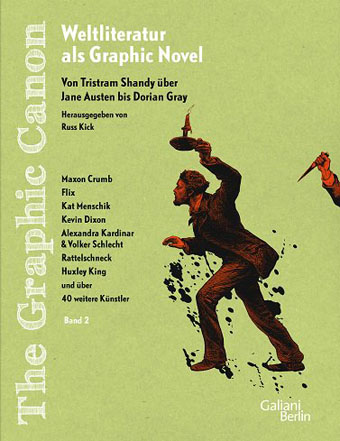
Some of the art from my collage adaptation of The Picture of Dorian Gray appears on the cover of The Graphic Canon: Volume 2, published this month in a German edition by Verlag Galiani. Out next month (although possibly available now) is the same book in a Brazilian edition from Boitempo Editorial. One of the disappointments this year was having to abandon plans to contribute to Russ Kick’s forthcoming graphic canon of crime fiction. I was overstretched during the summer, and what with projects slipping their deadlines and the trip to Providence there wasn’t any time left for other things.

• For those who missed the first edition, a second and final expanded edition of the Penda’s Fen study/celebration The Edge Is Where The Centre Is.

• Whipping up a storm: how Robert Mapplethorpe shocked America; Kevin Moore on the photographer’s Perfect Moment exhibition.

In the best scenario, metaphysical art distributes the work of understanding among cultural traditions and symbolic systems, and it is along these lines that Carrington’s work has been described as a productive combination of Mexican, Egyptian, Hebrew, Celtic, Greek, and Mesopotamian elements. Her paintings, plays, and stories mix the symbols of alchemy, astrology, Tarot, herbalism, magic, witchcraft, and a personal iconography.

Leif Schenstead-Harris on the life, art and fiction of Leonora Carrington

• Mixes of the week: Hieroglyphic Being collects favourite cosmic jazz of the 1970s; NTS Radio presents an hour of Annette Peacock.

• At Kill Your Darlings: Alexandra Heller-Nicholas enthuses about Dario Argento’s delirious masterwork, Suspiria.

Pye Corner Audio releases a new album (only limited vinyl at the moment—boooo!) and remixes Stealing Sheep.

• The Trip Planners: Emily Witt meets the founders behind Erowid, the online drug encyclopedia.

Woven Processional (1985), music on the Long String Instrument by Ellen Fullman.

• “The Paris attacks prove Charlie Hebdo’s critics wrong,” says Dorian Lynskey.

• Photographs by Danila Tkachenko of abandoned Soviet technology.

Come Wander With Me / Deliverance by Anna von Hausswolff.

• The collages of Guy Maddin.

CAN HALEN

Let’s Take A Trip (1965) by Godfrey | Trip On An Orange Bicycle (1968) by The Orange Bicycle | Last Trip (1968) by We Who Are

Six Into One: The Prisoner File

prisoner1.jpg

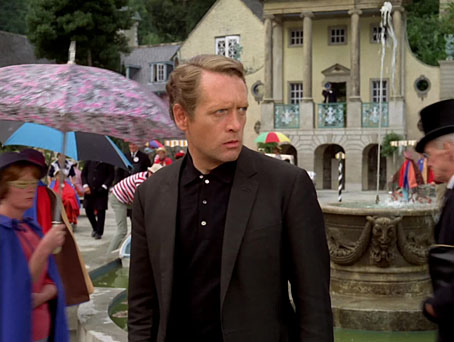
Patrick McGoohan.

Network DVD had a sale recently so I finally capitulated and bought the blu-ray set of The Prisoner which I finished watching this weekend. The picture quality is so outstanding it might have been made yesterday, and many of the extras are also essential for Prisoner obsessives, not least a restored print of the original cut of the first episode, something that was believed lost for years.

prisoner2.jpg

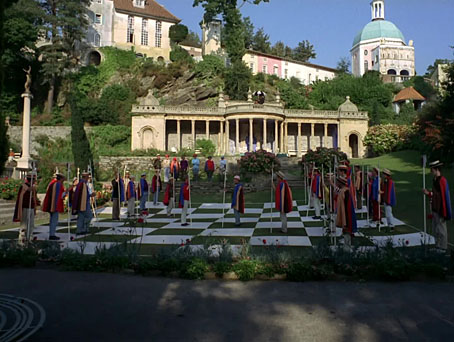
Episode 9: Checkmate.

There’s no need to enthuse about the series when I’ve done so already; this time round I’ll note that while the Cold War background is thoroughly outmoded some of the themes of particular episodes seem more relevant than ever. The model of total surveillance seen in the Village has for some time seemed to be one that Western governments and tech corporations would love to emulate. (“The whole world as the Village?” asks The Prisoner. “That’s my hope,” says Number 2.) The Prisoner isn’t the only drama to deal with authoritarian control, of course, but it also deals with the soft tyranny of closed communities, ideology and group-think. Episode 12, A Change of Mind, concerns a process whereby disobedient Villagers are confronted by their peers, declared “unmutual” then bundled off for corrective therapy; when they return they repent their antisocial crimes in public. In 1967 such a scenario would have seemed reminiscent either of McCarthyite America, or Soviet Russia and Maoist China; in 2015 you can be declared “unmutual” for minor infractions every day on the internet, and find yourself rounded upon by a sanctimonious horde.

prisoner5.jpg

The allegorical and symbolic qualities of The Prisoner have kept the series fresh for almost 50 years while the character who launched the genre that gave rise to series—James Bond—has required several overhauls in order to keep up with changing times. Bond may bicker with his superiors but he’s always been a tool of the status quo, an agent of the Control virus in Burroughsian terms. In episode 8, The Dance of the Dead, The Prisoner is lectured by a judge in a kangaroo court on the importance of “the rules”. “Without rules, we have anarchy,” she says. The Prisoner, who happens to be dressed in a Bondian dinner jacket, replies “Hear, hear.”

Continue reading “Six Into One: The Prisoner File”

Weekend links 277

elledge.jpg

Sunday by Amanda Elledge.

• Coming from Strange Attractor this November: The Moons at Your Door, an anthology of strange tales selected by David Tibet. “The Moons At Your Door collects over 30 tales, both familiar and unknown from: Robert Aickman, Algernon Blackwood,  DK Broster, AM Burrage, RW Chambers,  Aleister Crowley, Sheridan Le Fanu, Elizabeth Gaskell, WW Jacobs, MR James, Vernon Lee, LA Lewis, Thomas Ligotti, Arthur Machen, Guy de Maupassant, Perrault, Thomas De Quincey, Saki, Count Stenbock, Montague Summers, HR Wakefield and Edith Wharton. The volume also includes extracts and translations by the author from Babylonian, Coptic and Biblical texts alongside poems and fairy tales.”

Gay-rights activists give their verdict on Stonewall: “This film is no credit to the history it purports to portray”. The only surprise about this episode is that anyone expected Roland Emmerich to make a historically accurate film in the first place. Related: Edmund White’s first-hand report written a few days after the riots.

• “If you hate [Boom!], I hate you, and I could never be your friend or your boyfriend. Divine and I had seen Boom! right before we made Pink Flamingos, and it’s about Elizabeth Taylor, retired, writing her memoirs, which is what Pink Flamingos was too, in a way.” John Waters (again) gives Hayley Campbell some dating tips.

• “We moderns may too-often suffer from a mixing up of historical sequences, but better that, surely, than risk raising a population that is entirely not-arsed about its past.” Julian Cope explores the Celts: Art and Identity exhibition at the British Museum, London.

• “But I am talking about psychedelic music, and obviously some of that comes from early psychedelic rituals, which are all about losing yourself…and I did come back into the world in a different way.” Natasha Khan on her new musical project, SEXWITCH.

• At Dangerous Minds: Vincent Price teaches the dark arts on his 1969 album An Adventure in Demonology.

• A trailer for Salthouse Marshes, “a short, landscape obsessed ghost story” by Adam Scovell.

• Rare video of Young Marble Giants playing for 45 minutes in Vancouver, 1980.

• A collection of Ghost Box posters and flyers designed by Julian House.

• Mix of the week: Secret Thirteen Mix 163 by Ssleeping desiresS.

Ministry, a new photo series by Ellen Rogers.

Julia Holter‘s favourite albums.

Boom Stix (1962) by Curley & the Jades | Things That Go Boom In The Night (1981) by Bush Tetras | Boom! (1991) by The Grid

Weekend links 272

sage.jpg

No Passing (1954) by Kay Sage.

• More Lovecraftiana: She Walks In Shadows, an illustrated all-woman Lovecraftian anthology, will be published in October. Related: “The octopus genome and the evolution of cephalopod neural and morphological novelties“, a study that’s been filtering through the press as “Do octopuses have alien DNA?”

• “The right to ‘subject each others’ fundamental beliefs to criticism’ is the bedrock of an open, diverse society,” says Kenan Malik in his TB Davie Memorial Lecture.

Sunn O))) with Attila Csihar at the Berlin Heimathafen. Related: Here’s what you missed at Sunn O)))’s sold out Berlin gig.

Caillois is fascinated by these “beveled buildings,” truly abundant in the Fifteenth, along with an unusually high incidence of blind walls, false façades, and merely ornamental windows, each beloved of his phantoms. In the parts of the arrondissement developed during the postwar period, Caillois’s attention is drawn instead to the ventilator shafts and drainage grates that dot the streets. These structures, built to clear away rainwater or aerate underground garages, have a secret function, according to him. Noting their uncanny similarity to some of the settings in the Weird Tales of HP Lovecraft, he speculates that they may have been constructed to provide the entry points for an extraterrestrial invasion of our planet.

Ryan Ruby on Roger Callois and the phantoms of the Fifteenth Arrondissement

• “I’m really into big moments,” says Julia Holter whose new album, Have You In My Wilderness, is released next month.

Adrian Utley talks to Peter Zinovieff, co-inventor of the EMS synthesizer. Related: What the Future Sounded Like.

• “Tarkovsky’s Solaris is the anti-2001: A Space Odyssey,” says Marissa Visci.

• Mix of the week: Gizehcast #17 by Rutger Zuydervelt.

Modernist architecture on film.

Thaumaturgy at Tumblr

The Call of Ktulu (1984) by Metallica | Cthulhu Dawn (2000) by Cradle of Filth | Cthulhu: A Cryo Chamber Collaboration (2014) by Various Artists