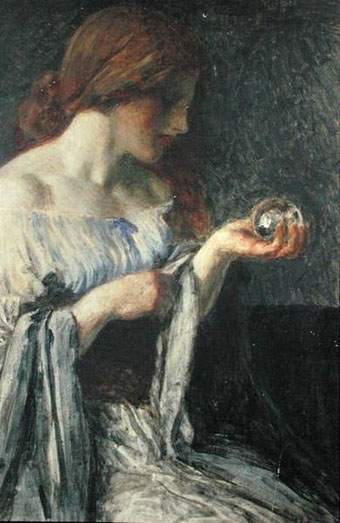
The Crystal Ball (c. 1900) by Robert Anning Bell.
Crystal balls in art, film and the pulp magazines.
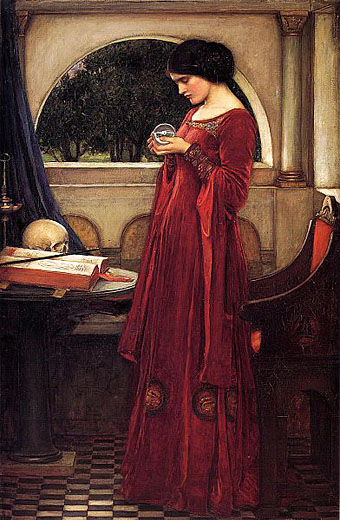
The Crystal Ball (1902) by John William Waterhouse.
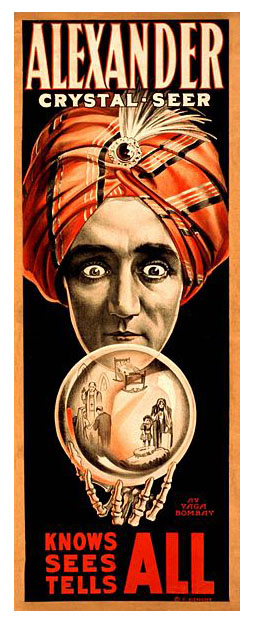
Alexander, Crystal Seer (1910).
A journal by artist and designer John Coulthart.
Occult
The Crystal Ball (c. 1900) by Robert Anning Bell.
Crystal balls in art, film and the pulp magazines.
The Crystal Ball (1902) by John William Waterhouse.
Alexander, Crystal Seer (1910).
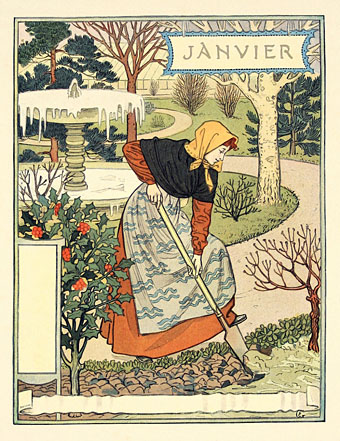
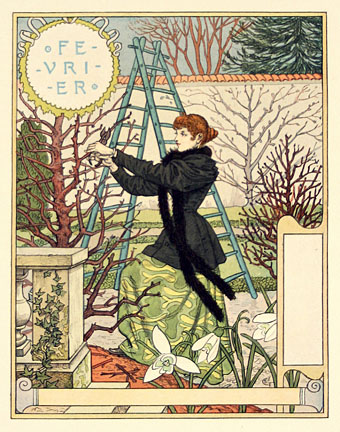
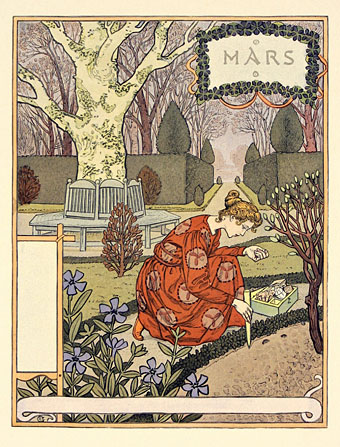
I was going to post a few more paintings depicting the month of February but now I’ve circled the calendar with the monthly theme suitable candidates are harder to find. Searching wasn’t a waste of time, however, since I turned up a complete set of the prints by Art Nouveau designer Eugène Grasset (1845—1917) that depict the months of the year. Some of these have appeared here before but I’d not seen a complete set until now. Grasset was commissioned by the Parisian department store La Belle Jardinière in 1894 to produced twelve artworks to be used as a calendar. The portfolio was published as The Months in 1896. The prints also serve as zodiac when you notice that each woman has an astrological symbol on her clothing. See them at larger size here.
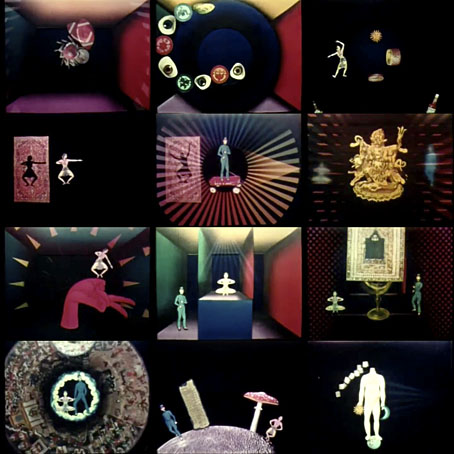
Another Harry Smith film that’s very similar to the one featured here a couple of weeks ago, Number 11, which is also entitled Mirror Animations. Smith wrote a description for this one: “An exposition of Buddhism and the Kaballah in the form of a collage. The final scene shows Agaric mushrooms growing on the moon while the Hero and Heroine row by on a cerebrum.” The copy at YouTube has an improvised score which isn’t very flattering. The film runs for around 4 minutes so I’d suggest finding something of that length from elsewhere. Elastic Dance by African Head Charge works well.
Previously on { feuilleton }
• Number 11: Mirror Animations, a film by Harry Smith
• Meeting Harry Smith by Drew Christie
• Heaven and Earth Magic by Harry Smith
• Harry Smith revisited
• The art of Harry Smith, 1923–1991
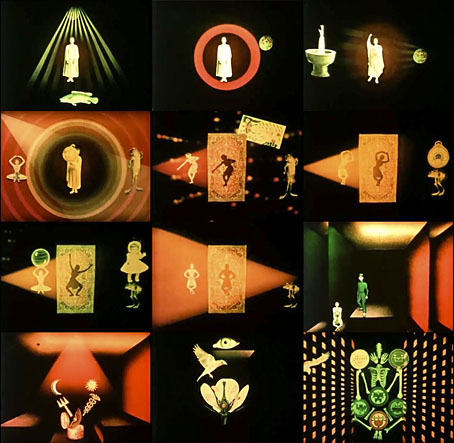
A very short collage animation from 1956 that Smith later expanded into a version running 12 minutes. The artwork crams a great deal of occult and religious symbolism into its 3-minute running time—alchemy, the Kabbalah, Buddhism, Eliphas Levi’s Baphomet, and so on—while Misterioso by Thelonious Monk is playing. Watching this makes me realise that there are still many Harry Smith films I’ve not yet seen despite having read about them for years. Further investigation is required.
Previously on { feuilleton }
• Meeting Harry Smith by Drew Christie
• Heaven and Earth Magic by Harry Smith
• Harry Smith revisited
• The art of Harry Smith, 1923–1991
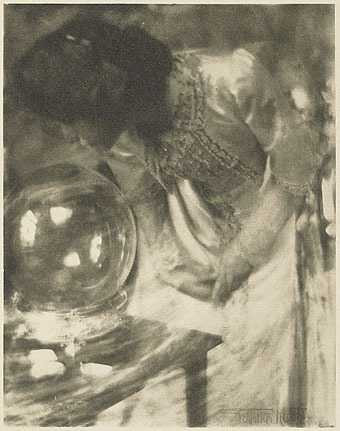
The Crystal Gazer (or The Magic Crystal, 1904) by Gertrude Käsebier.
• “I had to resort to extreme violence”: how Hipgnosis revolutionised the album sleeve. Aubrey Powell, last surviving member of the design team, talks to Joe Muggs.
• Mixes of the week: Radio Belbury: Programme 14; The Conjurer’s Hexmas by SeraphicManta; Secret Mix 139 by A Closer Listen.
• Social progress, high-speed transport and electricity everywhere: Iwan Rhys Morus on how the Victorians invented the future.
• At Cinephilia & Beyond: “The most complete investigation into the origins and making of Citizen Kane.”
• Poor Souls’ Light: seven curious tales for the end of the year, and a dedication to Robert Aickman.
• Music and the Occult: Stuart Maconie and Rob Young spend an hour in the magick circle.
• Alejandro Jodorowsky and Iain Sinclair in conversation at the British Library, July 2014.
• From 1972: An unpublished Victor Moscoso interview by Patrick Rosenkranz.
• The Spooky Story Behind Hollywood’s Favourite Mansion.
• The Lost World of British Tape Recording Clubs.
• 2014 was a year of outrage.
• Pepper-Tree (1984) by Cocteau Twins | Otterley (1984) by Cocteau Twins | Aikea-Guinea (1985) by Cocteau Twins