Weekend links 384

muljat.jpg

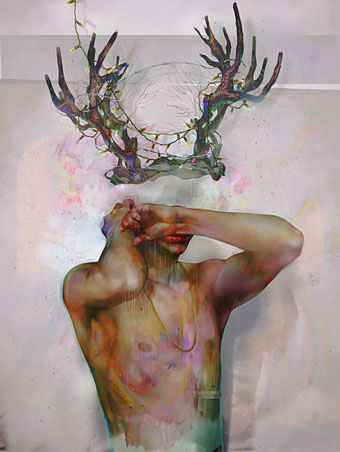
Sultans of Swing by Samantha Muljat.

• Pain & Pleasure, Indivisible: Mat Colegate talks to Stephen Thrower (Coil, Cyclobe) about the meeting between Coil and Clive Barker that would have led to Coil scoring Barker’s Hellraiser if the studio hadn’t rejected the music.

• “From Arsedestroyer to Zoogz Rift: 50 underground albums you’ve never heard of” The usual presumption—I’ve been listening to The Groundhogs since the mid-1980s—but it’s a good list.

• More magazines at the Internet Archive: an incomplete run of British science-fiction monthly Interzone; and a complete (?) run of the film magazine for horror (and gore) obsessives, Fangoria.

• “…it’s background music, is what it is. But there’s nothing wrong with that. I’m very proud of it.” John Carpenter discussing his soundtrack music and his new album, Anthology.

• Mixes of the week: Aral Mix 05 by Ellen Arkbro, Secret Thirteen Mix 234 by FOQL, and Samhain Séance Six: Triffid Witch by The Ephemeral Man.

• Dallas Killers Club: Nicholson Baker reads a stack of books about the Kennedy assassinations then draws his own conclusions.

Michael Flanagan on searching for LGB histories of Neopaganism, the paranormal and the occult in San Francisco.

• At Lounge Books: author Amelia Mangan on horror, old and new, and her favourite things.

• At Monoskop: the (almost) complete works of James Joyce in one convenient epub.

Jillian Steinhauer on Duchamp’s last riddle.

Hell Raiser (1973) by Sweet | Hell’s Bells (1989) by Rhythm Devils | Hell’s Winter (2011) by Earth

The Strange World of Willie Seabrook by Marjorie Worthington

worthington.jpg

This is a curious book. Marjorie Worthington (1900–1976) was the second wife of William Seabrook, an obscure figure today, known—if at all—as much for the lurid details of his life as for his books. In the 1920s and 1930s Seabrook was a well-regarded and very popular writer, delivering to the American public reports of his travels in the dangerous and exotic parts of the globe. Worthington was a writer herself, the author of novels, short stories and biographies, in addition to this memoir, her final major work. By the time The Strange World of Willie Seabrook appeared in 1966 Worthington’s subject was largely forgotten, his exploits eclipsed by wilder figures, while the “unexplored” areas of the world whose exotic lure had fuelled much of his writing were no longer so distant or so strange in a world of continental travel. Seabrook wasn’t completely forgotten at this time; I knew his name, if little else, from a paperback of Voodoo Island that my parents owned. This was a retitled reprint of The Magic Island (1929), a best-selling study of Haiti and its voodoo culture which, among other things, popularised the concept of the zombie.

Seabrook’s name is hard to avoid if you’re reading about witchcraft or the occult in the first half of the 20th century. Aleister Crowley knew him and mentions him in his autobiography, while Crowley is discussed in Seabrook’s Witchcraft: Its Power in the World Today (1940). Crowley’s attitude towards Seabrook seems to have soured in later years, possibly because of some perceived slight or betrayal. The two men have a lot in common: both were the same generation (Crowley was born in 1875; Seabrook in 1884), both were addicts (Seabrook’s demon was alcohol), and both were fascinated by the outer limits of human experience. In Seabrook’s case this famously extended to eating human flesh, an experience he recounted in the follow-up to The Magic Island, Jungle Ways (1930). Marjorie Worthington gives a detailed account of this episode which was much more mundane than Seabrook’s printed version. When the African feast failed to materialise Seabrook decided to keep the incident in the book even if it meant staging a cannibal meal in Paris. One of the fascinating things about Worthington’s memoir is the frequent lurches of tone when Seabrook disrupts their generally placid domesticity with a hare-brained inspiration. If this makes him sound like an Jazz Age Hunter S. Thompson he wasn’t quite as mercurial, but the cannibal episode has a trace of the gonzo as the pair race around Paris one evening, looking for a convenient stove where Seabrook can cook the “rare goat meat” a friend has procured from a Paris hospital.

Worthington logs these and similar exploits with dismay, and one of the many curious aspects of her memoir is the unexamined nature of the attraction between herself and “Willie” as she calls him. Their relationship was an unusual one from the outset. Seabrook and Worthington were both married to other partners before they met; Worthington fell in love almost immediately but rather than go through the usual adulterous games the four people simply swapped partners and went on their way, all still married but now living with their opposite numbers. Worthington remained in love with Seabrook even though they were sexually incompatible, Seabrook having an obsession with bondage games whose outlet was provided by compliant women hired for the purpose. Worthington tried to be understanding but Seabrook’s fetishes and recurrent alcoholism strained their relationship, despite their mutual dependence. One of the ironies of the book is that Worthington recounts her abhorrence each time Seabrook retires to the barn for an endurance session with one of his new women but offers little detail as to what took place. This has the effect of stoking the reader’s curiosity which could hardly have been her intention. Seabrook told her he was interested in the mental effects caused by his bondage experiments—we see a photograph of one session on the cover of the new edition from Spurl—but the sexual dimension remains undiscussed.

The Strange World of Willie Seabrook isn’t an account of continual torment, however. Seabrook had many successful years, and the pair were friends with Jean Cocteau, Man Ray, Aldous Huxley, the Astors and others. One of the best parts of the book concerns a journey by plane from Paris to Timbuktu at a time when international air travel was still a difficult and dangerous business. Worthington’s account of a noisy flight across the Sahara in a cramped aircraft that could only fly during the day makes contemporary moans about air travel seem like the whining of spoiled children. Her narrative comes alive when it assumes the character of travel writing, and she writes evocatively about her experience of the Sahara Desert. I’d have preferred more along these lines but for this it may be necessary to turn to Seabrook’s own works of the period, Air Adventure (1933) and The White Monk of Timbuctoo (1934).

The Strange World of Willie Seabrook is published by Spurl Editions on 25th October.
Weekend links 381

siner.jpg

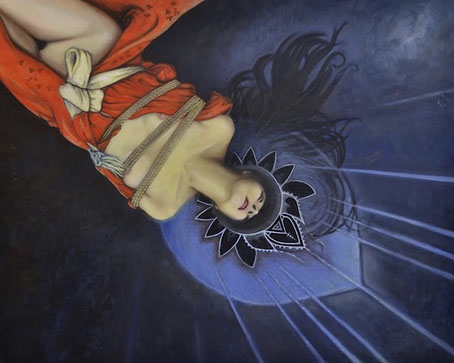
States of Ecstasy 1 by K. Lenore Siner some of whose work may be seen in Witch-Ikon: An Exhibition of Contemporary Witchcraft Imagery at Mortlake & Company, Seattle.

Emily Temple compiles a list of “40 creepy book covers”. A shame that she (or Lithub) can’t also credit more of the artists and designers responsible. Searching titles at ISFDB would turn up many of the missing names.

• Blogging has suffered in recent years from the onslaught of social media but some persist in maintaining the form as a creative act. Poemas del río Wang is one such, its scope best seen in this alphabetical index.

• Mixes of the week: XLR8R Podcast 510 by Moodprint, Secret Thirteen Mix 232 by Alex XIII Maerbach, a mix for The Wire by Sadaf, and FACT mix 621 by NHK yx Koyxen.

Out next month: Mute: A Visual Document, being a visual history of Mute Records by Terry Burrows and Daniel Miller.

Nick Soulsby on “the myth and majesty of Vangelis’ timeless Blade Runner soundtrack”.

Compound in the new album by Yair Elazar Glotman. Stream it in full here.

Killed by Roses (1963): Eikoh Hosoe’s photographs of Yukio Mishima.

Oriental Traditional Music from LPs & Cassettes

• Hours and hours of Blue Jam. Oo ab welcome.

• 65 books of prints by Katsushika Hokusai.

Alpha (1976) by Vangelis | Rêve (1979) by Vangelis | Flamants Roses (1979) by Vangelis

Weekend links 378

belbury.jpg

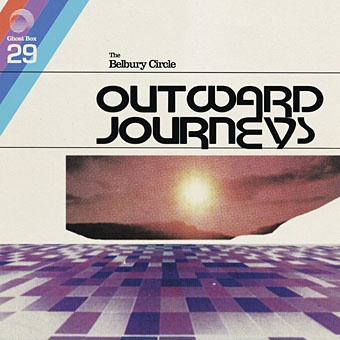
Outward Journeys, which will be released on November 3, is the second album on the Ghost Box label by The Belbury Circle (Belbury Poly with The Advisory Circle). As before, John Foxx is a guest vocalist, and as always, Julian House provides the graphic design.

• Music non-stop: Geeta Dayal in 2012 talking to Rebecca Allen about the challenges of turning Kraftwerk into computer animations.

• At the BFI: Jon Towlson on the sublimity of Close Encounters of the Third Kind; and Stephen King’s favourite films.

Bookogs is the Discogs concept applied to books. Stupid name (Bibliogs would be much better) but there it is.

belbury2.jpg

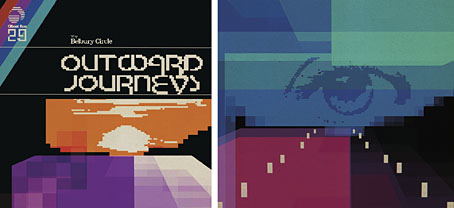
Julian House goes 8-bit. More artwork for The Belbury Circle.

Iain Sinclair‘s farewell to London. Sinclair talked to Alan Moore about his book earlier this month.

• At Dangerous Minds: Paul Gallagher on the occult art of Austin Osman Spare.

• The places where Cold War numbers stations broadcast spies’ secret codes.

• Rodney Brooks on the seven deadly sins of predicting the future of AI.

Nadja Spiegelman on the peculiar poetry of Paris’s Lost and Found.

• At Wormwoodiana: The rise of secondhand bookshops in Britain.

• RIP Grant Hart and Harry Dean Stanton. (And Dirge Magazine.)

• Mix of the week: FACT mix 618 by Tara Jane O’Neil.

• An introduction to Conny Plank in 10 records.

Reoccurring Dreams (1984) by Hüsker Dü | Canción Mixteca (1985) by Ry Cooder | You Don’t Miss Your Water (1993) by Harry Dean Stanton

Weekend links 373

YDKMorimoe.jpg

Untitled (2011) by YDK Morimoe. Via Jim Post at Dennis Cooper’s.

For The Climax Of The Night by Total Leatherette is almost certainly the only album you’ll see this year with autofellatio cover art. Faux Fox gives a taste of the new album, while an earlier piece, Squeeze Hunk, features a Tom of Finland-style video. And speaking of which, Dome Karukoski’s feature film, Tom of Finland, is released in the UK this week. Related: Tom of Finland coffee.

• The death of playwright Joe Orton in 1967 prompted yet more 50th anniversary articles this week. Mentioned here before, and better value than all the textual appraisal, is the BBC’s 70-minute TV documentary from 1982, A Genius Like Us: A Portrait of Joe Orton, which includes interviews with family, friends, colleagues and Orton’s biographer, John Lahr.

• Two skulls, 50,000 postcards and a book that took 50 years to finish: Stuart Jeffries visits artist Tom Phillips.

• New at the Internet Archive: 25,000 78RPM records. You can never go wrong with Duke Ellington.

Lock Your Door and The Reformation of St. Jules: Algernon Blackwood filmed in 1949.

Redemption, an exhibition of art by Fay Pomerance (1912–2001) at Ushaw College, Durham.

• At Dirge Magazine: Daniel Pietersen on the myth of the sunken city.

• Mix of the week: FACT Mix 613 by Aaron Dilloway.

Laetitia Sadier’s favourite albums.

• RIP Hywel Bennett

Sunken City (1961) by Les Baxter | Ys (1971) by Alan Stivell | Atlantis (1971) by Deuter