Weekend links 395

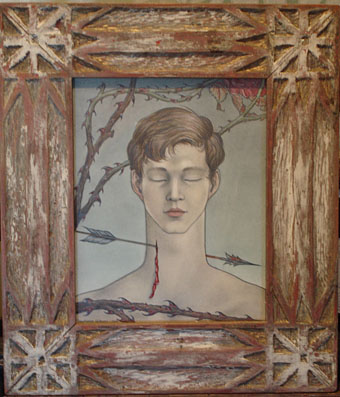
godwin.jpg

Love is a Martyrdom (1965) by Stephanie Godwin. See Joscelyn Godwin’s Flickr pages for more.

David Shire’s synthesizer score for Apocalypse Now was the first music recorded for the film but was abandoned when Shire was fired due to other commitments. 39 years later, his score has been released by La-La Land Records.

Moon Safari by “French band” Air was released in the UK on January 16th, 1998. Jeremy Allen looks back at an album that was more successful here than elsewhere.

• On the occasion of the US publication of Iain Sinclair’s The Last London, Geoff Nicholson presents an A to Z of the author and his works.

This is the story of how two artists fell in love with each other, with Kelmscott Manor, and with William Morris, the poet, craftsman, and socialist who had made it his home. As Kelmscott’s first tenants afer the Morris family, Edward and Stephani Scott-Snell rented the historic Oxfordshire house throughout the Second World War. There they created an aesthetic and erotic paradise based on a fantasy land called ‘Thessyros’, and produced a body of figurative painting unique for its time. Much of this was done under the influence of a legally-obtained drug they called ‘Starlight’, making many of their paintings  early examples of psychedelic art.

The Starlight Years is a book by Joscelyn Godwin about his artist-parents and their strange relationship

• Mixes of the week: FACT mix 634 by Minor Science, Secret Thirteen Mix 243 by Moa Pillar, and XLR8R Podcast 524 by Burnt Friedman.

• At The Smart Set: Marian Calabro pays a visit to the Brussels apartment where René and Georgette Magritte lived from 1930 to 1954.

Hormone Lemonade, a new album by Cavern Of Anti-Matter, will be released in March. The Quietus has a preview.

• At the Internet Archive: QZAP, the Queer Zine Archive Project; 551 downloadable publications from 1974 to 2015.

• At Dennis Cooper’s: Briefly recounting Tim Buckley‘s short, inconvenient stylistic trajectory.

• Musician and bookseller Richard Bishop recommends a handful of rare occult volumes.

• At Kickstarter: Arsgang, a short psychological horror film by Harry Edmundson-Cornell.

• “A Sloppy Machine, Like Me”: Michael Grasso on the history of video synthesizers.

• At Flashbak: 27 Snapshots of Manchester in the 1960s.

• At Strange Flowers: 18 books for 2018.

Love Is Strange (1956) by Mickey & Sylvia | Love Is Peace (1970) by Amon Düül | Love Is The Drug (1980) by Grace Jones
Weekend links 393

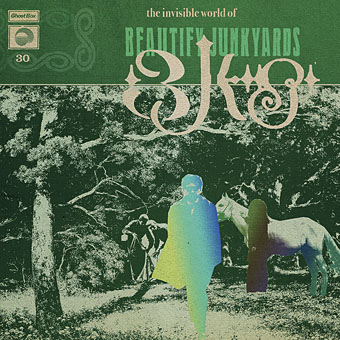
beautifyjunkyards.jpg

The Invisible World of Beautify Junkyards will be the next release on the Ghost Box label in March 2018. Design by Julian House.

• Tantalising discovery of the week was Alphons Sinniger’s Eno (1974), a 24-minute film about post-Roxy Music Brian Eno which shows (among other things) the recording of Here Come The Warm Jets. The film is a scarce item that appeared briefly on YouTube before being yanked. Copies have been reposted (see here) although they may not stay around for long.

Nosferatu the Shapeshifter: An inventory of intertitles, prints and premiéres. A page that includes some detail about Die zwölfte Stunde. Eine Nacht des Grauens (The Twelfth Hour: A Night of Horror), a seldom-seen reworking of Murnau’s film from 1930 which added sound, additional scenes (none of them by Murnau) and a happy ending.

• At Dennis Cooper‘s: Entry Level: Luchino Visconti’s “German Trilogy”: The Damned, Death in Venice, Ludwig (1969–1973).

• “3,500 occult manuscripts will be digitized and made freely available online, thanks to Da Vinci Code author Dan Brown.”

• From 2015: Watch Alejandro Jodorowsky give a tarot reading (for Nicolas Winding Refn).

Portals of London: “Towards a catalogue of London’s inter-dimensional gateways”.

• At Spoon & Tamago: Gigantic sculptures by Kenji Yanobe of cats wearing helmets.

• At the BFI: Adam Scovell on 10 great “urban wyrd” films.

• At Swan River Press: Our Haunted Year: 2017.

Portals (2001) by Bill Laswell | Portals And Parallels (2010) by Belbury Poly & Moon Wiring Club | Abysmal Cathedrals Arise!—Beyond The Quivering Portal—Minds On Fire (2012) by The Wyrding Module

The weekend artists, 2017

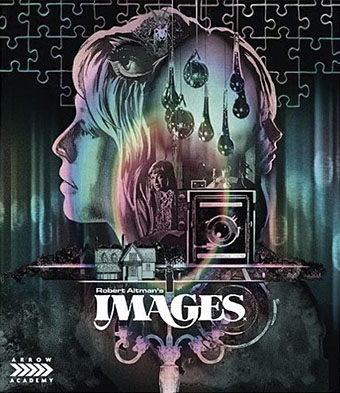
images.jpg

Art by Twins of Evil for the forthcoming blu-ray from Arrow Academy.

The laziest post of the year is invariably a review of the artists/designers/photographers featured on the weekend posts, so here’s another end-of-year list for you. Scroll down to see what caught my attention over the past twelve months.

mueck.jpg

Mass by Ron Mueck at the National Gallery of Victoria Triennial. Photo by Tom Ross.

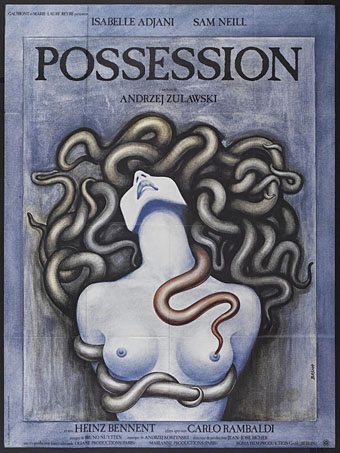
possession.jpg

French poster by Basha (Barbara Baranowska) for Andrzej Żuławski’s extraordinary Possession (1981).

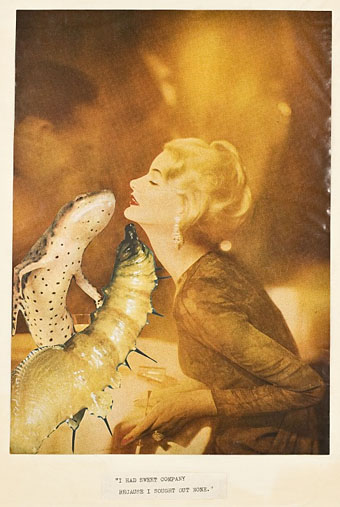
adam.jpg

I Had Sweet Company Because I Sought Out None. Collage by Helen Adam.

nakayama.jpg

Still of an Alive Painting by Akiko Nakayama.

Continue reading “The weekend artists, 2017”

Émile Bayard’s Histoire de la Magie

bayard11.jpg

Regular readers may have noticed my persistent urge to trace the provenance of certain images or designs. The latest candidate is the above illustration of a witches sabbat, a picture familiar to readers of occult histories in addition to appearing on at least two album covers. It’s the use in occult books which no doubt drew it to the attention of composer John Zorn who used it as a cover image in 2004 for his Magick album, one of a series of occult-themed recordings. The album credits the artwork to Gustave Doré, a plausible candidate given the engraving style but I’m familiar enough with Doré’s work to doubt that it was one of his.

bayard01.jpg

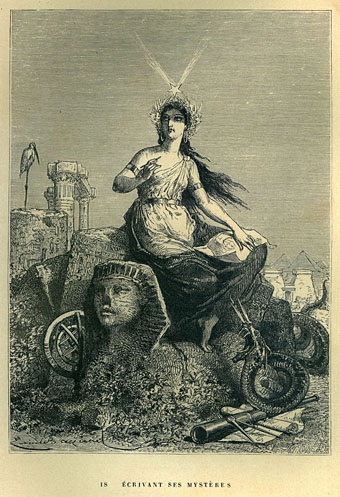
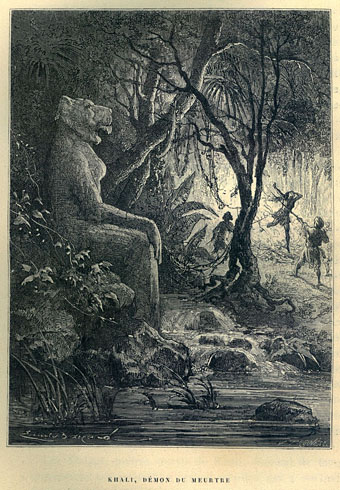
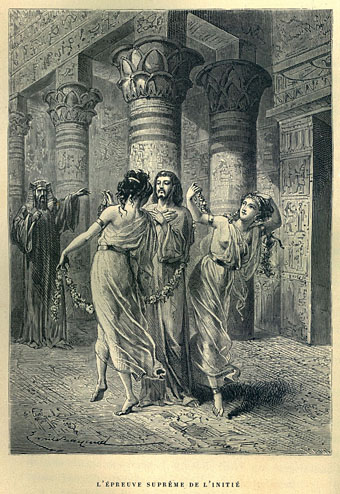
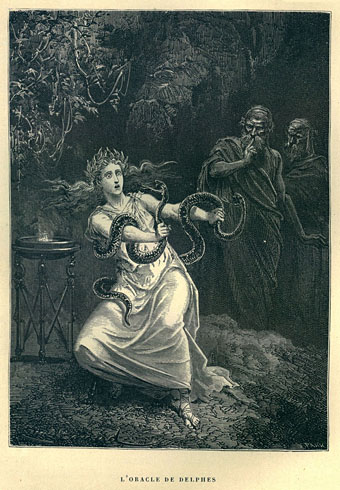
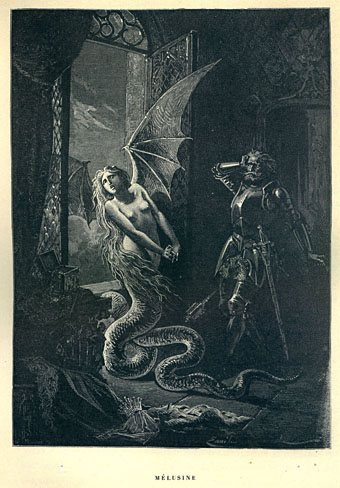
Earlier this week I was looking for more occult-related imagery so finally conducted a proper search for the sabbat picture. The origin is a French volume by Paul Christian, Histoire de la Magie, Du Monde Surnaturel Et de la Fatalite a Travers Les Temps (1870), and the full-page illustrations are by Émile Bayard (1837–1891). The Doré identification was partially correct since Bayard was a contemporary of Doré’s, and the drawings were engraved by François Pannemaker, an engraver who worked on many of Doré’s books as well as the Hertzel editions of Jules Verne. Émile Bayard is one of those artists whose name is unknown today even though people throughout the world would recognise one of his drawings; his illustration of Cosette from Victor Hugo’s Les Miserables provided the face seen on all those posters and hoardings promoting the popular musical.

bayard02.jpg

“Paul Christian” was the nom de plume of Jean-Baptiste Pitois (1811–1877), and his study of occult history was a popular book when it first appeared. I can’t say much about its contents but the illustrations (of which these are a selection via this page) show a range that encompasses various myths and religions as well as the expected variants of Western occultism. I’d seen several of Bayard’s other illustrations in a more recent French history of the occult, where the pictures are uncredited. I’ve suspected for years that they might be by the same artist responsible for the sabbat picture so this discovery has laid another nagging question to rest.

bayard03.jpg

Histoire de la Magie isn’t among the scanned books at the Internet Archive, unfortunately, but a copy may be viewed at Gallica. It’s a shame this is one of Gallica’s older scans which spoils the artwork but you can at least seen the book in full. An English translation was published in the US in 1969, containing notes and additions by living occult experts, but I’ve yet to discover whether this edition retained Bayard’s pictures.

bayard04.jpg

bayard05.jpg

Continue reading “Émile Bayard’s Histoire de la Magie”

Weekend links 386

ward.jpg

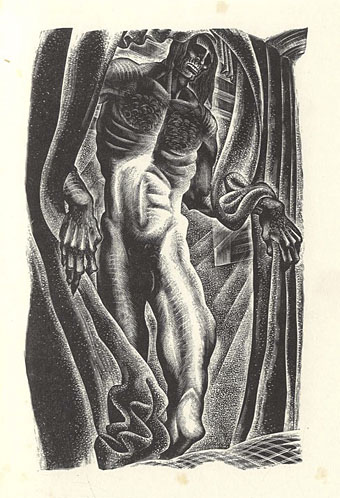
Lynd Ward again, and one of his illustrations for Frankenstein (1934).

• “Julio Mario Santo Domingo was a collector and visionary who filled his homes and warehouses with the world’s greatest private collection related to the subjects of drugs, sex, magic, and rock and roll: a library of more than 50,000 items…” Altered States: The Library of Julio Santo Domingo by Peter Watts catalogues some of the artefacts.

• “His vision of Gay Liberation was deeply, and uniquely, inflected by his study of, and belief, in anarchism.” More on the late Charles Shively: Michael Bronski remembers a pivotal figure in the gay liberation movement.

• William Friedkin’s Sorcerer was released on region-free blu-ray a couple of years ago but it’s being reissued again in the UK for its fortieth anniversary. Julian House has created a series of designs for the insert.

• Electronic musician and podcaster Marc Kate talks to Erik Davis about nihilism, horror movies, New Age music, and transmuting Nazi black metal into the ambient soundscapes of his latest album, Deface.

• “Beware the polished little man“: an extract from The Guesthouse at the Sign of the Teetering Globe by Franziska zu Reventlow which is available now from Rixdorf Editions.

• Another welcome blu-ray release, Sergei Parajanov’s The Colour of Pomegranates appears later this month in a special edition from Second Sight.

• Mixes of the week: FACT mix 626 by Sharp Veins, XLR8R Podcast 515 by Sammy Dee, and Secret Thirteen Mix 236 by Beta Evers.

The Witch Wave with Pam Grossman is a podcast for bewitching conversation about magic, creativity, and culture.

• Call me by the wrong name: Benjamin Lee on Hollywood’s perennial attempts to straight-wash gay films.

• At Dennis Cooper’s: Spotlight on…Ronald Firbank Concerning the Eccentricities of Cardinal Pirelli (1926).

• Zoë Lescaze reviews Frankenstein: The First Two Hundred Years by Christopher Frayling.

• Angry Optimism in a Drowned World: A Conversation with Kim Stanley Robinson.

• Stewart Smith on The Strange World of…Linda Sharrock.

Colors (1969) by Pharoah Sanders | Frankenstein (1972) by The Edgar Winter Group | Pomegranate (2001) by Transglobal Underground