Weekend links 436

cthulhusex.jpg

Cover for the now-defunct Cthulhu Sex magazine, volume 2, no. 23. Art by Chad Savage.

• Revising Lovecraft: The Mutant Mythos by Paul StJohn Mackintosh. Mackintosh was interviewed at Greydogtales in 2016 where he made a point that certainly chimes with my experience: “…the English-speaking genre community seems to have far more trouble with certain sexual themes than the mainstream literary community does, especially in Europe. […] A pity, because, for example, if H P Lovecraft’s worldview did owe much to sexual repression, then more mature engagement with that could really benefit the whole cosmic horror genre.”

• At Expanding Mind: Occultist and Aleister Crowley biographer Richard Kaczynski talks with Erik Davis about Jack Parsons, the “method of science,” the Agape Lodge, the women of Thelema, and the pluses and minuses of the Strange Angel TV series.

The Tell-Tale Heart (1953) is a short adaptation of the Poe story directed by JB Williams, and featuring Stanley Baker as the author. The film had been lost for 50 years but may now be seen on the BFI website.

• From July but more suited to the end of October: Paul Karasik on The Addams Family Secret: how a massive painting by Charles Addams wound up hidden away in a university library.

• Mixes of the week: Samhain Séance Seven: A Very Dark Place by The Ephemeral Man, Big Strings Attached, Oct. 2018 by Abigail Ward, and XLR8R Podcast 564 by Niagara.

• At Haute Macabre: Conjured from obscurity: lost, neglected and forgotten literature from Valancourt Books.

The Feathered Bough, a large-format collection of new fiction and art by Stephen J. Clark.

William Doyle on Music For Algorithms: in search of Eno’s ambient vision in a spotify era.

• The devils of our better nature: Daniel Felsenthal on Dennis Cooper and his new film.

Bone Mother, a short animated film by Dale Hayward & Sylvie Trouvé.

• “In Japan, the Kit Kat Isn’t Just a Chocolate. It’s an Obsession.”

Leigh Singer chooses 10 great films about the afterlife.

• “I am a haunted house,” says Sarah Chavez.

Psychedelitypes

Sex Voodoo Venus (1985) by Helios Creed | Sexy Boy (1998) by Air | Sex Magick (2002) by John Zorn

Weekend links 435

moss.jpg

An illustration by “Lapthorn” for Little Green Apples: the Chronicle of a Fallen Man (1930) by Geoffrey Moss.

Jean-Michel Jarre & Michel Granger: how we made Oxygène. “[It] was initially rejected by record company after record company. They all said: ‘You have no singles, no drummer, no singer, the tracks last 10 minutes and it’s French!’ Even my mother said: ‘Why did you name your album after a gas and put a skull on the cover?'”

• “When we ignore or demean consensual BDSM erotica, or stories about female sexual submission, we inadvertently contribute to a cultural legacy that routinely pathologizes, demeans, or erases women’s sexual desires.” Hayley Phelan on why we need erotica.

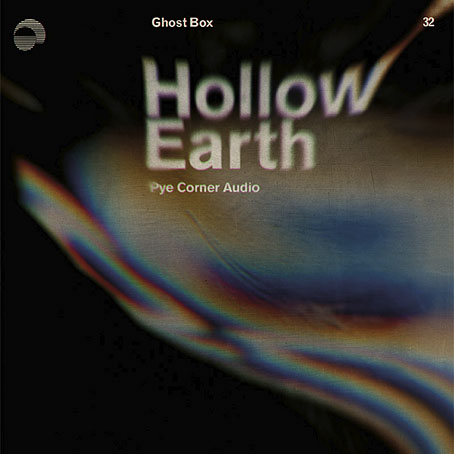
• “More than a literal reconstruction of an imagined collaboration between Eno and Morricone, Ghost Box opens a door onto a world where ambient music and country-western make for natural bedfellows.” Ghost Box (Expanded) by Suss.

Peter Bebergal and Janaka Stucky discuss Bebergal’s new book, Strange Frequencies: The Extraordinary Story of the Technological Quest for the Supernatural. There’s more at the Occulture podcast.

Great Noises That Fill The Air (1988), an album by Bow Gamelan Ensemble, receives its first release on CD next month. Related: the group in 1987 staging one of their pyrotechnic performances.

• Mixes of the week: Bleep Mix #45 by Lawrence English & William Basinski – Casting Voices Mixtape, DJ Food Solid Steel mix by Matt Berry, and The Séance – 13th October 2018.

• “…the social position filled by art and aesthetics is increasingly best understood in terms of magic.” Marina Warner and Eleanor Birne discuss forms of enchantment.

• From 2104: Ten little tales of terror for late of a Halloween night by Levi Stahl.

Words I Heard by Julia Holter.

The Cosmodrome Futurists

Urban Gamelan (Pt. 1) (1984) by 23 Skidoo | Chez Les Futuristes Russes (1984) by Aksak Maboul | Oxygen (1997) by Gas

Weekend links 434

klint.jpg

Group X, No. 1, Altarpiece (1915) by Hilma af Klint.

“Like Kandinsky, and other pioneers of abstract art, af Klint was deeply immersed in theosophy and anthroposophy. But she seems to have taken that interest much further than her male counterparts, participating in (and later leading) séances with a group of women friends. Whatever the spirits said, af Klint did.” Nana Asfour on pioneering abstract painter, Hilma af Klint.

• Four electronic artists reflect on the influence of composer Laurie Spiegel. Spiegel’s The Expanding Universe (1980) is reissued by Unseen Worlds next month. Related: Laurie Spiegel in 1977 playing the Bell Labs Digital Synthesizer.

• At Expanding Mind: Gurdjieffean writer and DuVersity director Anthony Blake talks with Erik Davis about dialogue, synergy, mind between brains, the trouble with teachers, and the gymnasium of beliefs in higher intelligence.

• Mixes of the week: Flashing Noise Mix by Tim Gane, Secret Thirteen Mix 268 by Bérangère Maximin, and Samhain Séance Seven: A Very Dark Place – Prologue by The Ephemeral Man.

Geeta Dayal on Broken Music (1989), a book about sound art edited by Ursula Block and Michael Glasmeier which is now available in a new edition from Primary Information.

• The Sainsbury Archive showcases the graphic design of several decades of the supermarket chain’s products.

• More of the usual suspects: Michael Moorcock and Alan Moore in 2006 discussing Moorcock’s career.

• “Karloff the Uncanny”: Joe Dante talks to Stephanie Sporn about the attraction of old film posters.

Mexico City, another preview (and a psychedelic one) of Randall Dunn’s forthcoming solo album.

• At Haute Macabre: Timeless Phantom Interludes: The Photography of Jason Blake.

Mark Valentine on the current state of Britain’s secondhand book shops.

• At I Love Typography: Unicorns, Frogs and the Sausage Supper Affair.

• “I never wanted to be a cult film-maker,” says John Waters.

• Artist Arik Roper chooses some favourite album covers.

Broken Head (1978) by Eno, Moebius, Roedelius | Broken Horse (1984) by Rain Parade | Broken Aura (2000) by Coil

The Cardinal and the Corpse

cardinalcorpse.jpg

Appearing at last on YouTube (although I think it may have been there once before) is the curious TV film that Iain Sinclair (writer & “freak wrangler”) and Chris Petit (director) made for Channel 4’s Without Walls series in 1992. This is a must for enthusiasts of Sinclair’s early novels since it features the real-life models for several of his characters—guitarist/bookdealer Martin Stone, artist/author Brian Catling, crazed bookdealer Driffield—plus Sinclair’s friends Michael Moorcock and Alan Moore. The latter is seen searching for a copy of Francis Barrett’s grimoire, The Magus (1801), a year before he attached the magus label to himself; I still don’t know whether this quest was Alan’s suggestion or Sinclair’s.

Elsewhere there are fleeting portraits of crime writer Robin Cook (aka Derek Raymond), and Kray gang member Tony Lambrianou. Other notable appearances include poet Aaron Williamson, artist John Latham and David Seabrook, a writer whose Jack of Jumps book I designed a cover for in 2006. The narrative, such as it is, is a series of quests and meetings, threaded together with anecdotes about the various personalities who are the real subject of the film. It’s all very hermetic, and what sense it makes to the uninitiated I can’t say, but it holds the attention for 40 minutes. These obscurities have a way of vanishing, so if you’re interested watch it now or download it for later.

Previously on { feuilleton }
Terror and Magnificence
Mister Jarman, Mister Moore and Doctor Dee
Compass Road by Iain Sinclair

The Ingenious by Darius Hinks

hinks.jpg

My latest cover for Angry Robot Books was revealed this week at the Barnes & Noble blog (where I talk a little about the design aspects) so here it is. The Ingenious is an alchemy-themed fantasy by Darius Hinks, the brief for which required a depiction of the city of Athanor, the central character, Isten, and some indication of the novel’s occult flavour:

Thousands of years ago, the city of Athanor was set adrift in time and space by alchemists called the “Curious Men.” Ever since, it has accumulated cultures, citizens and species into a vast, unmappable metropolis.

Isten and her gang of half-starved political exiles live off petty crime and gangland warfare in Athanor’s seediest alleys. Though they dream of returning home to lead a glorious revolution, Isten’s downward spiral drags them into a mire of addiction and violence. Isten must find a way to save the exiles and herself if they are ever to build a better, fairer world for the people of their distant homeland.

I was also asked to do something in the detailed drawing style of artists such as Philippe Druillet and Ian Miller, a challenge I was happy to accept with the proviso that both those artists are inimitable. As I say in the B&N post, I went in a Miller direction although I don’t know whether anyone would spot the influence. I was more overt years ago in some of my borrowings from Druillet whose aesthetics can be discerned in my poor artwork for Hawkwind and my much better artwork for The Call of Cthulhu. The background pattern was the kind of thing I often do where I spend hours working on something then cover it over, but more of the interlacing and symbolism (all genuine alchemical symbols) will be visible on the back of the book.

The Ingenious will be published on 9th February, 2019.

Previously on { feuilleton }
De Sphaera
Delineations
Musaeum Hermeticum
A triangular book about alchemy
Alembic and Ligier Richier
Atalanta Fugiens
Splendor Solis revisited
Laurie Lipton’s Splendor Solis
The Arms of the Art
Splendor Solis
Amphitheatrum Sapientiae Aeternae
Cabala, Speculum Artis Et Naturae In Alchymia
Digital alchemy