Weekend links 550

moebius

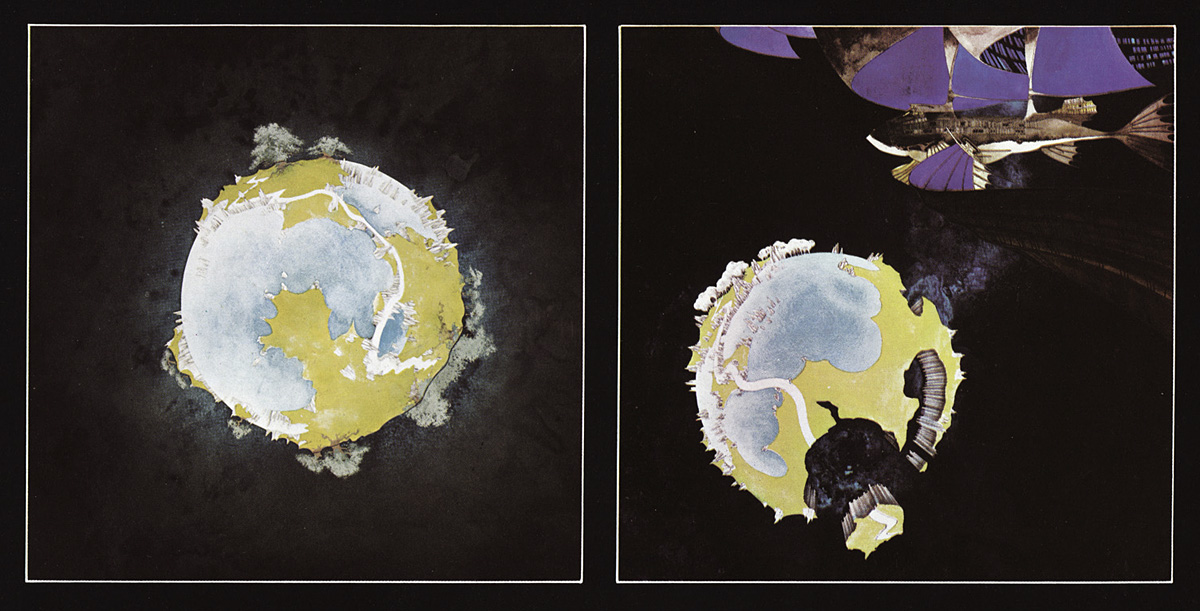
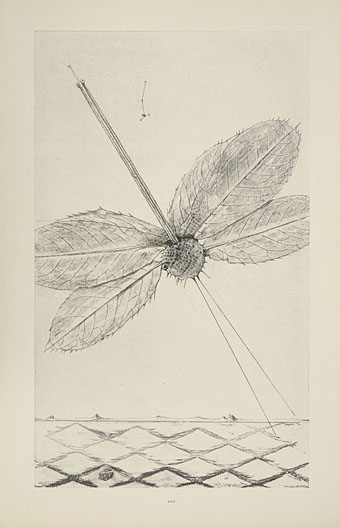
Illustration by Moebius for Les Robinsons du Cosmos (1970) by Francis Carsac.

Notre Dame des Fleurs is a collection of art based on or inspired by the Jean Genet novel. The book, which includes some new work of mine, will be published in February. Editor Jan van Rijn has a trailer for it here. It’s limited to 150 copies so anyone interested is advised to pre-order.

• Books that made me: William Gibson‘s influential reading. Good to see him mention Suttree by Cormac McCarthy, an outstanding novel that might be better known if it wasn’t for the gravitational pull of McCarthy’s other works.

• Zagava have announced a paperback reprint of The Art of Ilna Ewers-Wunderwald, a collection of neglected Art Nouveau drawings and designs compiled by Sven Brömsel.

• At Dennis Cooper’s: Black_Acrylic presents…He Stood In The Bath And He Stamped On The Floor: A Joe Meek Day.

• More yearly roundups: Our Haunted Year 2020 by Swan River Press, and The Year That Never Was by blissblog.

• New music: Spaceman Mystery Of The Terror Triangle by The Night Monitor.

Ralph Steadman’s guided tour through six decades of irrepressible art.

• At Greydogtales: Valentine Dyall: Mystery and Mesmerism.

• At Wormwoodiana: The Esoteric in Britain, 1921.

• At Strange Flowers: Marie Menken’s Lights.

I Want To See The Bright Lights Tonight (1974) by Richard and Linda Thompson | Neon Lights (1978) by Kraftwerk | Lights (1980) by Metabolist

Weekend links 549

fuseli.jpg

The Shepherd’s Dream, from Paradise Lost (1793) by Henry Fuseli.

• “16 April. A card from Tom King with news of the tattoo of me that he had put on his arm: ‘The tattoo remains popular, though bizarrely one person thought it was of Henry Kissinger. It also makes for an amusing conversation during intercourse.’ This suggests the intercourse might be less than fervent, my name in itself something of a detumescent.” Alan Bennett‘s diary for the year is always a highlight of December.

• “I know that if I don’t write, say on holiday, I begin to feel unsettled and uneasy, as I gather people do who are not allowed to dream.” The Paris Review removed its paywall on their Art of Fiction interview with JG Ballard.

• “A biologist and composer have turned the aurora borealis into sound to create a magic melding of art and nature.”

If we let it, dreaming gradually erodes wake centrism—that waking consciousness to which Westerners in particular are inordinately attached. You might think of wake centrism as a pre-Copernican-like worldview that presumes waking to be the centre of the universe of consciousness, while relegating sleeping and dreaming to secondary, subservient positions. It is a matrix, a cultural simulation evolved to support adaptation, yet it inadvertently limits our awareness. Wake centrism is a subtle, consensual, sticky and addictive over-reliance on ordinary ways of perceiving that interfere with our direct personal experience of dreaming. To paraphrase the 16th-century British clergyman Robert Bolton, it is not merely an idea the mind possesses, but an idea that possesses the mind. Wake centrism is a flat-world consciousness. It warns us to stay away from the edges, to refrain from dialoguing with dreams and the unconscious.

Rubin Naiman on sleep and dreams

96th of October: an online fiction magazine dedicated to “tales of the extraordinary”.

• “Punk artist Barney Bubbles joins Manet among works given to UK public in 2020.”

• The results of the Nature Photographer of the Year contest for 2020.

• A list with a difference: Twenty Four Psychic Pop Relics by Woebot.

• Merve Emre on how Leonora Carrington feminized Surrealism.

• Mix of the week: XLR8R Podcast 675 by Teebs.

I Had Too Much To Dream (Last Night) (1966) by The Electric Prunes | The Room Of Ancillary Dreams (2000) by Harold Budd | Blue Dream (2001) by Sussan Deyhim & Richard Horowitz

Jean Giraud record covers

moebius17.jpg

Disc design for Eight Day Journal (1998) by Sam Rivers / Tony Hymas.

Continuing an occasional series about artists or designers whose work has appeared on record sleeves. I’ve used the artist’s full name (or his Earth name, if you prefer) in the title of this one to distinguish Moebius the comic artist and illustrator from Dieter Moebius of Cluster, Harmonia, et al. As with Harry Clarke, it’s taken a long time for Discogs to compile a substantial collection of these covers, and the catalogue there is still incomplete thanks to a lack of credits on some of the sleeves. Unlike other artists whose cover work tends to be a repurposing of existing art many of the Giraud/Moebius covers were created for the albums on which they appear.

moebius01.jpg

7 Colts Pour Schmoll (1968) by Eddy Mitchell.

moebius02.jpg

An album by a prolific French rock’n’roller. Giraud (as he was credited here) was no doubt hired on the strength of his Blueberry strips.

moebius03.jpg

Blueberry (1973) by Dadi.

And speaking of Blueberry… Jean Giraud drew the adventures of Jean-Michel Charlier’s Western anti-hero for 15 years under the name “Gir”. The character was very popular in France, hence this spin-off single by Marcel Dadi.

moebius04.jpg

Dadi’s Folks (1973) by Marcel Dadi.

moebius05.jpg

Jazz Septet (1973) by Ogoun Ferraille.

moebius06.jpg

Are You Experienced / Axis: Bold As Love (1975) by Jimi Hendrix.

moebius07.jpg

A gatefold sleeve for a series of four reissues of the Hendrix catalogue on the Barclay label. The other covers were by Philippe Druillet, Jean Solé and an artist unidentified on the link above but it looks to me like the work of Philippe Caza. I’ve got most of the music but I’d buy these for the covers alone.

Continue reading “Jean Giraud record covers”

Weekend links 548

aurora.jpg

The Aurora Borealis by Charles H. Whymper.

• “In 1829, when the celebrated Japanese artist Katsushika Hokusai was almost 70 years old, he created more than 100 drawings of a dazzling array of subjects: playful cats, serene landscapes, even severed heads. Hokusai’s fame continued to grow after his death in 1849, and the suite of small, elaborate drawings was last purchased a century later, at a Paris auction in 1948. Then it disappeared from the public eye.” The British Museum now has the drawings which may be seen here.

• The week in cover design: Emily Temple compares US and UK covers for the same books, while Vyki Hendy collects recent titles with objects as the main feature of the cover designs. One of my recent covers (which will appear here soon) is less minimal than these but also features an arrangement of objects.

• The compilation experts at Light In The Attic Records have put together another collection of obscure Japanese music. Somewhere Between: Mutant Pop, Electronic Minimalism & Shadow Sounds Of Japan 1980–1988 will be released in January.

“A Jamesian world is one of cursed artefacts, endlessly subsuming landscapes, forgotten manuscripts and tactile beings that punish the curious and intellectually arrogant.” Adam Scovell visits the grave of MR James.

• Dragons and Unicorns: John Boardley on the lost art of the Hieroglyphic Bible.

• I almost missed John Waters’ favourite films of the year.

• At Dennis Cooper’s: Sade’s Castle, Cardin’s House.

Northern lights photographer of the year.

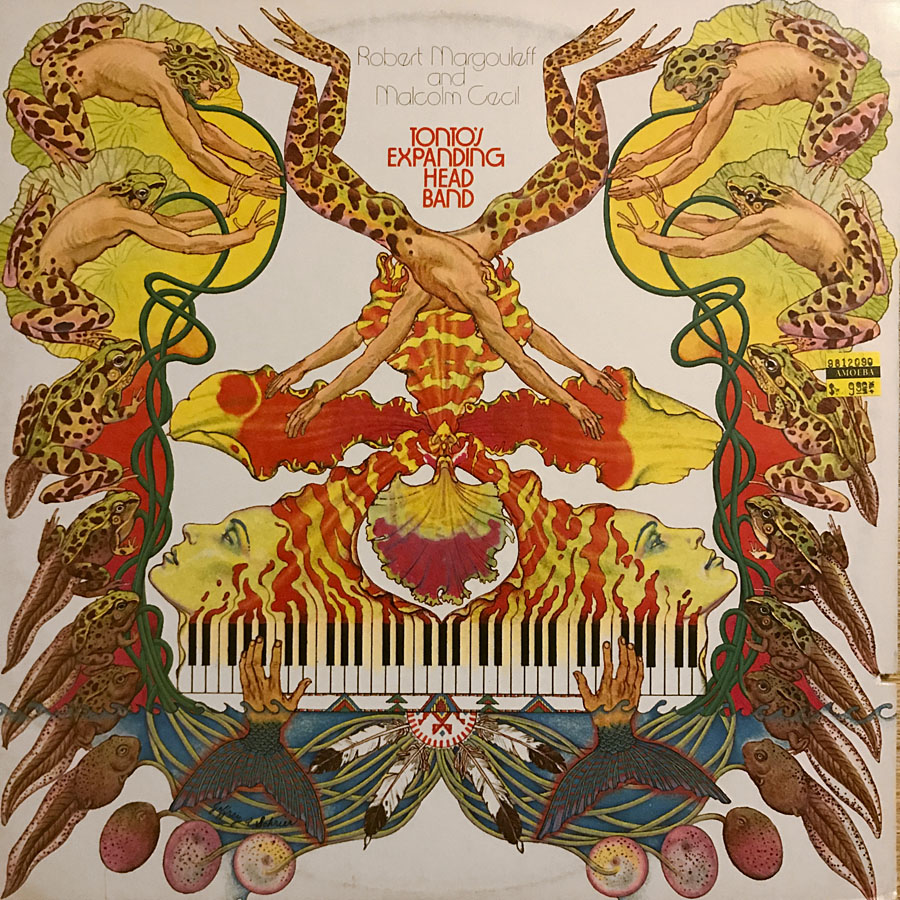
Aurora Hominis (1970) by Beaver & Krause | Aurora (1971) by Tonto’s Expanding Head Band | Soft Aurora (1979) by Tod Dockstader

Weekend links 547

baade.jpg

Anti-Vanitas (2018) by Carrie Ann Baade.

• RIP Richard Corben, an artist whose work I wasn’t always keen on but whose enthusiasm for pulp weirdness and cosmic horror was matched by a pulp vitality of his own. Corben’s Den was the first story in the first issue of Heavy Metal, a strip in which Den’s ever-present penis provided some rare equality of nudity in American comics. Corben was also a lifelong Lovecraftian; his 1972 adaptation of The Rats in the Walls is one of the earliest Lovecraft-derived comic strips.

• “Wit was the great man’s defence. Once, crossing Leicester Square with a friend, he looked up and saw a cinema marquee advertising a new film: Michael Redgrave and Dirk Bogarde in The Sea Shall Not Have Them. Coward turned to his friend and said: ‘I don’t see why not. Everyone else has.'” Philip Hoare on Noël Coward’s private lives: the photographs that could have landed him in jail.

• The end of the year brings the lists: Strange Flowers’ Secret Satan, 2020 is a guide to a surfeit of delectable volumes, while at 3 Quarks Daily Dave Maier selects his favourite ambient music of the year.

It’s not an easy life, but for Layne it is better than the alternative. “There is a generation of writers who think that it is a perfectly acceptable thing to accumulate a couple of hundred thousand dollars in student loan debt and go write “takes”—contrary opinion on things like ‘Why Dogs Are Actually The Worst Pet.’” None of it is new, he says, “it’s what people were doing when Rome burned.” But it has left us worse off, he says.

“I feel like we are post-language now,” he says. “Things are more symbolic. The relationship between words and facts and objectivity and their impact seems to have separated to the point where most of the writing that I see, especially on something like Twitter, is by people baffled that people don’t get what they are trying to say. It’s depressing.”

Dominic Rushe on how Ken Layne created an alternative to clickbait in the desert

• “Underworlds, otherworlds, so many passageways on this earth to elsewheres, especially during these weeks of the year.” Nina MacLaughlin on The Shadows below the Shadows.

Dennis Cooper‘s favourite fiction, poetry, non-fiction, film, art, and internet of 2020. Thanks again for the link here!

• The week in strange worlds: The Strange World of Colossive Press, and The Strange World of Robbie Basho.

• The Images Wish To Speak: An interview with artist Carrie Ann Baade.

Jackson Arn on why so many filmmakers have paid homage to Pieter Bruegel.

Physicists nail down the “Magic Number” that shapes the Universe.

Dreams, Built By Hand

Shadow (1990) by Nusrat Fateh Ali Khan | Shadows (1994) by Pram | Shadow Of A Twisted Hand Across My House (2001) by I.E.M.