Ash

ash.jpg

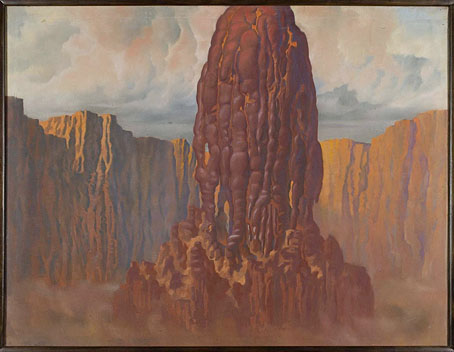
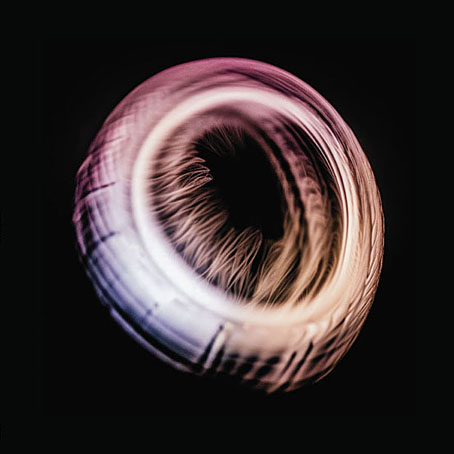
Cover art by Clayton Welham.

I’ve been doing the design duties on albums and singles by Emptyset since their first self-titled release in 2009. The latest album from the electronic duo, Ash, is also the 50th release on the Subtext label for which I’ve once again provided a minimal layout. I’ve no idea how the images by Clayton Welham were created, and I’m quite happy not knowing. Ash is available for pre-order ahead of its release next month.

Work announcements here have been rather scarce of late, in part because I’ve been working on a major project which is nearing completion and will no doubt be announced soon. Watch this space.

Weekend links 690

sosnowski.jpg

The Voice of St. Teresa (1928) by Oskar Sosnowski.

• The House is the Monster: Roger Corman’s Poe Cycle forms “a body of work not only deeply coherent but uniquely inspired,” says Geoffrey O’Brien.

• Steven Heller’s font of the month is Amberwood, while at The Daily Heller there’s a profile of Otto Bettmann, “an unsung visionary of commercial art”.

• At Public Domain review: The Works of Mars (1671), plans for military architecture by Allain Manesson Mallet.

The “underlying oneness of all things,” the conviction “that everything is connected” (Gravity’s Rainbow 703), is a thesis that appeals to many mystics and even to some scientists, but Fort complains that the latter too quickly dismiss unexplainable coincidences, or feebly explain them away. Scorning “scientific procedure” and inept police investigations, Fort turns for answers to denizens of the occult—poltergeists, invisible people, vampires, werewolves, miracle healers, fakirs, psychic criminals, dowsers—and to such notions as teleportation, human-animal metamorphoses, spontaneous combustion and pyrokinesis, “psychic bombardment,” telekinesis, animism, “secret rays,” telepathy, spirit-photography, clairvoyance, and modern instances of witchcraft.

Steven Moore in a perceptive essay about the overlooked connections between Thomas Pynchon, William Gaddis and Charles Fort. Having discussed Fort’s preoccupation with coincidences, the author notes that he shares a name with the late Steve Moore, former editor of Fortean Times magazine

• Pynchonesque headline of the week: The Paradox of the Radioactive Boars.

• James Balmont’s guide to the masterworks of New Taiwanese Cinema.

• New music: Solo for Tamburium by Catherine Christer Hennix.

• Winners of Bird Photographer of the Year 2023.

• Idris Ackamoor’s favourite music.

• Radio-Active (1984) by Steps Ahead | Radioactivity (William Orbit Remix) (1991) by Kraftwerk | Radioactivity (1998) by Hikasu

Weekend links 689

cossard.jpg

Salammbô (1899) by Adolphe Cossard.

• At Unquiet Things: “A mystery that no longer exists: Wrinkle in Time cover artist revealed”. S. Elizabeth explains. I did a little research of my own into this enigma without success. Good to know that it’s been resolved.

• James Balmont’s latest guide to Japanese cinema is an examination of the transcendental oeuvre of Yasujiro Ozu.

• At Spoon & Tamago: Trains intersect with everyday life in nostalgic illustrations by Shinjiro Ogawa.

• DJ Food discovered a set of Zodiac posters by Bruce Krefting from 1969.

• At Wormwoodiana: John Howard on looking for misplaced Machens.

• At Vinyl Factory: Discovering Mort Garson with Hilary Wood.

• At Dennis Cooper’s: More Ozu in Yasujiro Ozu Day.

• New music: Multizonal Mindscramble by Polypores.

• Mix of the week is a mix for The Wire by Aho Ssan.

• Ioneye in conversation with Bill Laswell.

• Train Song (1969) by Pentangle | Love On A Real Train (1984) by Tangerine Dream | Tokyosaka Train (2002) by Funki Porcini

Weekend links 688

horna.jpg

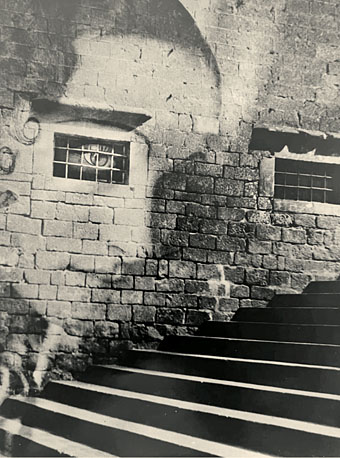
Ascending to the Cathedral, Barcelona (1938/1960) by Kati Horna.

• The rise and fall of Kowloon Walled City, Hong Kong’s infamous urban monolith. Related: a four-and-a-half-hour walkthrough of Stray, a game in which you help a cat escape from a deteriorated robot-filled housing complex.

• Quote of the week: “The true master requires the precision of a poet and the imagination of a scientist.” Thus Vladimir Nabokov at Lawrence Weschler’s Wondercabinet.

• New music: Orion Nebula by Christian Wittman, and Chthonic by Lawrence English & Lea Bertucci.

Chapter by chapter, Flaubert lampoons his poor pair, who fail at discipline after attempted discipline: landscape architecture, anatomy, history, literature, phrenology, religion, even love, and on and on. In each pursuit, they never lose the optimism or the hubris of thinking they can put their knowledge to work in the world. When they become interested in pedagogy, they adopt a pair of abandoned children who are at turns mystified by and contemptuous of their efforts to improve their well-being. The fruit trees fail, the novel is abandoned, a cat is boiled alive, the children cause scandals.

David Schurman Wallace explores the hazards of distraction with a detour through Flaubert’s Bouvard and Pecuchet

• At AnOther: Peter De Potter’s new book explores the erotic performance of social media.

• At Dennis Cooper’s: Hobart LaRoche presents…15 experimental video games.

• Take a look at a book chronicling the albums of Island Records.

• At Colossal: Gabriel Schama’s laser-cut plywood reliefs.

• Orion (1986) by Metallica | Shades Of Orion (1993) by Shades Of Orion | Orion (2001) by Jah Wobble and Bill Laswell

Weekend links 687

crane.jpg

The Peacock Garden (1898) by Walter Crane.

• “The trio [Remedios Varo, Leonora Carrington & Kati Horna] became known as the ‘three witches’ for their exploration of the supernatural and metaphysical—which ranged…’from tarot readings to shamanic psychedelics to attempts to stop or slow time.'” Teresa Nowakowski on Remedios Varo: Science Fictions, an exhibition of Varo’s paintings at the Art Institute of Chicago which includes the one that Thomas Pynchon singled out for description in The Crying of Lot 49.

• Philip K. Dick giving a lecture on “orthogonal time” to a small audience at the Festival International de la Science-Fiction, Metz, in 1977. Dick’s talks and interviews aren’t exactly scarce, but this one was of interest for me since I recently designed an edition of John Crowley’s Great Work of Time, a novella which involves a similar concept. If you were at the Metz Festival in 1977 you could also see a live performance by Cluster. Lucky you.

• “Our minds remain open when the LSD wears off.” Steve Paulson on psychedelic drugs and their usefulness as therapeutic tools.

• At Cartoon Brew: Stephen Irwin’s animated films “combine the influences of David Lynch, Struwwelpeter, and the Brothers Grimm.”

• Steven Heller looked at NB3, the third book about Neville Brody’s graphic design. Elsewhere, Heller’s font of the month is Scusi.

• The glowing, prismatic nervous system of a sea star wins the Scientific Image of the Year.

• At Unquiet Things: Forgotten worlds and wonderlands from The Art of Fantasy.

• “Don’t waste my time with blood-free monster movies,” says Anne Billson.

• At Aquarium Drunkard: King Tubby And Soul Syndicate — Freedom Sounds In Dub.

• Mix of the week is DreamScenes – August 2023 at Ambientblog.

• Time Machine (1970) by Stray | Time Captives (1973) by Kingdom Come | The Existence Of Time (2012) by Monolake