New projects and new interview

kosher.jpg

The final post of an exceptionally productive year arrives with 2010 already shaping up to be just as busy and stimulating work-wise. In 2009 I designed at least 12 books (or was it 13? I’ve lost count…), 8 or 9 book covers, several CDs and many one-off commissions, as well as producing that calendar. If the precise details are vague it’s because the year has passed in something of a blur.

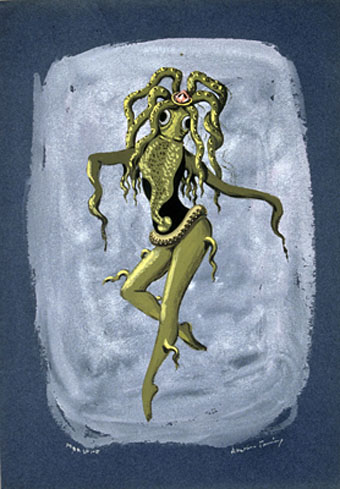
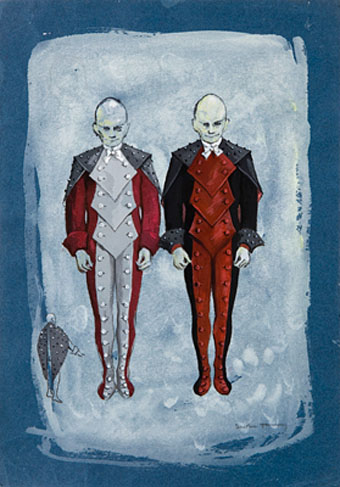
A number of the books I’ve been working on have yet to be published, among them The Kosher Guide to Imaginary Animals by Ann & Jeff VanderMeer which will be appearing soon from Tachyon. This is a small hardback whose humorous nature should be self-explanatory but if you need further details, Jeff can tell you more. And one of the major tasks of next year will be work for another VanderProject, The Thackery T Lambshead Cabinet of Curiosities, a sequel to the acclaimed Thackery T Lambshead Pocket Guide to Eccentric and Discredited Diseases. The new anthology will be a HarperCollins title due for publication in 2011; once again, Jeff has further details.

Finally, the good people at Innsmouth Free Press talked to me recently and their interview is now posted. Given the nature of the site, the discussion mostly concerns matters Lovecraftian but I also talk a little about how I ended up doing all this stuff in the first place. And if you read to the end you’ll discover which Lovecraft character I’d prefer to be. I decided to stick with the human cast; choosing from among the Great Old Ones seems far too presumptuous, even for an inflated ego like mine.

Autobahn animated

autobahn.jpg

The Düsseldorf maestros are treated to some animated illustration in this 1979 film by Roger Mainwood which takes Kraftwerk’s Autobahn as its soundtrack. Mark at Strange Attractor provided the tip and he compares the animation style to René Laloux and Roland Topor’s Fantastic Planet (1973). The purple humanoid floating through surreal landscapes is certainly reminiscent of Laloux’s film, but Autobahn also reminds me of Bruno Bozzetto’s Allegro non troppo (1977) and, given that Mainwood’s animation comes a couple of years later, it may well have been inspired by it. Bozzetto’s film is a feature-length “adult” response to Walt Disney’s Fantasia which takes the Fantasia format—well-known classical themes illustrated by animated sequences—but does so in a slightly more grotesque or risqué fashion. Much of Bozzetto’s film seems less daring today than it was in 1977 but the best sequence still works well and happens to be as science fictional as Mainwood’s Autobahn, an entire cycle of planetary evolution set to Ravel’s Bolero. Follow the links below.

• Roger Mainwood’s Autobahn pt. 1 | pt. 2
Ravel’s Bolero from Allegro non troppo

Previously on { feuilleton }
Sleeve craft
Who designed Vertigo #6360 620?
Old music and old technology
Aerodynamik by Kraftwerk
The genius of Kraftwerk

Winter music

nordfjord.jpg

Kjendalskronebrae, Nordfjord, Norway (c. 1900). From the Library of Congress Prints and Photographs Division via Wood s Lot.

Are you suffering list fatigue yet? I certainly have been, especially from the apparently endless “best ___ of the decade” catalogues which would have you believe that the significant cultural products of the past ten years have been thoroughly sifted, reviewed and appraised. So yes, there’s a degree of hypocrisy in adding to the list surplus but, as with the Halloween music lists, it’s difficult to write about an area of listening without compiling something like this. As it happens, my Halloween playlists proved briefly popular this year when they were noticed by Stumbleupon users so someone appreciates them.

The present selection is music to complement the season and its chilly weather which in our part of the world has been colder than usual and laden with snow. It might also serve as a suggested alternative to the dreary plague of Christmas songs. This isn’t definitive, of course, and I could have added more than ten. I kept the choices in the electronic spectrum but there’s a whole other list which could be made of winter-themed folk songs, folk music of all kinds being sensitive to the changing seasons.

Sonic Seasonings (1972) by Wendy Carlos.
Between her electronic transcriptions of Baroque music and the score for A Clockwork Orange, Wendy Carlos released a collection of four long pieces of electronic atmospherics blended with natural sound recordings, with each track dedicated to a different season. The album may not have had the formal intent of Brian Eno’s ambient albums but ambient it certainly is, preceding Eno’s Discreet Music by three years whilst predicting much of what would become over-familiar during the 1990s. The Winter track is the one which concerns us here, a droning Moog landscape of echoed notes, tinkling ice, distant wind and Rachel Elkind’s lupine howls. Carlos and Elkind carried the synthesised chill into their opening music for The Shining a few years later, and Carlos returned to the theme with the digital improvisations of Land of the Midnight Sun, included as a bonus on the Sonic Seasonings CD.

Eskimo (1979) by The Residents.
A conceptual masterpiece, and an album which still sounds as strange and timeless as it did when it first appeared. Eskimo is the first and (one presumes) only example of what might be labelled “Eskimo exotica” since the whole work is more Eskimo-esque than an authentic musical rendering of the world of the Inuit people. Like Wendy Carlos’s Winter, these are shifting soundscapes augmented by ritual chants and synthesised animal sounds. For those who found the album to be musically inaccessible the group released Diskomo, a segue of the musical themes matched to a thumping dance beat.

Iceland (1979) by Richard Pinhas.
Another far north concept album and the third solo release from the Heldon guitarist who subdues his Robert Fripp impersonations in favour of synth arrangements. The CD version includes a 22-minute bonus, Winter Music.

Victorialand (1986) by Cocteau Twins.
Much of the Cocteau Twins’ chiming and reverb-drenched output would suit the colder months but Victorialand in particular takes its title from a region of Antarctica, and many of the track titles—Whales Tails, How to Bring a Blush to the Snow—point in that direction. Another timeless work.

White Out (1990) by Johannes Schmoelling.
Schmoelling was a member of Tangerine Dream in what I consider to be their last worthwhile incarnation from 1980 to 1986. His third solo album also takes Antarctica as its theme and while some of the music tends to a jaunty blandness at its best it manages to evoke the isolation of the continent through lengthy synthesiser pieces. When the Polydor release went out of print, Schmoelling re-worked the album slightly for reissue on his own label.

Songs from the Cold Seas (1995) by Hector Zazou.
Many of the late Hector Zazou‘s albums were concepts of some kind, often involving a roster of guest artists. Songs from the Cold Seas follows this pattern with singers from around the world delivering a variety of songs from the world’s colder regions. For a contrast to the Residents’ ethnological forgeries, Song of the Water is a chant by Inuit artists Elisha Kilabuk and Koomoot Nooveya. Among other highlights there’s Björk who restrains her vocal gymnastics for once with a delicate Icelandic lullaby, Vísur Vatnsenda-Rósu.

Polar Sequences (1996) by Higher Intelligence Agency & Biosphere.
A collaboration between Bobby Bird of HIA and Biosphere‘s Geir Jenssen, recorded live with sounds sourced in and around Jenssen’s home town of Tromsø at the Arctic Circle. I much prefer this to the other HIA releases which lack its detailed textures. One track, Meltwater, sounds just as you’d expect, all running water and crackling ice.

Substrata (1997) by Biosphere.
Still one of the finest Biosphere releases (although Nordheim Transformed is probably my favourite) and included here for its chilly and mostly beatless atmosphere which includes further samples from the far north.

La Marche de L’Empereur (2005) by Emilie Simon.
I still haven’t seen La Marche de L’Empereur (March of the Penguins) but the soundtrack for the original French release is a fantastic collection of songs illustrating the survival struggles of the film’s penguins. Emilie Simon is frequently described as “the French Björk”, a lazy label which only connects the pair because they’re female singers who also happen to be “foreign” and users of unorthodox electronic arrangements. The recordings here feature glitch-inflected rhythms and glass instruments which means they were far too interesting for the American release of the film. The Hollywood version dropped the songs in favour of a traditional orchestral score.

Alaska Melting (2006) by Monolake.
The latest album from Monolake, aka Robert Henke, was released earlier this month. Silence has a winter scene on the cover and a track entitled Infinite Snow but winter isn’t a predominant theme. While the music is up to Henke’s usual high standard, it’s a lot less urgent than Alaska Melting, a one-off release on 12″ vinyl with two slices of vibrant techno that foreground Henke’s environmental concerns. The most uptempo and abrasive work on this list.

Previously on { feuilleton }
A playlist for Halloween: Voodoo!
Dead on the Dancefloor
Cristalophonics: searching for the Cocteau sound
A Clockwork Orange: The Complete Original Score
A cluster of Cluster
Fragment Endloss by Robert Henke
Another playlist for Halloween
Thomas Köner
A playlist for Halloween

Queer Noise and the Wolf Girl

queer_noise.jpg

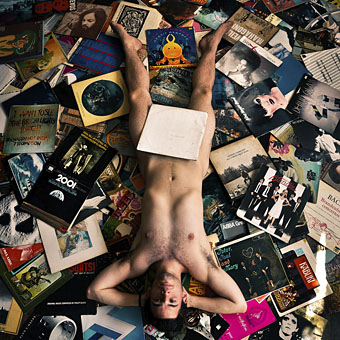
Two recent pieces of work which were being created at the same time so they share some similarity of style (and the same baroque flourish). Queer Noise is a music-related event taking place in Manchester (UK) next month. Music journalist Jon Savage will be leading the discussion and some may recognise the event title as relating to his Trikont CD compilation Queer Noises 1961–1978: From the Closet to the Charts. There are further details about the event at the MDMArchive.

Designing for gay content can be a fraught business since it’s almost inevitable that someone will disagree with your choices. Best then to abandon any thought of trying to please everyone and follow your own instincts. Making this a riot of pink seemed like a good way to offset the fetishised figure as well as making an eye-catching design. My first impetus had been to try an arrangement of pink and black on white similar to that used by Barney Bubbles in one of his Ian Dury designs. In the end this evolved away from that idea but it was a useful starting point. And while we’re on the subject of pink, there’s a growing backlash against the way the colour is forced on young girls:

Back in the 1800s, most children were dressed alike. Gender differences weren’t really apparent until they could walk, or later: boys and girls both wore dresses or skirts until they were six or so. By the end of the century, as the Ladies’ Home Journal noted, boys’ and girls’ clothing styles began to diverge. According to Professor Jo Paoletti of the University of Maryland, pink emerged as an appropriate colour for boys because it was “a close relative of red, seen as a fiery, manly colour”. Blue was considered better suited for girls because of its associations, in art, with the Virgin Mary. (More.)

curse.jpg

Curse of the Wolf Girl is a young adult title by Martin Millar about which I can tell you very little at the moment other than I’ve finished the cover and the book will be out some time in the new year from Underland Press. More about that when it happens.

Previously on { feuilleton }
Coming Out Day
Over the rainbow
Queer Noises