Weekend links 374

vasconcelos.jpg

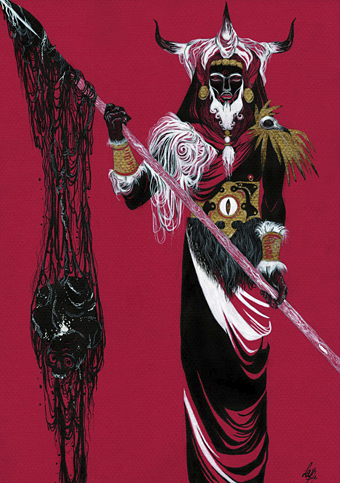
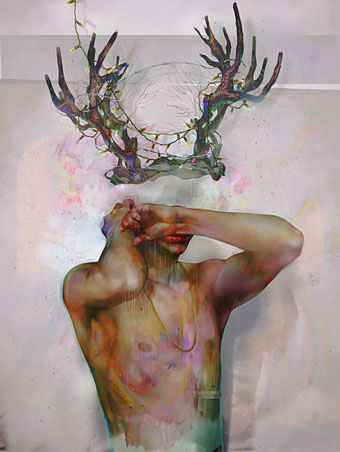
Le Chasseur by Lupe Vasconcelos who was profiled this week at Unquiet Things, and whose work may also be seen at the Ars Necronomica art show in Providence, RI, until the end of the month.

• “After a morning’s writing, Stevenson would entertain himself with music, particularly the flageolet, which he played so badly ‘people fled from the sound’.” Peter Moore reviewing Robert Louis Stevenson in Samoa by Joseph Farrell.

• Jon Hassell’s 1981 album, Dream Theory in Malaya: Fourth World Volume Two, will be reissued next month.

• Mixes of the week: Secret Thirteen Mix 228 by Arma Agharta, FACT Mix 614 by Do Make Say Think.

Yet, entertaining as all this is, in a macabre key, the dead are hard to think about—and, in many ways, to read about. Unlike animals, which Lévi-Strauss declared were not only good to eat but bon à penser, too, I found that I averted my eyes, so to speak, several times as I was reading this book. Not because of the infinite and irreversible sadness of mortality, or because of the grue, the fetor, the decay, the pervasive morbidity—though Laqueur’s gallows humour about scientific successes in the calcination of corpses can be a bit strong—but because the dead present an enigma that can’t be grasped: they are always there in mind, they come back in dreams, live in memory, and if they don’t, if they’re forgotten as so many millions of them must be, that is even more disturbing, somehow reprehensible. The disappeared are the unquietest ghosts. Simone Weil writes that the Iliad is a poem that shows how “force…turns man into a thing in the most literal sense: it makes a corpse out of him.” But Laqueur is surely right to inquire why that thing, the “disenchanted corpse…bereft, vulnerable, abject”, is a very different kind of thing from the cushion I am sitting on or even my iPad (which keeps giving signs of a mind of its own). I have always liked Mme du Deffand’s comment, when asked if she believed in ghosts. A philosopher and a free thinker, she even so replied: “Non, mais j’en ai peur.” (“No, but I am frightened of them.”)

Marina Warner reviewing The Work of the Dead: A Cultural History of Mortal Remains by Thomas Laqueur

• New Worlds magazine at the Internet Archive. Not a complete run but it’s a start.

• Brigit Katz on breakthroughs in the scientific search to replicate psilocybin.

• The relaunched (and slightly renamed) Manchester Digital Music Archive.

• At Dennis Cooper’s: Robert Altman Day (restored/expanded).

• RM Rhodes presents the art of Philippe Druillet.

• Fragile Self

• Dream Lover (1964) by The Paris Sisters | Dream Street (1966) by Henry Mancini | Dream Letter (1969) by Tim Buckley
Weekend links 373

YDKMorimoe.jpg

Untitled (2011) by YDK Morimoe. Via Jim Post at Dennis Cooper’s.

• For The Climax Of The Night by Total Leatherette is almost certainly the only album you’ll see this year with autofellatio cover art. Faux Fox gives a taste of the new album, while an earlier piece, Squeeze Hunk, features a Tom of Finland-style video. And speaking of which, Dome Karukoski’s feature film, Tom of Finland, is released in the UK this week. Related: Tom of Finland coffee.

• The death of playwright Joe Orton in 1967 prompted yet more 50th anniversary articles this week. Mentioned here before, and better value than all the textual appraisal, is the BBC’s 70-minute TV documentary from 1982, A Genius Like Us: A Portrait of Joe Orton, which includes interviews with family, friends, colleagues and Orton’s biographer, John Lahr.

• Two skulls, 50,000 postcards and a book that took 50 years to finish: Stuart Jeffries visits artist Tom Phillips.

• New at the Internet Archive: 25,000 78RPM records. You can never go wrong with Duke Ellington.

• Lock Your Door and The Reformation of St. Jules: Algernon Blackwood filmed in 1949.

• Redemption, an exhibition of art by Fay Pomerance (1912–2001) at Ushaw College, Durham.

• At Dirge Magazine: Daniel Pietersen on the myth of the sunken city.

• Mix of the week: FACT Mix 613 by Aaron Dilloway.

• Laetitia Sadier’s favourite albums.

• RIP Hywel Bennett

• Sunken City (1961) by Les Baxter | Ys (1971) by Alan Stivell | Atlantis (1971) by Deuter

Weekend links 372

mognetti.jpg

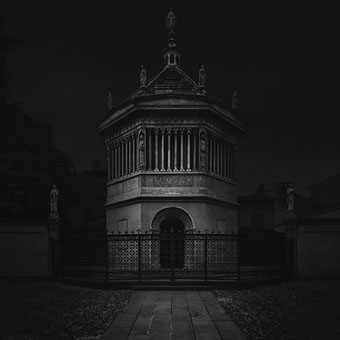
Battistero della Basilica di Santa Maria Maggiore, Bergamo (2017) by Mattia Mognetti.

• “Mumbo Jumbo: a dazzling classic finally gets the recognition it deserves.” Jonathan McAloon on Ishmael Reed’s unique novel being reissued as a Penguin Modern Classic.

• Amanda Gefter talks to Donald D. Hoffman, professor of cognitive science at the University of California, about “the evolutionary argument against reality”.

• Geeta Dayal on composer Raymond Scott. A new compilation, Three Willow Park, collects more of Scott’s electronic music from the 1960s.

Nagle critiques the follies of campus identity politics and social media liberalism not from the right, but as a left-leaning feminist. As she elucidates point after reasonable point, it feels as if a grown-up has finally entered the room. Like Mark Fisher, the Marxist critic who was savaged by his putative comrades for decrying “the stench of bad conscience and witch-hunting moralism” of the online left, Nagle has no sympathy for Twitter/Tumblr liberalism’s “cult of fragility and victimhood mixed with a vicious culture of group attacks, group shaming, and attempts to destroy the reputations and lives of others”. It is reassuring to find a self-described feminist disdaining the “hysterical” liberal call-out culture, and acknowledging that it has produced “a breeding ground for an online backlash of irreverent mockery and anti-PC”. Without joining the forces of reaction or losing sight of the vileness of the alt-right, she writes of “the deep intellectual rot of contemporary political progressivism”; “the moral self-flattery of … a tired liberal intellectual conformity”; and “the hysteria and faux-politics of liberal Internet culture”.

Rob Doyle reviewing Kill All Normies by Angela Nagle

• Mixes of the week: XLR8R Podcast 501 by Ryan Elliott, and ReMelodiya vol. 1 by Laurent Fairon.

• Sumit Paul-Choudhury on the slime mould instruments that make sweet music.

• The Wire Salon: an audience with photographer and writer Val Wilmer.

• Simon McCallum‘s list of 10 great lesser-known British LGB films.

• Zaria Gorvett on the ghostly radio station that no one claims to run.

• S. Elizabeth reposted her Coilhouse interview with me from 2010.

• “Boys are selling sex in Japan. Who is buying?” Boys For Sale

• At Spoon & Tamago: Ando Tadao’s Hill of Buddha.

• At Dennis Cooper’s: Gisèle Vienne Day.

• Sun Ra is now on Bandcamp.

• Shaolin Buddha Finger (1994) by Depth Charge | Atomic Buddha (1998) by Techno Animal | Psycho Buddha (2001) by Acid Mothers Temple & The Melting Paraiso U.F.O.

Undercurrents

undercurrents.jpg

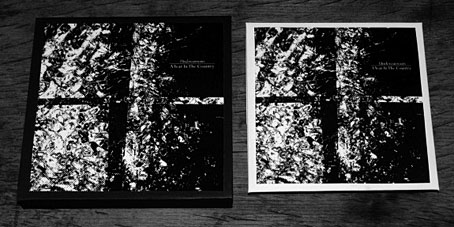
Undercurrent: a word whose meanings offer many worthwhile associations, from submerged currents of air and water to suppressed activities, and anything that moves unseen beneath the surface. Undercurrents is the latest release from A Year In The Country, artist and label, the latter having had a particularly busy year. The country happens to be the focus of the new release:

Undercurrents was partly inspired by living in the countryside for the first time since I was young, where because of the more exposed nature of rural life I found myself in closer contact with, more overtly affected by and able to directly observe the elements and nature than via life in the city.

This coincided with an interest in and exploration of an otherly take on pastoralism and creating the A Year In The Country project; of coming to know the land as a place of beauty, exploration and escape that you may well drift off into but where there is also a sometimes unsettled undercurrent and layering of history and culture.

I found myself drawn to areas of culture that draw from the landscape, the patterns beneath the plough, the pylons and amongst the edgelands and where they meet with the lost progressive futures, spectral histories and parallel worlds of what has come to be known as hauntology.

Undercurrents is an audio exploration and interweaving of these themes – a wandering amongst nature, electronic soundscapes, field recordings, the flow of water through and across the land and the flipside of bucolic dreams.

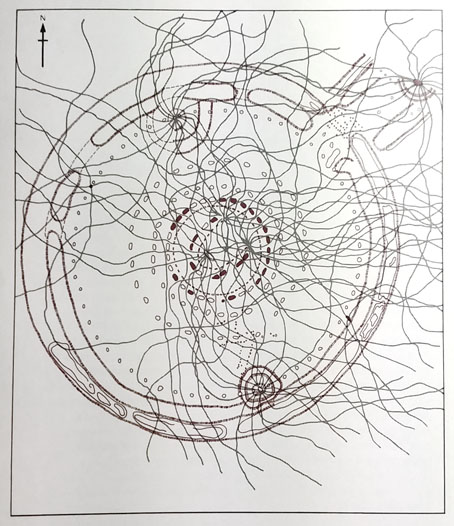
The electronic nature of these recordings contradicts the usual expectation that anything to do with the country—especially the English countryside—has to be presented in a folk idiom and with acoustic instruments. This adds further resonances to the theme, making me think of electric currents, dowsing maps and John Michell’s eccentric (to say the least) take on Alfred Watkins’ ley lines, which hauled Watkins’ idea of trade routes used by ancient Britons into a New-Age soup of cosmic energy, numerology and UFOs. Michell’s zone is a little more far out than A Year In The Country’s explorations (and already mapped on albums by Tim Blake, Steve Hillage and others), the sounds here being more restrained and allusive, as they ought to be for undercurrents. The atmospheres are closer to Xenis Emputae Travelling Band but without the esoteric pattern, Earth mysteries intuited but left unresolved.

stonehenge.jpg

A map produced by dowsers showing alleged underground streams around Stonehenge. From The World Atlas of Mysteries (1978) by Francis Hitching.

Undercurrents will be released on 8th August in a range of monochrome formats, and is available to pre-order now.

Previously on { feuilleton }
• From The Furthest Signals
• The Restless Field
• The Marks Upon The Land
• The Forest / The Wald
• The Quietened Bunker
• Fractures

Weekend links 370

lai.jpg

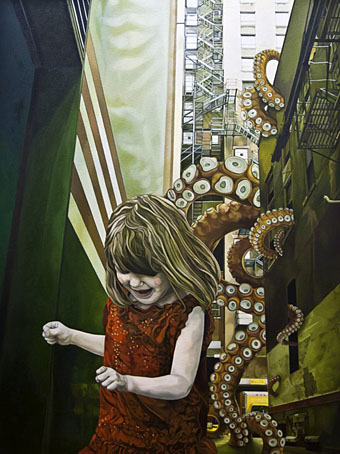
The Conjure (2016) by Jolene Lai. Via Dangerous Minds.

• RIP George Romero, a proudly independent filmmaker who succeeded on his own terms. Kim Newman remembers the man who remade horror cinema. Romero always referred to Powell & Pressburger’s Tales of Hoffmann (1951) as a key cinematic influence, something he discussed with Marc Lee in 2005.

• Man Alive (BBC TV, 1967): Consenting Adults: 1. The Men | Consenting Adults: 2. The Women. Two documentaries about the British homosexual experience screened shortly before the House of Commons vote that decriminalised sex between men in England and Wales.

• Dolente…Dolore: The Inferno of Malcolm Lowry is the latest musical release from Larkfall: “a trembling, drunken dream with flashes of heaven and hell…”

• Tom Harper on The Klenke Atlas (1660), one of the largest atlases in the world which is now available for viewing at the British Library.

• Martin Jenkins of Pye Corner Audio, The House In The Woods et al talks to Bandcamp about his own brand of sinister electronica.

• RIP Peter Principle, a musician whose up-front bass playing was always a key feature of the Tuxedomoon sound.

• And RIP actor John Heard talking to Will Harris in 2015 about some of his many roles in film and TV.

• 355 free copies of Galaxy Magazine at the Internet Archive.

• Google Maps goes inside the International Space Station.

• Good with a knife: The papercut art of Ivonne Carley.

• Mix of the week: FACT Mix 610 by Karen Gwyer.

• At Dennis Cooper’s: Yasujiro Ozu Day.

• L’alba Dei Morti Viventi (1978) by Goblin | East/Jinx/•••/Music #1 (1981) by Tuxedomoon | Martin (1983) by Soft Cell