The Outer Church

outer1.jpg

Compilation albums: on the one hand they’re in the lowest echelon of the musical world, all those cheap pop collections you see in any supermarket; on the other they provide an introduction to zones of activity which might seem too rich or too obscure to easily investigate; Soul Jazz Records is a master at this kind of collection.

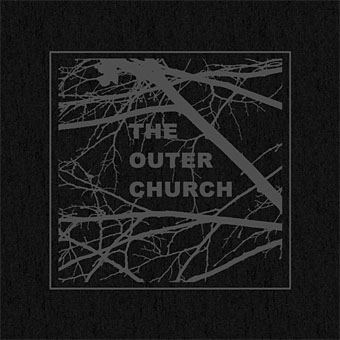
There’s also another level of compilation album where the collection becomes an opus in its own right, and which can also help to define a new movement or moment. In this category I’d think of favourites such as Kevin Martin’s Isolationism set from 1994 which first identified the emergence of what we now think of as Dark Ambient music; and Devendra Banhart’s The Golden Apples of the Sun (2004) which showcased a new generation of American folk artists. To these I’d add Joseph Stannard’s The Outer Church, a 2-CD set compiled for Front & Follow which is released this month. My hand-crafted, letterpressed edition just arrived so I’ve been relishing the new music after forcing myself to avoid the preview tracks which have been available for the past couple of weeks. Regular readers won’t be surprised to learn that the emphasis is very much on the Hauntological end of things; this blog nurses a Ghost Box fetish, and there are Ghost Box connections in the presence of Pye Corner Audio, Hong Kong In The 60s, and Baron Mordant. The latter pair and another artist, Robin The Fog, all provided tracks for the recent Restligeists, the cassette compilation that came with The Twilight Language of Nigel Kneale. Of the new collection, Joseph Stannard says in his notes:

Wind the tape all the way back to Brighton in 2009. The uncanny influence seeping into contemporary music from ‘elsewhere’ had become impossible to ignore. Magazine pieces I had written in my capacity as a music critic were revealed to contain subliminal memos for my own attention. Unusually vivid dreams and unsettling anonymous telephone calls imparted curious instructions. I was to establish a space in which various forms of unheimlich audio would converge with moving images of a similarly anomalous nature. Equipped only with a well-thumbed copy of The Beginner’s Guide To Psychic Architecture, I resolved to build a Church.

This compilation presents a selection of the artists who have performed at The Outer Church, with the exception of illustrious filmmaker and composer Graham Reznick, who lives in faraway Brooklyn and kindly permitted us to screen his tremendous psychedelic campfire tale, I Can See You, in Brighton and Dublin. All of the recordings here are previously unreleased. Together they advance the argument that something weird is stirring in modern music which resists categorisation, manifesting itself in unsettling cadences and temporal distortions across a wide variety of occult strategies.
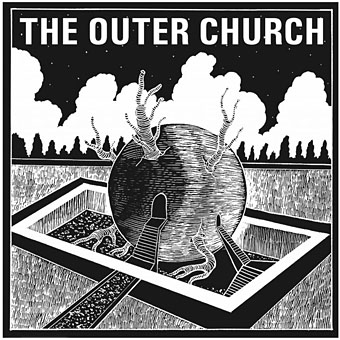
outer2.jpg

Illustration by Alexander Tucker.

And they aren’t the only ones exploring this territory: Demdike Stare and the very excellent Haxan Cloak might also have been included here. I am, of course, especially partial to any kind of doom-laden timbres, whether electronic, orchestral or guitar-oriented, so I can’t be an unbiased reviewer. But it has been a relief to see contemporary electronica (in the UK at least) find a way out of the rut of abstraction into which it had fallen in the late 1990s. That’s it’s done this by delving into our nation’s long history of ghost and folk mythology is no bad thing. Not all the artists on The Outer Church are attempting to spook their audience; there are songs as well as drones. Hong Kong In The 60s produce the kind of uptempo pop you’d expect from a band with that name. It’s to Stannard’s credit that he manages to sequence things without the mix of styles being too disjunctive.
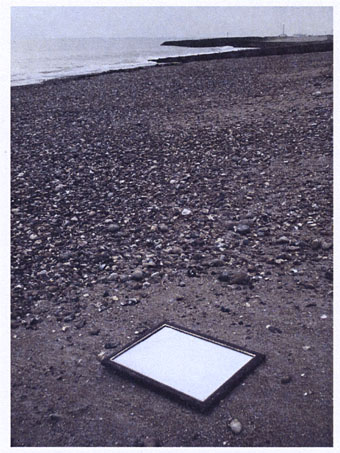
outer3.jpg

One of the mini-postcards inside the limited edition. Photo by Joseph Stannard.

The first edition of The Outer Church has been selling well so anyone looking for a copy is advised to make haste and use the links on this page. There’s a related event in Brighton this (Friday) evening, and another in Manchester on Saturday. I’m now looking forward to following some of the paths revealed by this opening of the portals.

Previously on { feuilleton }
• The Ghost Box Study Series
• A playlist for Halloween: Hauntology
• The Séance at Hobs Lane
• Ghost Box
Weekend links 170

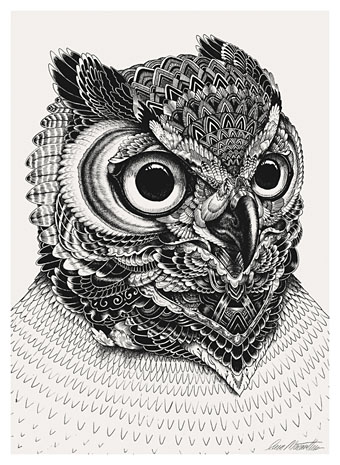
macarthur.jpg

Owl portrait by Iain Macarthur.

• “Ghost Box is a glance through a window seeing something running alongside our version of reality. Like, what if Paul McCartney had made records with the Radiophonic Workshop?” Ghost Box designer and Mr Focus Group, Julian House is interviewed.

• “…that book with the girl with the hatchet in her head…” Dave Tompkins remembers Denis Gifford’s A Pictorial History of Horror Movies (1973), a formative influence of mine, and that of many other people, it seems.

• Salvador Dalí’s 1946 illustrated edition of Macbeth. Related: From Macbeth to the Wizard of Oz: New exhibition explores the erotic side of witchcraft.

I do not want to live in a world where the government and a select few conservative feminists get to decide what we may and may not masturbate to, and use the bodies of murdered women or children as emotional pawns in that debate. It is supremely difficult to achieve radical ends by conservative means. Feminists and everyone who seeks to end sexual violence should be very cautious when their immediate goals seem to line up neatly with those of social conservatives and state censors.

Laurie Penny on the recent Tory policy of attempting to limit online pornography.

• The Facebook page for The Wicker Man has details of the pursuit for a complete print of the film. A Blu-ray edition will be released in October.

• Anne Billson visited the Hotel Thermae Palace in Ostend, the columnated location of Daughters of Darkness.

• Kenneth Anger on how he made Lucifer Rising. The ICA in London is screening his films this weekend.

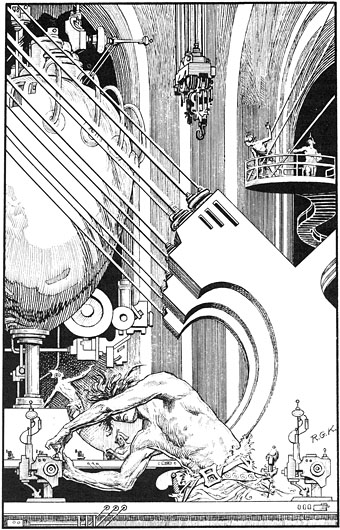
krenkel.jpg

Roy Krenkel illustrates Tales of Three Planets by Edgar Rice Burroughs, 1964.

• The Electric Banana Blows Your Mind: The soundtrack library alter ego of The Pretty Things.

• Mix of the week: an ambient (in the 90s’ sense of the word) DJ set by Surgeon.

• Bernie Krause shares the happiest sounds he’s heard in nature.

• RIP Walter De Maria, sculptor and musician.

• Sexodrome by Asia Argento with Morgan.

• Metabolist: Identify (1980) | Curly Wall (1980) | Ymuzgo/Pigface (1981)

Weekend links 169

anderson.jpg

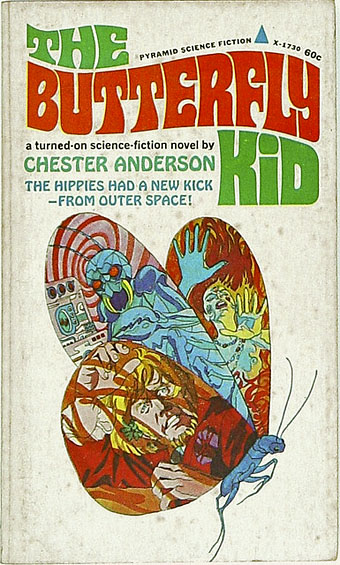
Cover illustration by Gray Morrow, 1967. One of the less exploitative examples from a collection of hippy book covers.

• Ten Photographs by Alain Resnais: Mise en scène of Memory, Aesthetics of Silence by Ehsan Khoshbakht. In the comments to that post someone shows an old Penguin book with cover photos by Chris Marker. This confirms that the “C. Marker” whose name I found on the back of another Penguin book was indeed Monsieur Chat.

• There’s more (there’s always more…): Cornelius Castoriadis interviewed by Chris Marker in 1989, the complete footage of an interview edited down for Marker’s TV series L’héritage de la chouette (The Owl’s Legacy). Watch the series itself at YouTube.

• “A generation of innovators want to change the way we have sex and consume porn, but Google, Apple, and Amazon won’t let them,” says Andrea Garcia-Vargas. Related: Sam Biddle on how Tumblr is pushing porn into an internet sex ghetto.

• Mix of the week: the Chop Quietus Mix, “a jagged journey all the way from Broadcast to the uneasy thrum of Suicide, kosmische flavours from Popol Vuh and Cluster, Alexander Robotnik and many more.”

• Strange Flowers looked back at The Student of Prague: “the first art film, the first horror film and the first auteur film”, and now a century old.

• Clive Hicks-Jenkins talked to animator Barry Purves about the pleasures and difficulties of creating animated films for adults.

• Mazzy Star released a song, California, from their new album which arrives in September. Can’t wait.

• Suzanne Ciani, “American Delia Derbyshire of the Atari Generation” explains synthesizers, 1980.

• Christer Strömholm‘s photos of Parisian transgender communities in the 1950s.

• What are These Giant Concrete Arrows Across the American Landscape?

• How Kiyoshi Izumi built the psych ward of the future by dropping acid.

• Alan Moore: The revolution will be crowd-funded.

• Fuck Yeah Mazzy Star

• Suzanne Ciani: Lixiviation | The First Wave—Birth Of Venus (1982) | The Eighth Wave (1986)

Psyché Rock

henry1.jpg

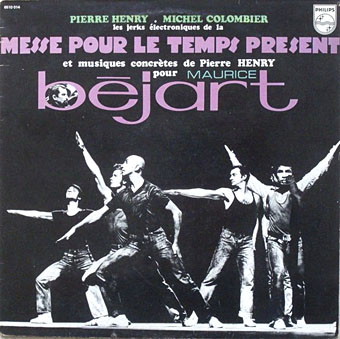
Messe Pour Le Temps Present (1967).

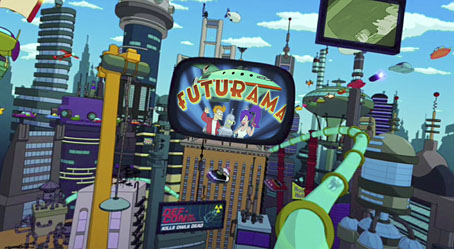
Electro-acoustic composer Pierre Henry probably wouldn’t thank you for calling Psyché Rock his finest moment but it’s a favourite of mine. It’s also his most well-known composition although most people know it as a putative inspiration for Christopher Tyng’s theme to Futurama. The YouTube version here is the original mix. Many other uploads are later remixes which disgracefully downplay the wonderful out-of-time synth shrieks.

henry2.jpg

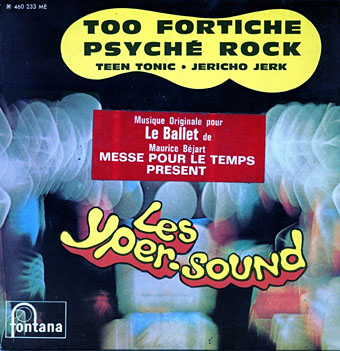
Too Fortiche / Psyché Rock / Teen Tonic / Jericho Jerk (1967). Credited to “Les Yper-Sound”.

Psyché Rock was the second track on Messe Pour Le Temps Present, an album of music composed in part with Michel Colombier. (It was also released on an EP with three other Henry/Colombier tracks, and later as a single in its own right.) The Messe section of the album was the score for a Maurice Béjart dance piece, a small example of which can be seen here. There’s also this silly dance sequence from French TV featuring stripping meter maids.

perrey.jpg

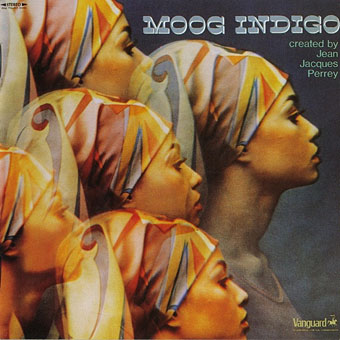
Moog Indigo (1970).

Another French composer, Jean-Jacques Perrey,  looked from inner to outer space in 1970 with E.V.A., a track on his Moog Indigo album. This sounds very similar to Psyché Rock, albeit less wild and much more groovy, and may also be an inspiration for the Futurama theme. This train of associations has given E.V.A. a life beyond its album release.

futurama.jpg

As to Futurama, there’s a mass of clips and themes of differing lengths out there. I’ll mention Fatboy Slim’s remixes only to say that I’ve never been very enamoured of Quentin’s compositions so the less said about him (and them), the better. Les Jerks Électroniques De La Messe Pour Le Temps Présent Et Musiques Concrètes De Pierre Henry Pour Maurice Béjart was available on CD as recently as 2009 in a package which shows some of the equipment used to produce its sounds.

Previously on { feuilleton }
• The music of Igor Wakhévitch

Mistaken Memories Of Mediaeval Manhattan

eno1.jpg

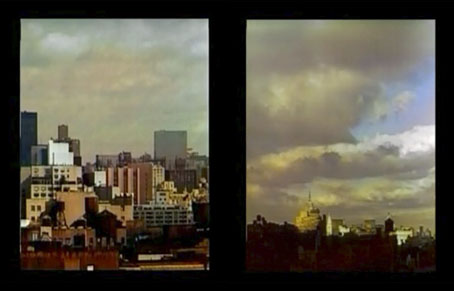
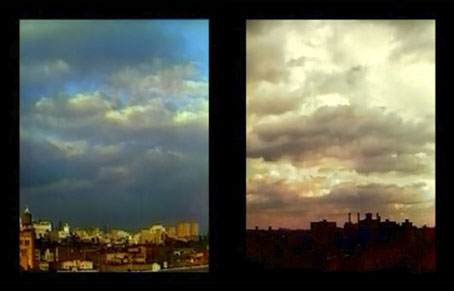
The first ambient film, at least in the Brian Eno sense of the term, although one can think of other examples prior to this, not least Andy Warhol’s Empire (1964) which is possibly alluded to in a sequence showing the Empire State Building in the distance. Eno filmed several static views of New York and its drifting cloudscape from his thirteenth-floor apartment in 1980–81. The low-grade equipment (and NTSC video) give the images a hazy, impressionistic quality. Lack of a tripod meant filming with the camera lying on its side so the tape had to be re-viewed with a television monitor also turned on its side. The assembled videos were later screened in galleries with music from some of the Ambient series of albums, and also two unique pieces.

eno2.jpg

An edited suite of seven pieces running 47 minutes was released on VHS tape in 1987. Like the original recordings, these could only be viewed by turning your TV on its side, something I used to think was a combination of the hazardous and foolhardy to all but the most diehard Eno aficionados. Television sets in the 1980s were either portable things in cheap plastic enclosures (some with curved sides), or cathode-tube monsters that would require two people two handle, assuming they weren’t screwed to a stand. I’ve yet to hear of anyone other than Eno himself who ever went to this trouble to watch a single video recording. It’s notable that recent DVD reissues of these videos, and the later Thursday Afternoon, have included horizontal as well as vertical versions.

The screen grabs here are from a 26-minute edit of the suite. The 14 Video Paintings DVD is currently out-of-print but a vertical copy can be found at Ubuweb.

Previously on { feuilleton }
• Brian Eno: Imaginary Landscapes
• Thursday Afternoon by Brian Eno
• Moonlight in Glory
• Tiger Mountain Strategies
• Generative culture
• My Life in the Bush of Ghosts