A Czech Machen

machen.jpg

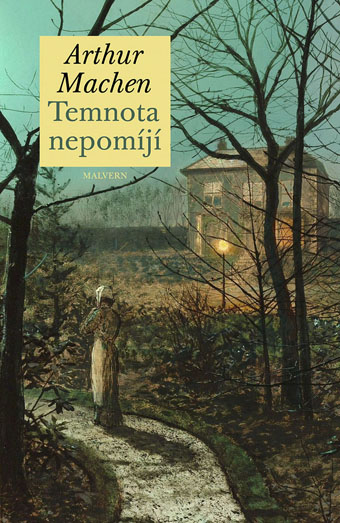
Cover art is a detail from A Woman on a Path by a Cottage (1882) by John Atkinson Grimshaw.

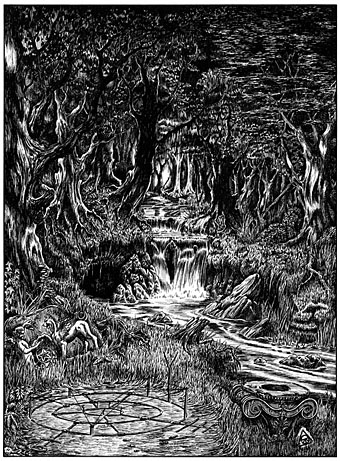
The fiction of Arthur Machen doesn’t inspire a great deal of illustration, probably because his best writing is more concerned with the description of particular places and the feelings those places evoke, rather than the depiction of illustratable scenes or events. I did make the attempt myself, however, when I started a series of illustrations in 1990 that were intended for a Savoy Books edition of The White People. This never materialised for a variety of reasons, and I never finished the series of drawings although the work did yield one picture (below), that I’ve always been pleased with.

whitepeople.jpg

Some of these drawings may now be seen in Temnota nepomíjí, an edition of Machen’s stories from Czech publisher, Malvern, almost all of which are appearing for the first time in translation. I’m told by the translator, Patrik Linhart, that the title in English would be “Darkness is undying”. As for the cover art, I approve the choice of John Atkinson Grimshaw, a painter whose sombre, autumnal views could cover an entire series of Machen books. His work is often seen today in connection with MR James but being a predominantly urban artist his work seems a better match for the Apostle of Wonder.

Previously on { feuilleton }
Ibrahim Ineke’s The White People
The White People
The Bowmen by Arthur Machen
Rex Ingram’s The Magician
The Great God Pan

Weekend links 499

konoike.jpg

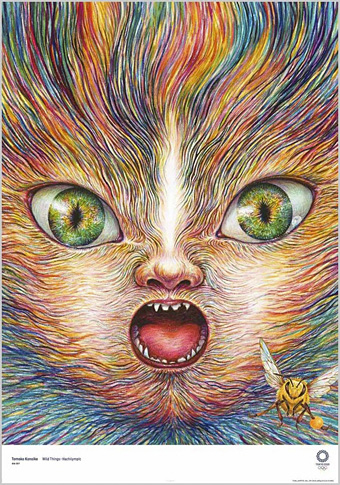
Wild Things – Hachilympic, a poster by Tomoko Konoike for the Tokyo 2020 Olympics.

• Hidden Jewels in ‘The Garden of Orchids’: Steve Toase on Der Orchideengarten (1919–1921), the German magazine of fantastic art and literature. Since the article doesn’t mention it, I’ll note again that the first Anglophone appraisal of the magazine (and also the place where it was drawn to the attention of myself and 50 Watts) was in Franz Rottensteiner’s The Fantasy Book (Thames & Hudson/Collier, 1978).

• “In its furtive, sotto-voce way, Gorey’s work is in conversation with gay history, gay literary influences, and, now and then, the gay-straight tensions of his time.” Mark Dery on the attempts by Edward Gorey’s readers and critics to ignore the obvious signs of a personal sexuality in his work.

• The Apotheosis of the Grotesque: illustrator Sidney Sime interviewed by Arthur H. Lawrence in The Idler, January 1898.

Goff would experiment with form, material, structure and ornament to almost absurd degrees. Materials he used in his buildings included aviation parts, goose feathers, oil rig equipment, orange artificial turf (on the roof), lumps of coal, and any kind of glass he could get his hands on. His 1948 Ledbetter House, also in Oklahoma, features a recurring motif of vertical lines of diamond-shaped glass studs set into doors and columns. In fact they are dime-store glass ashtrays.

Steve Rose on the restoration of “outsider architect” Bruce Goff

• At the BFI: Adam Scovell on where to begin with Delphine Seyrig; Kat Ellinger on giving Fellini’s later films their due; and Matthew Thrift on 10 great Acid Westerns.

• RIP Ivan Passer and Neil Peart. A reminder that John Patterson described Passer’s Cutter’s Way as a cinematic masterpiece. So it is.

Geeta Dayal on musician/composer Arthur Russell and yet another posthumous release.

Haunted And Known, a new recording by Six Organs Of Admittance.

• At Dennis Cooper’s: Hidden.

2112 (1976) by Rush | Xanadu (1977) by Rush | La Villa Strangiato (1978) by Rush

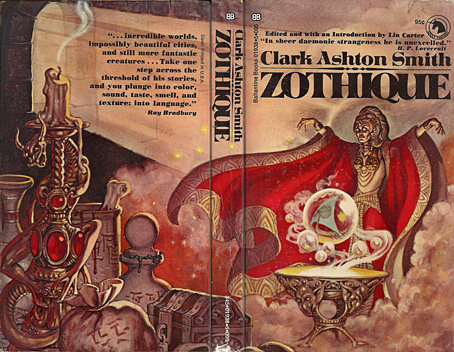
Illustrating Zothique

zothique00.jpg

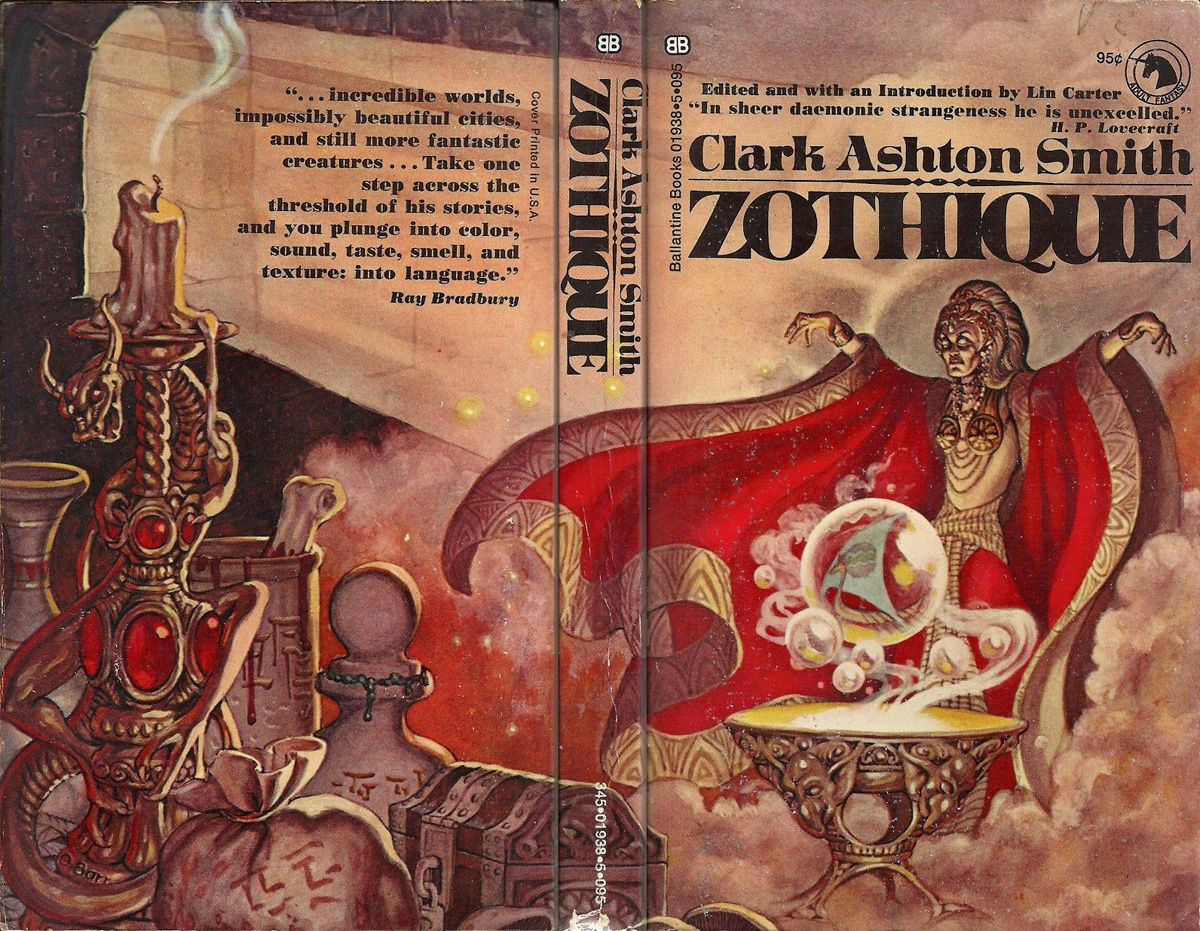
Cover art by George Barr, 1970.

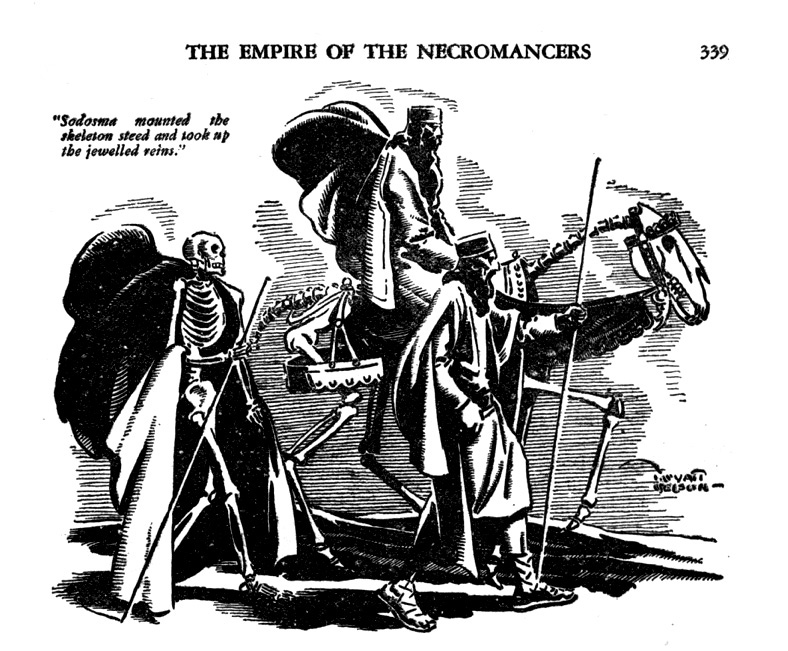
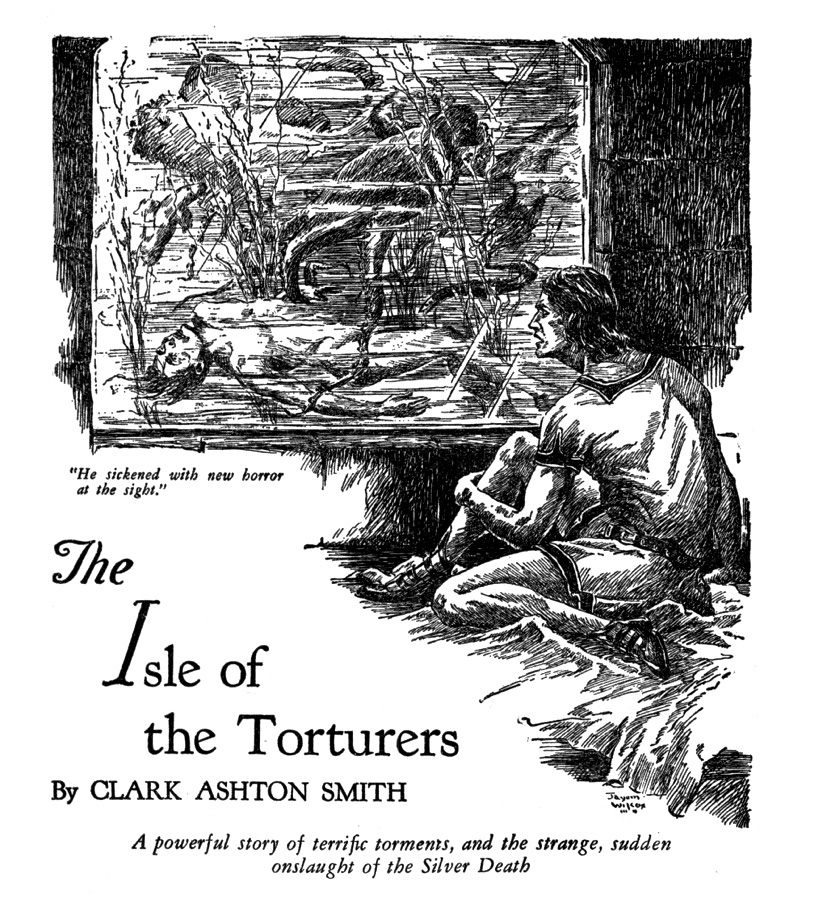
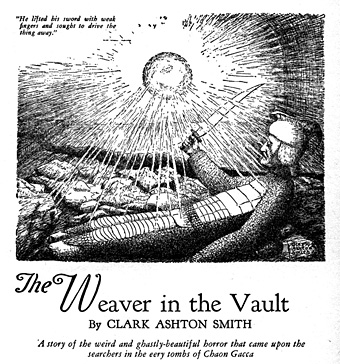
A few years ago I wrote a short piece about Virgil Finlay’s illustrations for a Zothique story by Clark Ashton Smith, The Garden of Adompha, so this post may be regarded as a more substantial sequel. If Smith remains something of a cult author then Zothique is the pre-eminent cult creation from his career as a writer of weird fiction. Most of Smith’s stories can be grouped together according to their location: Atlantis, Hyperborea, Averoigne in medieval France, the planet Mars, and so on. Zothique was a more original conception than his other worlds, being the last continent on Earth in the final years of the planet, an idea which had precedents in earlier novels such as William Hope Hodgson’s The Night Land but which hadn’t been used before as a setting for a cycle of stories. The distant future suggests science fiction but, as with the Zothique-influenced Dying Earth of Jack Vance, science and technology is long-forgotten and sorcery rules the day. The poetry that Smith wrote before he took to writing short stories had a distinctly Decadent quality—”like a verbal Gustave Moreau painting“—and Zothique is a richly Decadent world, with the entire planet in a state of decay along with its barbarous, demon-worshipping peoples.
zothique01.jpg

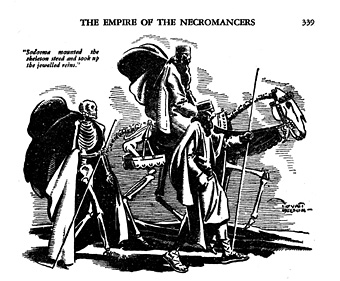
Weird Tales, September 1932. Art by T. Wyatt Nelson.

All the Zothique stories had their first printings in Weird Tales, a magazine that ran illustrations with most contributions, but unless you’re a pulp collector many of the illustrations have been difficult to see until very recently. One of the pleasures of looking through fiction magazines is seeing how their stories might have been illustrated when they were first published. Popular tales eventually find their way into book collections but their illustrations tend to be marooned in the titles where they first appeared unless the artist is of sufficient merit to warrant a collection of their own.
zothique02.jpg

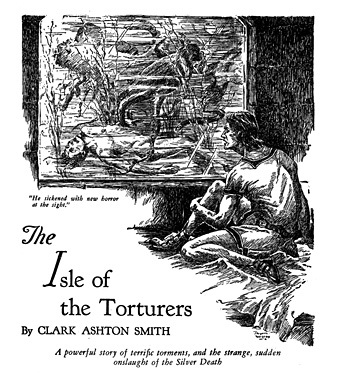
Weird Tales, March 1933. Art by Jayem Wilcox.

The examples here are all from recent uploads at the Internet Archive which now has a complete run of Weird Tales from 1923 to 1954. The illustrations also run in order of publication with links to the relevant issues, although I agree with Lin Carter’s ordering of the stories. Smith never organised them himself, and the later reprints from Arkham House and others tend to scatter them through separate volumes. When Lin Carter edited the Zothique collection in 1970 he put the stories into an order that follows the very loose chronology running through the cycle.
zothique06.jpg

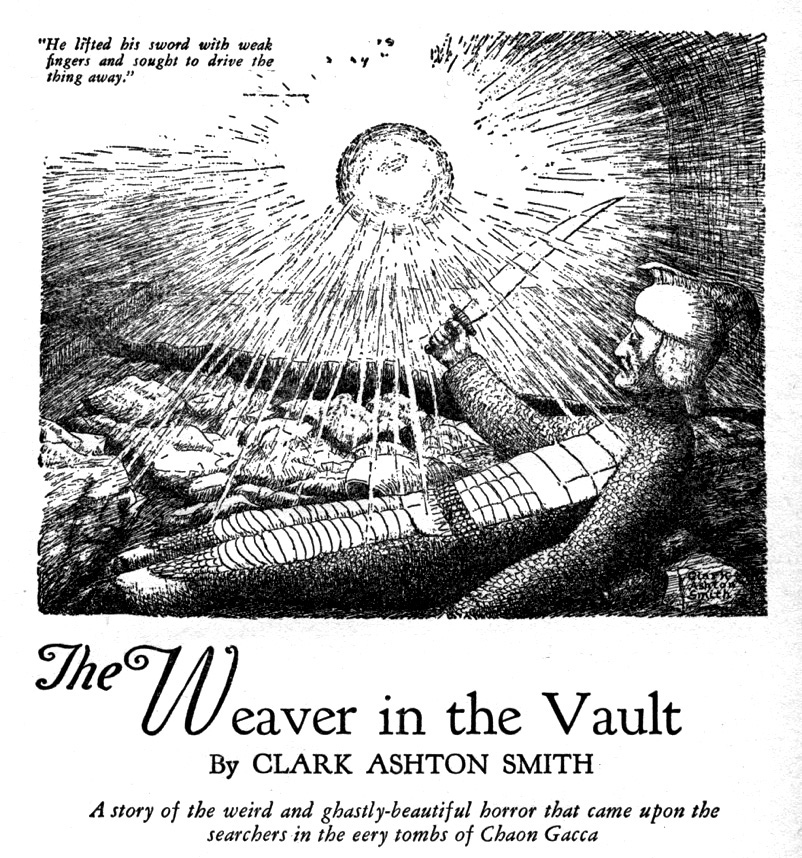
Weird Tales, January 1934. Art by Clark Ashton Smith.

One surprise of this search was discovering that Smith himself had provided illustrations for several of the stories. Some Smith enthusiasts like his drawings and paintings but I’m afraid I’m not among them, his sculpture work is better. It’s doubtful that these would have been printed at all if they weren’t the work of the author.

Continue reading “Illustrating Zothique”

The Last Ritual

sidor.jpg

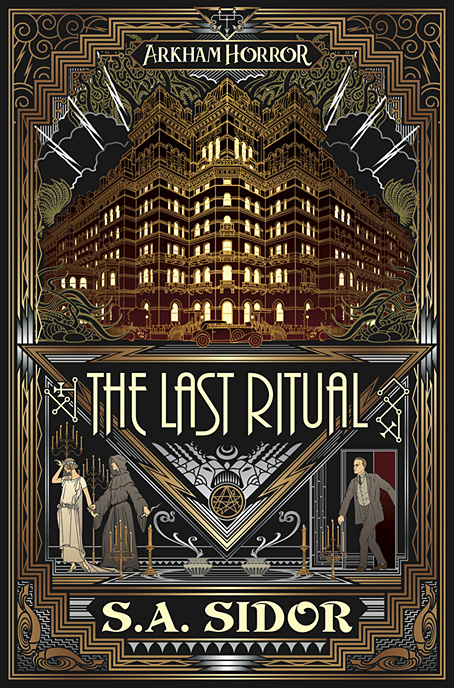
Starting the new year with a new cover, and another from the plethora I was working on last year. Art Deco occultism is the theme this time, a satisfying combination since the rectilinear Deco style is a good match for the sigils and thaumaturgic diagrams you find in grimoires. The publisher is Aconyte Books, a new imprint launched a year ago to produce novels that complement the games created by parent company, Asmodee UK. Arkham Horror is an Asmodee game with a Lovecraftian theme, and S.A. Sidor’s novel is set in the game’s world:

Aspiring painter Alden Oakes is invited to join a mysterious art commune in Arkham: the New Colony. When celebrated Spanish surrealist Juan Hugo Balthazarr visits the colony, Alden and the other artists quickly fall under his charismatic spell. Balthazarr throws a string of decadent parties for Arkham’s social elite, conjuring arcane illusions which blur the boundaries between nightmare and reality. Only slowly does Alden come to suspect that Balthazarr’s mock rituals are intended to break through those walls and free what lies beyond. Alden must act, but it might already be too late to save himself, let alone Arkham (more).

The design of the cover combines the look of much Art Deco metalwork, especially bronze door and grille designs, with the kind of inlay you see on Deco furniture and the more lavish leatherbound books of the period. Part of the brief was to show a magic ritual taking place but I thought it wouldn’t do to make the figures look too realistic, hence the stylised poses; George Barbier rather than Weird Tales. Another request in the brief was to incorporate the Yog-Sothoth sigil from the Simon Necronomicon (the bronze circle under the title). I think I’ve said before that the symbols in the Simon Necronomicon tend to be used a lot today as though they’re the only ones available, even though the book is only one of several unofficial attempts to imagine the contents of Lovecraft’s notorious grimoire. I’ve always favoured the George Hay-edited Necronomicon so the symbol at the top of the cover is the Yog-Sothoth sigil from the Hay volume.

The Last Ritual will be published in August 2020.

Elsewhere on { feuilleton }
The Lovecraft archive

Weekend links 497

roma.jpg

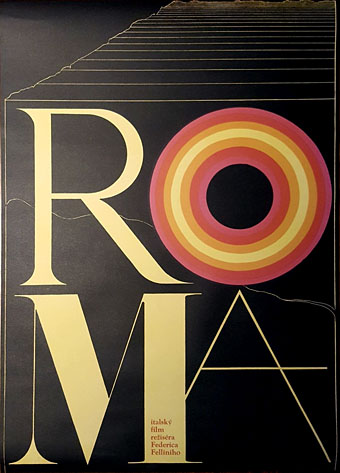
Poster by Zdeněk Ziegler for Roma (1972), a film by Federico Fellini.

• At Dennis Cooper’s: a short history of Straight to Hell, a long-running fanzine launched by Boyd McDonald in 1971 dedicated to true stories of men having sex with other men. The post gives an idea of the contents but for a deep dive I’d suggest Meat (1994) at the Internet Archive, a collection of the best of the early editions of STH. Related: “Straight to Hell was an immensely popular underground publication. John Waters, William S. Burroughs, and Robert Mapplethorpe were fans; Gore Vidal called it ‘one of the best radical papers in the country.'” Erin Sheehy on Boyd McDonald’s determination to kick against the pricks.

• RIP psychedelic voyager and spiritual guide Richard Alpert/(Baba) Ram Dass. The Alpert/Ram Dass bibliography includes The Psychedelic Experience: A Manual Based on the Tibetan Book of the Dead (1964), an acid-trip manual written in collaboration with Timothy Leary and Ralph Metzner from which John Lennon borrowed lines for the lyrics of Tomorrow Never Knows. But the most celebrated Ram Dass volume is Be Here Now (1971), a fixture of countless hippy bookshelves whose first editions were all handmade.

• “An Einstein among Neanderthals”: the tragic prince of LA counterculture. Gabriel Szatan talks to David Lynch, Devo and others about the eccentric songwriter, performer and voice of Lynch’s Lady in the Radiator, Peter Ivers.

• For the forthcoming centenary of Federico Fellini’s birth Stephen Puddicombe offers suggestions for where to begin with the director’s “exuberant extravaganzas”. Related: Samuel Wigley on 8½ films inspired by .

• “I met resident Tony Notarberardino for the first time in 2015 and entering his apartment was like crossing into another dimension.” Collin Miller explores the Chelsea Hotel.

• “More green tea, professor?” The haunted academic, a reading list by Peter Meinertzhagen. Related: Our Haunted Year: 2019 by Swan River Press.

• “30 July, Yorkshire. Thunder, which is somehow old-fashioned.” Alan Bennett’s 2019 diary.

• More acid trips: Joan Harvey on the resurgence of interest in psychedelic drugs.

• At Lithub: Werner Herzog’s prose script for Nosferatu the Vampyre.

Tief gesunken, a new recording by Bohren & Der Club Of Gore.

In Heaven (1979) by Tuxedomoon | Die Nacht Der Himmel (1979) by Popol Vuh | Roma (1981) by Steve Lacy