Weekend links 477

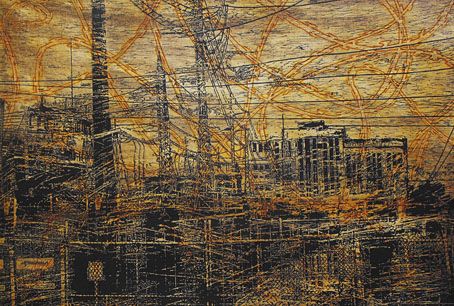
starling.jpg

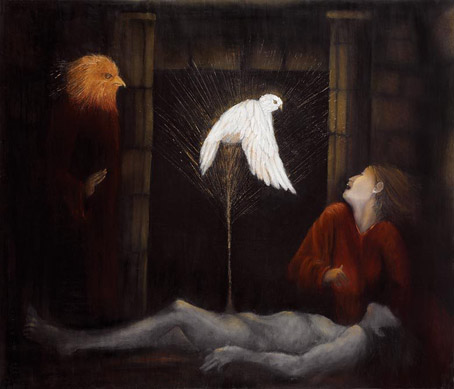
Edge of Industry (2009) by Anne Starling.

• “In her darkroom with her silver salts and gelatine plates, she experimented with the mercurial effects of light, time and temperature.” Hailey Maxwell on the photographic art of Dora Maar.

• A Visionary Work Renew’d: A conversational review of Swan River Press edition of William Hope Hodgson’s The House on the Borderland by the late Sam Gafford & The joey Zone.

Brian Blomerth’s graphic novel Bicycle Day tells the story of the psychedelic ride made in 1943 by Swiss chemist Albert Hofmann while he was researching LSD.

• “The cinema is not the industrial cinema. The cinema is independent cinema.” Francis Ford Coppola on Apocalypse Now and related matters.

• More lunacy: “Fireworks, wild swans and super-cannons were propelling people mentally Moonwards long before 1969,” says David Seed.

• Mix of the week: Then Beautiful Swift Sparrows Led You Over the Black Earth by The Ephemeral Man.

Working (You Are), a new recording by Stephen Mallinder, his first solo work since Pow Wow in 1982.

Lost Proust stories of homosexual love finally published (but only in French for the moment).

Oren Ambarchi‘s favourite albums.

My White Bicycle (1967) by Tomorrow | Trip On An Orange Bicycle (1968) by The Orange Bicycle | Blue Bicycle (2008) by Hauschka

Weekend links 476

kimura.jpg

Man’s body dish for Sashimi under the cherry blossom (2005) by Ryoko Kimura.

• Godley & Creme’s Consequences (1977) is reissued this month on CD and vinyl. Originally a three-disc concept album with a theme of climate disaster and the natural world’s revenge on humanity, Consequences was released at a time when punk and prog rock were fighting for the attention of music listeners. 1977 wasn’t the end of prog by any means (many of the vilified bands had some of their greatest successes at this time) but Godley & Creme’s transition from the smart pop songs of 10cc to extended instrumental suites was abrupt, and their concept, such as it was, lacked the drama and accessibility of Jeff Wayne’s The War of the Worlds, even with the addition of Peter Cook providing a multi-voice comic narrative between the musical pieces. (Kevin Godley ruefully referred to the album in later years as Con Sequences.) The album flopped, and has been a cult item ever since.

• “A word of caution, though. Once you do read it, it’s hard to let it go.” Philip Hoare on Herman Melville and Moby-Dick. Related: William T. Vollmann on how a voyage to French Polynesia set Herman Melville on the course to write Moby-Dick.

Samm Deighan on The “Faraway Forest” in Peter Strickland’s Katalin Varga, The Duke of Burgundy, and The Cobbler’s Lot.

Brian Eno, Roger Eno, and Daniel Lanois discuss the recording of Apollo: Atmospheres & Soundtracks.

John Boardley on the first fashion books, Renaissance pixel fonts and the invention of graph paper.

Melanie Xulu looks back at a time where major labels were releasing witchcraft rituals.

• “Tom Phillips’ A Humument is a completely novel project,” says Rachel Hawley.

John Foster on the evolution of Stereolab’s analogue-inspired record sleeves.

• At Dennis Cooper’s: a history of le Grand Guignol by Agnes Peirron.

Casey Rae on William S. Burroughs and the cult of rock’n’roll.

• An Austin Osman Spare image archive.

Consequences (1965) by John Coltrane | Moby Dick (1969) by Led Zeppelin | Consequence (1995) by Paul Schütze

Weekend links 475

brooks.jpg

Femme avec des fleurs (c. 1912) by Romaine Brooks.

• “Boring people tend not to exile themselves to rocky islands, but even among the intriguing personalities we encounter in Capri, some individuals prove more extravagantly memorable than others.” Steve Susoyev reviews Pagan Light: Dreams of Freedom and Beauty in Capri by Jamie James.

• “The Mad “idiots” subverted the comic form into a mainstream ideological weapon, aimed at icons of the left and the right—attacking both McCarthyism and the Beat Generation, Nixon and Kennedy, Hollywood and Madison Avenue.” Jordan Orlando on a world without Mad Magazine.

• RIP Sam Gafford, Paul Krassner and Rutger Hauer. Related to the latter: Hauer’s first role as Floris, the hero of a Dutch TV series directed by Paul Verhoeven.

I cannot tell you what it does to me to hear pre-Stonewall. And even in our literature, even in the art, pre-Stonewall, post-Stonewall. I wrote three books pre-Stonewall and a dozen more post-Stonewall. There’s no demarcation. Gay history is centuries and centuries from the Romans to the Greeks to Oscar Wilde to all kinds of outrages. And those seem to be put back and pre-Stonewall is passive. Post-Stonewall is brave and dignified. I actually have heard things like that. I’ve talked, I’ve lectured and I’ve been invited all the way from Harvard to USC. And I talk about what it was like, what we had to survive.

Look, pre-Stonewall produced Allen Ginsberg, William Burroughs, Oscar Wilde, and I could go on. Post-Stonewall produced Bret Easton Ellis, who jumps out of the closet only now and then and then rushes back in, and Queer Eye for the Straight Guy, where we’re reduced to clowns for straight people. The husband of Mr. Buttigieg, he is so darling talking about the silver he’s going to be choosing for the White House. It embarrasses me, it embarrasses me very much because that’s what people expect a gay man to do, to be very precious, and that’s not what we are. A good solid queen I will protect forever, they are heroes.

A lot of people think that everything stopped, everything, all harassment stopped. Look, it’s still going on. It’s still going on, for god’s sake. The same tactics are often used in a different way.

John Rechy talking to Jason McGahan

• The genius of Barry Adamson: An exclusive interview by Paul Gallagher at Dangerous Minds.

Three hours of the Prophecy Theme from Dune (by Brian Eno with Daniel Lanois & Roger Eno).

Ed Sanders on why pop culture still can’t get enough of Charles Manson.

• Havelock Ellis takes a trip: Mike Jay on peyote among the Aesthetes.

Darren Anderson on why little works of architecture deserve respect.

• Mix of the week: Stephen O’Malley presents / Java / Apr 27 2017.

Phil Hine reviews Folk Horror Revival: Urban Wyrd 1 & 2.

John Waters revisits “The Golden Age of Monkey Art”.

I Must Be Mad (1966) by The Craig | The Day My Pad Went Mad (1982) by John Cooper Clarke | Yesterday, When I Was Mad (1993) by Pet Shop Boys

Weekend links 473

spectra.jpg

“Spectra of various light sources, solar, stellar, metallic, gaseous, electric”, print by René Henri Digeon; plate IV in Les phénomènes de la physique (1868).

• More polari: Thom Cuell this time with another review of Fabulosa!: The Story of Polari by Paul Baker. Good as it is to see these articles, one thing they all share is paying tribute to the polari-enriched radio series Round the Horne without crediting its writers, Barry Took and Marty Feldman.

• “…with its conspiracy theories, babbling demagogues and demonised minorities, Bahr’s investigation is sadly all too relevant today.” Antisemitism (1894) by Hermann Bahr, is the latest new translation from Rixdorf Editions.

Isao Tomita in 1978 showing a presenter from NHK around his tiny studio. Japanese-only but the discussion reveals that the words “synthesizer”, “tape recorder” and “mixer” sound the same as they do in English.

Ben Frost talks to Patrick Clarke about his music for German TV series, Dark.

• PYUR composes a guide through limbo with Oratorio For The Underworld.

• Steven Heller on Don Wall’s book design for a Paolo Soleri retrospective.

• Coming soon from Fulgur Press: Ira Cohen: Into the Mylar Chamber.

Will Harris compiles an oral history of Q: The Winged Serpent.

• Mix of the week: a mix for The Wire by Overlook.

• At Dennis Cooper’s: Magic Shop Internationale.

Shadow In Twilight by Pram.

The Feathered Serpent Of The Aztecs (1960) by Les Baxter | The Serpent (In Quicksilver) (1981) by Harold Budd | Black Jewelled Serpent Of Sound (1986) by The Dukes Of Stratosphear

Weekend links 472

isono.jpg

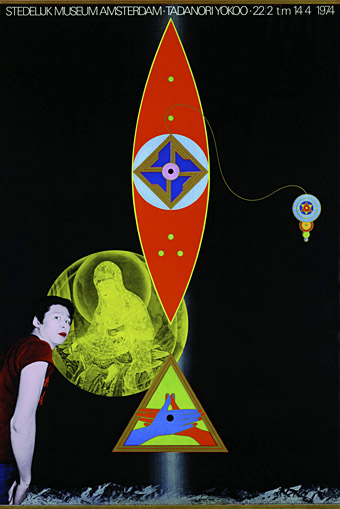
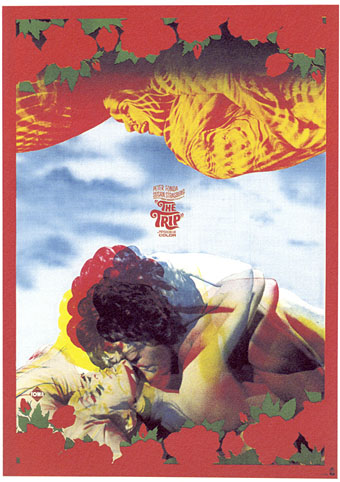
Poster art by Hiroo Isono.

• “[Divine] didn’t want to pass as a woman; he wanted to pass as a monster. He was thought up to scare hippies. And that’s what he wanted to do. He wanted to be Godzilla. Well, he wanted to be Elizabeth Taylor and Godzilla put together.” I can’t help linking to yet another John Waters interview when he always has things like this to say.

• Fifty shades of grey: great towers of the Eastern bloc photographed by David Navarro & Martyna Sobecka.

• Seeking Beastliness and Defining Beauty: Clive Hicks-Jenkins on visualisations of Beauty and the Beast.

Fire Temple by Bobby Krlic (The Haxan Cloak) from the Midsommar soundtrack.

Brad Jolliff & Mark Robinson on the scientific legacy of the Apollo programme.

John Boardley on Renaissance memes and the chemical pleasure garden.

• “It’s important to go out and feel the so-called reality,” says David Lynch.

Peter Strickland talks to Robert Barry about his new film, In Fabric.

Nico in Manchester: “She loved the architecture—and the heroin”.

• Mix of the week: Secret Thirteen Mix 292 by Paco Sala.

• Andrei Codrescu on the many lives of Lafcadio Hearn.

Hiroo Isono: Into the Depths of the Sacred Forest.

• At Dennis Cooper’s: Queer.

The Beast (1956) by Milt Buckner | The Beast (1989) by Rhythm Devils | Beast (1994) by Brian Eno