Weekend links 361

f1x-2.jpg

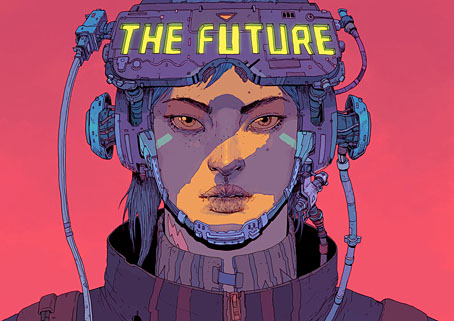
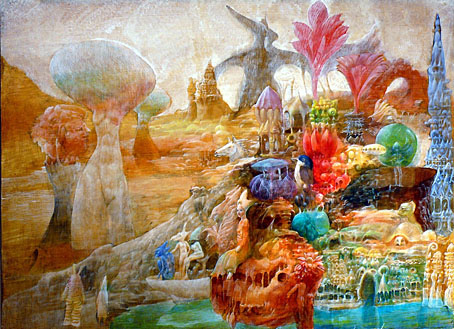
The Future Vol.2 (2016) by f1x-2.

• One of the notable things about the reaction to the original series of Twin Peaks was the way in which Americans were astonished that something so outré could be allowed on television. Here in the UK the response was a little more subdued; we had, after all been spoiled for years by The Prisoner, Sapphire and Steel, and numerous odd and challenging dramas by Dennis Potter and others. Pre-dating all of these was The Strange World of Gurney Slade (1960), a six-part series starring Anthony Newley that was unprecedented in its Surrealism. Andy Murray looks back at the series, and at the rest of Newley’s career.

Andrew Dickson on Peter Ackroyd whose latest book, Queer City: Gay London from the Romans to the Present Day, is published later this month.

Alyona Sokolnikova on a Soviet vision of the future: the legacy and influence of Tekhikia – Molodezhi (Technology for the Youth) magazine.

You know who weren’t cops? All the radicals and queers and artists and dreamers that were there while I grew up, my mom and dad’s old friends from New York and the wider bohemian world, the actors and the drag queens and the dilettantes and the ex junkies and the current junkies, the kind of queer people who wouldn’t get caught dead getting married, the people who actually made the “old New York” of the myth into what it was. They were smart and they were funny and they were tougher than I can imagine and they were possessed of an existential commitment to the idea that life is complicated and so we shouldn’t be quick to judge. They were tolerant, in the true sense, even while they were tireless advocates for actual justice. […] Now we’re Rudy Giuliani, trying to get offensive art pulled off the walls. Now we’re the book burners. Now we’re the censors. Now we attack the ACLU for defending free speech. Now we screech about community morals. Now we’re the prison camp screws. That’s us. Me, I could never be one of the good ones. Never. I can never live up to that ideal. I know I’m not good enough. I know when the judgment day comes, I go down. And so I decline. You can decline, too.

Planet of Cops by Freddie deBoer, or how inflexible morality makes everyone a cop

• Mixes of the week: FACT Mix 601 by Dark Entries, Secret Thirteen Mix 221 by Eli Keszler, and XLR8R Podcast 490 by Ben Lukas Boysen.

• At Dangerous Minds: Punk, Patti Smith, William Burroughs & capitalism: A “conceptual conversation” with RE/Search’s Vale.

Emily Wells on the strange, irreverent worlds of Down Below and The Complete Stories of Leonora Carrington.

Rick Poynor on Mike Halliwell’s montages based on JG Ballard’s The Atrocity Exhibition.

• “Why are the British so scared of cannabis?” asks Professor David Nutt.

Witchcraft and the Gay Counterculture (1978) by Arthur Evans.

• At Dennis Cooper’s: Jacques Rivette Day.

Designing Penguin Modern Classics

Future Dub (1994) by Mouse On Mars | Future Proof (2003) by Massive Attack | Future (2004) by Alva Noto

Typefaces of the occult revival

mmm.jpg

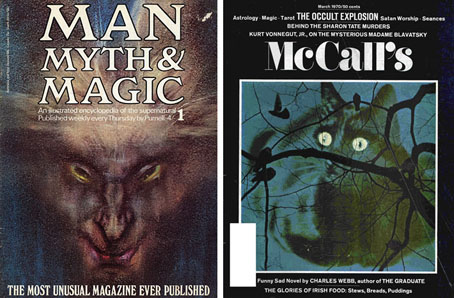
Man, Myth & Magic #1, January 1970; McCall’s, March 1970.

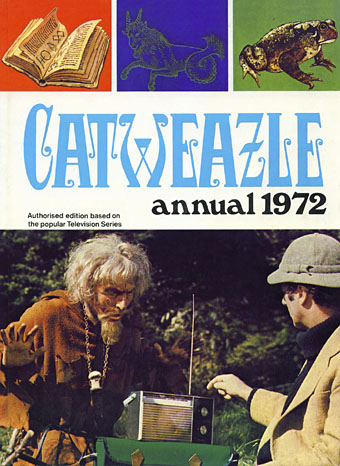
The announcement last week of the death of British character actor Geoffrey Bayldon prompted some discussion here about the typeface used for the titles of Bayldon’s TV series from the early 1970s, Catweazle. This was a humorous drama in which the actor portrayed a warlock transplanted by a time portal from the Norman era to the present day, a comic counterpart to another occult-themed series, Ace of Wands (1970–72). Being aimed at children, both Catweazle and Ace of Wands are at the lighter end of the great flourishing of occult-related media that runs in parallel with the rise and fall of psychedelic culture, a period roughly spanning the years 1965 to 1975. The two trends reflected and fed off each other; the hippie movement stimulated interest in the occult (Aleister Crowley is on the cover of Sgt Pepper) while giving to the commercial propagators of the supernatural a range of aesthetics lifted from the 19th century.

occult.jpg

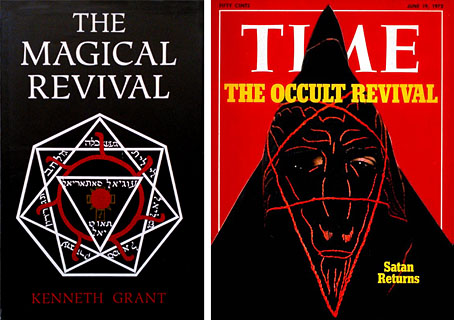
Muller, 1972; TIME, June 1972.

Among the graphic signifiers is a small collection of typefaces from the Victorian or Edwardian eras, designs which vanished from sight after 1920 only to surface 50 years later in very different settings to their previous deployment. I’m always fascinated by the way context changes the perception of a typeface; the repurposing of Art Nouveau fonts—which hadn’t previously been associated with diabolism—to signify witchcraft or sorcery is a good example of this. In the case of the occult revival this was partly opportunism: the commercial application of post-psychedelic style made the previously untouchable trendy again, decoration and elaborate stylisation was no longer taboo. But it was also a solution to the problem of signifying the sorcerous with typography when there were no off-the-peg solutions as there were for, say, Westerns or stories about the Space Race. As well as carrying with them a flavour of old books, some of the more curious letterforms were reminiscent of the glyphs of magical alphabets which no doubt explains their popularity.

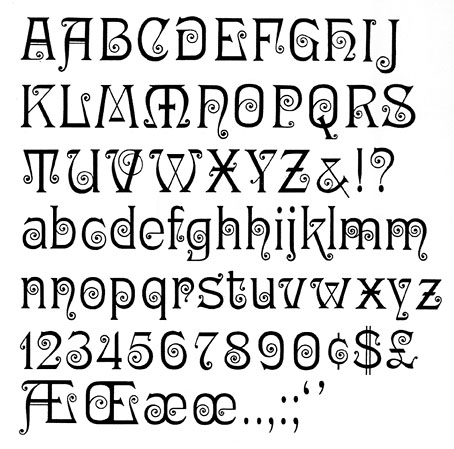
What follows is a chronological selection of the more striking examples (or my favourites…) which conveniently begins with Ringlet, the Catweazle font. With the trend being towards Art Nouveau you find popular Nouveau styles such as Arnold Bocklin also being used in the 1970s but I’ve avoided these in favour of the less common choices.


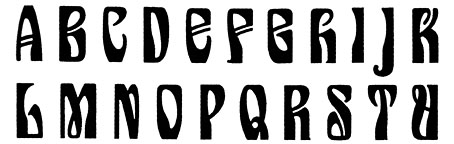
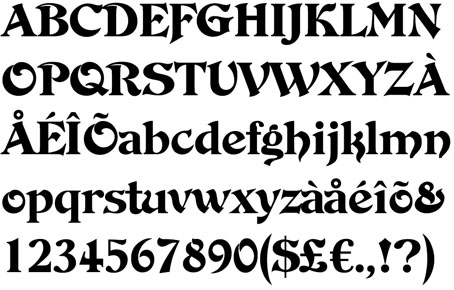
Ringlet (1882) by Hermann Ihlenburg

ringlet3.jpg

jullian08.jpg

Pall Mall, 1971.

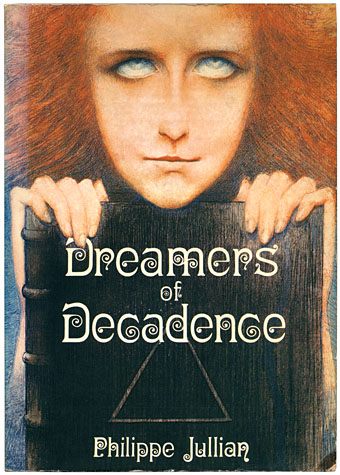
Jullian’s landmark study of the Symbolist movement isn’t an occult text but it is a great favourite of mine whose original title—Esthètes et Magiciens—puts it in the right sphere. Inside, the author touches on the spiritual concerns of many of the artists which included Theosophy and fashionable Satanism.

ringlet1.jpg

ringlet2.jpg

Duckworth, 1973.

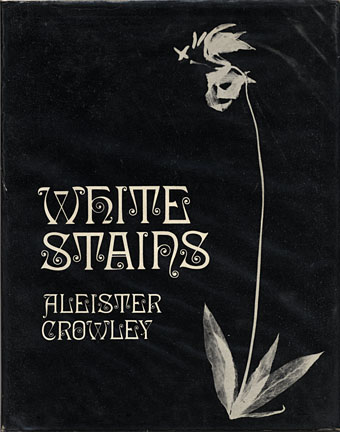
Aleister Crowley is represented here with the first reprinting of his erotic poetry, produced in a limited run by the venerable London house of Duckworth.

ringlet4.jpg

Rise Above Records, 2016.

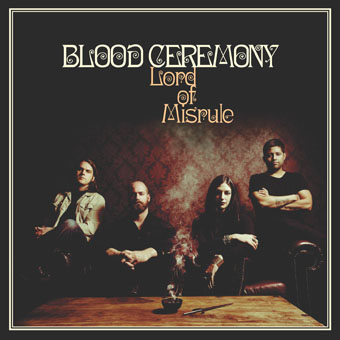
Blood Ceremony are Canadians devoted to the occult rock of previous decades. Their presentation matches songs with titles like The Great God Pan and Morning Of The Magicians.


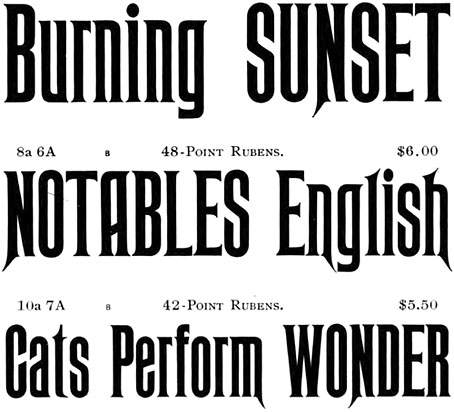
Rubens (1884) by John K. Rogers

rubens2.jpg

Rubens has long been a favourite of mine even though it gets used a great deal on horror novels and the like. Many Americans also regard it as “the Haunted Mansion font” owing to its use in Disney theme parks.

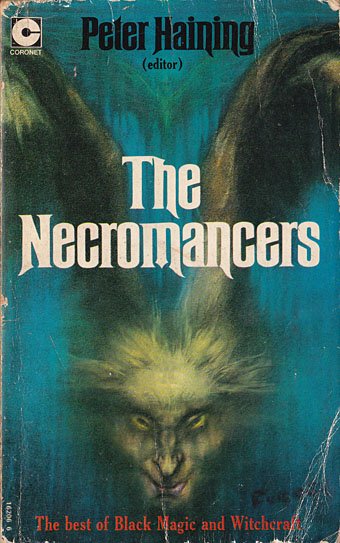
Peter Haining’s collection combined supernatural fiction with short non-fiction accounts of magical operations. The cover art is the full version of the drawing by Austin Osman Spare—The Elemental aka The Vampires are Coming—seen in detail on the cover of the first issue of Man, Myth & Magic.

rubens1.jpg

Coronet Books, 1972.


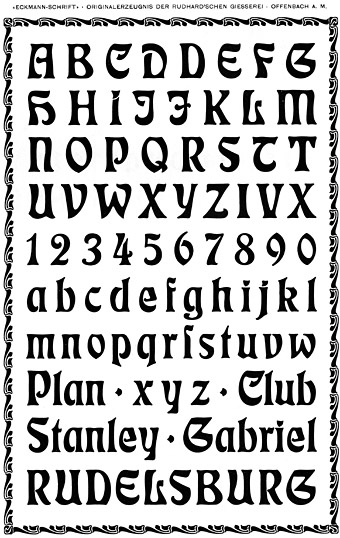
Eckmann (1900) by Otto Eckmann

eckmann2.jpg

eckmann1.jpg

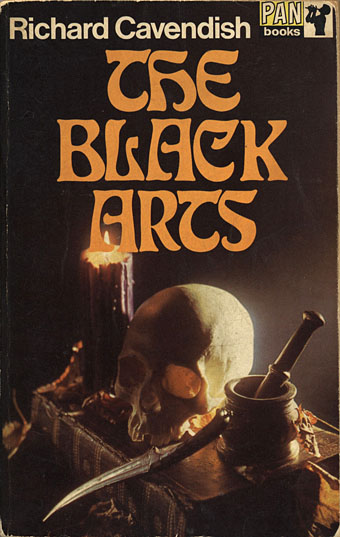
Pan Books, 1969.

Many of the examples in this post tend towards the exploitational (see below…) but Cavendish’s overview of occult theory and history is a serious study, even if the cover does beckon to the Dennis Wheatley readership. My mother was among the latter which no doubt explains why she had a copy of this paperback; in due course it found its way into my hands. Richard Cavendish was enough of an authority to be hired by Purnell as editor-in-chief of Man, Myth & Magic.


Siegfried (c. 1900) by Wilhelm Woellmer

siegfried2.jpg

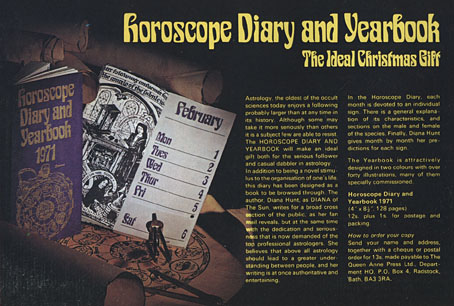
And speaking of which…Purnell offered their readership a sidereal start to 1971.

siegfried1.jpg

Man, Myth and Magic, 1970.

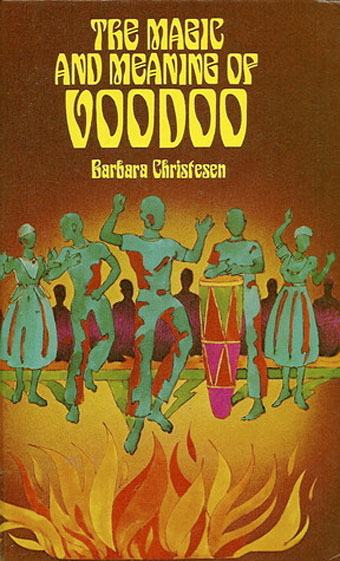
voodoo.jpg

Heinemann, 1977.


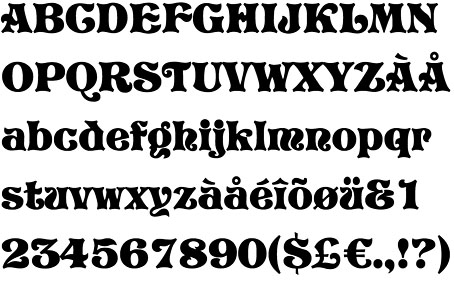
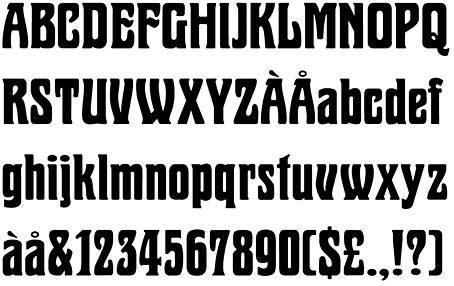
Pretorian (c. 1900) by PM Shanks & Sons

pretoria2.jpg

pretoria1.jpg

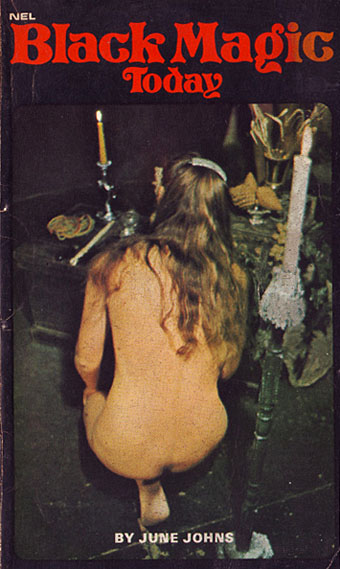
NEL, 1971.

This is where things shift from anthropology, history and children’s television to Satanic exploitation and hardcore porn. “Black magic” ceremonies in previous centuries were often a kind of orgiastic cosplay so it’s no surprise to find the same thing happening in the 20th century. New English Library dominated the British book world of the 1970s with a wide range of genre novels, as well as salaciously-packaged reprints of serious occult studies by Francis King and this volume by June Johns.

pretoria3.jpg

Undated.

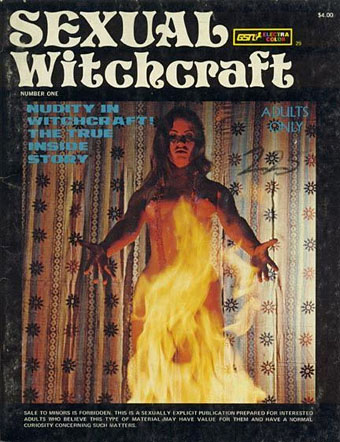
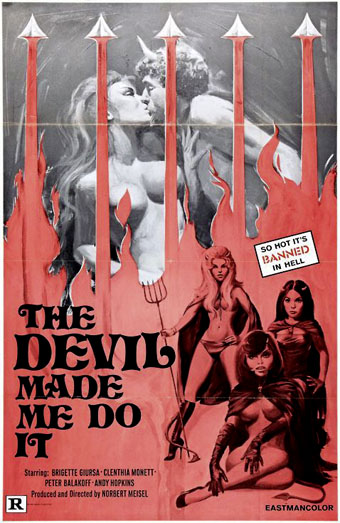
Sexual Witchcraft and The Devil Made Me Do It are two works whose pornographic nature means their origin remains obscure; nobody seems to have any information about the latter title.

pretoria5.jpg

Undated.

pretoria6.jpg

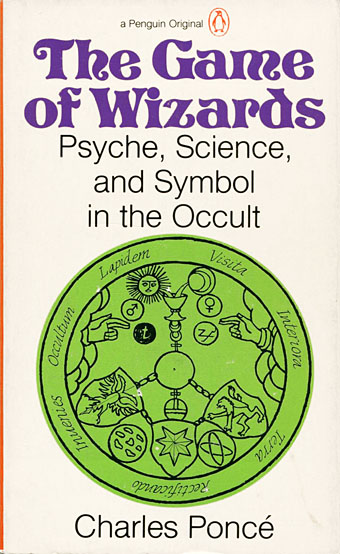
Penguin, 1975.

pretoria4.jpg

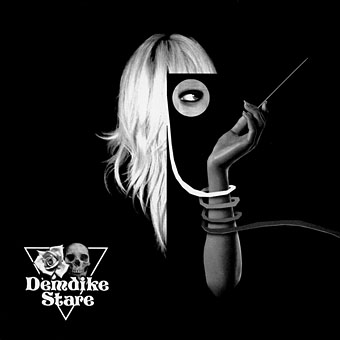
Symbiosis by Demdike Stare. Modern Love, 2009.

Mancunian duo Demdike Stare hark back to the heyday of Ouija boards and witchcraft with sinister electronics and the monochrome art and design of Andy Votel. Pretorian is used on all their early releases.


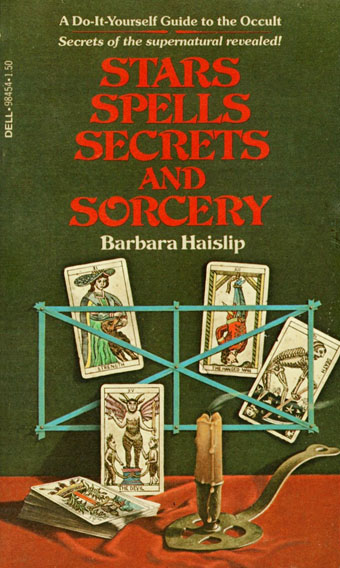
De Vinne Ornamental (1900) by Nicholas J. Werner

devinne1.jpg

devinne2.jpg

Dell, 1978.

devinne3.jpg

Holt, Rinehart and Winston, 1984.


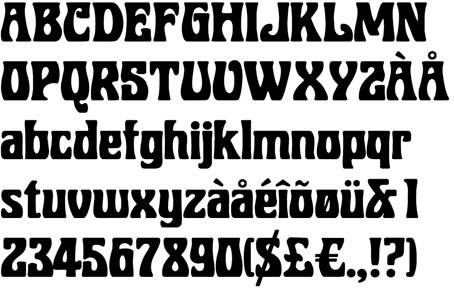
Marschall (1905) by Wilhelm Woellmer

marshall2.jpg

marshall3.jpg

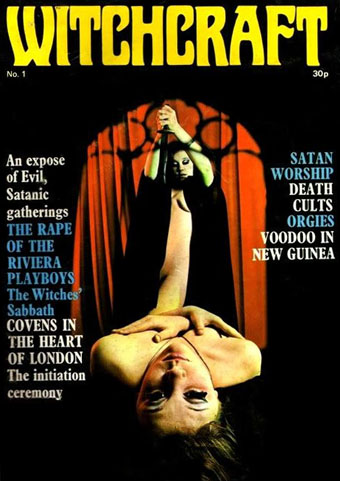
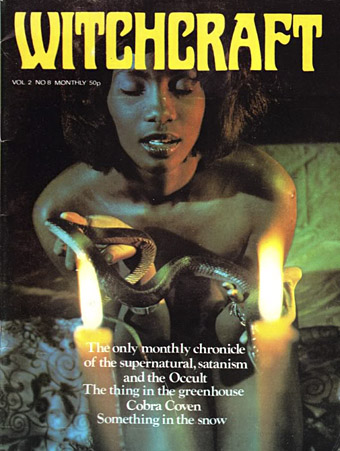
Witchcraft magazine was a UK publication (dates unknown) whose revelatory stories ran alongside many photographs of naked ladies. There was a brief fad for this kind of thing, a diabolic counterpart to all those beefcake mags pretending to be devoted to body-building. Witchcraft did at least manage more than a single issue.

marshall1.jpg


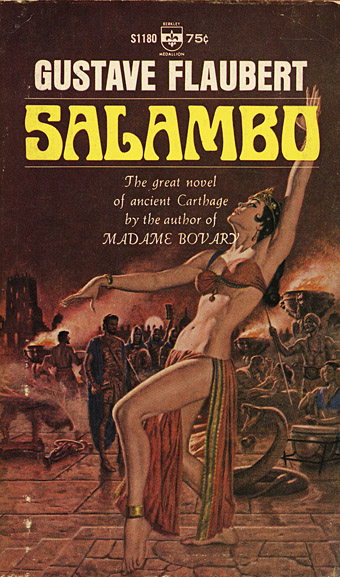
Roberta (1962) by Robert Trogman

roberta1.jpg

Trogman’s type was based on a Belgian restaurant sign so this may be another Art Nouveau derivation. Not so the use to which it was put, however. Flaubert’s novel doesn’t feature any overt occultism (although there is a whole chapter of human sacrifice) but the cover is one of the first to establish Roberta as a signifier of the exotic/erotic .

roberta4.jpg

Berkley Medallion, 1966.

roberta2.jpg

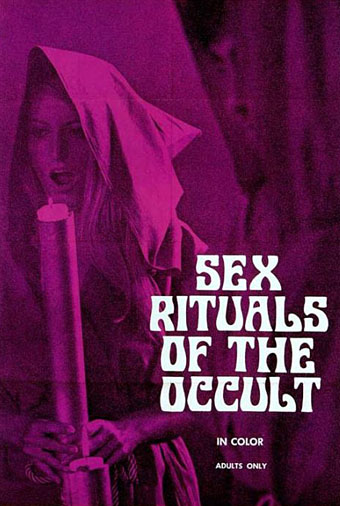
The film equivalent of Witchcraft magazine from 1970. According to this review, Sex Rituals of the Occult also features some gay sex from the male performers, a rare thing in these boob-fests.

roberta3.jpg

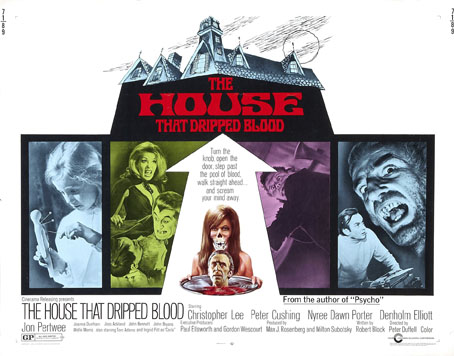
Amicus Productions, 1971.


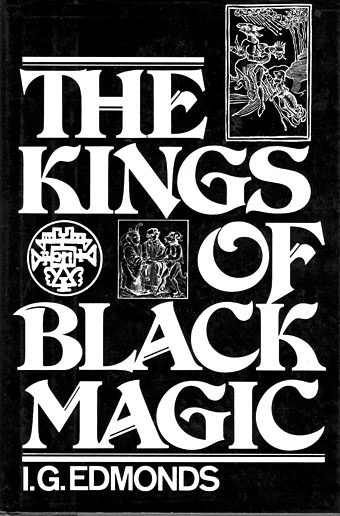
Davida (1965) by Louis Minott

davida1.jpg

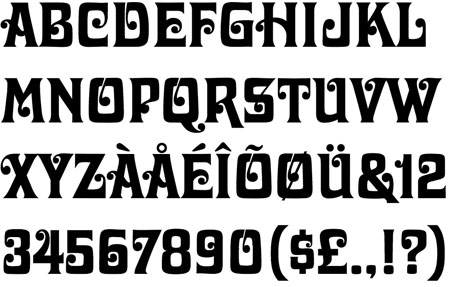
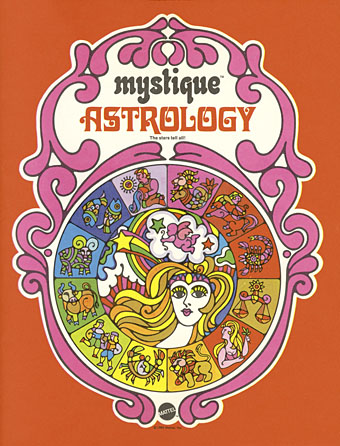
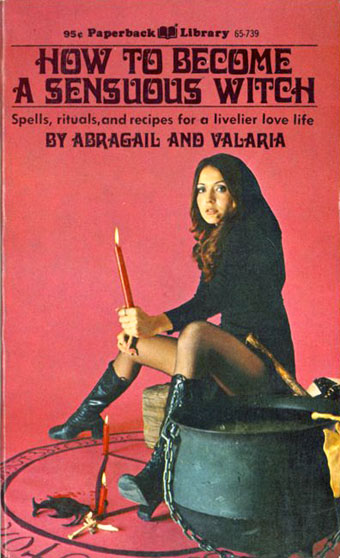
Davida is one of those typefaces from the 60s that was very popular in the following decade so it’s no surprise to find one or two occult titles using it. I’ve included it here for the way its style refers back to Ringlet, and for Abragail and Valaria’s book of recipes.

davida3.jpg

Mattel, 1969.

davida2.jpg

Coronet Communications, 1971.

Previously on { feuilleton }
MMM in IT
The Book of the Lost
The Occult Explosion
Forbidden volumes
The Sapphire Museum of Magic and Occultism
Occultism for kids

Weekend links 360

sasaki.jpg

Threshold (2008) by Roku Sasaki.

• A previously unseen interview with Angela Carter from 1979 in which she talks to David Pringle about her evolution as a writer, literary influences and genre fiction.

• Among the highlights in the latest edition of Wormwood there’s Doug Anderson on Panacea by Robert Aickman, a “vast unpublished philosophical work”.

• The London Review Bookshop podcast: Marina Warner and Chloe Aridjis discuss Leonora Carrington.

The prose works, conversely, read like surrealist poetry. They were written according to a compositional method Roussel called le procédé (the procedure), in which a complicated system of puns rather than traditional narrative logic determines the progression of the story. In Locus Solus, the mad scientist Martial Canterel takes his colleagues on a tour of his country estate—“the lonely place” of the title—to show them the bizarre inventions generated by Roussel’s procédé. These include a device that constructs a mosaic made out of human teeth; a water-filled diamond in which a dancer, a hairless cat, and the head of Danton are suspended; and a series of corpses Cantarel has brought back to life with the fluid “ressurectine,” which compels them to act out the most important event of their former lives, to the scientists’ astonishment.

Ryan Ruby on Raymond Roussel, The Accidental Avant-Gardist

• The latest manifestation of paranormal electronica by The Electric Pentacle is entitled Black Ectoplasm.

Sergey Bessmertny‘s account of working as a camera technician on Andrei Tarkovsky’s Stalker.

• City Of Fallen Angels: The Bug vs. Earth. In conversation with Kevin Martin and Dylan Carlson.

• Sex and art by the Grand Canal: Judith Mackrell on Peggy Guggenheim in Venice.

• A Guide Through the Darkened Passages of Dungeon Synth.

• Mix of the week: XLR8R Podcast 489 by Samuel Rohrer.

• The late Mika Vainio/Panasonic live in 1996.

Xan Brooks on Cary Grant’s 100 acid trips.

Resurrection (1968) by Steppenwolf | Resurrection (1975) by Master Wilburn Burchette | Resurrection (1987) by Demons Of Negativity

David Tibet meets Derek Jarman

jarman.jpg

For the past week I’ve been reading the Strange Attractor Press edition of England’s Hidden Reverse by David Keenan, a book that’s not only a handsome volume in its own right but is also an excellent chronicle of the post-Throbbing Gristle Industrial scene in Britain from the late 70s to the present. There’s too much I could say about that side of the 1980s since it was a part of the decade I was fully immersed in. Not only the music either; I still have correspondence with some of the key figures (David Tibet among them), and accumulated a mass of newspaper and magazine features, reviews and interviews. The internet has rendered this aspect of the hoarding imperative redundant but pre-internet if you didn’t keep old papers and magazines then the information in them was effectively gone forever, especially if the publications were fanzines or small-run amateur mags that wouldn’t be archived by libraries.

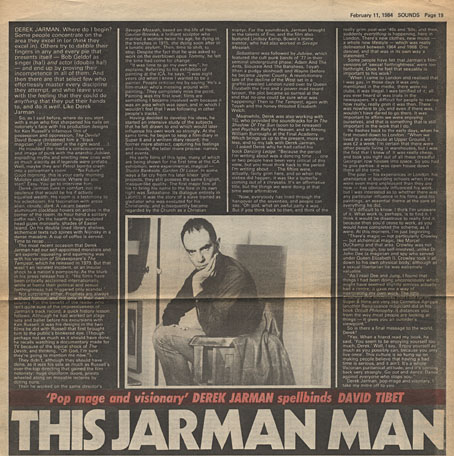
Keenan’s book prompted me to dig in some boxes to see what clippings had survived various relocations. Most of the stuff was familiar but I’d forgotten this piece from David Tibet’s fleeting career as a music journalist before Current 93 established themselves. Derek Jarman gets a passing mention in Keenan’s book via his connections with Throbbing Gristle and Coil, two groups who provided soundtracks for his films. Tibet’s interview was occasioned by the publication of Dancing Ledge, Jarman’s diary/memoir that’s been quoted here on several occasions. Tibet was writing for Sounds on this occasion, an unusual venue for a piece about Derek Jarman (Sounds was always more rock-oriented than the NME) which no doubt explains the lengthy contextualising; I’m sure Tibet would have preferred to talk more about John Dee and Jarman’s magickal preoccupations. Not a great interview, then, but a curious meeting that reinforces some of the connections of the period.

* * *

THIS JARMAN MAN by David Tibet (Sounds, February 11, 1984)

DEREK JARMAN. Where do I begin? Some people concentrate on the area they excel in (or think they excel in). Others try to dabble their fingers in any and every pie that presents itself—Bob Geldof as singer (ha!) and actor (double ha!)—and end up by proving their incompetence in all of them. And then there are that select few who effortlessly master every discipline they attempt, and who leave you with the feeling that they could do anything that they put their hands to, and do it well. Like Derek Jarman…

So, as I said before, where do you start with a man who first sharpened his nails on notoriety’s face with his production designs for Ken Russell’s infamous film of possession and oppression, The Devils? David Bowie christened him a “black magician” (if ‘christen’ is the right word…

He moulded the media’s consciousness and image of punk with the anarchic Jubilee, exploding myths and erecting new ones with as much alacrity as if legends were prefabs. Well, maybe they are! Petrol bombs crash into a policeman’s room… “No Future”. Good morning, this is your early morning
Molotov cocktail service. Where do you start? Easy. You go to interview him.

Derek Jarman lives in comfort, not the opulence that would be his if activity equalled wealth. His room is a testimony to his eclecticism, his fascination with areas alien, cloudy, dark. A vacant beaten aluminium clockface hovers on arches in the corner of the room, its hour hand a solitary coffin nail. On the hearth a huge sculpted head gates morosely, shades of Easter Island. On his double lined library shelves, alchemical texts rub spines with Nijinsky in a danse macabre. A cup of coffee is served. Time to recap…

The most recent occasion that Derek Jarman had our self-appointed moralists and ‘art-experts’ squealing and squirming was with his version of Shakespeare’s The Tempest, which he released in 1979. But that wasn’t an isolated incident, or an insular shock to a nation’s pomposity. As the blurb in his press release has it: “His films have been critically acclaimed internationally, while at home their political and sexual forthrightness has triggered only scandal.”

Not surprising either. Prophets are always without honour, and not only in their own country. For the benefit of the reader who isn’t quite sure of the impressiveness of Jarman’s track record, a quick history lesson follows. Although he had worked on stage sets and ballet before his excursions with Ken Russell, it was his designs in the two films he did with Russell that first brought him to the public’s blinkered eye. (Though perhaps not as much as it should have done; he recalls watching a documentary made for TV because of the topical shock of The Devils, and thinking, “Oh god, I’m sure they’re going to mention me now.”)

They didn’t, although they should have done, as it his sets as much as Russell’s over-the-top directing that gained the film notoriety: huge cruciform doors, priests wheeled along on movable lecterns by doting nuns.

Then he worked on the same director’s Savage Messiah, based on the life of Henri Gaudier-Brzeska, a brilliant sculptor who married a woman twice his age, he dying in the trenches in 1915, she dying soon after in a lunatic asylum. Then, time to shift, to stop. Despite the fact that he was asked to work on the overblown opus Tommy, he felt the time had come for change.

“It was time to go my own way”, he explains. Referring to his exhibition of painting at the ICA, he says, “I was eight years old when I knew I wanted to be a painter. People criticise me by saying ‘He’s a film-maker who’s messing around with painting.’ They completely miss the point. Painting was my first love; films are something I became involved with because it was an area which was open, and in which I wouldn’t feel that I was following in other people’s tracks.”

Having decided to develop his ideas, he started an intensive study of the subjects that he felt drawn to and which would later, influence his own work so strongly. At the same time, he began to keep a film-diary in Super 8 and a written diary record; the former more abstract, capturing his feelings and moods, the latter more precise: names and events.

His early films of this type, many of which are being shown for the first time at the ICA exhibition, were experimental, magical—Studio Bankside, Garden Of Luxor. In some ways a far cry from his later linear ‘plot’ projects, they stiil possess the same English, masque-like quality. The first major film of his to bring his name to the fore in its own right was Sebastiane. Its dialogue entirely in Latin (!), it was the story of a slave trained as gladiator who was executed for his Christianity, and subsequently became regarded by the church as a Christian martyr. For the soundtrack, Jarman brought in the talents of Eno, and the film also featured Lindsay Kemp, Bowie’s mime mentor, who had also worked in Savage Messiah.

Sebastiane was followed by Jubilee, which featured the cult punk bands of ’77 in their seminal underground phase: Adam And The Ants, Siouxsie And The Banshees, Toyah (then a pudgy skinhead) and Wayne (before he became Jayne) County. A revolutionary tale of the decline of the West set in a graffiti-jewelled London ruled over by Queen Elizabeth the First and a power-mad record tycoon, the plot became so surreal at the end that no-one could be sure what was happening! Then to The Tempest, again with Toyah and the honey-throated Elisabeth Welch.

Meanwhile, Derek was also working with [Throbbing Gristle], who provided the soundtracks for In The Shadow Of The Sun (soon to be released) and Psychick Rally In Heaven, and in filming William Burroughs at the Final Academy. Which brings us up to the present, more or less, and to my talk with Derek Jarman.

I asked Derek why he had called his book Dancing Ledge. “Because the period I’m writing about was a dancing time…one or two people have been very critical of this view, but you must think back to the period I’m writing about… The fifties were, actually, fairly grim here, and so when the sixties did happen, it was like a butterfly coming out of a chrysalis. It’s an affirmative title, but the things we were doing at that time were affirmative.

“Now, everybody has lived through the hangover of the seventies, and people can say. ‘Oh god, what an awful party it was. But if you think back to then, and think of the really grim post-war ’40s and ’50s; and then, suddenly everything is happening, here in London. There’s new clothes, new music—a whole new lifestyle—which was really delineated between 1964 and 1968. One danced, and that was in its own way a statement.”

Some people have felt that Jarman’s fiIm versions of ‘sexual forthrightness’ were too forthright. Does he feel that sexuality is important to his work?

“When I came to London and realised that I was gay, in those days it was only mentioned in the media; there were no clubs, it was illegal. I was terrified of it; all you ever heard of was trials in the newspapers. It’s difficult for people to realise how really, really grim it was then. There was nowhere to go, and even if there was, I wouldn’t have dared to go there. It was important to affirm we were enjoying ourselves, and that is something that is still important in the work that I do.

He flashes back to the early days, when he first moved down to London: “When we lived in a warehouse at Upper Ground, it was £2 a week. I’m certain that there were other people living in warehouses, but I was the first that I knew of. It was really cheap, and took you right out of all these dreadful Georgian row houses into space. So you had to give parties: it was open house down there all the time.”

The past—his experiences in London, his attendance at boarding schools when they were even more unpleasant than they are now—has obviously influenced his work, but I was interested as to whether there was any particular influence in his films and his paintings, an essential theme at the core of everything he did.

“It’s difficult to know. I think I’m unaware of it. What work is, perhaps, is to find it. I think it would be disastrous to really find it, because then you’d cease to work, as you would have completed the scheme, as it were. At this moment, I’m just beginning.

“There’s magic—not particularly Crowley—but alchemical magic, like Marcel Duchamp and that area. Crowley was not selfless enough, too self-involved, unlike Dr John Dee (a magician and spy who served under Queen Elizabeth I). Crowley took it all down to his own physical body, although as a sexual libertarian he was extremely valuable.

“As I read Dee and Jung, I found that things I had been doing unconsciously which might have seemed slightly aimless actually had a centre; it gave me a way of interpreting my own work. The little drawings and notebooks that I did for my Super 8 films are very like Cornelius Agrippa (another Renaissance magician) did in his book Occult Philosophy. It distances you from the way most people are looking at things—it gives you an outsiders viewpoint.”

So is there a final message to the world, Derek?

“Yes. When a friend read my book he said, ‘You seem to be enjoying yourself too much, Derek. Well, I say, ‘Enjoy yourself as much as you possibly can. because you only live once’. This culture is so hung up on making people believe that having a bad time is serious, and it ain’t. It’s a whole Victorian puritanical attitude, and it’s coming back very strongly. Go out and dance. Dance against everyone who stops you.”

Derek Jarman pop-mage and visionary, I take my mitre off to you. •

Previously on { feuilleton }
Shooting the Hunter: a tribute to Derek Jarman
Derek Jarman’s landscapes
Derek Jarman album covers
Ostia, a film by Julian Cole
Derek Jarman In The Key Of Blue
The Dream Machine
Jarman (all this maddening beauty)
Sebastiane by Derek Jarman
A Journey to Avebury by Derek Jarman
Derek Jarman’s music videos
Derek Jarman’s Neutron
Mister Jarman, Mister Moore and Doctor Dee
The Tempest illustrated
In the Shadow of the Sun by Derek Jarman
Derek Jarman at the Serpentine
The Angelic Conversation
The life and work of Derek Jarman
The Thing Group Art Show

creaturefeatures.jpg

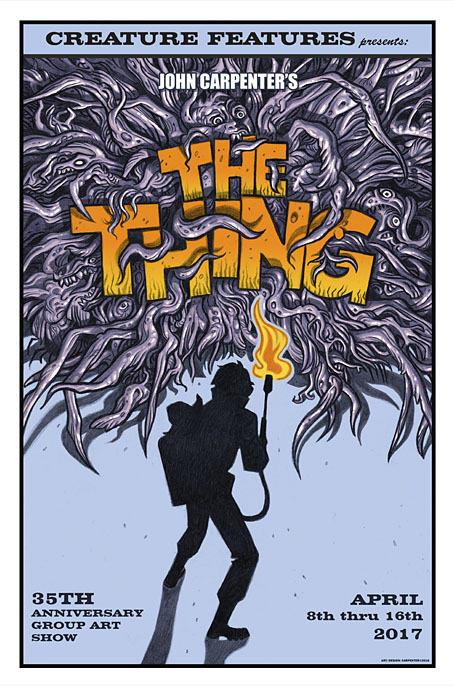
People or, indeed, things in the Los Angeles area may be interested in the Thing Group Art Show which opens this Saturday at Creature Features in Burbank. The gallery will be displaying prints and original artwork from the forthcoming The Thing: Artbook including a print of my own contribution. Some of the prints are for sale, as mine will be, so Coulthart collectors (I know there’s one or two out there) should head to Magnolia Boulevard.

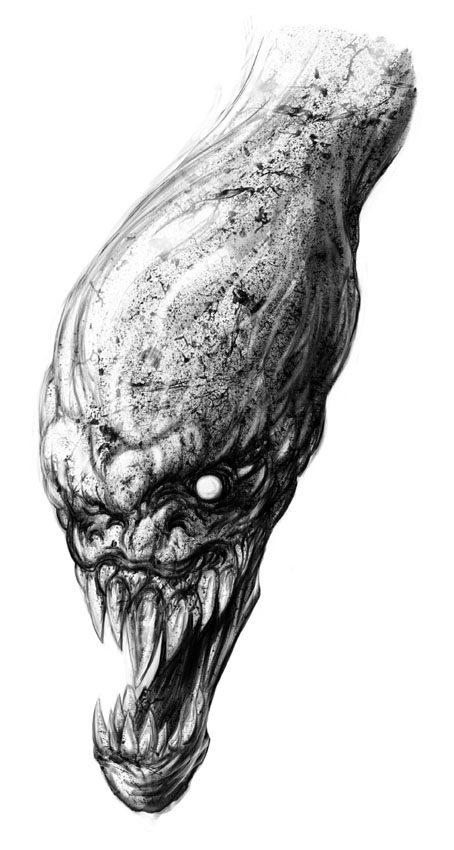
The publishers of The Thing: Artbook, Printed In Blood, have requested that the artists refrain from showing their contributions until the book is launched in July. I can show this Thing head, however, a manifestation that I couldn’t fit into my final composition. Even before I began work on my piece I suspected that many of the other artists would be doing their own versions of favourite moments from the film, an accurate prediction as it turns out. So my intention was to try and show some of the nastiness that might be occurring between the filmed scenes, to which end I produced a number of sketches of fanged heads. The one below would have worked better attached to a body (or at least some limbs) but I was running out of time so it was left aside. The Thing: Artbook may be pre-ordered here.
thing.jpg

Previously on { feuilleton }
Things