Weekend links 490

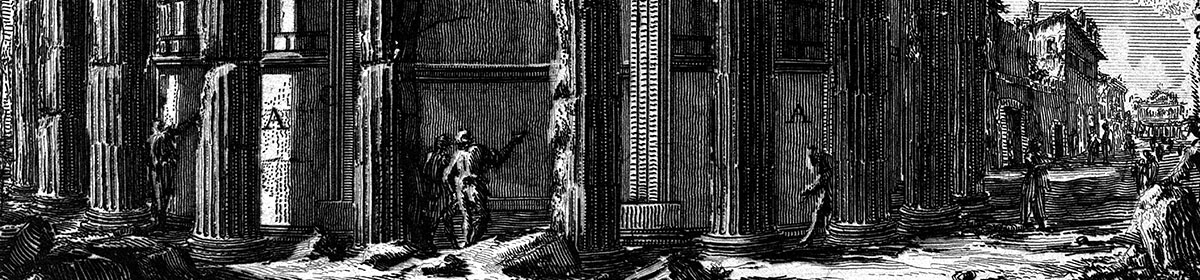
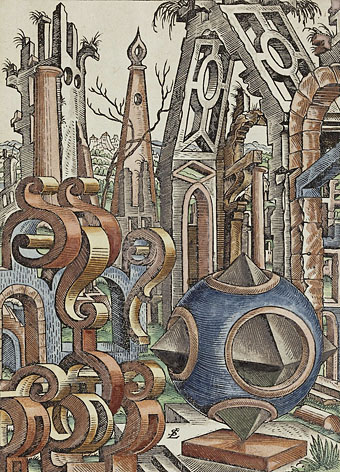
stoer.jpg

An engraving from The Geometric Landscapes of Lorenz Stoer (1567).

• Curtis Harrington’s cult horror film, Night Tide (1961), receives a lavish blu-ray reissue from Powerhouse in January. The limited edition will include an extra disc of Harrington’s early short films which encompass Poe adaptations and also Wormwood Star, his portrait of occult artist (and actor in Night Tide) Marjorie Cameron.

• “He was the first American representative of an electronic sound that was largely coming from Europe, from bands like Kraftwerk, or producers like Giorgio Moroder and Pete Bellotte…” Jude Rogers on Patrick Cowley.

Clive Hicks-Jenkins examines Hans Poelzig’s and Marlene Moeschke’s work on Paul Wegener’s 1920 film of The Golem. Wegener’s film is released this month in a restored blu-ray edition by Eureka.

• “Conrad was uncompromising in his beliefs until the end, sticking to his ideals with tenacious fervor.” Geeta Dayal on Tony Conrad: Writings, edited by Constance DeJong and
Andrew Lampert.

• At Dennis Cooper’s: 47 dead films. One of the films, Hu-Man (1975), a French science-fiction drama starring Terence Stamp, isn’t as dead as was assumed.

• The Danske Filminstitut has made a collection of Danish silent films available to watch for free online.

• The Last Time I Saw John Giorno, an Extraordinary Performance Poet by Mark Dery.

• “Like looking through butterfly wings”: Ira Cohen’s Mylar chamber—in pictures.

Callum James reviews the Early Poetical Works of Aleister Crowley.

• Drawing the Gaze: Revisiting Don’t Look Now by Jesse Miksic.

• Mix of the week: FACT Mix 745 by Visible Cloaks.

Mind Warp (1982) by Patrick Cowley | Go-Go Golem (1986) by Golem Orchestra | Night Tide (1995) by Scorn
Weekend links 489

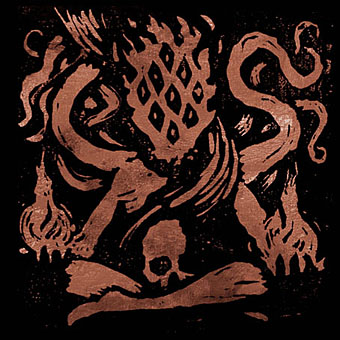
wyrding.jpg

Typhonic Neural Tantra by The Wyrding Module.

• November 2019, as many people have been noting, is the month in which Ridley Scott’s Blade Runner takes place. At Dangerous Minds Paul Gallagher writes about the unrelated William Burroughs script whose title was borrowed for Scott’s film.

• More Ridley Scott (sort of): disco was still a big thing when Alien was in the cinemas 40 years ago, so Kenny Denton reworked Jerry Goldsmith’s Alien score into a disco single which he released under the name Nostromo.

• “The Count of Monte Cristo is one of the most exciting novels ever written and on the other hand is one of the most badly written novels of all time and in any literature.” Umberto Eco on the cult of the imperfect.

• Jonathan Glazer has made a short film, The Fall, for the BBC but the corporation’s restrictions mean that (for the moment) it’s difficult to see if you live outside the UK.

• New albums at Bandcamp: Typhonic Neural Tantra by The Wyrding Module, and Emotional Freedom Techniques by Jon Brooks (aka The Advisory Circle).

• Hawkwind dancer Miss Stacia and the Barney Bubbles estate have made a line of T-shirts based on Barney Bubbles’ Space Ritual design.

Walter Murch and Midge Costin on the art of cinematic sound design.

Ivana Sekularac on the former Yugoslavia’s brutalist beauty.

• Congratulations to Strange Flowers on its 10th anniversary.

Geoff Manaugh on the witch houses of the Hudson Valley.

• At Dennis Cooper’s: 19 experimental horror films.

Fall (1968) by Miles Davis | The Fall (2011) by The Haxan Cloak | Fall (2014) by The Bug (feat. Copeland)

Weekend links 488

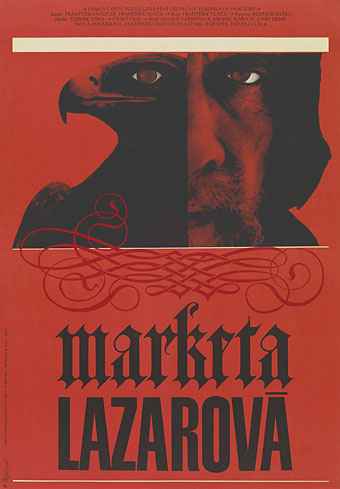
ziegler

Poster by Zdeněk Ziegler for Marketa Lazarová (1966), a film by František Vláčil.

• I’ve spent the past couple of weeks watching a number of films by Béla Tarr, including his 432-minute masterwork, Sátántangó (1994). The latter was based on a novel by László Krasznahorkai, an author who not only worked with Tarr on the screenplay but helped with several of his other features. So this piece by David Schurman Wallace, about a more recent Krasznahorkai novel, Baron Wenckheim’s Homecoming, arrives at just the right moment.

The Paris Review unlocked its Art of Fiction interview with Italo Calvino. William Weaver and Daniel Pettigrew ask the questions. And at the same site: Ivan Brunetti on the deceptive simplicity of Charles Schulz’s Peanuts.

• Halloween approaches so Sudip Bose suggests 10 pieces of orchestral music to set the mood. I made a similar list of my own in 2011. Related: Adam Scovell on 10 lesser-known folk horror films.

I thought, “When I grow up, I’m going to be in a group making this kind of music.” Slowly and Shirley, I did grow up and found myself in a group but they weren’t making that kind of music. It was a hole of longing in my guts that I needed to fix.

Andy Partridge, aka Sir John Johns, on his love of psychedelic music and the remixed reissue of the Dukes Of Stratosphear catalogue

Faye Lessler on how the Internet Archive is digitizing LPs to preserve generations of audio.

• Photographing the Dark: Allison C. Meier on Nadar’s descent into the Paris Catacombs.

• At Wormwoodiana: Go Back at Once, Robert Aickman‘s unpublished second novel.

• Queen of the Flies: Mica Levi talks to Charlie Bridgen about her soundtrack music.

• At Dangerous Minds: Sex, Nazis, and classical music: Ken Russell’s Lisztomania.

• The first new Ghost Box recording artist of 2020 will be…Paul Weller.

• Mix of the week: There’s No Going Back by The Ephemeral Man.

• The Dead Travel Fast: The Gothic Ballad of Lenore in paint.

Catacombs/Cum Mortuis In Lingua Mortua (1980) by Mussorgsky (George Solti/Chicago SO) | Fade In Hong Kong (1981) by Video Liszt | La Ballade De Lenore (1986) by Shub-Niggurath

Of Mice and Minestrone

lansdale.jpg

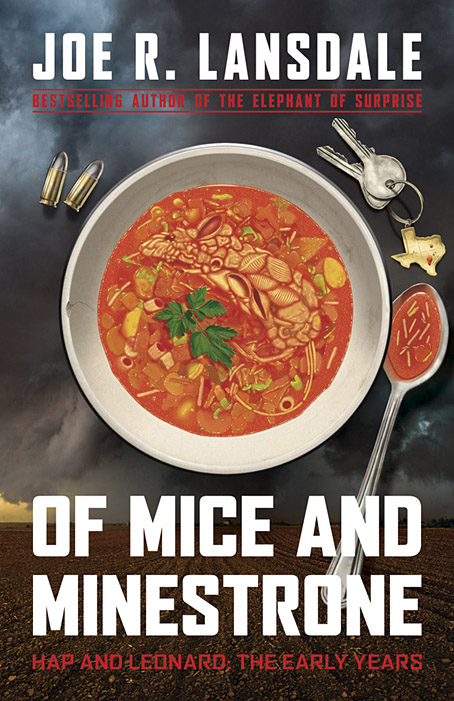
I’ve done a lot of cover work this year, and there are still more designs waiting to be announced. Of Mice and Minestrone isn’t my usual line of work but it’s actually the third cover I’ve done for a Joe R. Lansdale book, although the previous titles were horror and steampunk respectively. The latest volume is a collection of crime stories, and an addition to Lansdale’s Hap and Leonard books, a series about a pair of Texan detectives whose popularity now extends to a TV show.

Crime presents many of the same challenges you find in other genres, all of which come with their own set of clichés which you can either choose to engage with or avoid. In the case of crime there’s a tendency for degraded typefaces to proliferate, along with variations on a red/black/white colour scheme. One of the early drafts of this design did use a red/black/white arrangement but I was told that Joe Lansdale was (unsurprisingly) tired of seeing this scheme applied to his own books. The title of the collection comes from the opening story which concerns the young Hap’s involvement with an older woman and her abusive husband; the marital abuse is resolved via a bowl of soup which has been poisoned with a dead rat, hence the title and the cover image. I like using pareidolia when I can, and the slightly unusual imagery pushed the appearance away from generic clichés (if you discount the bullets) towards the marvellously surreal covers that Tom Adams painted for Agatha Christie’s novels.

The background photo is a rare example of my using a stock image. The soup bowl looked fine from the outset but the background lacked a suitably ominous quality, and was at risk of looking too much like a recipe book. (As it happens there are some recipes by Kasey Lansdale following the fiction although I don’t think any require the use of dead rats.) After trying a number of different table surfaces I decided on a lateral approach so went searching for pictures of Texan storm clouds. The image we eventually used—a tornado over farmland near Patricia, Texas by John Finney at Getty Images—was the second one I tried and it worked so well we decided to keep it.

Of Mice and Minestrone will be published by Tachyon in March 2020 but is available for pre-order now.

Previously on { feuilleton }
The Gods of HP Lovecraft
Lovecraft’s Monsters
Ten titles and a cover
Steampunk overloaded!
New things for April

Exlibris (Bucheignerzeichen)

bookplates04.jpg

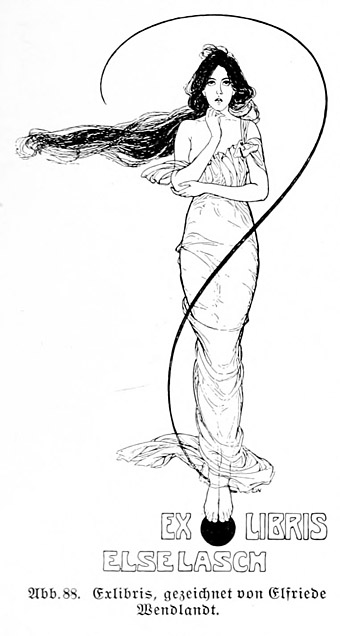
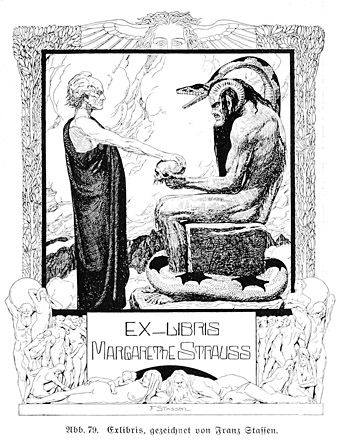
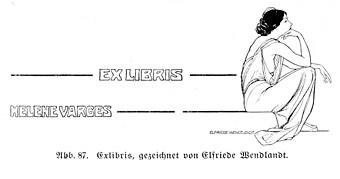
I don’t use bookplates, and don’t know anyone who does, but the conjunction between art and literature is a fascinating one. Exlibris (Bucheignerzeichen) (1909) by Walter von Zur Westen explores the history of the bookplate, and would no doubt answer some of my questions about the form if it wasn’t in German throughout, and also typeset in the semi-legible Fraktur style that used to be de rigueur for all German texts.

bookplates02.jpg

We still have the illustrations, however, and these range from woodcut engravings to contemporary works in pencil and ink, with many of the later contributions being from established artists whose names are familiar today; among the examples below are works by Symbolists Max Klinger, Fernand Khnopff and Felicien Rops. There’s also an especially fine example by Charles Ricketts. The latter are a reminder that bookplate commissions were a common thing for 19th-century artists, although their efforts are seldom seen outside collections such as this. Much of Zur Westen’s history is devoted to the German regions but later chapters cover other European countries and the United States.

bookplates03.jpg

bookplates01.jpg

bookplates05.jpg

Continue reading “Exlibris (Bucheignerzeichen)”