Abeceda

nezval26.jpg

This week I’ve started working my way through the filmography of Jan Švankmajer, having finally acquired a blu-ray set of his feature films. I’ve also been reading interviews and rewatching some of the documentaries about the man and his work, which in turn prompted me to look up some of his associates and precursors among the Czech Surrealists. Prague was unusual in being a centre for the early development of Surrealism at a time when the movement (for want of a better term) was centred on Paris. André Breton encouraged this, and cultural exchanges took place, with Breton and Paul Éluard visiting Prague, while Vítězslav Nezval and his colleagues journeyed to Paris. The outbreak of war severed the connection but this also had the inadvertent effect of perpetuating the Czech brand of Surrealism by cutting off Prague from the rest of the European avant garde. While Breton and co were forced to flee to the United States and Mexico, the Czech Surrealists went underground, hiding their illicit explorations first from the occupying Nazis, then from the disapproving Communist authorities. It’s always important to bear this in mind when considering Švankmajer’s films and artwork; his Surrealism is a serious motivation with a long history in Czech and Slovak art.
nezval00.jpg

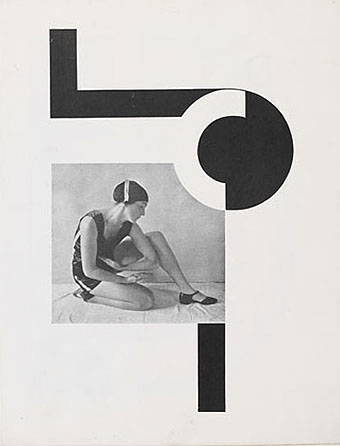
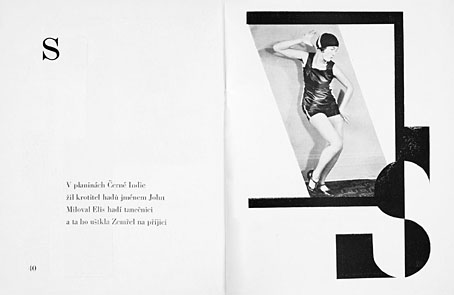
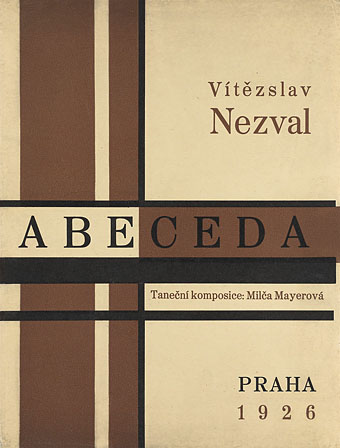
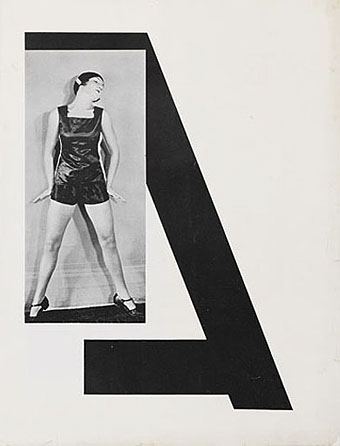
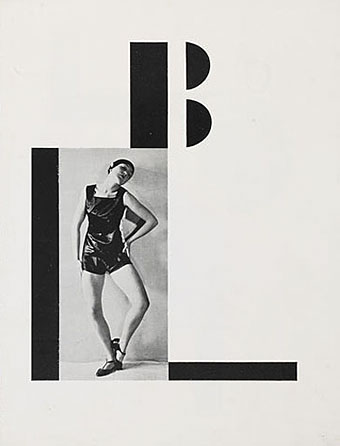
Vítězslav Nezval is best known today for being the author of Valerie and Her Week of Wonders (1935), the source novel for the cult film by Jaromil Jires. Abeceda (1926) is a much shorter work, a Modernist abecedary created by Netzval (who wrote a short verse describing each letter) with Milča Mayerová (who choreographed a series of letterform poses) and Karel Teige (who designed the book and took the photographs). I’ve not seen a complete translation of the verses but I love the page design which is like something the Bauhaus might have produced for the Modernist Children of the Future. The form being used here had a name—Poetism—a Czech variation on similar movements elsewhere such as Constructivism and Futurism but with an intention to create works accessible to all, hence the abecedary. I can imagine Milča Mayerová’s poses being animated by Švankmajer’s staccato edits although his design preferences have always been more florid and baroque. A Surrealist he may be but he also favours Jean Midolle’s Alphabet Lapidaire Monstre.
nezval01.jpg

nezval02.jpg

nezval03.jpg

Continue reading “Abeceda”

Weekend links 516

correa.jpg

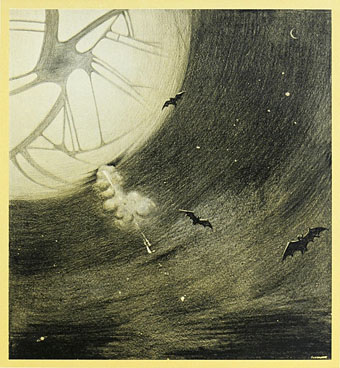
Bats in space: an illustration by Henrique Alvim Corrêa from a 1906 edition of The War of the Worlds.

• Auf wiedersehen to Florian Schneider. Until he left Kraftwerk in 2009 (or 2006 or whenever it was), Schneider had been the group’s longest-serving member, keeping things running for the few months in 1971 when Ralf Hütter was absent. The brief period when Kraftwerk was Schneider plus soon-to-be-Neu! (Michael Rother, guitar, and Klaus Dinger, drums) fascinates aficionados over-familiar with the later albums. The music they produced was a wild and aggressive take on the rock idiom but Scheider maintained the link with Kraftwerk before and after, not only instrumentally but with his ubiquitous traffic cones, as noted in this post. There’s no need for me to praise Kraftwerk any more than usual, this blog has featured at least one dedicated post about them for every year of its existence, and besides which, the group itself is still active. Elsewhere: Simon Reynolds on how Florian Schneider and Kraftwerk created pop’s future; A Kraftwerk Baker’s Dozen Special; Dave Simpson attempts to rank 30 Kraftwerk songs (good luck getting anyone to agree with this); Jude Rogers with ten things you (possibly) don’t know about Kraftwerk; Dancing to Numbers by Owen Hatherley; Pocket Calculator in five languages; Florian Schneider talks about Stop Plastic Pollution.

• Intermission is a new digital compilation from Ghost Box records featuring “preview tracks from forthcoming releases and material especially recorded for the compilation during the global lockdown”. In a choice of two editions, one of which helps fund Médecins Sans Frontières.

• How groundbreaking design weirdness transformed record label United Artists, against all odds. By Jeremy Allan.

Sex in an American suburb is not quite the same phenomenon as sex in, say, an eastern European apartment block, and sex scenes can do a great deal to illuminate the social and historical forces that make the difference. All of which is to say that sex is a kind of crucible of humanness, and so the question isn’t so much why one would write about sex, as why one would write about anything else.

And yet, of course, we are asked why we write about sex. The biggest surprise of publishing my first novel, What Belongs to You was how much people wanted to talk about the sex in a book that, by any reasonable standard, has very little sex in it. That two or three short scenes of sex between men was the occasion of so much comment said more about mainstream publishing in 2016, I think, than it did about my book. In fact, in terms of exploring the potential for sex in fiction, I felt that I hadn’t gone nearly far enough. I’ve tried to go much further in my second novel, Cleanness. In two of its chapters, I wanted to push explicitness as far as I could; I wanted to see if I could write something that could be 100% pornographic and 100% high art.

Garth Greenwell on sex in literature

• James Balmont’s guide to Shinya Tsukamoto, “Japan’s Greatest Cult Filmmaker”.

• A Dandy’s Guide to Decadent Self-Isolation by Samuel Rutter.

• Maya-Roisin Slater on where to begin with Laurie Anderson.

• The Count of 13: Ramsey Campbell’s Weird Selection.

• Adam Scovell on where to begin with Nigel Kneale.

• When John Waters met Little Richard (RIP).

• RB Russell on collecting Robert Aickman.

• Weird writers recommend weird films.

• Campo Grafico 1933/1939.

• Ruckzuck (1970) by Kraftwerk | V-2 Schneider (1977) by David Bowie | V-2 Schneider (1997) by Philip Glass

Weekend links 515

huysmans.jpg

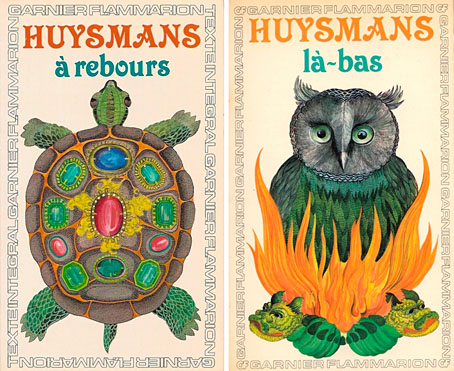
A pair of Huysmans covers from 1978 designed by Gérard Deshayes.

• Friends of the great composer/musician Jon Hassell set up a GoFundMe account a few days ago to help raise money for Jon’s medical costs. It’s always dispiriting having to link to these fund-generators when they shouldn’t be required at all but until America sorts out its health situation this is how things are. For those who’d prefer to help Jon by buying his music, there’s a Bandcamp page with a handful of releases, and more available at Bleep, the online distributor of Warp Records who helped produce his last release, Listening To Pictures (Pentimento Volume One). Related: Words With The Shaman: Jon Hassell interviewed by Chris May.

• Every time I think I must have heard all the best of the early Kraftwerk concerts another one turns up. This new posting at YouTube is taken from a recent file upload at the concert-swapping site Dimedozen, and is believed to be a radio recording of the group playing in Vancouver, Canada, in 1975. It’s very good quality (some slight bleed from other stations) and features excellent versions of their concert repertoire at that time. The version of Autobahn is especially good.

• in 2009 Dana Mattocks built a machine he called Steampunk Frankenstein, a construction which was attended by a frame containing my first piece of steampunk art. Dana’s latest creation is TILT, the Robot with Rocket Jet-Pack.

• RIP Tony Allen, the drummer about whom Fela Kuti said “without Tony Allen, there would be no Afrobeat”. Allen was interviewed by John Doran in 2012. Related: Tony Allen: the Afrobeat pioneer’s 10 finest recordings.

• “Robert Fripp’s ‘Music for Quiet Moments’ series. We will be releasing an ambient instrumental soundscape online every week for 50 weeks. Something to nourish us, and help us through these Uncertain Times.”

• How to avoid Amazon: the definitive guide to online shopping – without the retail titan; Hilary Osborne & Poppy Noor have some suggestions. I favour eBay for many of my purchases, large or small.

• Adam Scovell on A Cinematic Lockdown: Confinement in the films of Alfred Hitchcock.

• Liberty Realm, a book of art by Cathy Ward, is coming soon from Strange Attractor.

• One Great Reader: Luc Sante talks to Wes del Val about his favourite books.

• Oscar Wilde and the mystery of the scarab ring by Eleanor Fitzsimons.

• Unica Zürn at Musée D’art Et D’histoire De L’hôpital Sainte-Anne.

• Mix of the week: Secret Thirteen Mix 302 by Avizohar.

• Another concert: Tuxedomoon live in Rome in 1988.

• Rarefilmm | The Cave of Forgotten Films.

• At Dennis Cooper’s: Ghosts.

• Ghost Song (1978) by Jim Morrison & The Doors | Ghost Song (2000) by Air | Ghost Song (2005) by Patrick Wolf

The Bomb Squad

bombsquad.jpg

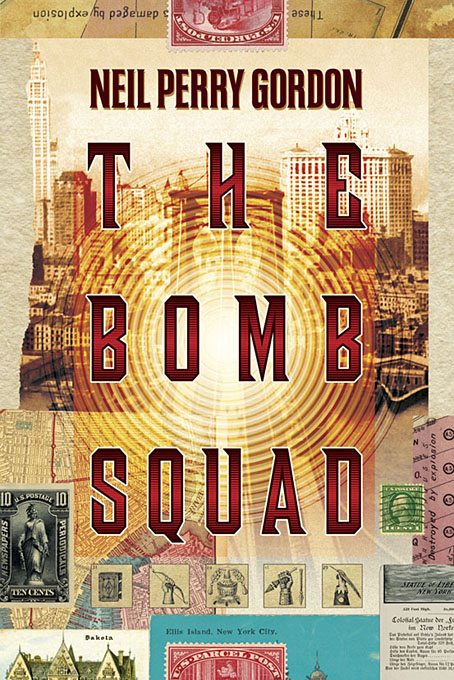
This is the second book cover I’ve designed for Neil Perry Gordon, the first being for The Righteous One which was published in August last year. Both novels have New York City as a location but The Bomb Squad differs substantially from the metaphysical drama of The Righteous One by opening with a real event, the bomb attack in 1916 by German agents on US munitions being stored on Black Tom Island in New York harbour; the bomb squad of the title is the group of men who lead an investigation to prevent further outrages.

Rather than take a figurative approach with this design I opted for a collage of historical details. This seemed a good way of immediately establishing the period and location as well as reflecting the piecemeal nature of police investigations, the accumulation of evidence and so on. Collage also made it possible to include references to some of the locations in the story such as Black Tom Island (from a map at the Library of Congress showing the extent of the bomb damage), the Dakota Building, Ellis Island, etc. The five symbols below the title are from a book of heraldic designs, and relate to the Jungian archetypes which one of the detectives assigns to each member of the squad. The symbols aren’t labelled so the reader can decide which symbol relates to which character.

The Bomb Squad is available now from the usual outlets.

Previously on { feuilleton }
• The Righteous One

Weekend links 512

white

Cover art by Tim White for Weaveworld (1987) by Clive Barker.

• Another week leading with obituaries but that’s where we are just now. Among others, we had film maker Bruce Baillie, cartoonist Mort Drucker, lesbian/gay rights activist Phyllis Lyon, film director Nobuhiko Obayashi, artist Tim White, and music producer Hal Willner. Related to the last: Hal Willner’s Vanishing, Weird New York.

• Open Door is a new recording by Roly Porter from his forthcoming album, Kistvaen. I designed the CD and vinyl packaging for this one.

• From 1995: Peter Wollen on dandyism, decadence and death in Donald Cammell & Nicolas Roeg’s Performance.

• “Fear, bigotry and misinformation—this reminds me of the 1980s AIDS pandemic,” says Edmund White.

• David Lynch wants you to meditate, maybe make a lamp during self-isolation.

• “Weird tale” by Secret Garden author Frances Hodgson Burnett discovered.

• Behind the iron curtain, the final frontier: Soviet space art in pictures.

• Mix of the week: Secret Thirteen Mix 301 by Asher Levitas.

• At Dennis Cooper’s: Raymond Queneau, Party Animal.

• Oren Ambarchi Archive at Bandcamp.

• Japan’s Tourism Poster Awards.

• Hal Willner produces: Juliet Of The Spirits (1981) by Bill Frisell | Apocalypse (1990) by William S. Burroughs | The Masque Of The Red Death (1997) by Gabriel Byrne