Weekend links 496

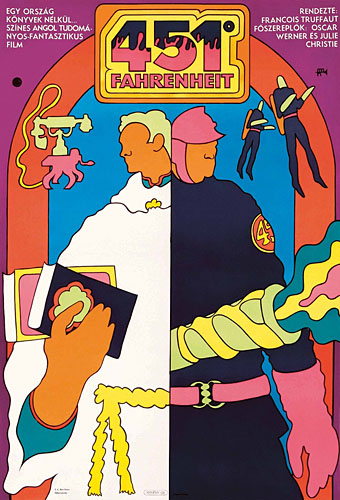
kemeny.jpg

Fahrenheit 451 (1966) poster by György Kemény.

• “The novel is constantly assailed by people wanting to conscript it to their own ends. (Other art forms are not similarly burdened; someone yelling ‘What about global warming?’ between numbers at a Keith Jarrett concert would be recognized to have made a category error.)” Jonathan Clarke on the demands that literature should nurture empathy.

• The first three features by Alejandro Jodorowsky—Fando y Lis (1968), El Topo (1970) and The Holy Mountain (1973)—return to Britain’s cinema screens in January (well…two of them return; I’m not sure that Fando y Lis has ever been shown in cinemas over here). All three films will be given overdue blu-ray releases by Arrow in March.

• “What distinguishes Oulipo from other language games, is that its methods have to be capable of producing valid literary results.” Tony White reviews The Penguin Book of Oulipo: Queneau, Perec, Calvino and the Adventure of Form, edited by Philip Terry.

But from a present-day perspective, it is also remarkable the extent to which cafés, busy conduits for knowledge and sentiment, resembled later digitally connected systems. The larger establishments offered not just a huge selection of newspapers, domestic and foreign, but also reference material—maps, dictionaries, encyclopaedias, language lexicons, address books—for writers struggling with their research, or merely trying to settle an argument. The combination of hard facts and caffeinated opinion firing through the steamy analogue ether constituted a local area network of extraordinary reach. In the pre-digital era, the Viennese café offered the greatest possible concentration of current knowledge—for the price of a mélange.

From the Strange Flowers guide to Vienna, part 2

• “People like Edmund Wilson and Isaiah Berlin, they have to love Zhivago to prove that good writing can come out of Soviet Russia. They ignore that it is really a bad book.” Jennifer Wilson on Vladimir Nabokov’s fighting spirit.

• Master animator Richard Williams died in August so here again is the exceptional adaptation of A Christmas Carol made by his studio in 1971.

• Hearing a person: Annea Lockwood remembers her partner, composer Ruth Anderson, whose death was announced last week.

• The London Review of Books has relaunched its website. The paywall is currently down until mid-January so dig in.

Live In Paris by Pharoah Sanders, a previously unreleased ORTF concert recording from 1975.

• Unrising sun: Amos Chapple’s photographs of the polar nights of Murmansk.

Mary McNamara on the rescuing of 200 historic Hollywood backdrops.

• Mix of the week: XLR8R Podcast 623 by Aida.

• At Dennis Cooper’s: Sandy Dennis Day.

The Desert Is A Circle (1970) by Shades Of Joy | The Desert Is A Circle (1971) by Paul Horn | Holy Mountain (1994) by Axiom Ambient
Weekend links 493

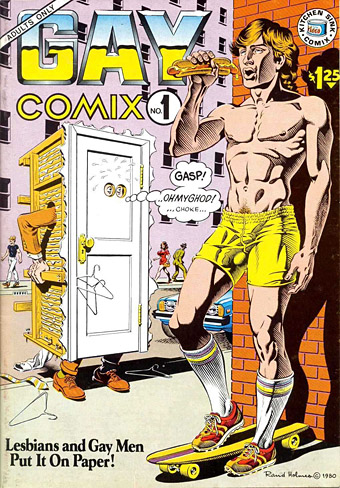
gaycomix.jpg

Art by Rand Holmes for Gay Comix No. 1, September 1980.

• In the universe next door, Los Angeles in November, 2019 looks like the drawings in the Blade Runner Sketchbook (1982). The book has been out of print for many years but available online for a while, although seldom in a downloadable form. A recent upload at the Internet Archive remedies this. In addition to the familiar Syd Mead designs for flying cars and street furniture there are some Moebius-like doodles by Ridley Scott, and Mead’s design for Tyrell’s cryogenic crypt, a detail that would have formed part of an unfilmed sub-plot.

• RIP Howard Cruse, comic artist and pioneering editor of the first few issues of Gay Comix in the 1980s. Cruse produced work outside the gay sphere (I first encountered his strips in Heavy Metal) but the stories that he and other artists created for Gay Comix (later Gay Comics) were some of the first by lesbians and gay men chronicling their own lives, as opposed to porn fantasies or the more recent trend of bolting a token sexuality to a superhero. John Seven talked to Cruse about his career in 2007.

• “On the eve of the First World War Stefan George had started recruiting his own twink army…” Well, if you really must have an army… Strange Flowers presents part one of a guide to the city of Vienna.

In Wild Air, 2016–2018: all 72 of Heath Killen’s requests for a list of six interesting things from artists, writers, scientists, ecologists, musicians, historians and others. My answers are at number 55.

• “Satan is a friend of mine”: Sander Bink on a forgotten occult novel, Goetia (1893) by Frits Lapidoth.

• Picturing a voice: Rob Mullender-Ross on Margaret Watts-Hughes and the Eidophone.

• “They broke the rules”: Killian Fox on the film posters of the French New Wave.

• At Dennis Cooper’s: Jan Švankmajer Day.

Ogi No Mato (1976) by Ensemble Nipponia | Rêve (1979) by Vangelis | Blade Runner Esper “Retirement” Edition, Part III (1982)

Weekend links 492

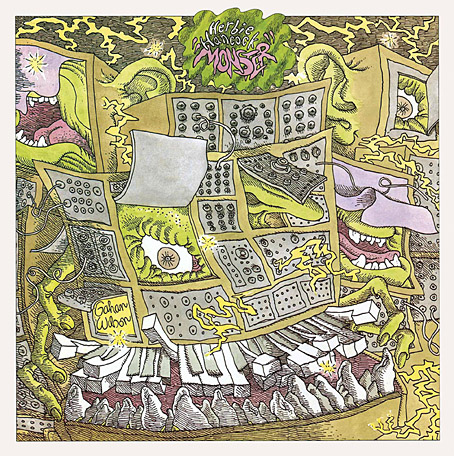
wilson

Cover art by Gahan Wilson for Monster (1980) by Herbie Hancock.

• RIP Gahan Wilson, a great cartoonist with a flair for horror, the macabre and grotesque. Many of his best cartoons are buried in back issues of The New Yorker, Playboy and National Lampoon but book collections of his work are worth seeking out. He also wrote regularly, and for several years was a film reviewer and columnist for The Twilight Zone Magazine, back issues of which may be found at the Internet Archive. Related: Gahan Wilson and the Comedy of the Weird, an interview with Wilson by Richard Gehr; The Beautifully Macabre Cartoons of Gahan Wilson by Michael Maslin.

• The Unanswered Question: Irmin Schmidt, the last surviving member of Can, interviewed by Duncan Seaman. The conversation is mostly about his solo work but he also mentions plans to release a collection of live Can recordings next year.

Valerie and Her Week of Wonders (1970), the Surrealist fable directed by Jaromil Jires, receives a welcome region-free blu-ray release by Second Run in January.

At its best, the true psychedelic experience is an analogue of psychotherapy: you are encouraged to lean in to something potentially rupturing or even disturbing, in an attempt to achieve deep personal resolution rather than simply mind-scrambling hedonism or entertainment (which, to be fair, the group can provide as well). […] Despite clear and longstanding links with the extreme worlds of black metal, power electronics, industrial, sludge metal and doom, Sunn O))) have created a space that now stands beyond any obvious scene signifiers. This zone of pure affect—and what they hope will be a healing experience—is welcome to all.

John Doran on the vibrational power of Sunn O)))

Neuland is an electronic collaboration by two ex-members of Tangerine Dream, Peter Baumann and Paul Haslinger.

• Flying teapots and electric Camembert: the story of Gong, prog’s trippiest band by Simon Reynolds.

• Conversations with Ursula: Clive Hicks-Jenkins answers some questions about his art.

• Mix of the week: Test Transmission Archive Reel 38 by Keith Seatman.

• Limitation of Life: Tim Pelan on John Frankenheimer’s Seconds.

Anthony Madrid on the most famous coin in Borges.

• At Dennis Cooper’s: Jacques Tati Day.

Dutch Graphic Roots

The Magic Yard (1970) by Lubos Fiser | Valerie (2003) by Broadcast | Introduction (2007) by The Valerie Project

Weekend links 491

beatty.jpg

The Weirdness is Coming, an illustration by Robert Beatty for an NYMag feature about the near future.

• I’m slightly late to this news, but better late than never: The Doll’s Breath is a 22-minute animated film by the Brothers Quay, shot on 35mm film and with a soundtrack by Michèle Bokanowski. It may take a while before it’s available to view outside the festival circuit but it’s good to know it’s in the world. Related: Filip Lech on the Polish inspirations of the Brothers Quay.

• More from Swan River Press: Joseph Sheridan Le Fanu’s disturbing horror tale, Green Tea, is published in a 150th anniversary edition, with an introduction by Matthew Holness, two essays and a CD containing a theatrical adaptation of the story by the Wireless Mystery Theatre.

• Luca Guadagnino, Olivia Laing and Sandy Powell, Tilda Swinton and John Waters choose favourite pieces of writing by Derek Jarman. Related: Protest!, a Jarman exhibition at the Irish Museum of Modern Art.

Fairport [Convention]’s revolutionary impact came in doing precisely the opposite of what the folklorists had intended when they began collecting the songs. By taking the old songs and setting them down on paper, they had largely believed they were preserving them in the form in which they must remain, ignoring the fact that songs passed through generations orally will always evolve. Fairport, though, played extremely fast and loose with the source material, matching tunes from one source with lyrics from another. As Rob Young put it in his book Electric Eden: “It threw into question the spurious ‘authenticity’ of the folk versions studiously set in stone by the Victorian and Edwardian collectors. Fairport’s electrifying act preserved and restored the guts and spontaneous vigour to the folk continuum.”

Michael Hann on the 50th anniversary of Fairport Convention’s Liege & Leaf

• More Patrick Cowley: PC’s megamix of Hills Of Kat Mandu by Tantra. And the mix of the week: a Patrick Cowley tribute from 1981 by DJ Jim Hopkins.

• The seventh edition of Wyrd Daze—”The multimedia zine of speculative fiction + extra-ordinary music, art & writing”—is out now.

5 Mishaps: A 32-page hardbound handmade book of short stories by Tamas Dobozy, with collage illustrations by Allan Kausch.

• At Dangerous Minds: Lovely Bones: The transfixing skeletons and dreamlike nudes of Belgian painter Paul Delvaux.

• From 1979: a very early TV appearance by Virgin Prunes (their first?) on Ireland’s The Late Late Show.

• Fists of fear: Anne Billson on 10 films featuring severed (and frequently vengeful) hands.

Adrian Curry at MUBI selects his favourite film posters of the 2010s.

Tea For Two (1956) by Duke Ellington | Tea For One (1976) by Led Zeppelin | Tea In The Sahara (2001) by Simon Shaheen & Qantara

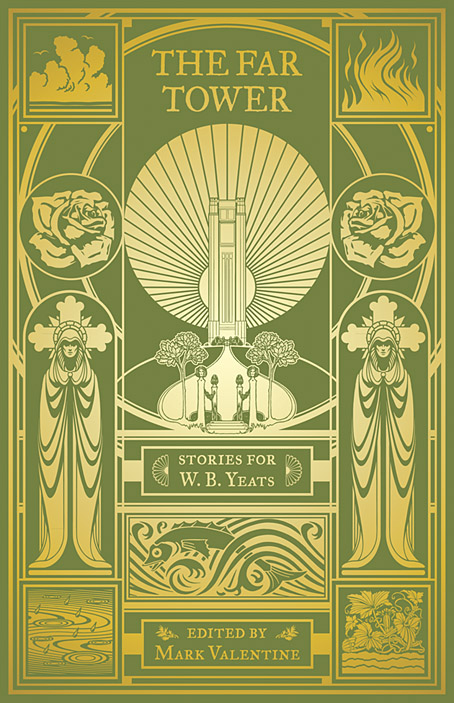
The Far Tower: Stories for WB Yeats

tower.jpg

I said a couple of weeks ago that I had more cover designs waiting to be revealed, and this was one of them, arriving two years to the week after my earlier cover for The Scarlet Soul: Stories of Dorian Gray. Both books are collections of original fiction edited by Mark Valentine for Swan River Press, and both offer variations on works by Irish authors prominent during the 1890s:

“All Art that is not mere story-telling,
or mere portraiture, is symbolic…” — WB Yeats

Stories of magic and myth, folklore and fairy traditions, the occult and the outré, inspired by the rich mystical world of Ireland’s greatest poet, WB Yeats. We invited ten contemporary writers to celebrate Yeats’s contributions to the history of the fantastic and supernatural in literature, drawing on his work for their own new and original tales. Each has chosen a phrase from his poems, plays, stories, or essays to herald their own explorations in the esoteric. Alongside their own powerful qualities, the pieces here testify to the continuing resonance of Yeats’s vision in our own time, that deep understanding of the meshing of two worlds and the talismans of old magic.

Yeats had a career that extended beyond the fin de siècle, of course, and the title of The Far Tower alludes to The Tower, a collection of poems that Yeats published in 1928. (The first poem in the book, Sailing to Byzantium, is the origin of the phrase/title “no country for old men”.) Yeats’s poetry is very different to the Modernists, however, and remained infused with mystical resonances, something I tried to reflect in the cover design. In addition to the very Yeatsian symbol of the rose there are symbols for the four elements, and a pair of robed figures who can be taken as adepts of one sort or another, either the Golden Dawn (who Yeats was involved with for a time) or the various Theosophists and Rosicrucians of the period who fed his imagination.

The green-and-gold colour scheme matches the gold on green design that Thomas Sturge Moore created for the first edition of The Tower. Sturge Moore produced covers for a number of Yeats’s books but it was his splendid design for Axel by Auguste Villiers de L’Isle-Adam that gave me the nested circles and vertical division of the board. That edition happens to have a preface by Yeats so as an influence it isn’t too remote.

The Far Tower will be published in December but is available for pre-order now.

Previously on { feuilleton }
The Scarlet Soul: Stories for Dorian Gray
Form and Austin Osman Spare
Golden apples and silver apples
A Book of Images by WT Horton
The Savoy magazine