Weekend links 571

valck.jpg

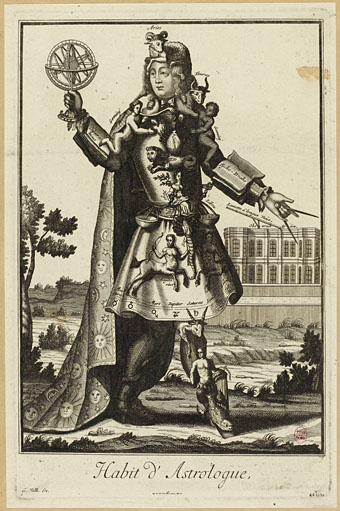
Habit d’Astrologue (c. 1700) by Gerard Valck.

• “The Appointed Cloud begins with the high-pitched, keening sound of many bagpipes noisily playing at once—and then the music slowly coalesces, approaching a peaceful, tranquil hum. This gives way to fast-paced repetitive pulses, reminiscent of the minimalist works of composers such as Terry Riley and Philip Glass. Then the bagpipes join in once more, in a ferocious swarm of energy.” Geeta Dayal on the music of Yoshi Wada.

• “How can we conceive of the time of climate change, the time of planetary death? The House on the Borderland tried to conceive of exactly this a century ago. Yes, the narrator’s acts are fruitless. He gets haplessly carted about the universe to witness the end of time, which never really ends, is always at the edge, nearing an asymptote, on the borderland.” Namwali Serpell journeys through space and time with William Hope Hodgson.

• The Bureau of Lost Culture: DJ Food hosts a podcast discussion with Tony Bennett, founder and publisher of Knockabout Comics.

• Mixes of the week: Isolated Mix 111 (plus interview) by Ian Boddy, and a Wire mix (plus interview) by Teresa Winter.

• Fantastic visions and unknown worlds: Edwin Pouncey on Van Der Graaf Generator’s sleeve art.

• At Spoon & Tamago: Sculptor Kenichi Nakaya reconfigures ubiquitous Japanese rural crafts.

• My Bloody Valentine’s Kevin Shields: “We wanted to sound like a band killing their songs.”

• At Wormwoodiana: More earth mysteries are explored in Northern Earth magazine.

• New music: Black Horses Of The Sun by Dave Bessell.

• The Exotica Project: One Hundred Dreamland 45s

• At Dennis Cooper’s: Hans Richter Day.

• Mdou Moctar‘s favourite music.

• Earth Floor (1985) by Michael Brook | Earth Tribe (1993) by Transglobal Underground | Earth Lights (2012) by Belbury Poly
The art of Mike Hinge, 1931–2003

hinge06.jpg

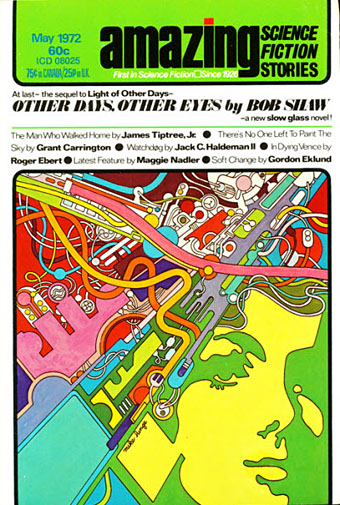
Amazing Science Fiction, May 1972.

Back in March I ended my post on the psychedelia-derived art style that I think of as “the groovy look” with the words “there’s a lot more to be found.” There is indeed, and I’d neglected to include anything in the post by Mike Hinge, a New Zealand-born illustrator whose covers for American SF magazines in the 1970s brought a splash of vivid colour to the groove-deprived world of science fiction. This was a rather belated development for staid titles like Amazing and Analog whose covers in the previous decade wouldn’t have looked out of place in the Gernsback era. Opening the door to someone like Mike Hinge, a graphic designer as well as a general illustrator, was probably a result of both magazines having undergone recent changes of editorship. Hinge approached SF art in the same way that Jim Steranko approached comic-book art in the late 1960s, importing trends that had been flourishing outside the medium. (And Steranko liked Hinge’s art enough to publish a portfolio of black-and-white drawings, The Mike Hinge Experience, in 1973.) This kind of graphic style was increasingly outmoded by the mid-70s but some of Hinge’s compositions are audacious in context: the Algol cover with one of his robots seen in a water reflection (and those ripples that defy perspective), the Analog cover that works both vertically and horizontally.

For this post I’ve favoured Hinge’s groovy look over other covers, especially those from the late 70s when his cover art shifted to a painted style which is less distinctive, and less interesting as a result. It’s the distinctive style that people still prefer today. There’s more to be seen at Tenth Letter of the Alphabet and Onyx Cube.

hinge21.jpg

Undated drawing (probably mid-60s).

Something else you can always find more of is Aubrey Beardsley borrowings. Via Tenth Letter of the Alphabet which has a couple more pieces in this style.

hinge19.jpg

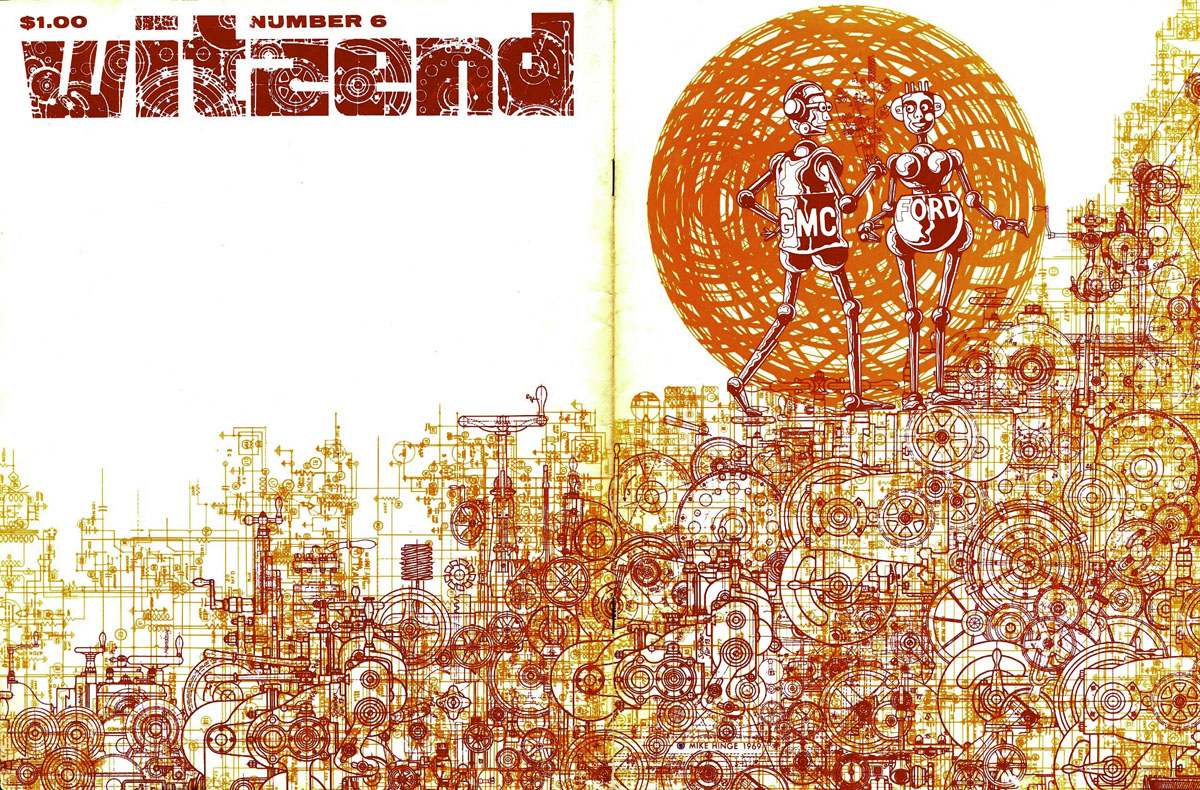
Wraparound cover for Witzend #6, Spring 1969.

Witzend was a magazine of comics, fantasy stories and related art published by Wallace Wood, a complete run of which may be found here.

hinge01.jpg

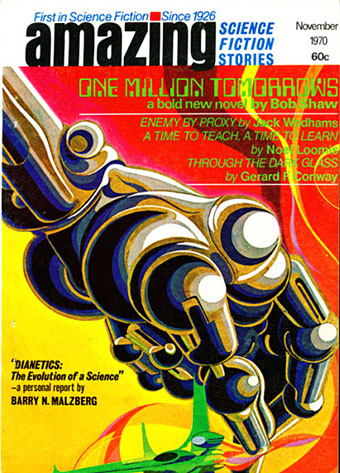
Amazing Science Fiction, November 1970.

hinge02.jpg

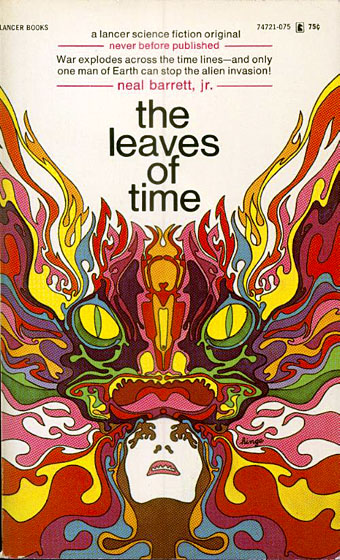
The Leaves of Time (1971).

Continue reading “The art of Mike Hinge, 1931–2003”

Weekend links 570

griffin.jpg

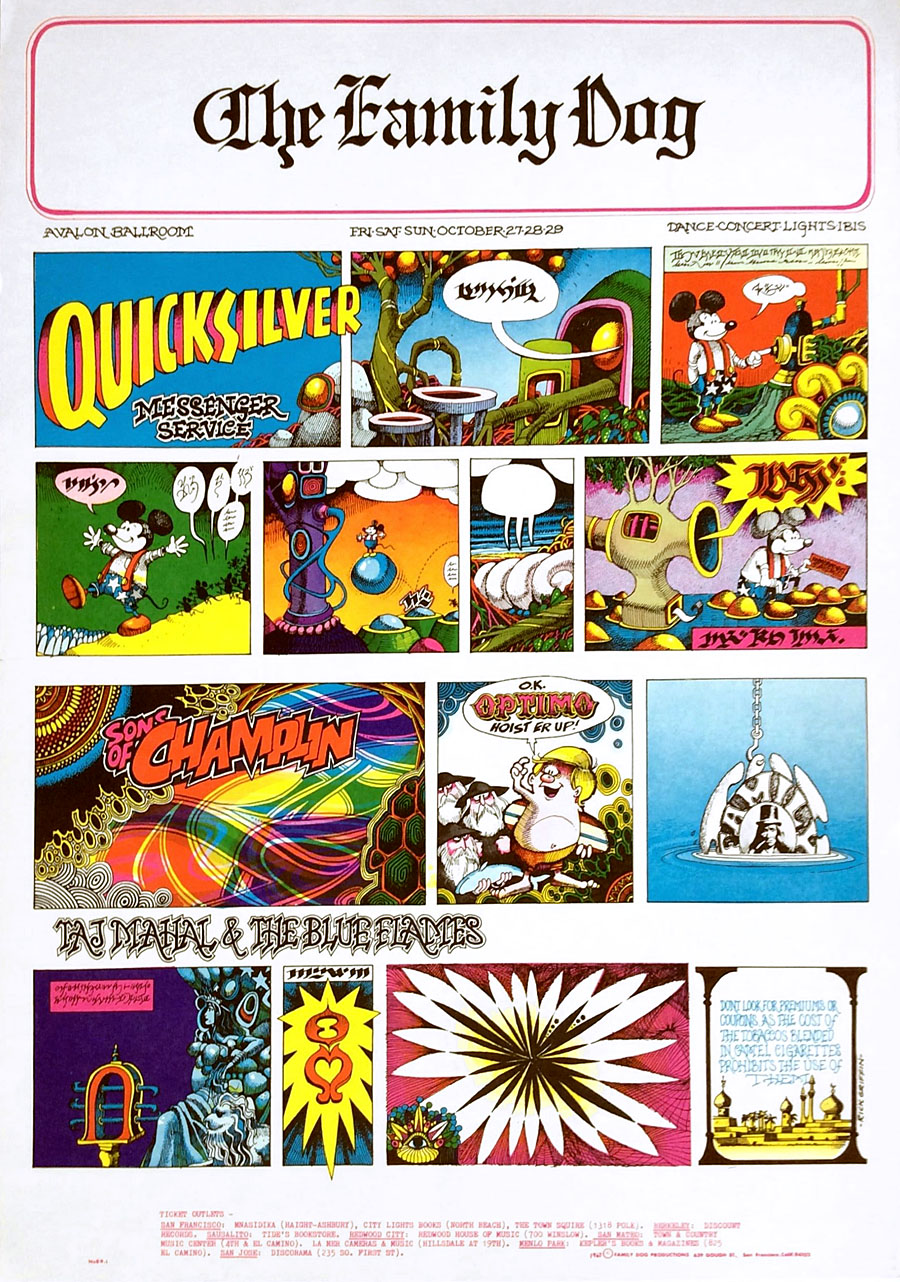
Rick Griffin’s comic-style poster for The Quicksilver Messenger Service at the Avalon Ballroom, October 1967.

• “Like ‘perversion,’ the word ‘script’ has a special meaning for Escoffier, who devotes most of the book’s attention to films featuring sex between men, and treats pornography as a vast screen on which all of our fantasies are projected.” Steve Susoyev reviews Sex, Society, and the Making of Pornography by Jeffrey Escoffier.

• “The themes reflect Griffin’s core obsessions: sex, death, Christ, flesh, liquids, goofy japes, and lysergic gnosis. Man from Utopia is an opus, one that Griffin felt strongly enough about to eschew the usual pulp, printing the cover on good full-color card stock.” Erik Davis on Rick Griffin and a comic book like no other.

• Strange Things Among Us, a summer exhibition at The College of Psychic Studies, London, will include among its exhibits a room of art by Austin Osman Spare.

She delighted in the fact that after The Sadeian Woman, she ended up on the mailing lists of both pro- and antiporn groups, though no one (alas) ever sent her any actual porn. She aligns more naturally in retrospect with Madonna—potent, fiercely individualistic, disruptive, and self-invented. Carter’s evolved philosophical position on gender was a variation on Stoicism. Gender roles were “behavioural modes,” a construct (“Baby is hermaphrodite!”), and there was weakness in allowing oneself to be beholden to (let alone enslaved by) a construct. Above all, women should have total sexual agency and also their own money. “I became a feminist,” she wrote in a postcard to Susannah Clapp, “when I realised I could have been having all this instead of being married.”

Minna Zallman Proctor on the life and work of raucous fabulist Angela Carter

• New music: Chapter 4 by the Moritz Von Oswald Trio with Heinrich Köbberling & Laurel Halo, and Synth Vehicles For Guitar by Michael C. Sharp.

• DJ Food searched the back issues of International Times to find a handful of adverts for London’s legendary UFO Club.

• At Wormwoodiana: Mark Valentine explores Hy Brasil, a novel by Margaret Elphinstone.

• Remembering Tom of Finland through stories of those who knew him.

• What I’m Aiming For: Peggy Seeger’s favourite music.

• At Dennis Cooper’s: The Light Show (1965–1971).

• Mix of the week: Haze by The Ephemeral Man.

• A Strange Light From The East (1967) by Tuesday’s Children | Strange Things Are Happening (1968) by Rings & Things | Strange Walking Man (1969) by Mandrake Paddle Steamer

Fire works

votf.jpg

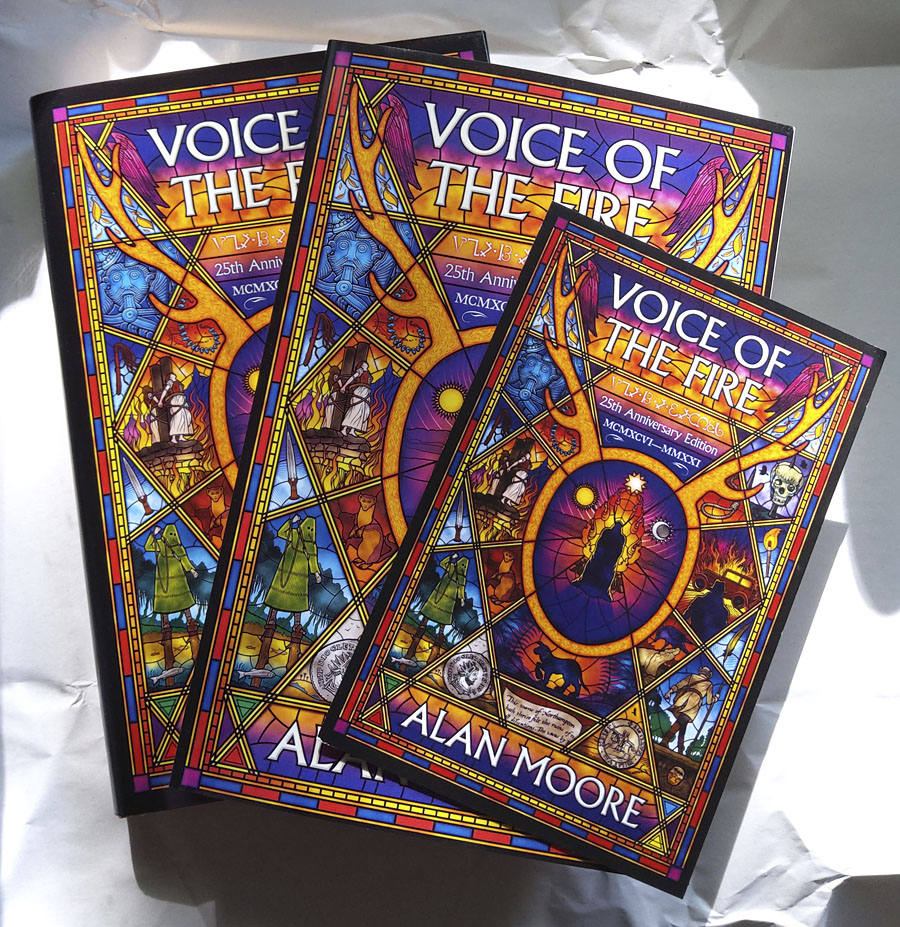
Glowing in the intermittent spring sunshine, the new hardback, paperback and bonus postcard of Alan Moore’s Voice of the Fire from Knockabout. The postcard is signed by the author, and only available with the hardbacks which are a limited run of 300 copies. Top Shelf will be publishing the book in the US (and also using my cover art) but I don’t know whether they’ll be following suit with signed cards. Anyone wanting more information about both editions is advised to check the publishers’ websites.

Previously on { feuilleton }
• Voice of the Fire by Alan Moore

Switched-On… hits and misses

so01.jpg

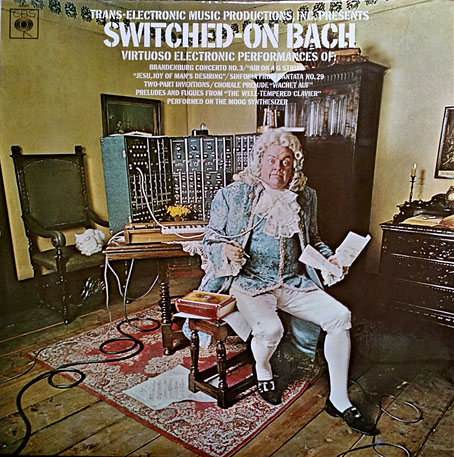
The first pressing of Switched-On Bach with a cover showing a Bach-alike confounded/dismayed by the sounds issuing from the machine behind him. The cover was soon swapped for the one below.

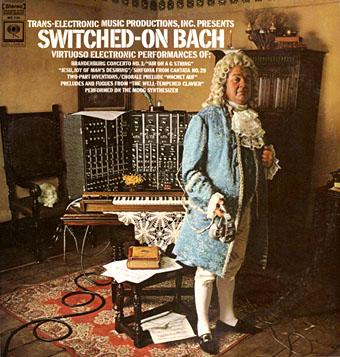
After mentioning the proliferation of Switched-On… synthesizer albums in the previous post, curiosity impelled me to see how many of these things were out there. A lot more than I expected is the answer, almost enough to make this cul-de-sac of novelty exploitation into a sub-genre of its own. As mentioned earlier, it was the huge success of Switched-On Bach (1968) by Wendy Carlos that began the trend. The album had a rare crossover appeal so that it could be sold to classical listeners as well as to a younger audience interested in electronic sounds, those for whom the words “switched on” echoed the druggy/erotic intersection of “turned on”. Carlos had an advantage over other musicians thanks to a long association with Robert Moog which meant she had a head start in exploring the recording potential of the new Moog synthesizer and innovations like Moog’s touch-sensitive keyboard. In 1968 few people could afford a Moog system; those who could usually needed to hire technicians like Paul Beaver and Bernie Krause to help them operate the thing. For a brief while it was enough to simply use the instrument to make strange noises, hence Mick Jagger’s droning score for Kenneth Anger’s Invocation of my Demon Brother (1969), and George Harrison’s preposterous Electronic Sound (1969), 44 minutes of very amateurish Moog-doodling. Switched-On Bach sounds a little primitive today—it sounds primitive next to its follow-up albums, The Well-Tempered Synthesizer (1969) and Switched-On Bach II (1973)—but Carlos and collaborators Rachel Elkind and Benjamin Folkman spent much more time refining their recording techniques than the knob-twiddling horde who rushed to capitalise on their success.

so02.jpg

The rules of the Switched-On… idiom are as follows: a title that begins with the words “Switched-On”, obviously, although there’s a subset of the form in which an album may have a different title while a subtitle mentions something about “switched-on recordings”; the music must be cover versions of familiar songs or compositions, originality here is surplus to requirements; and it’s not essential but the cover art often alludes in some way to synthesizer technology and/or “the future”, with the latter represented by Space Age typefaces such as Amelia, Computer, Countdown or Data 70. I’ve not heard many of these albums, and I’m fairly certain that I don’t want to hear most of them, but I’ve heard enough Carlos cash-ins to know that the cover designs are often the best thing about them. The remastered CDs that Wendy Carlos released in the 1990s feature additional tracks that give some idea of the amount of work involved in the creation of each album. The early cash-ins, by contrast, tend to avoid time-consuming multi-track composition in favour of using a synthesizer as though it’s merely an expensive keyboard. The success of these albums musically may be gauged by the lack of reissues. They may be of interest to the so-bad-it’s-good “Incredibly Strange Music” crowd but I prefer to spend my time listening to other things. Beware.

so03.jpg

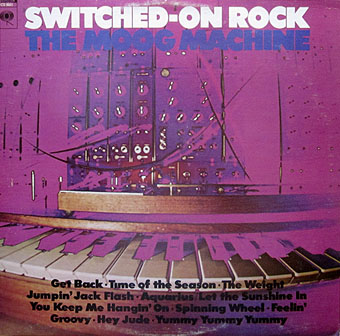
Switched-On Rock (1969) by The Moog Machine.

so04.jpg

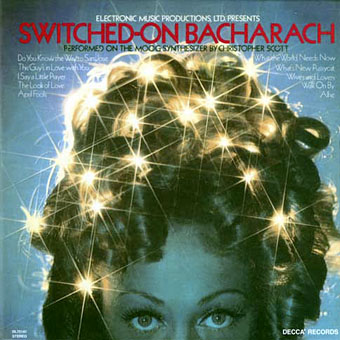
Switched-On Bacharach (1969) by Christopher Scott.

so05.jpg

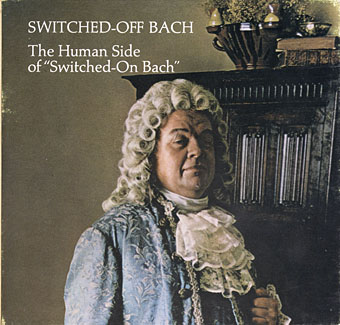
Switched-Off Bach (1969) by Various Artists.

CBS exploits the success of the electronic album by packaging a collection of earlier non-electronic recordings.

Continue reading “Switched-On… hits and misses”