
Weekend links 84

enok.jpg

Regeneration (2011) by Toshiyuki Enoki. Via.

• HIDE/SEEK: Difference and Desire in American Portraiture, the art exhibition that caused such a fuss last year at the Smithsonian Institution, opens at the Brooklyn Museum, NYC, on November 18th. Among the events associated with the show is a screening of James Bidgood’s lusciously erotic Pink Narcissus. David Wojnarowicz’s video piece, A Fire in My Belly, is still a part of the exhibition so the New York Daily News reached for the outrage stick to prod some reaction from people who’d never heard of the artist or his work before. Will history repeat itself? Does the Pope shit in the woods? Watch this space…

Magic is not simply a matter of the occult arts, but a whole way of thinking, of dreaming the impossible. As such it has tremendous force in opening the mind to new realms of achievement: imagination precedes the fact. It used to be associated with wisdom, understanding the powers of nature, and with technical ingenuity that could let men do things they had never dreamed of before. The supreme fiction of this magical thinking is The Arabian Nights, with its flying carpets, hidden treasure and sudden revelations…

Marina Warner, whose new book, Stranger Magic: Charmed States and the Arabian Nights, is reviewed here and here.

• Those Americans who adore big business but loathe the idea of gay marriage will be dizzy with cognitive dissonance at the news that 70 major US companies—including CBS, Google, Microsoft and Starbucks—have signed a statement saying the Defense of Marriage Act (DOMA) is bad for business. Mark Morford at SFGate says this now means that real homophobes don’t Google.

• Divining with shadows and dreams, tears and blood: S. Elizabeth talks to JL Schnabel of BloodMilk about her “supernatural jewels for surrealist darlings“.

• Earth: Inferno (2003), a short film by Mor Navón & Julián Moguillansky based on the book by Austin Osman Spare. Via form is void.
finlay.jpg

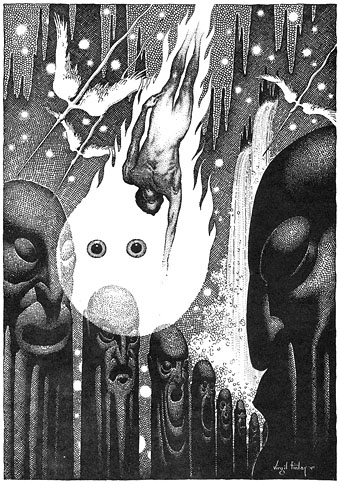
Illustration by Virgil Finlay for A. Merritt’s The Face in the Abyss. From a 1942 Finlay portfolio at Golden Age Comic Book Stories.

• The Mute Synth as created by Dirty Electronics & designed by Adrian Shaughnessy.

• Phil Baker reviews two new Aleister Crowley biographies at the TLS.

• A Brief Rant on the Future of Interaction Design

• The Most Amazing Room In Queens, NYC.

• Brian Eno on composers as gardeners.

• Alan Turing is Alan Garner’s hero.

• Paintings by Guy Denning.

• Static (1998) by Redshift | The Owl Service (2000) by Pram | Lover’s Ghost (2010) by The Owl Service.

Saul Bass album covers

bass1.jpg

Frank Sinatra Conducts Tone Poems Of Color (1956).

The great designer and filmmaker Saul Bass is the subject of renewed attention with the publication this month of Saul Bass: A Life In Film & Design by Jennifer Bass and Pat Kirkham, the first comprehensive examination of the man’s work. A post at AnOther has an extract from Martin Scorsese’s foreword, and also a small selection of designs from the book among which was this tremendous Sinatra album cover that I’d not seen before. The album was a limited edition release in which a number of Sinatra’s composer friends produced pieces of music based on colour-themed poems by Norman Sickel. Sinatra had appeared in Otto Preminger’s The Man With the Golden Arm the year before, the film for which Saul Bass designed a title sequence and a poster that’s probably more visible (and imitated) these days than the film itself. (The arm from the poster is the main graphic on the cover of the new book.) Bass designed the posters, titles and ads for many other Preminger films, more than for any other director. A number of those films had soundtrack albums, of course, as did other films featuring Bass’s work. Usually the poster design was adapted for the album sleeve (something you can see at this Flickr set) but the Sinatra album had me wondering whether there were more albums with Saul Bass covers that aren’t film spin-offs.

bass2.jpg

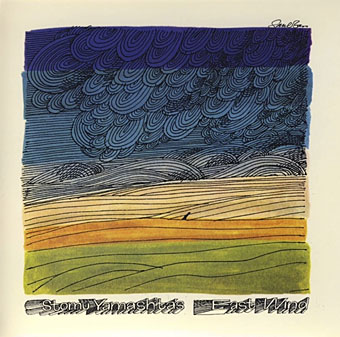
Freedom Is Frightening (1973) by Stomu Yamash’ta’s East Wind.

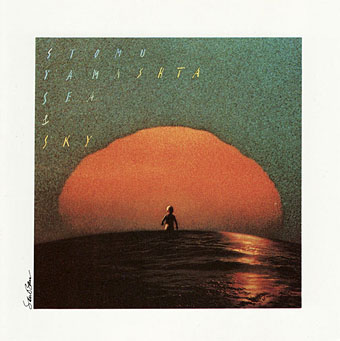
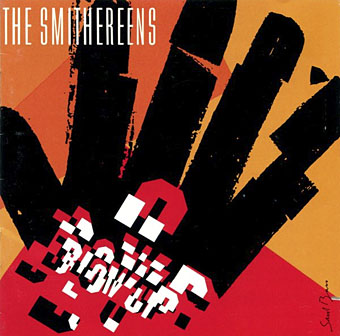
Searching around turned up a few more surprises: two covers a decade apart for Japanese jazz musician Stomu Yamash’ta, and a one-off for The Smithereens who were audacious enough to ask for a cover design in 1991, right at the time when Bass’s work was being noticed again thanks to Martin Scorsese. Outside of the soundtrack albums this seems to be all there is—unless you know better. As for Mr Scorsese, the Telegraph had more of his foreword from the new monograph. And speaking of books, here’s another Bass link: Henri’s Walk to Paris, a children’s picture book that I wish someone had bought me in the 1960s.

bass3.jpg

Sea And Sky (1984) by Stomu Yamash’ta.

bass4.jpg

Blow Up (1991) by The Smithereens.

Elsewhere on { feuilleton }
• The album covers archive

Previously on { feuilleton }
• Pablo Ferro on YouTube

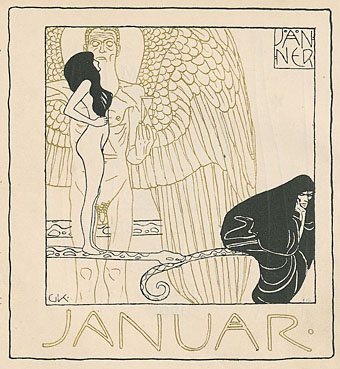
Ver Sacrum, 1901

vs-1901-01.jpg

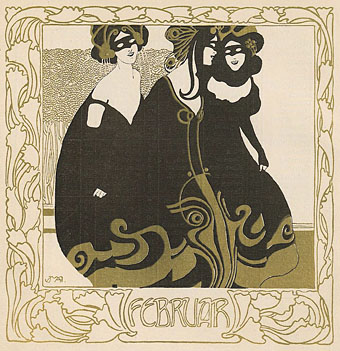
Continuing the series of posts about Ver Sacrum, the art journal of the Viennese Secession. After a somewhat lacklustre collection for 1900 the journal finds its vitality again, the painters of happy Teutonic peasants having been dropped in favour of more remarkable prints and graphics from Vienna’s finest. The contents for this year parallel some of the works being featured in Deutsche Kunst und Dekoration for the same period. Gustav Klimt is given a great deal of attention, beginning with the calendar piece below. There’s also work from the Symbolist sculptor George Minne and a feature on the Glasgow School artists Charles Rennie Mackintosh and Margaret MacDonald. Throughout the year each issue tends to concentrate on a single artist or exhibition. There’s so much good stuff in this year it’s not possible to present more than a small sample. Those interested are encouraged to browse all 432 pages or download the entire volume here.

vs-1901-02.jpg

vs-1901-03.jpg

Continue reading “Ver Sacrum, 1901”

The Crackdown by Cabaret Voltaire

crackdown1.jpg

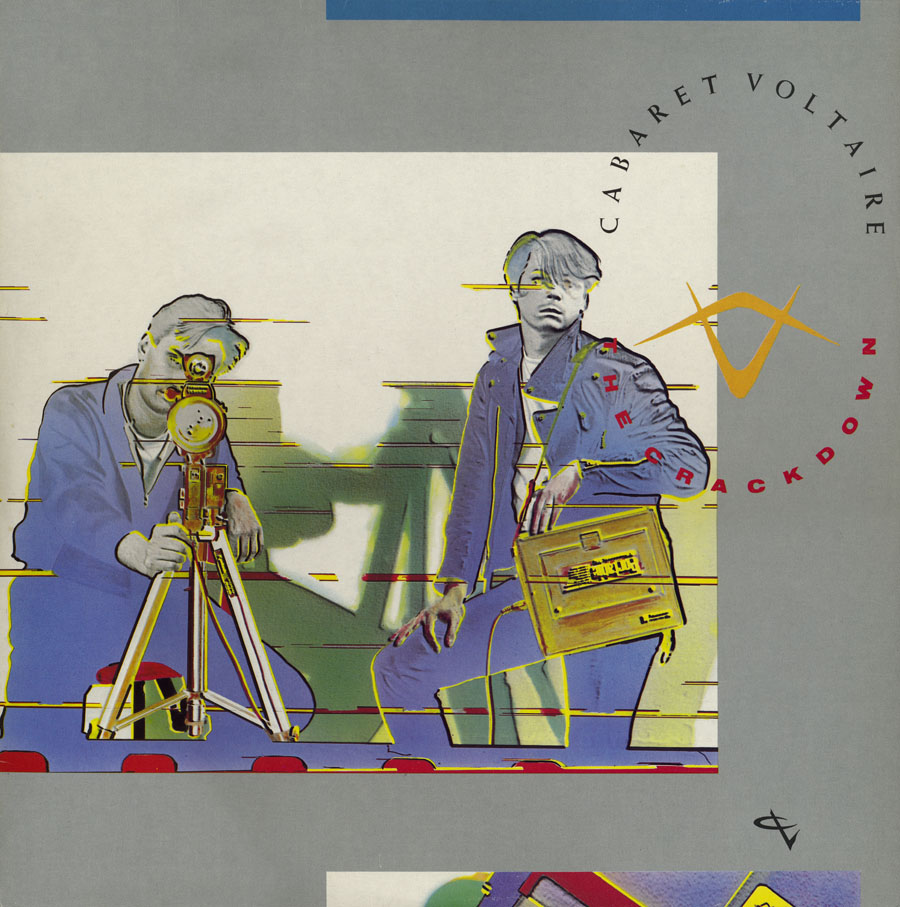
I mentioned yesterday Richard H. Kirk’s announcement that Cabaret Voltaire’s albums on the Virgin label are to be reissued next year by Mute Records. The news gives me a topical excuse to write something about the first album in that series, The Crackdown, which happens to be my favourite of all their releases. Cabaret Voltaire, like 23 Skidoo, benefited a great deal from their association with designer Neville Brody in the early 1980s, and this post mostly concerns Brody’s design for The Crackdown and its accompanying singles. The Crackdown was released in 1983 with the advance from Virgin having allowed them to buy new equipment and add a degree of polish to their recordings which earlier albums had lacked. Brody had been designing their covers for the past two years, and continued to do so for the next few releases before leaving the music business to concentrate on magazine and other design work.

crackdown2.jpg

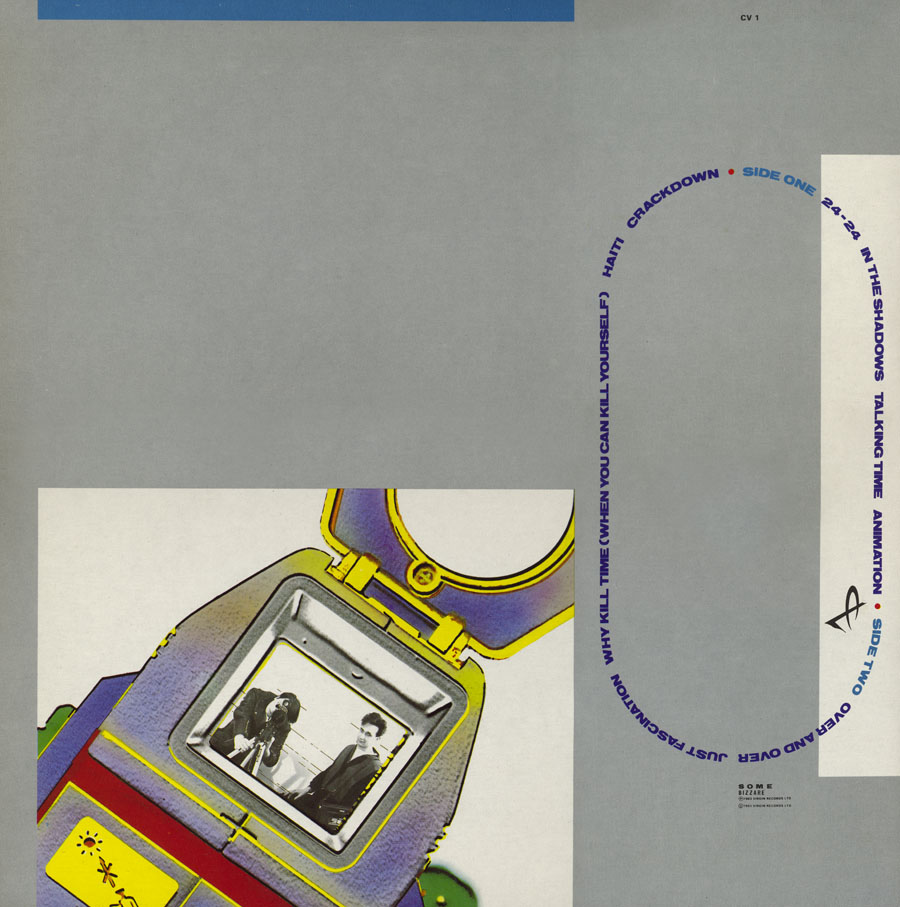
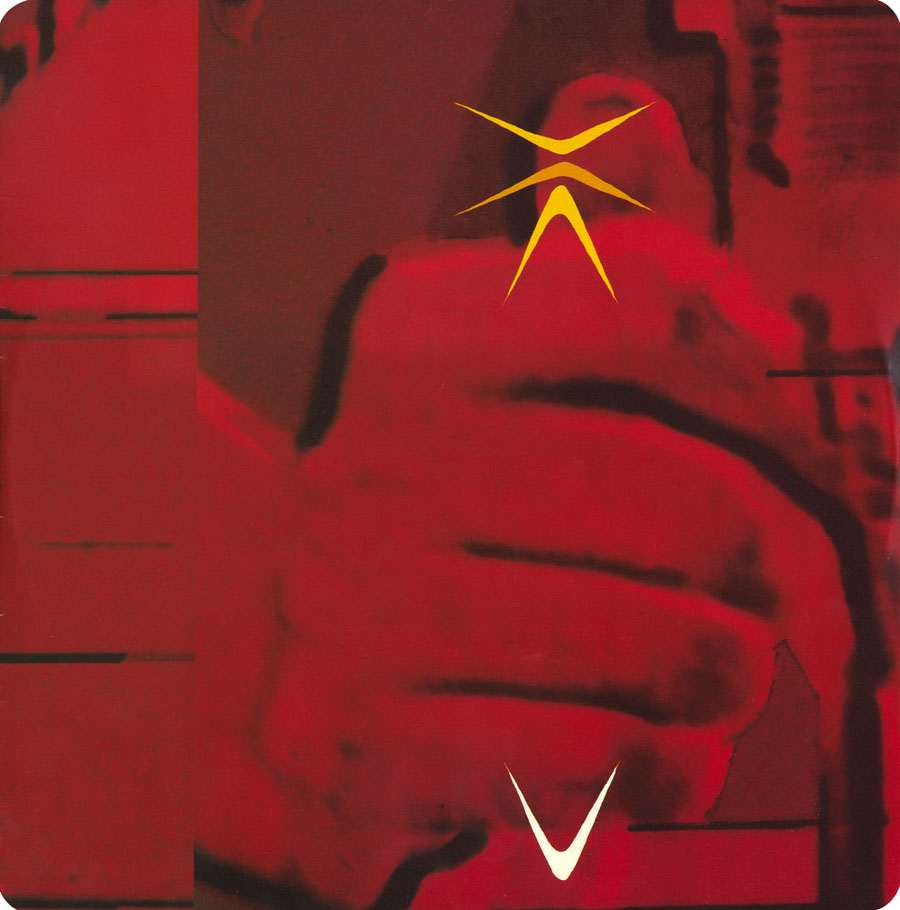
What I liked about this sleeve was the way it gets the most out of the careful arrangement of a few simple elements. The front photo showing Stephen Mallinder and Richard Kirk posing with video equipment (monitoring the viewer) is enlarged and cropped to provide backgrounds elsewhere. The sleeve photos wrap around front and back while the shape made by the titles determines the layout of track titles and credits. (The various CV graphics are credited to Phil Barnes.) The type wasn’t set digitally but was applied by hand using Letraset rub-down lettering which makes me wonder how much planning was required to get the track titles to perfectly fit their intended shape.

crackdown3.jpg

Continue reading “The Crackdown by Cabaret Voltaire”

Weekend links 83

hackett.jpg

In Memory by Caitlin Hackett who describes her astonishing drawings as “contemporary mythology”.

• David Lynch’s solo album, Crazy Clown Time has just been released so The Guardian last Friday let the artist/director/musician edit their G2 supplement. Xan Brooks tried to get Lynch to open up about his inspirations while elsewhere Lynch had a chat with ZZ Top’s Billy Gibbons. Of more interest to me was news that some of the deleted sequences from Blue Velvet have been discovered. I’ve known about these for years from a feature in Video Watchdog magazine but never thought we might get to see them. Related: a mixtape by David Lynch & musical collaborator/engineer ‘Big’ Dean Hurley.

• “Book jackets these days, for reasons I won’t unpack, seem to revel, overtly, in wit, conceptual deviousness, unusual clever or droll juxtapositions – we, as a professional community, seem to have elevated the visual bon mot above all other virtues.” Peter Mendelsund in a great post about certain problems in book design, starting with the very problematic question of what to do with Nabokov’s Lolita. Related: Covering Lolita, a gallery of covers through the ages which run the gamut of bad decisions.

• “For his sins Pinocchio is not only hanged but robbed, kidnapped, stabbed, whipped, starved, jailed, punched in the head, and has his legs burned off.” Nathaniel Rich goes back to Carlo Collodi’s original Pinocchio. Disney it ain’t.

wolpe.jpg

Some of Berthold Wolpe’s Faber cover designs are now available as prints from wire-frame whose Pelham/Ballard prints were mentioned here recently. Related (and worth another visit): Faber 20th century classics at Flickr.

• Technical Vocabularies – Games for May, a small collection of poems by Alan Moore & Steve Moore, is now online with authorial permission. Alan’s Beardsley pastiche on the cover is a bonus.

• Cabaret Voltaire’s Richard H. Kirk says the group’s Virgin albums will be reissued next year by Mute. A new edition of The Crackdown? Yes, please.

• “Homo Riot can only think of six or seven street artists in the world who regularly feature gay themes in their work, and he knows all of them.”

• Rub Out The Words: Letters from William Burroughs and Philip K. Dick on the language virus theory of William Burroughs.

• L’exilé de Capri: the connections between Jacques d’Adelswärd-Fersen and Roger Peyrefitte explored at Strange Flowers.

• Flying cars and monorails: Soviet Russia in the 1960s also had a Gerry Anderson view of the future.

• Are You An Anarchist? The Answer May Surprise You.

• Baby’s On Fire (1973) by Brian Eno | Baby’s On Fire (live, 1974) by Eno & The Winkies | Baby’s On Fire (live, 1976) by 801 | Baby’s On Fire (1998) by The Venus In Furs.