Le Dossier B by Schuiten and Peeters

db01.jpg

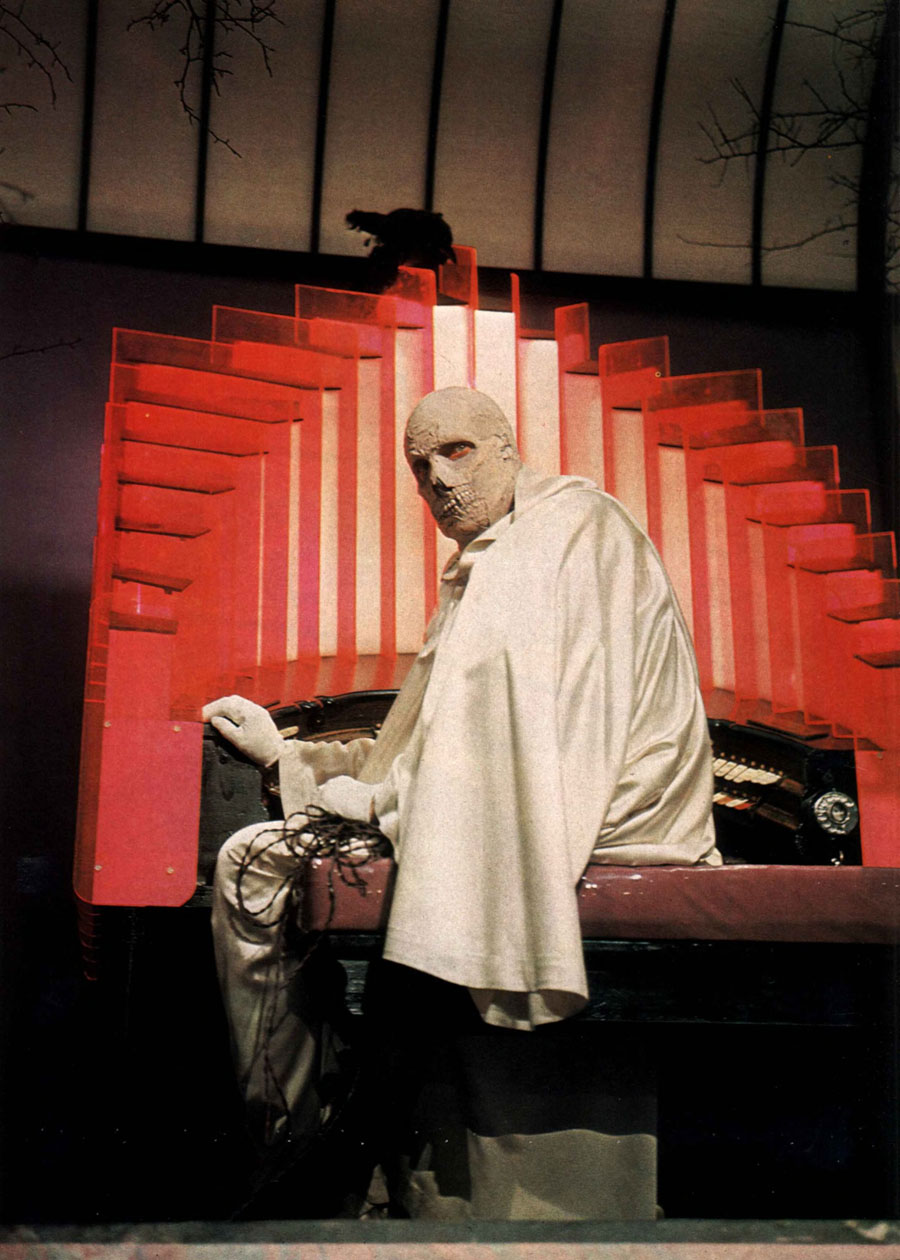
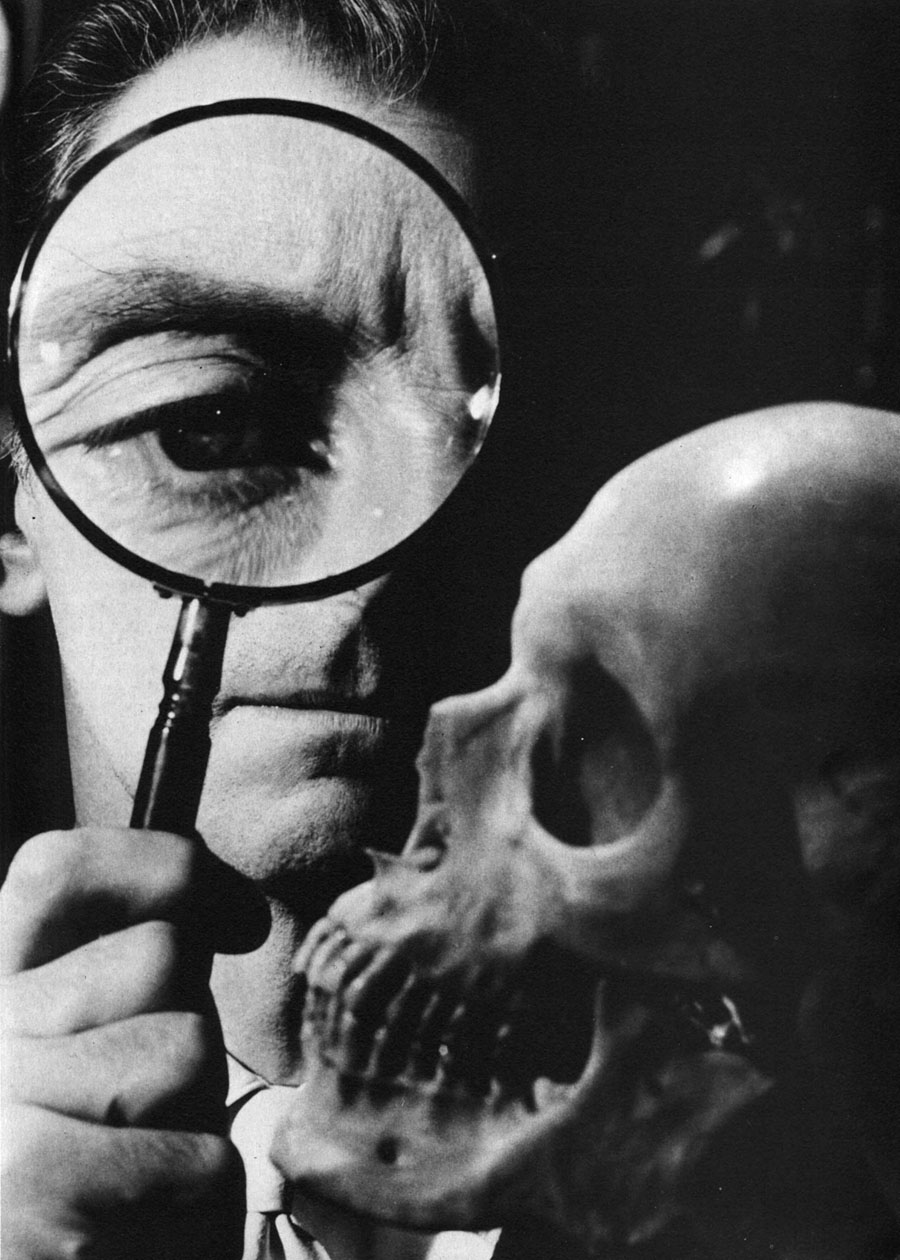
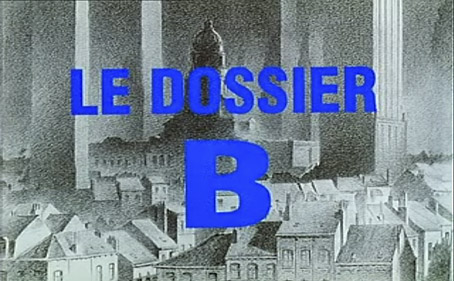
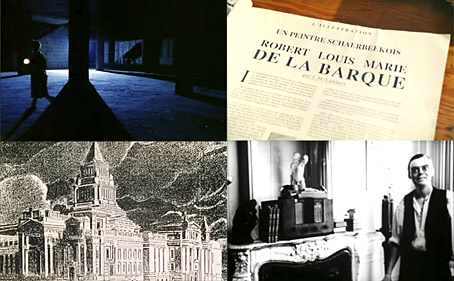
Almost ten years have elapsed since I devoted a week of blog posts to one of my favourite fantastic creations, the Obscure World/Obscure Cities of Belgian artist-and-writer team François Schuiten and Benoît Peeters. Schuiten and Peeters’ mythos is a multi-media project with a series of bande desinée albums as its core, a cycle of stories which introduce the reader to some of the cities in the Obscure World (a “counter-Earth” on the opposite side of our Sun), and which are connected by recurrent characters and motifs. Since the completion of the core series, Schuiten, with occasional help from Peeters, has expanded the mythos to encompass other books that flesh out some of the world’s invented history and its connections to our own world, together with other manifestations such as art exhibitions and music releases. Le Dossier B (1995) is a peripheral Obscure World production, a 54-minute TV documentary which entangles the genuine history of 20th-century Brussels with an invented secret society who believe in the existence of a twin city, Bruzel, that intersects with the Belgian capital.
db02.jpg

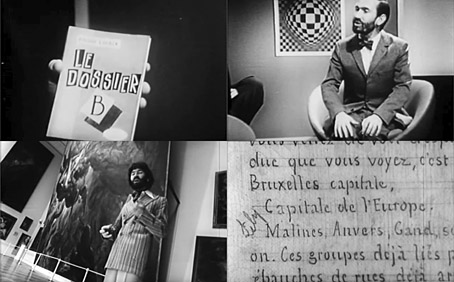
Le Dossier B was directed by Wilbur Leguebe from a script by Leguebe with Schuiten and Peeters. Valérie Lemaître plays the on-camera investigator, “Claire Devillers”, while artist and writer appear in roles that match their personalities. Schuiten is seen in silent footage as “Robert de la Barque”, an artist whose obsession with Brussels’ vast Palace of Justice provides clues to the Bruzel mystery via the eccentricities of its architect, Joseph Poelaert. Peeters appears later in the investigation as “Pierre Lidiaux” the author in 1960 of Le Dossier B (a book which has since vanished), his own study of the connections between Brussels and Bruzel. We first see Lidiaux being interviwed on a TV arts show, then later as the presenter of his own eccentric and unfinished film about Antoine Wiertz, the real-life Belgian painter of vast canvasses on morbid subjects whose museum Lidiaux explores. Aside from the well-realised historical fakery, one of the pleasures of Leguebe’s witty and imaginative documentary is the spotlight it throws on the history and culture of Brussels and Belgium. I hadn’t realised, for example, that the Wiertz Museum is so close to the European Parliament building which was still under construction when the film was being made. Elsewhere there are references to Magritte, Delvaux and Art Nouveau architect Victor Horta, and we catch a glimpse of work by another great Belgian painter, Jean Delville.
db03.jpg

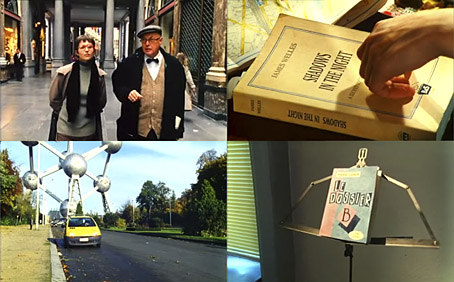
The last third of the film is based around the researches of one James Welles (Adrian Brine), a British historian whose book-length study, Shadows in the Night: A Secret Society in Belgium, explores the connections of yet more historical figures with the Bruzel mystery, including the aforementioned Horta and chemist Ernest Solvay. The historian’s surname may be taken as a deliberate choice: Orson Welles was the director of another documentary mixing fact and fiction, F for Fake, while Welles’ appearance as Falstaff in Chimes at Midnight provided Schuiten with the model for the central character in La Tour, one of the albums in Schuiten and Peeters’ Obscure Cities series.
db04.jpg

Some of this territory is explored in another of the Obscure Cities albums, Brüsel, especially the building of the Palace of Justice and the concept of “Brusselisation”, a pejorative French term for the rapid demolition of historical quarters of a city to make way for new construction. Where Brüsel has the freedom of the comics medium to refashion the capital in a fantastic manner, Le Dossier B uses the material of our world to suggest another city (possibly the one depicted in the album) whose existence we never see. Apart, that is, for the suggestion near the end of the film that the Bruzel of the secret society is the Brussels of today, a city which has overwritten the Brussels of a century ago, just as the invented encyclopedia in Borges’s Tlön, Uqbar, Orbis Tertius gradually changes the world at large to match its contents.

Le Dossier B is available on DVD but seems to be sold out for now. Alternatively, it may be watched at YouTube in an unsubtitled copy that’s been uploaded in the wrong aspect ratio. The really determined may wish to do what I did: download the video, grab some English subtitles, then watch it in VLC with the aspect ratio set to 16:10. A lot of messing around but it works.

(My thanks to Brussels resident Anne Billson for the YT link!)

Previously on { feuilleton }
Urbatecture
Echoes of the Cities
Further tales from the Obscure World
Brüsel by Schuiten & Peeters
La route d’Armilia by Schuiten & Peeters
La Tour by Schuiten & Peeters
La fièvre d’Urbicande by Schuiten & Peeters
Les Murailles de Samaris by Schuiten & Peeters
The art of François Schuiten
Taxandria, or Raoul Servais meets Paul Delvaux
Weekend links 459

akira.jpg

• “Their graves were covered with cement tiles to block the radiation emanating from their corpses.” Sophie Pinkham reviews three books about the Chernobyl nuclear disaster.

• At Dangerous Minds: Julius Eastman: The resurrection of the visionary minimalist composer continues; at The Quietus: The Strange World of Julius Eastman.

• Mixes of the week: a Dune-inspired Secret Thirteen Mix 286 by Coeden, and ’94–95 Mirrorverse by The Ephemeral Man.

Nabokov had meanwhile acquired a literary agent in New York. She made no headway placing translations of his Russian novels. His latest, she informed him, was “dazzlingly brilliant” and hence wholly without promise for the American market. She suggested something more topical, an idea that left her client hyperventilating. “Nothing,” he would roar later, “bores me more than political novels and the literature of social unrest.” He was, he enlightened his representative, neither Sinclair Lewis nor Upton Sinclair. (Ultimately he tossed the two over the cliff together, as “Upton Lewis.”) Weeks later, in the bathroom of a Paris studio apartment, he began — “a champion figure skater switching to roller skates,” as he complained, speaking for whole cadres of displaced professionals — to write in English.

Stacy Schiff on Vladimir Nabokov, literary refugee

Iain Sinclair on Ghosts of a Ghost: William Burroughs, time surgery and the death of the image.

ST Joshi remembers Lovecraftian writer Wilum Pugmire (RIP).

The Conspirators: A Borgean Tribute to Jorge Luis Borges.

Jasper Sharp on where to begin with Japanese cyberpunk.

Greg Anderson on the new Sunn O))) album, Life Metal.

Drew Daniel of Matmos picks his Bandcamp favourites.

• The Kraken surfaces for Clive Hicks-Jenkins.

• An interview with Brian Eno by Suite (212).

Apocalypse Now: Final Cut

The Book of Weirdo

Conspiracy Of Silence (1994) by Cypher 7 | The Vodun Conspiracy (1996) by The Sidewinder | Machine Conspiracy (2010) by Conforce

Weekend links 449

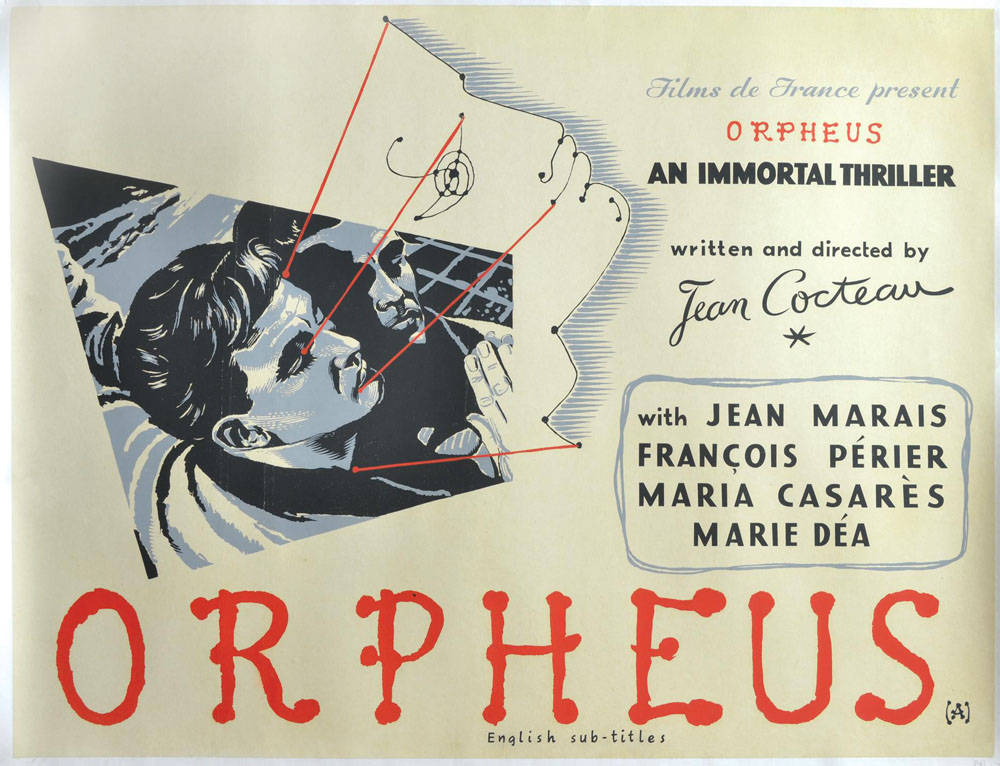
orpheus.jpg

UK poster, 1950. Cocteau’s film receives a UK blu-ray release this week.

• Into the Zone: 4 days inside Chernobyl’s secretive “stalker” subculture by Aram Balakjian. (Again. There’s an implication in Balakjian’s piece that illicit Chernobyl tourism is a new thing even though people have been doing this for a while now.) Related: Jonathan’s visit to the Chernobyl reactor control room, and photos of Soviet-era control rooms (plus a couple of stray American examples).

• “He’s a very interesting author: a disabled, gay writer during the Third Reich…who somehow survived only to be shot by a Red Army patrol days before the end of the war.” At the Edge of the Night (1933) by Friedo Lampe will receive its first English-language publication via Hesperus Press next month.

• “The tradition of the painted still life has been reinvented by contemporary photographers with pictures that pose a puzzle and slow the viewer down,” says Rick Poynor.

• Comic artist Matt Howarth has been writing short reviews of electronic music for many years. Sonic Curiosity is his archive site.

Bauhaus at 100: what it means to me by Norman Foster, Margaret Howell and others.

• RIP Jonas Mekas. Related: a conversation between Jonas Mekas and Jim Jarmusch.

• Beyond the Buzzcocks: Geeta Dayal remembers Pete Shelley‘s electronic side.

• Where to begin with Jean Cocteau: Alex Barrett goes through the mirror.

• Mix of the week: Secret Thirteen Mix 278 by Sarah Louise.

• At Dennis Cooper’s: Jud Yalkut Day.

• Undulating Terrain (1995) by Robert Rich & B. Lustmord | Darkstalker (2000) by Bohren & Der Club Of Gore | Stalker Dub (2012) by John Zorn

A Pictorial History of Horror Movies by Denis Gifford

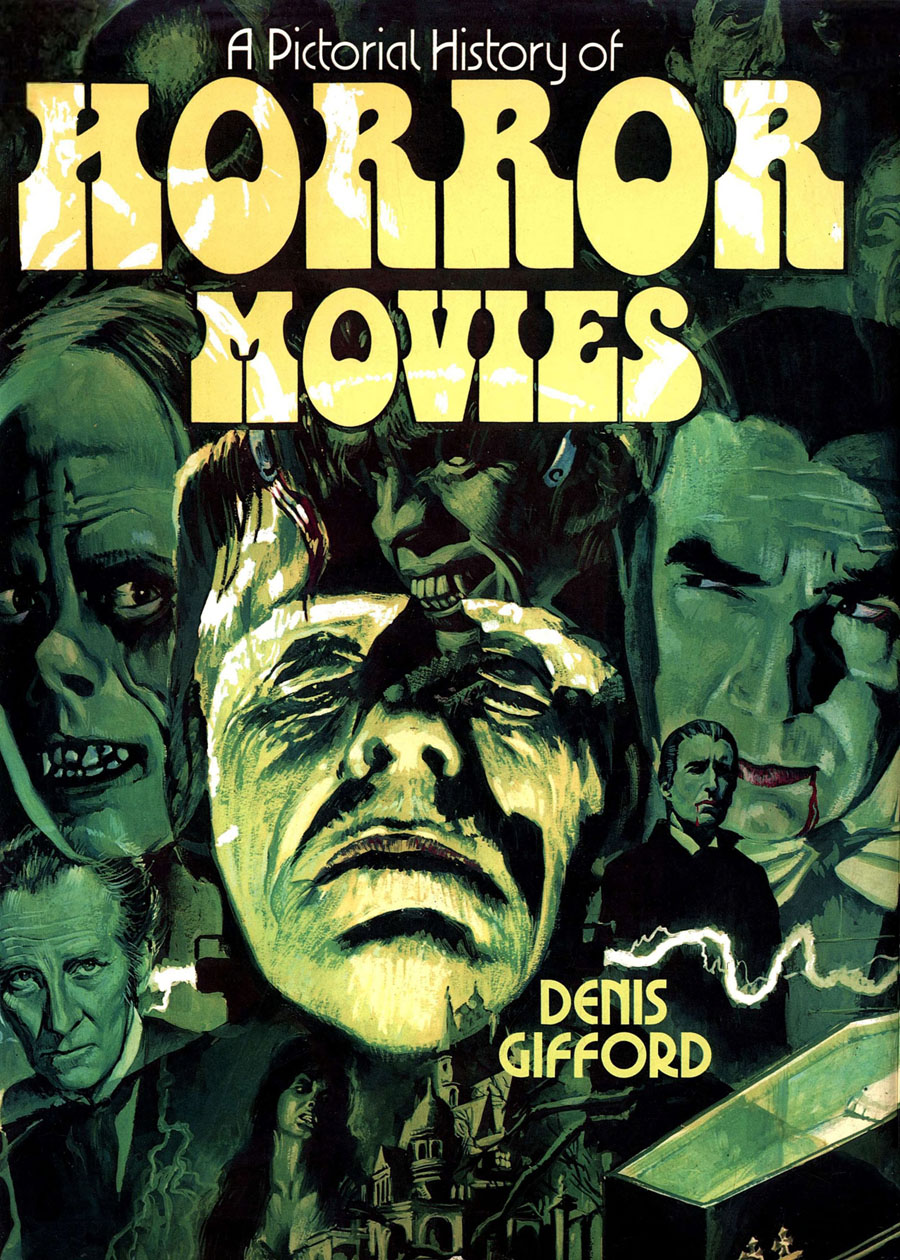
gifford01.jpg

Cover art by Tom Chantrell.

Halloween approaches so here’s a book that suits the season. Denis Gifford’s A Pictorial History of Horror Movies was published in Great Britain by Hamlyn in 1973. A large-format hardback of just over 200 pages, this was a cheap production for wide distribution, and evidently sold well: my edition from 1980 is the 12th reprint, and the book was still in print in 1983, in a slightly longer edition with a new cover.

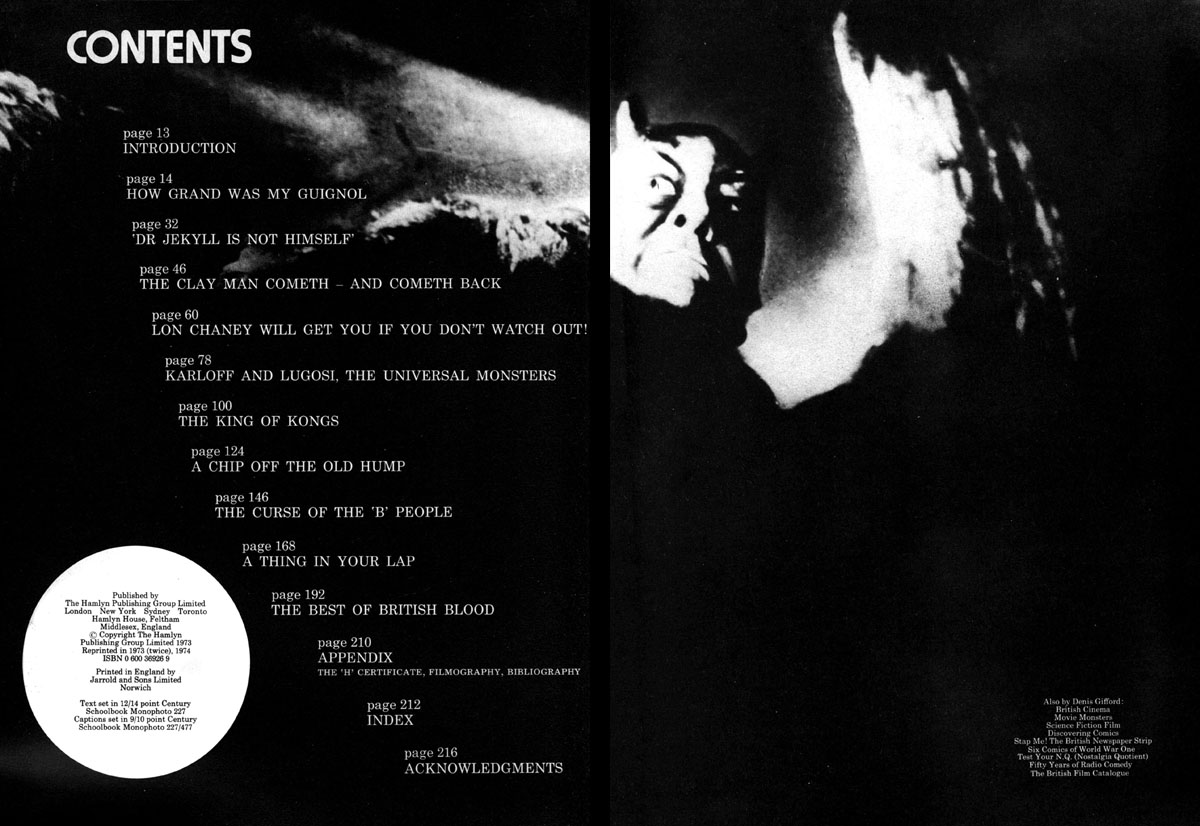
gifford17.jpg

For a generation of British kids Gifford’s book made an indelible impression, not least because of its ubiquity. It was always easy to find—for years I didn’t have a copy of my own because I invariably seemed to know someone who did—and its mostly black-and-white pictures featured a great deal of imagery that was generally forbidden to those of us under the age of 18. This may seem surprising to Americans, or those in more liberated European countries, but Britain has always had an uneasy relationship with the horror genre despite the legacy of Gothic novels and ghost stories, never mind Dracula, Frankenstein and the rest. Literary manifestations command a grudging acceptance if enough years have passed since first publication but Britain’s moralists and censors have fretted over pictorial horror for decades, especially the film and comic-book variety.

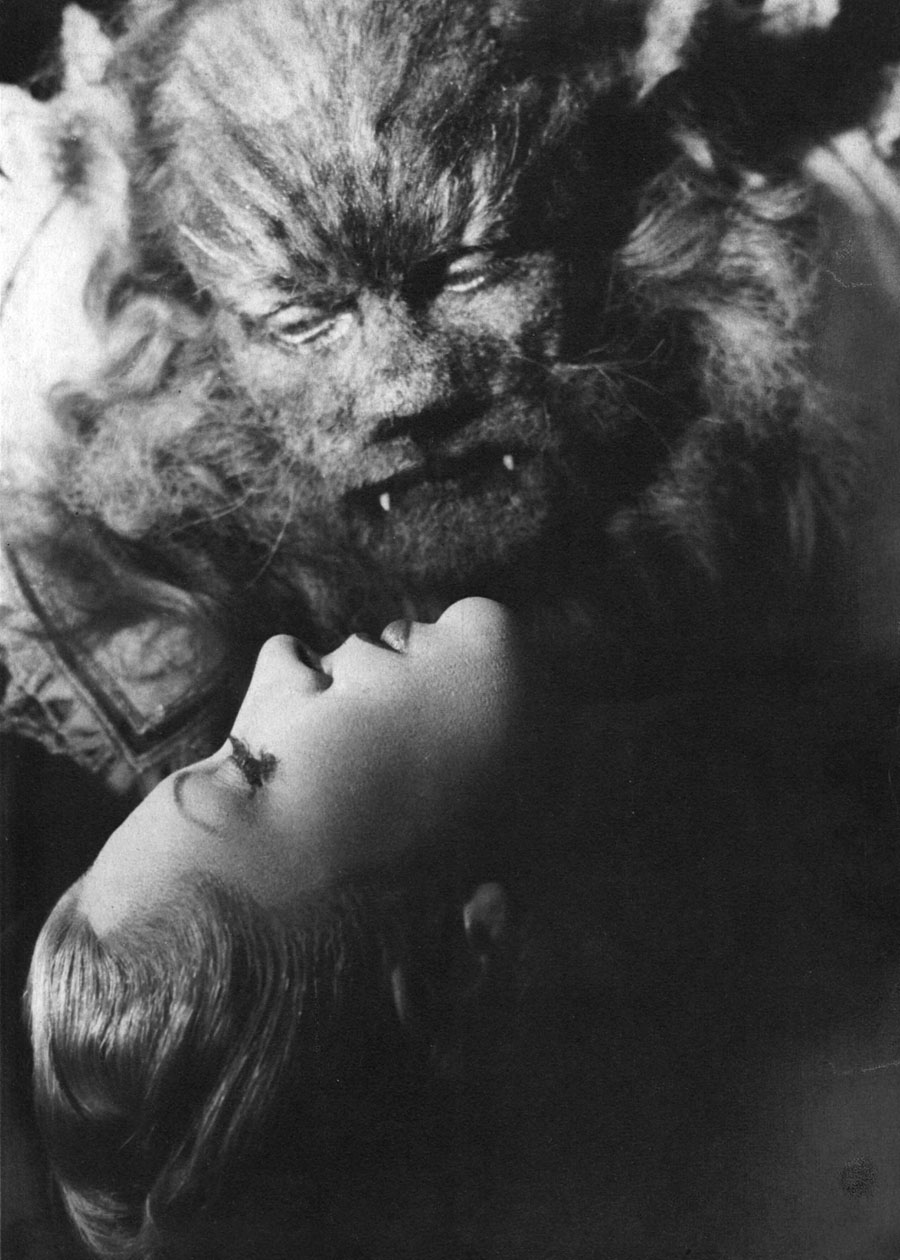
gifford02.jpg

La Belle et la Bête (1946).

Almost all horror films screened in Britain over the past century were for audiences of 18 or over, while horror films on TV were never shown before 10pm. That scene in Halloween (1978) where the kids are watching The Thing From Another World on television in the early evening would have been impossible here. In 1982 we had the start of the “video nasties” panic, a particularly disgraceful episode for those eager to interfere in other people’s entertainment, and an issue that rumbled on for the rest of the decade. As for print media, I still have a leaflet from the late 1980s given to all applicants of UK passports which lists “horror comics” along with weapons, drugs, poisons, etc, among the items forbidden from import into Britain. This climate gave Gifford’s guide an illicit charge it might not have had if published elsewhere: the book delivered a concentrated dose of the forbidden.

gifford03.jpg

Vincent Price as Doctor Phibes.

Denis Gifford (1927–2000) was, among other things, a comics artist, a comics and film historian, and a collector of comic books and horror ephemera. Most of the material in A Pictorial History of Horror Movies is from his own collection, and an excellent collection it was. More than 300 stills run through the entire history of horror cinema from the earliest Méliès shorts to German Expressionism, Universal horror, Hammer horror, AIP monster movies, Toho monster movies, and on to the garish efforts of the late 1960s; he even manages to get in a still from Carry On Screaming. The accompanying text is concise but authoritative, although I doubt anyone ever used the book as a serious study. Yet for a 12-year-old this was a perfect introduction to the genre, as well as a dizzying intimation of hundreds of films yet to be seen. In place of the films you had pictures implying entire worlds of mystery and terror, many of which are so good they give very unrealistic expectations of the films from which they originate. Some of the most memorable examples for me have been those which are more atmospheric or eerie than horrific, like the sinister child at the window in Mario Bava’s Operazione Paura (1966) aka Curse of the Dead. (See this post for more about the extended life of Gifford’s still.) But there were also plenty of monsters, grotesque makeup effects and even some gore; a female friend of mine was obsessed with the picture of a blonde and bloodied young woman with an axe buried in her head (see below). Looking at the book today I suspect Gifford’s punning captions may have been a nod to Famous Monsters of Filmland, a magazine with a devoted readership but not a title I ever read myself.

gifford04.jpg

Peter Cushing (The Skull; 1965).

All the pictures here are from an upload of the entire book at the Internet Archive. Gifford isn’t around to complain about this but the book may not remain there for long so enjoy it while you can. A few more pages follow. For an earlier appraisal of the book’s impact on impressionable minds, there’s this piece by Dave Tompkins.

Continue reading “A Pictorial History of Horror Movies by Denis Gifford”

Weekend links 433

ginzburg.jpg

Cover art for Six Correlations, a solo album by Emptyset’s James Ginzburg which is released later this month. Photo by Clayton Welham.

• “Every single leather S&M club in London was raided by the police at least once, but they couldn’t get any convictions because juries wouldn’t convict us.” Ed Siddons on the death of London’s gay leather scene.

• I’ve been listening to a lot of Stereolab this week so this post from Dangerous Minds last year was useful: “The intriguing origins of ‘Cliff,’ the cartoon character that’s all over Stereolab’s early album art”.

• Available for pre-order: Performance – The Making of a Classic, a book by Jay Glennie celebrating the 50th anniversary of Donald Cammell & Nicolas Roeg’s cult feature film.

• Out later this month from Strange Attractor: The Haunted Writings of Lionel Johnson, the Decadent Era’s Dark Angel, edited by Nina Antonia.

• Mixes of the week: Rosemary Hill – an Autumn Autobiography by cafekaput, and Secret Thirteen Mix 267 by Drew McDowall.

The top 100 albums of The Quietus’ existence, as picked by tQ’s writers.

RC Harvey on the 50th anniversary of (American) underground comix.

• At Haute Macabre: An enigmatic baroness and her collection of skulls.

Miyu Kojima creates miniature replicas of lonely deaths.

Scratches in Kubrick’s 2001: A Space Odyssey.

Richard Thompson’s favourite albums.

Wrong Airport Ghost by Sam Slater.

Mark Valentine’s 3 Wyrd Things.

• 4/4 In Leather (1981) by Eurythmics | The Girl With The Patent Leather Face (1981) by Soft Cell | Leather Bound (1982) by Patrick Cowley