Reverbstorm on sale

reverbstorm1.jpg

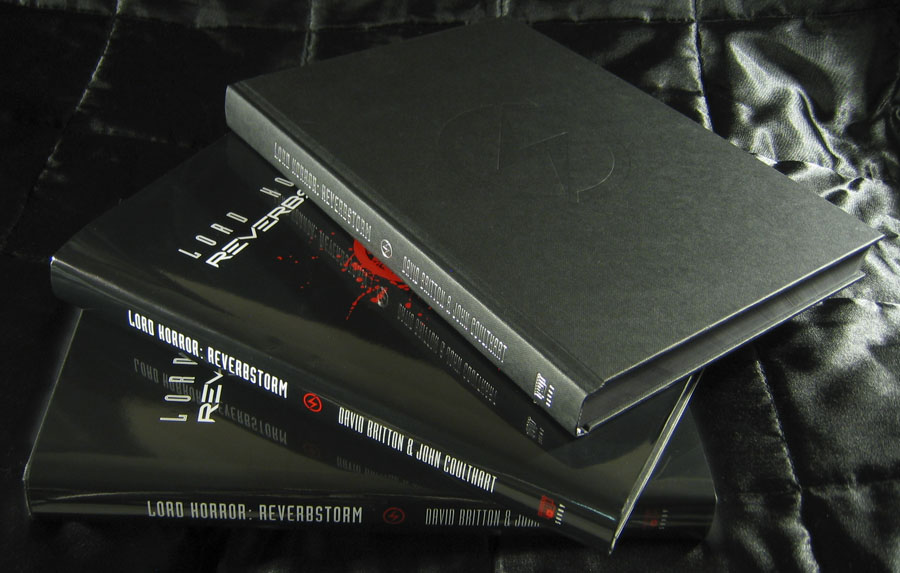
At long last, the news that many people have been waiting for: the Reverbstorm book is now on sale at Savoy. From the hyperbolic press release:

“Surfin’ bird Bbbbbbbbbbrbrbrbrbrb…awawawawawawawaaaaaah! A-pa-pa-pa-pa-pa-pa-pa-pa-pa-pa-pa-pa-pa-pa-pa-pa-pa-pa-pa-pa-pa-pa-pa-pa-pa-pa-pa-pa-pa-pa-ooma-mow-mow Papa-oom-mow-mow!” The Trashmen, Surfin’ Bird

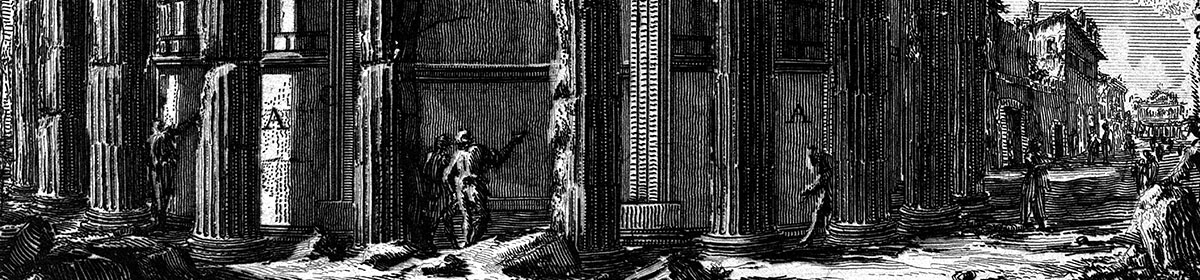
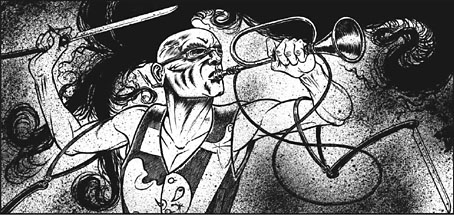
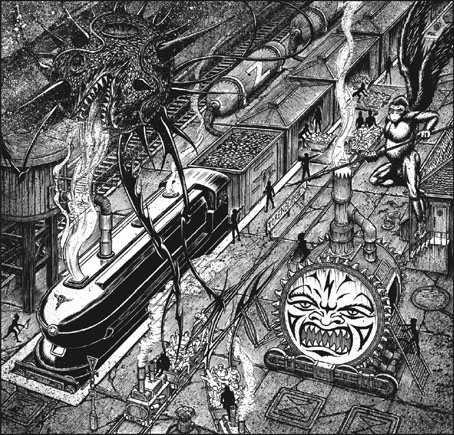
Welcome to the nightmare metropolis of Torenbürgen, where New York’s Art Deco architecture has fused with the termination machinery of Auschwitz. In this urban inferno Jessie Matthews is singing Sondheim, James Joyce is at work on a new novel and Lord Horror, ex-Nazi propaganda broadcaster and Torenbürgen’s model citizen, is stalking the streets in search of fresh victims for his razors. Murderous apes infest the alleyways, Ononoes feast on the living and the dead, while above the rooftops the Soul of the Virgin Mary drifts like a swollen Lovecraftian dirigible, picking at bodies destined for the charnel furnaces.

Lord Horror: Reverbstorm is a unique graphic collaboration between writer David Britton, the author of four Lord Horror novels, and artist John Coulthart, whose book of Lovecraft-derived comic strips and illustrations, The Haunter of the Dark, featured a collaboration with Alan Moore. Reverbstorm was originally published in serial form and is now being presented in a single volume for the very first time. Britton’s debut novel, Lord Horror (1990), was the last work of fiction to be banned in the UK; an earlier Lord Horror comic series, Hard Core Horror, was also banned by a British court in 1995. Coulthart’s death-camp artwork from the final issue in that series appears in Reverbstorm as a prelude to the main narrative.

There’s never been a comic like this surreal collision between Modernist art and pulp aesthetics, a world where Finnegans Wake is drenched in Alligator Wine and Picasso’s Guernica is invaded by Tarzan’s simian hordes. Ambitious, transgressive and meticulously rendered, Reverbstorm is one answer to the eternal question posed by those cultural philosophers, The Cramps: “How far can too far go?”

“Bababadalgharaghtakamminarronnkonnbronntonnerronn-
tuonnthunntrovarrhounawnskawntoohoohoordenenthurnuk!”
James Joyce, Finnegans Wake

reverbstorm2.jpg

rev2.jpg

Previously on { feuilleton }
Reverbstorm in print
Reverbstorm update
James Joyce in Reverbstorm
A Reverbstorm jukebox
Reverbstorm: Bauhaus Horror
Reverbstorm: an introduction and preview

Polanski details

polanski01.jpg

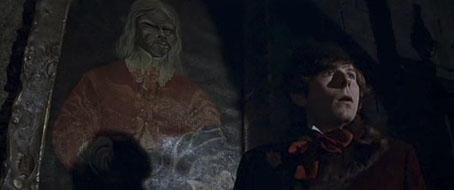
Roman Polanski as Alfred in Dance of the Vampires (1967).

I’ve always admired the attention to detail in Roman Polanski’s films, a quality evident not only in his careful adaptations but also in areas that lesser filmmakers might ignore. Dance of the Vampires (1967) is a good example (sorry, I refuse to call it by the title MGM used for its edited US release): the sets and decor are remarkable, and the editing and camera work so skilfully blends studio constructions with location shots that for years I was convinced the film was made in a genuine European castle. The atmosphere is so carefully sustained that I found the whole thing as terrifying on first viewing as any Hammer film, despite the broad humour. In the set-piece moments Polanski (and soundtrack composer Krzysztof Komeda) put many of the later Hammer vampire films to shame.


The Vampire Portraits

polanski02.jpg

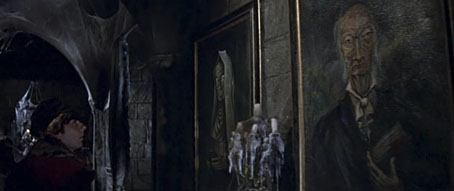
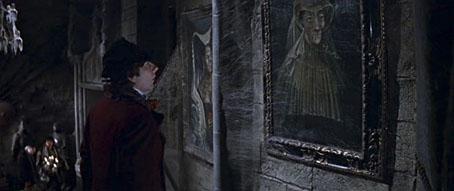
The production design and art direction for Dance of the Vampires was created by Wilfred Shingleton and Fred Carter, both of whom later worked on Polanski’s Macbeth, and who fill the rooms with mouldering furnishings and rotting decoration. One striking sequence concerns a walk through a gallery of vampire portraits that are the creepiest paintings seen on film since Ivan Albright’s portrait of a decrepit Dorian Gray. Film credits in the 1960s were sparse so there’s no indication of the artist responsible. However, one portrait glimpsed at the end of the gallery (below) is a copy of the “Ugly Duchess” painting by Quinten Matsys.

polanski03.jpg


Rosemary’s Book

polanski04.jpg

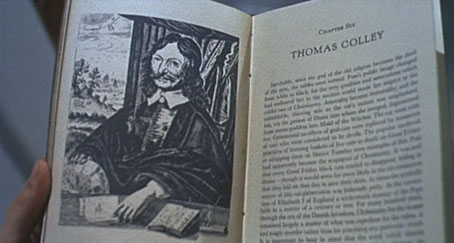
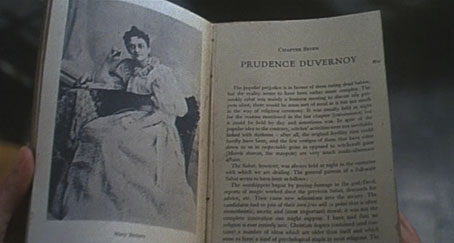
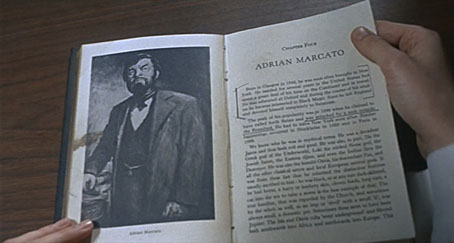
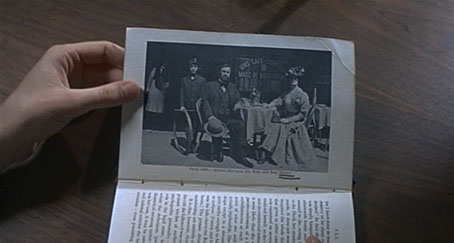
A sign that filmmakers care about detail is when they make their fictional books look like the genuine article. The history of witchcraft in Rosemary’s Baby (1968) could easily have been glimpsed very briefly but Polanski shows Rosemary leafing through its pages in a sequence of Hitchcock-like view-reaction-view shots that make it appear as convincing as possible. The shots also make the viewer examine the book through Rosemary’s eyes, something Polanski does throughout the film.

polanski05.jpg

polanski06.jpg

polanski07.jpg


Trelkovsky’s Paintings

polanski09.jpg

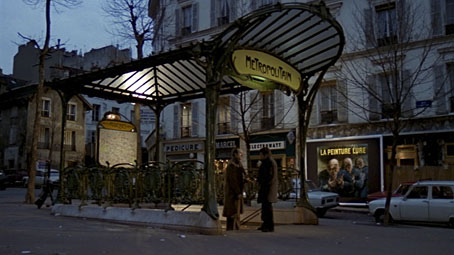
The Tenant (1976) is Polanski’s third study of apartment-dwelling paranoia, a superb adaptation of Roland Topor’s novel, Le Locataire chimérique (1964). The screenplay removes some of Topor’s ambiguity—and the film is spoiled by unsympathetic dubbing of the French actors—but in every other respect it’s as good as Repulsion for its portrait of an isolated individual (here portrayed by Polanski himself) surrendering to madness.

polanski10.jpg

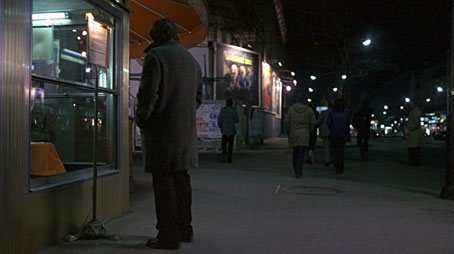
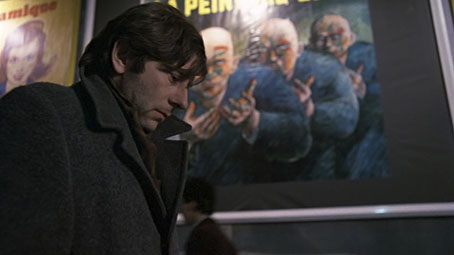
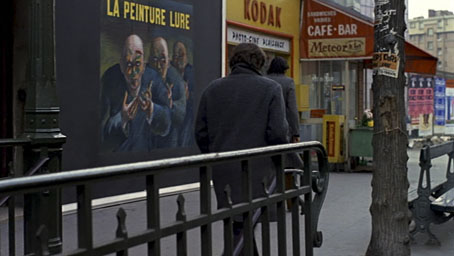
Among the many visual details which add to the unease is the appearance halfway through the film of billboards advertising…what? A painting exhibition? Or something more sinister? We never find out. The presence of these figures and their slogan—”La Peinture Lure”—remains as cryptic as many of the other unresolved questions which prey upon the beleaguered Trelkovsky.

polanski11.jpg

polanski12.jpg


Corso’s Postcard

polanski13.jpg

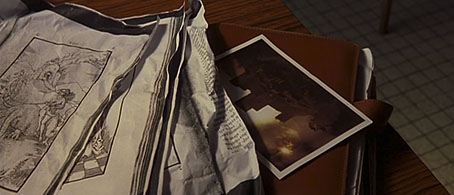
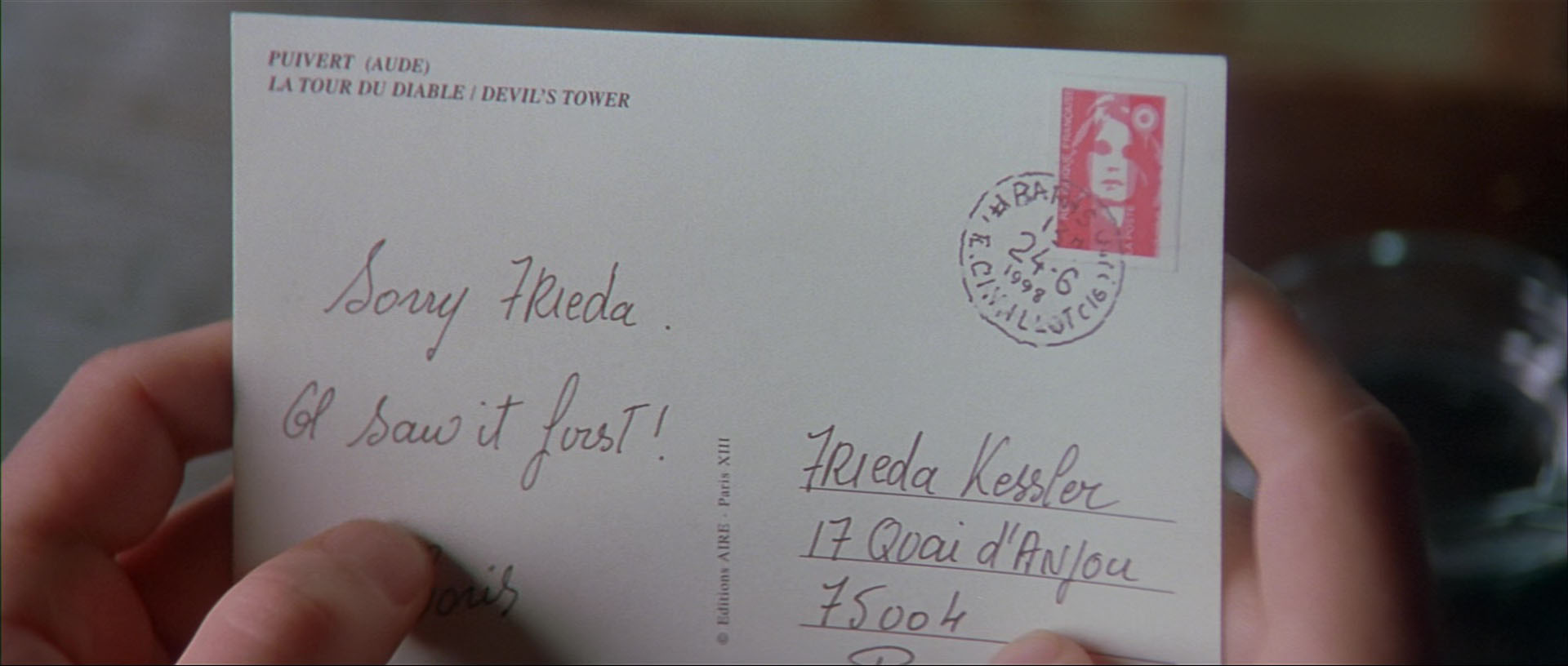
I’m in the minority of people who like The Ninth Gate (1999) a great deal even though it takes some liberties with Arturo Pérez-Reverte’s wonderful novel The Dumas Club. Once again, the bibliographic details are perfectly done, a crucial matter in a film about the antiquarian book trade. Near the end of the film Dean Corso (played by Johnny Depp) finds a postcard that leads him to the final location. On the back of the card there’s a blink-and-you-miss-it detail. Polanski’s wife, Emmanuelle Seigner, plays the mysterious and nameless woman who follows Corso throughout the film. By this point we already know she possesses occult powers so it’s not really surprising to see her face in the postage stamp, something that Corso doesn’t seem to notice.

polanski14.jpg

Previously on { feuilleton }
Repulsion posters
Atalanta Fugiens
Le Grand Macabre
Les Temps Morts by René Laloux
The writhing on the wall

Weekend links 141

nguyen.jpg

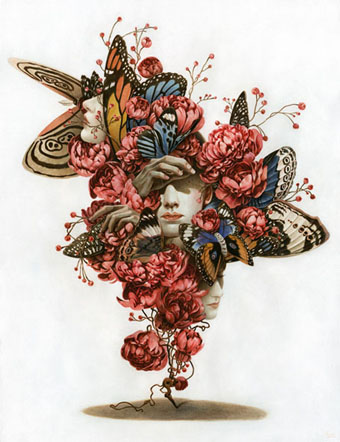
From the Beautiful Faces series (2012) by Tran Nguyen.

• “What possessed a generation of young European artists, and a few Americans, to suddenly suppress recognizable imagery in pictures and sculptures? Unthinkable at one moment, the strategy became practically compulsory in the next.” Peter Schjeldahl on the birth of abstraction.

• “A profanely mystical work of hyperpurple theory-porn, ObliviOnanisM is an auto-erotic intellectual fiction envisioning the phantastical unending odyssey of a young woman, Gemma, whom you will never know.”

Psychedelia—An Ancient Culture, A Modern Way of Life, a 520-page history of psychedelic culture by Patrick Lundborg. Related: Ken Kesey talks about the meaning of the Acid Tests.

[Hodges] made a convincing case that Turing’s teenage crush on a fellow schoolboy, Christopher Morcom, was an important catalyst for his lifelong preoccupation with the relationship between brain and mind. Morcom’s unexpected death at the age of eighteen was a shattering blow to Turing, who began to reflect on whether his friend’s consciousness might survive after death or whether it was simply a result of complex material processes and expired when life did. Hodges also linked the famous “Turing Test”, in which a computer attempts to pass as an intelligent human being, to Turing’s own dilemma as a gay man in a homophobic world. (Turing called his test the “imitation game”, and Hodges observed, “like any homosexual man, he was living an imitation game, not in the sense of conscious play acting, but by being accepted as a person that he was not”.)

Michael Saler reviews three books about computing pioneer Alan Turing

• Paul Gallagher at Dangerous Minds looks at Flowers, Lindsay Kemp’s theatrical staging of Genet’s Our Lady of the Flowers.

David Pearson designed a new edition of George Orwell’s Nineteen Eighty-Four for Penguin.

• Quadtone – Lumisonic Rotera: Mariska de Groot plays a light-to-sound instrument.

“Cash Mobs” Go Global—Battle Spreads Against Chain Store Dominance.

Cities and the Soul: a feast of Italo Calvino links at MetaFilter.

25 dessins d’un dormeur, Jean Cocteau, 1929.

Haunted Decor: a Flickr group.

Computer In Love (1966) by Perrey & Kingsley | Computer Love (1981) by Kraftwerk | Computer Love (1992) by The Balanescu Quartet

Atalanta Fugiens

teb.jpg

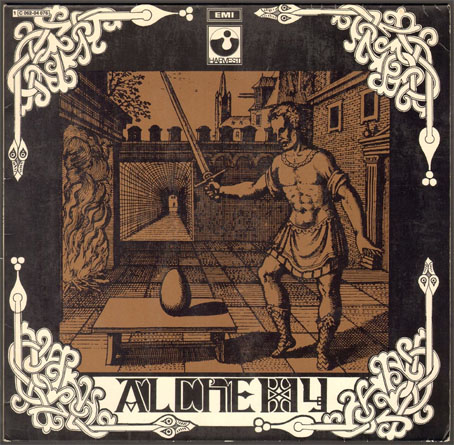
Alchemy (1969) by the Third Ear Band. Design by Dave Loxley.

For an idea of how these posts often come into being, this one is the result of the following chain of association: an article by Leo Robson about the films of Roman Polanski > A re-viewing of Polanski’s Macbeth > A re-listening to albums by the soundtrack artists for Macbeth, British folk group the Third Ear Band > A tracking down of the famous cover image from the first Third Ear Band album.

mm01.jpg

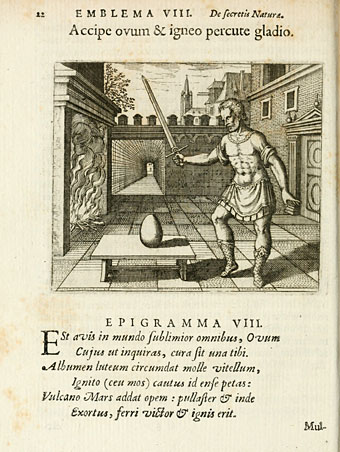
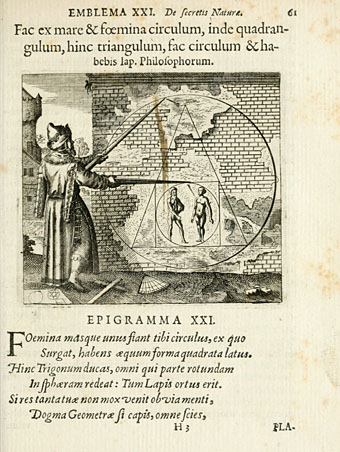
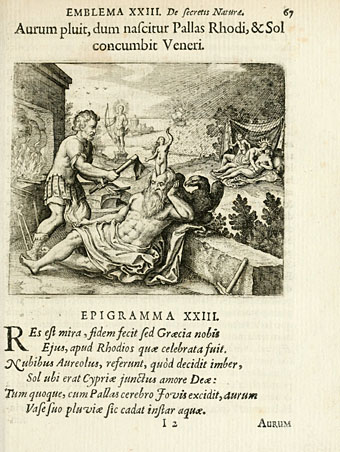
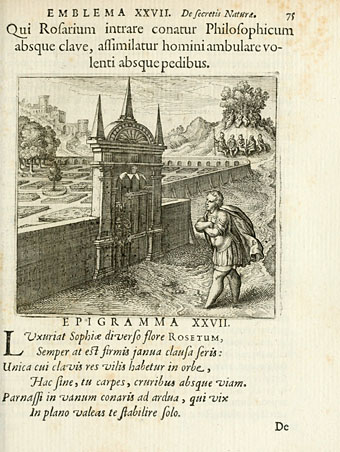
Alchemy is the dominant theme of the first two Third Ear Band albums. The engraving used on the cover of their debut album is one of the most frequently reproduced of all images associated with this branch of occultism, one of fifty emblems from Atalanta Fugiens (1618) by the German alchemist Michael Maier (1568–1622).

The plates are by Matthäus Merian, an artist whose career produced a number of notable alchemical illustrations. A detail from one of his other oft-reproduced pieces, Macrocosm and Microcosm from the Basilica Philosophica (1618), appeared on the cover of Pink Floyd’s Saucer Full of Secrets album a year before the Third Ear Band debut. Merian would no doubt be astonished that his work was so visible to future generations even though his name is seldom mentioned at all. The popularity can be accounted for by the way the best of these images seem almost archetypal whilst being resistant to any easy interpretation. Some of Merian’s plates remind me of Magritte’s paintings; they share a tension between carefully rendered yet impossible images that imply a hidden meaning. As Borges considered metaphysics to be a branch of fantastic literature it’s possible to consider this kind of alchemical illustration as a branch of fantastic art.

A 1687 edition of Maier’s Atalanta Fugiens (retitled Scrutinium Chymicum) may be browsed here or downloaded here.

mm02.jpg

mm03.jpg

mm04.jpg

Continue reading “Atalanta Fugiens”

The Time Machine

ttm01.jpg

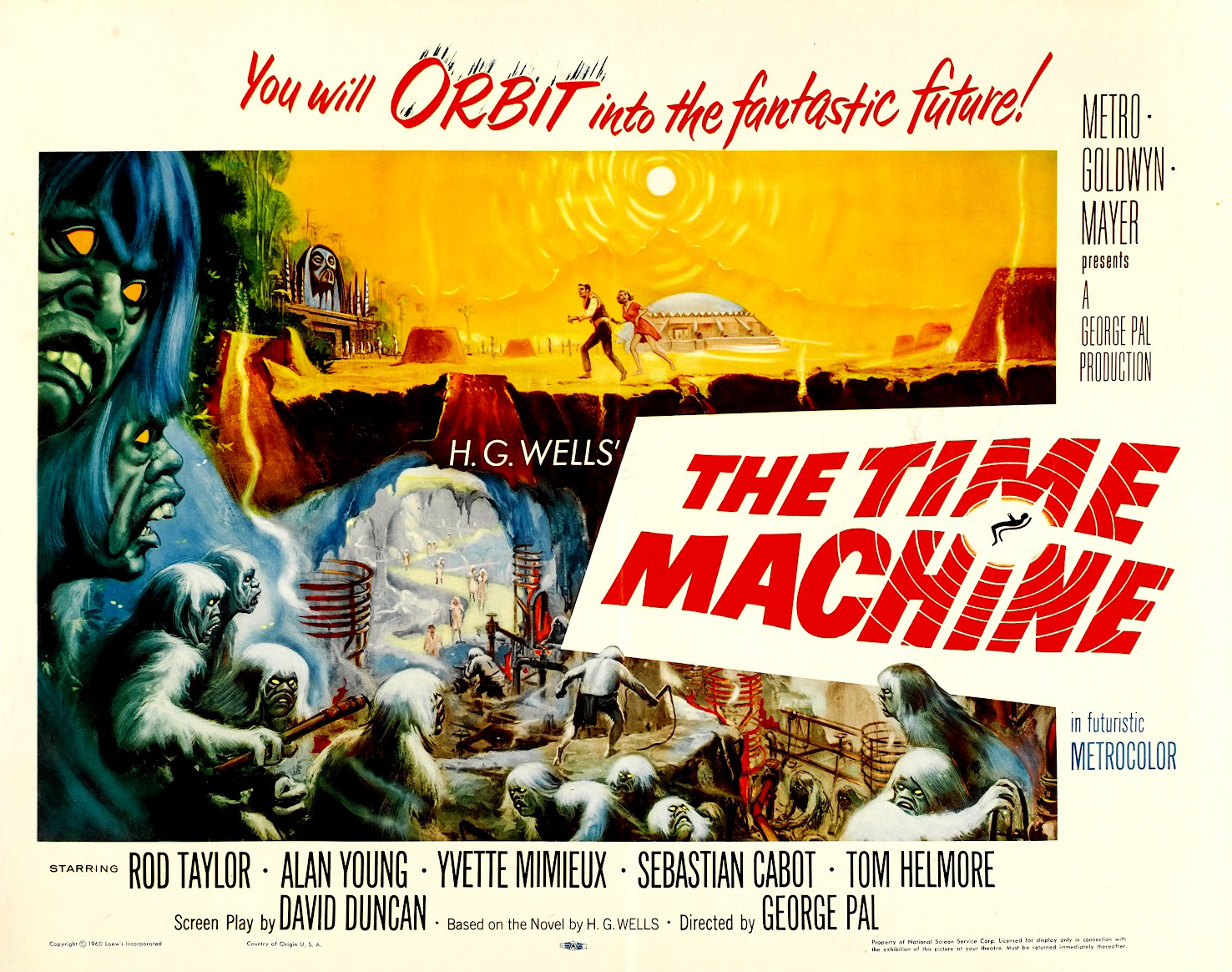
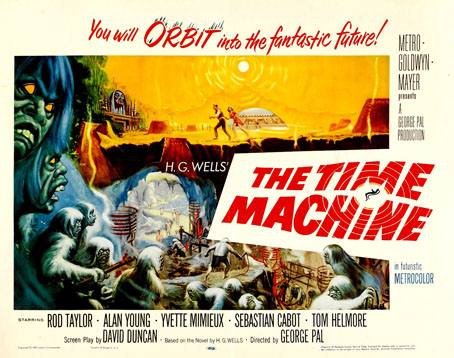
The Time Machine (1960).

The turning over of the calendar from one year to the next makes this day the ideal moment to write something about HG Wells’ celebrated story. Having re-read The Magic Shop before Christmas I decided to refresh my reading habit—lapsed these past months due to pressure of work—by revisiting more of Wells’ short stories, many of which I haven’t looked at for years.

As I said in that earlier post, it was The Time Machine that led me to Wells’ written work after being excited at an early age by George Pal’s 1960 film adaptation. Reading the story again I’m still astonished by how advanced it is compared to everything else being published in 1895. Michael Moorcock’s excellent introductory essay, The Time of ‘The Time Machine’ (1993), notes that time travel per se wasn’t a new idea for Victorian readers, there were many novels and stories using the theme, most of them merely displacing a character from one age to the next in a very simple manner. Wells’ innovation was the idea of a machine which would give the user mastery of Time itself. Moorcock also notes that Wells considered this to be his one great idea which he always felt he never exploited as fully as he wished. The need to make a living forced him to set down the story in some haste when it was accepted for serialisation in WE Henley’s New Review. (Moorcock’s introduction can be found in a recent collection London Peculiar and Other Nonfiction).
ttm11.jpg

The other notable feature this time round—and this means more to me than it would to many other readers—was being struck by the way Wells’ story prefigures so much of the fiction William Hope Hodgson would be writing a decade or so later. It’s a commonplace among Hodgson scholars that The Night Land (1912) owes something to the scenes when the Time Traveller journeys beyond the age of the Eloi and Morlocks to a period when the Earth is dead and the Sun has swollen to a baleful giant. Some of the more cosmic moments of The House on the Borderland (1908) can also be traced back to these scenes. I’d argue that the Time Traveller’s earlier battles with the Morlocks prefigure and possibly influence similar battles in The Night Land, and the attacks of the Swine-Things in Borderland. There’s even a moment near the end of Wells’ story when the Time Traveller is menaced by giant crustaceans like those which infest Hodgson’s Sargasso Sea. This may not be a fresh observation but it’s not one I’ve seen elaborated before.

Regular readers will know it’s a habit here to seek out illustrations of favourite stories. In the case of The Time Machine there are hundreds to choose from so the following selection barely scratches the surface. Something I’d not noticed before when looking at comic strip adaptations is that none of the works derived from Wells’ story (George Pal’s film included) seem able to countenance the Time Traveller’s abandoning of Weena to the Morlocks when the pair become trapped outdoors at night; all show the Time Traveller doing his best to rescue her. William Hope Hodgson’s fiction is filled with rescues, sieges and the defence of the weak against marauding and inhuman forces; The Night Land concerns an epic and apparently suicidal rescue mission across the most inhospitable terrain imaginable. It may be stretching a point but it’s possible to see much of Hodgson’s fiction as being a riposte to this incident in Wells’ story.
ttm02.jpg

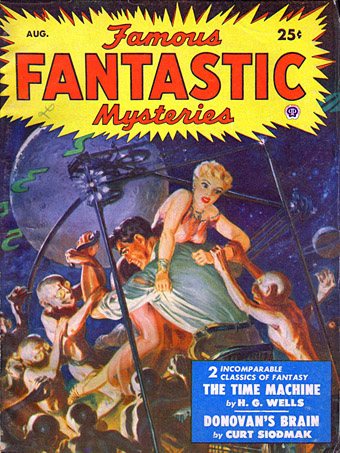
Illustration by George Saunders (August, 1950).

Recurrent points of interest in illustrations of Wells’ story are i) How is the Time Machine itself depicted? (The author’s descriptions are evasive), and ii) How are the Morlocks depicted? Wells describes them thus:

‘I turned with my heart in my mouth, and saw a queer little ape-like figure, its head held down in a peculiar manner, running across the sunlit space behind me. It blundered against a block of granite, staggered aside, and in a moment was hidden in a black shadow beneath another pile of ruined masonry.

‘My impression of it is, of course, imperfect; but I know it was a dull white, and had strange large greyish-red eyes; also that there was flaxen hair on its head and down its back. But, as I say, it went too fast for me to see distinctly. I cannot even say whether it ran on all-fours, or only with its forearms held very low.

George Saunders’ small Gollum-like creatures are closer to Wells’ conception than many later depictions. Saunders’ Weena, on the other hand, is far too tall for the equally diminutive Eloi.
ttm03.jpg

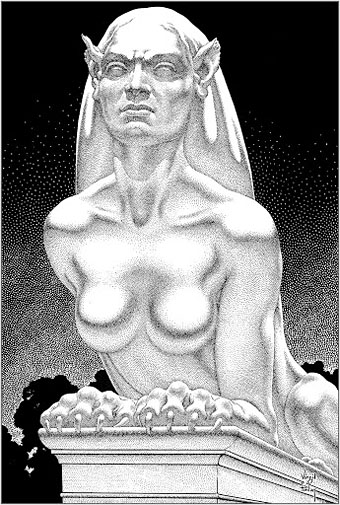
Virgil Finlay (1950).

This is still my favourite Time Machine illustration but then Finlay has a tendency to beat everyone when it comes to these assignments. His illustrations appeared inside the August, 1950 issue of Famous Fantastic Mysteries. Wells’ sphinx has wings which I imagine Finlay might have included if he wasn’t restricted by the space allowed for his illustration. He also provided the illustration of a Morlock below.

Continue reading “The Time Machine”