Weekend links 244

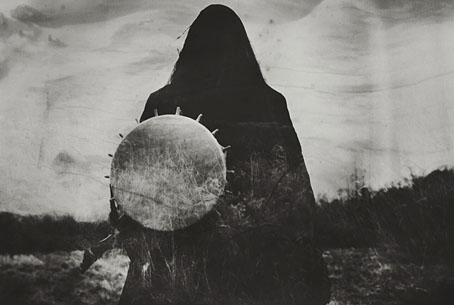
scarpulla.jpg

MMOB :: Far West (2013) by Alison Scarpulla.

• “…although same-sex love is as old as love itself, the public discourse around it, and the political movement to win rights for it, arose in Germany in the late nineteenth and early twentieth centuries. This message may surprise those who believe that gay identity came of age in London and New York, sometime between the Oscar Wilde trials and the Stonewall riots.” Alex Ross reviewing Robert Beachy’s Gay Berlin: Birthplace of a Modern Identity. Beachy talks about his book here.

• “I was in a room with tube synthesizers, where you had to tune them up to play them. It was unbelievable.” John Carpenter talking to Joseph Stannard about composing with electronics. Carpenter’s album of new music, Lost Themes, may be previewed here.

• From 2010: John Ridpath on Mervyn Peake’s illustrations for Lewis Carroll’s Alice Through the Looking Glass and Alice in Wonderland. Related: “The most twisted version of Alice in Wonderland you’ll ever see.”

I was brought up in a world where art was something owned and insured—usually inherited: but seldom if ever made by anyone one I knew.

I had an early inkling that there was fun to be had over the hill, like the feeling when faced with a sunset that someone’s throwing a mega awesome party just beyond the nearest cloud, and I set off to join the caravan. Let’s just say I was in search of company, headed towards the glow, and I found it.

Tilda Swinton‘s speech at the Rothko Chapel

• “Her art often touches on alchemy and magic; and in her memoir of insanity she writes of misreading an Imperial Chemicals sign as ‘chemistry and alchemy’.” Charlotte Higgins on Leonora Carrington.

Shadows Over Main Street, an anthology of small-town Lovecraftian terror, is out this week from Hazardous Press. 20 stories and poems plus interior illustrations including a contribution of my own.

• “With Fantastic Planet, I felt torn about using it, because it’s…the title of an animated film.” Guitarist Sarah Lipstate, aka Noveller, talks to Ned Raggett about her new album.

Jim Jupp of Belbury Poly and the Ghost Box record label answers 15 questions.

• A DeLorean driving through a Tron cityscape: Retrowave by Florian Renner.

• Powell & Pressburger’s Tales of Hoffmann (1951) has been restored.

Music from Forbidden Planet (1956) by Louis & Bebe Barron | The Four Horsemen (1972) by Aphrodite’s Child | Assault on Precinct 13 (Main Theme) (1976) by John Carpenter
A Mountain Walked

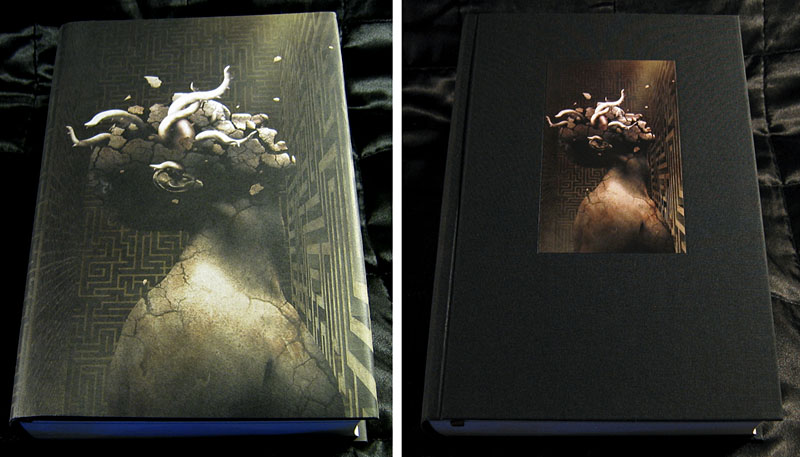
mountain01.jpg

Art by David Ho.

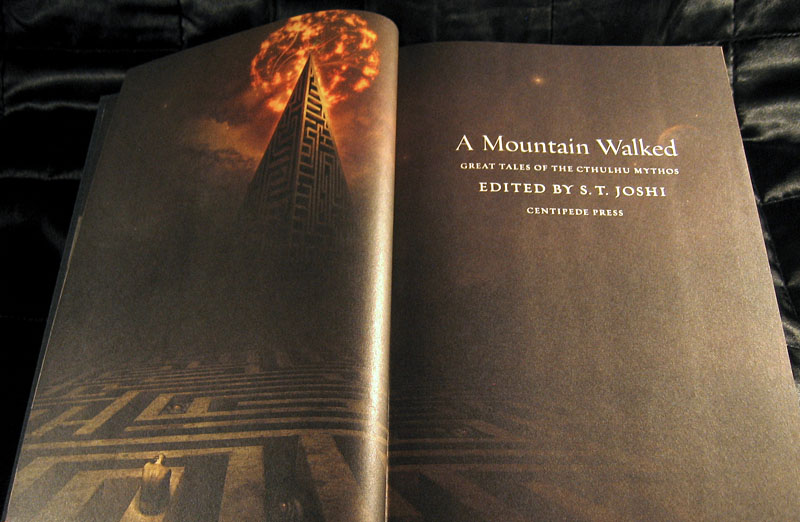
This may be a frustrating post for some since it concerns a limited edition anthology that sold out almost as soon as it was announced a year or so ago. Even though the book was published last year it’s taken a few months for my copies to arrive. A Mountain Walked is a collection of Cthulhu Mythos stories compiled by leading Lovecraft scholar ST Joshi, and published in the US by Centipede Press. Anyone familiar with Centipede’s more luxurious volumes will know that they don’t do things by halves, and this weighty tome is no exception: a large-format hardback (the signed edition is also cased), with heavy paper stock, colour printing, tinted sheets and a bulk that runs to almost 700 pages.

mountain02.jpg

Art by David Ho.

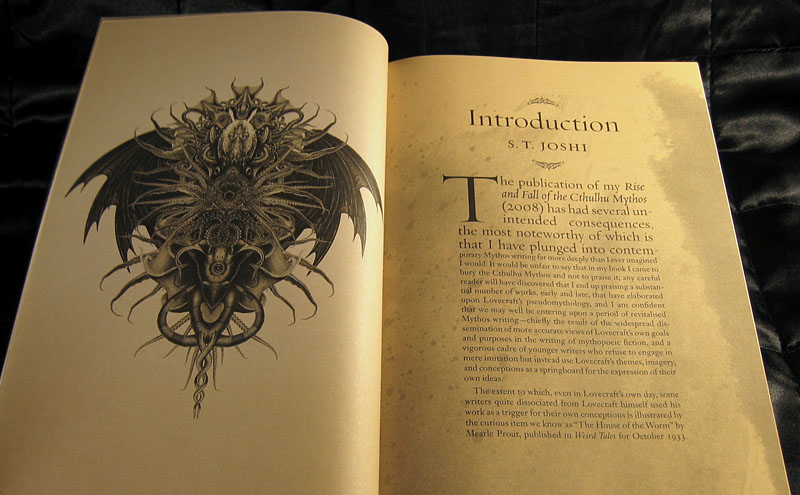
Many of the stories are reprints but there’s also new material from contributors including Thomas Ligotti, Neil Gaiman, Caitlín R. Kiernan, Laird Barron, the late Michael Shea (to whom the book is dedicated), Patrick McGrath, TED Klein, Gemma Files, Ramsey Campbell and many others. The artwork also ranges widely; I’d not seen anything by David Ho before but he’s very good, hence the samples shown here. But there’s also a variety of other work, even a Lovecraftian Peanuts comic strip by Julien Baznet. I was pleased that my Cthulhoid picture was placed with the introduction, it makes up for my never having responded to Mr Joshi when he wrote to me years ago asking if I’d be interested in contributing something to Necronomicon Press.

Since the book was so successful there’s been talk of doing a cheaper reprint. In the meantime, bloated Lovecraftian plutocrats (Yuggothcrats?) will find very expensive copies for sale on eBay. A few more page samples follow.

mountain03.jpg

Continue reading “A Mountain Walked”

Homosurrealism

oldham.jpg

Untitled (2012) by Brian Oldham.

Jack Sanders was in touch recently about his online art showcase Homosurrealism, a gallery of homoerotics, the surreal and the occult. The fourth issue has just gone live, and the contents could just as well be described as Homo-occultism given the predominance of esoterica. Jean Cocteau and Kenneth Anger are in there, also William Burroughs via Gus Van Sant’s film of the Thanksgiving Prayer which receives a lot of exposure at this time of year.

waiblinger.jpg

La Petite Mort by John Waiblinger.

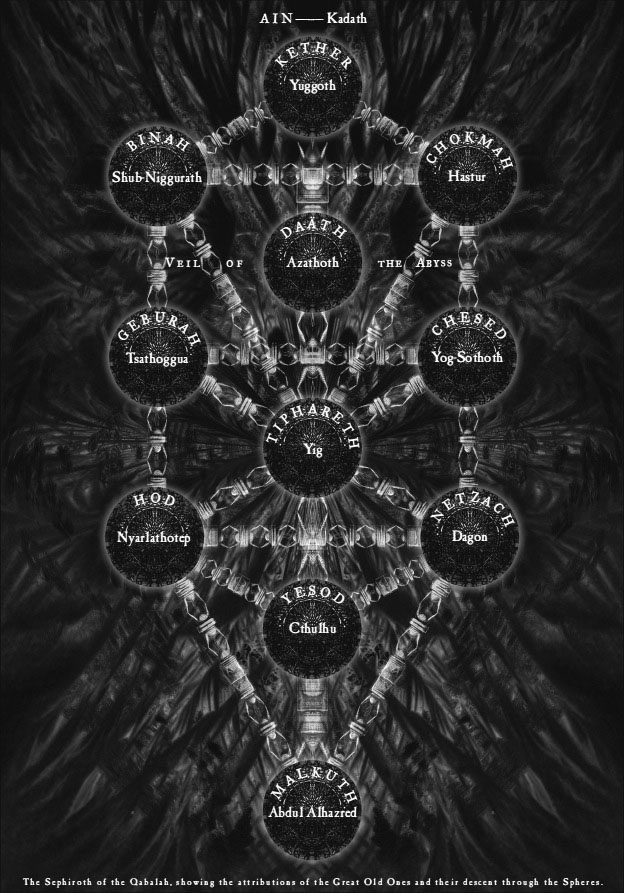
Also featured is my Sephiroth of the Great Old Ones from the Haunter of the Dark collection. Credit should be given there to Alan Moore who was responsible for the attribution of the various gods to the different spheres. In the book the chart is followed by my renderings of the sinister pantheon together with Alan’s description of each god and sphere.

sephiroth.jpg

The Great Old Ones: Sephiroth (1999) by John Coulthart & Alan Moore.

Elsewhere on { feuilleton }
The gay artists archive

Previously on { feuilleton }
The Salivation Army, a film by Scott Treleaven

Weekend links 236

carvalho.jpg

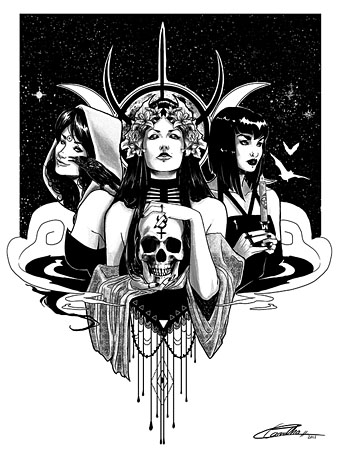
The Three Witches (2014) by Lorena Carvalho.

Immersion, a new album by Grey Frequency, “…is a recording of the broken signals, wraiths in the ether from lost futures and utopias which were once promised…”. Box Of Secrets (1999) is an album of electronica by Ian Boddy that’s a free download until the end of December.

• “Hothouse flowers, Egyptian statuary, jewels, Nubian servants, crystal balls, cocaine, opium and champagne were just some of the things she spent her money on…” Lucy Davies explores the riotous world of Marchesa Luisa Casati.

• “London is a network of complete nexuses, coincidences, overlaps, references…” Stephanie Boland talks to Iain Sinclair about his new book 70×70: Unlicensed Preaching: A Life Unpacked in 70 Films.

My Women’s Studies professors would say: “You don’t know how hard we fought for you.” And yet, when they told me my sexuality was not correct, I felt embarrassed. I knew I had longings that didn’t line up with the politics, but I refused to repress them, particularly in my writing. I fought to unravel a political correctness that was censoring desire.

Screenwriter Erin Cressida Wilson on sex, cinema and secrets

Cthulhu, Fiction and Real Magic, a lecture by Ian ‘Cat’ Vincent at Treadwell’s, London, on December 3rd. For those who can’t attend, Erik Davis has just posted his essay about Lovecraft and contemporary occultism.

• “John Gielgud was obsessed with trousers, loved corduroy and leather. And so he wrote a film set in a menswear shop.” Gielgud’s unfilmed screenplay for gay porn director Peter de Rome may now be filmed.

• “The stories are even more fantastic and full of marvels than those in the Arabian Nights.” Robert Irwin on the newly-translated Tales of the Marvellous.

• Mixes of the week: The Advisory Circle present Winter From Out Here; Fall by The Ephemeral Man; Secret Thirteen Mix 136 by Cosmin TRG.

Danny Cooke‘s drone views of Pripyat, Chernobyl. Related: Into the Zone: Gasworks Park (Seattle, WA) by Christina Scholz.

• Watch Dragnet’s 1967 LSD episode. More psychedelics: “Magic mushrooms change brain connections“.

• Earth Magic: Peter Bebergal on photography of witches at play and at ritual.

• Düsseldorf 1970: The crucible of Krautrock by those who were there.

• It’s Alright Ma, It’s Only Witchcraft (1968) by Fairport Convention | Witch’s Will (1973) by Wilburn Burchette | Witches’ Multiplication Table (1982) by Holger Czukay

Weekend links 232

hackett.jpg

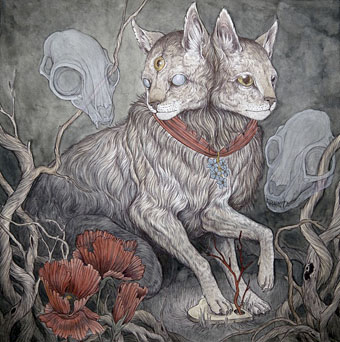
Forget Me Not (no date) by Caitlin Hackett.

• Halloween brings out the articles about weird fiction: “No one would now write of [HP Lovecraft] as the critic Edmund Wilson did, in the New Yorker in 1945: ‘The only real horror in most of these fictions is the horror of bad taste and bad art.’ The true horror was in fact that of judging Lovecraft by the standards of a defunct literary culture,” says John Gray. At The Atlantic there’s Jeff VanderMeer on the uncanny power of weird fiction, while Matt Seidel at The Millions explores the mysteries and attractions of Robert Aickman’s “strange stories”.

The Witching Hour is a video essay by Pam Grossman “examining the many different faces of witches in film”. Pam’s video opens with a scene from Suspiria; over at FACT, Goblin’s Claudio Simonetti talks about the creation of Suspiria‘s peerless soundtrack.

• David Rudkin and Alan Clarke’s uncanny television film, Penda’s Fen, is given a 40th anniversary screening later this month at the Horse Hospital, London. For those who can’t attend (and those who haven’t already read it) there’s my post from 2010.

Nabokov sees each day’s weather as a palette: “The weather this morning was soso: dullish, but warm, a boiled milk sky, with skin – but if you pushed it aside with a teaspoon, the sun was really nice, so I wore my white trousers”. He listens carefully to the sound of the rain, which his letters brilliantly orchestrate. He provides fantastic descriptions of puddles, some of which contain shifts in perspective reminiscent of the nearly cinematic transitions found in the novel he would write shortly afterwards, King, Queen, Knave:

“I looked out of the window and saw: a red-haired housepainter caught a mouse in his wheelbarrow and killed it with the stroke of a brush, then he tossed it in a puddle. The puddle reflected the dark-blue sky, quick black upsilons (reflections of swallows flying high) and the knees of a squatting child, who was attentively studying the little grey round corpse.”

Eric Naiman on Vladimir Nabokov’s Letters to Véra

• Occult rock: Peter Bebergal talks to Expanding Minds about his new book, Season of the Witch: How the Occult Saved Rock and Roll. There’s an hour-long film of Black Sabbath saving rock and roll in Paris, 1970, here.

• Mixes of the week: Burning The Existence, “a three-hour sonic exploration of the outer fringes of Goth”, and a horror soundtrack mix by Death Waltz.

• “‘Capital loathes the old,’ [Gareth] Evans said, ‘for anchoring us in the reality of the lived.'” Iain Sinclair on London’s lost cinemas.

Desirina Boskovich, co-editor of the Steampunk Users Manual, offers “7 Reasons Why Steampunk Is Totally ‘Now'”.

• Penguin has new collage covers by Julian House for The Cut-Up Trilogy by William Burroughs.

Hear a homemade synthesizer turn weather into music.

• Grotesque doodles by William Makepeace Thackeray.

full fathom five is Thom’s new blog.

Weird Dream (1976) by Harmonia 76 | Weird Caravan (1980) by Klaus Schulze | Weird Gear (1991) by Ultramarine