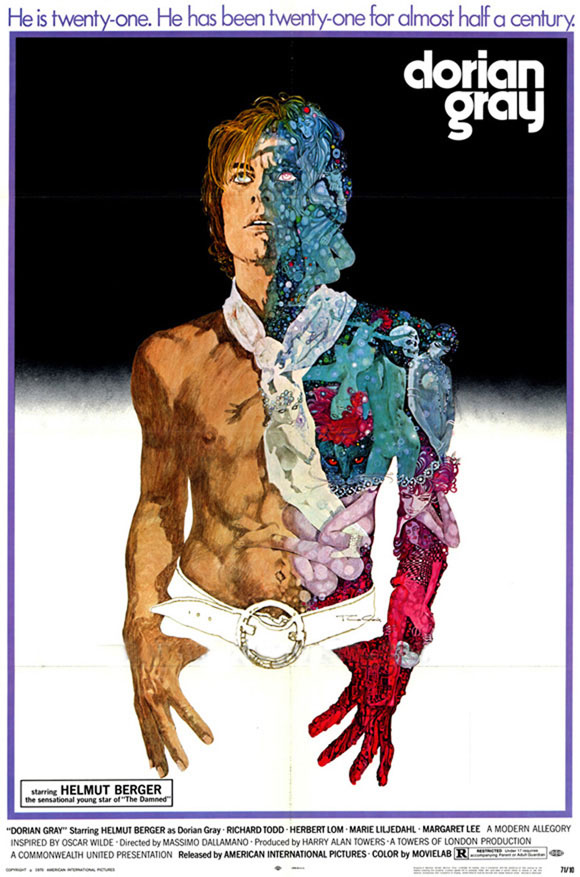
The art of Ted Coconis

dorian.jpg

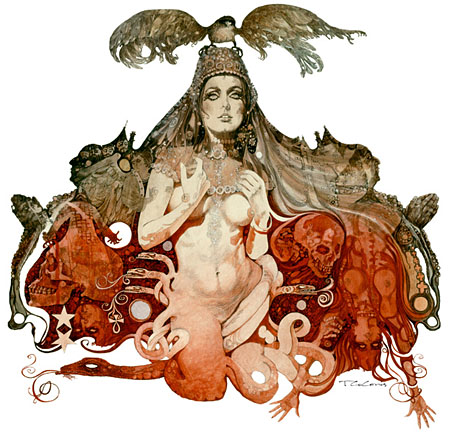
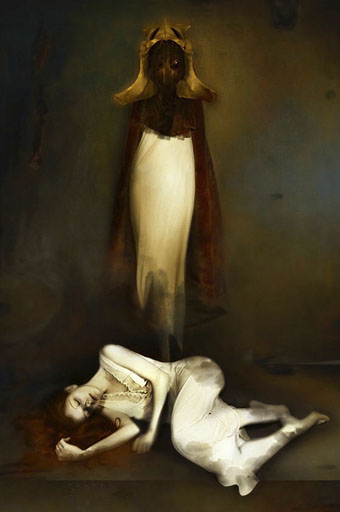
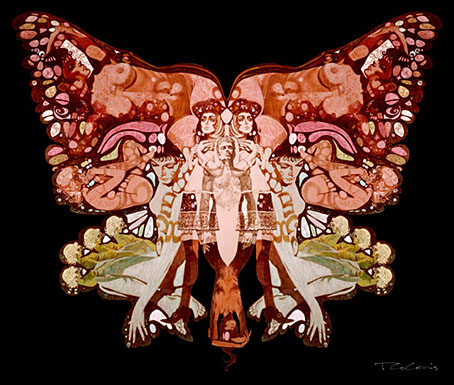
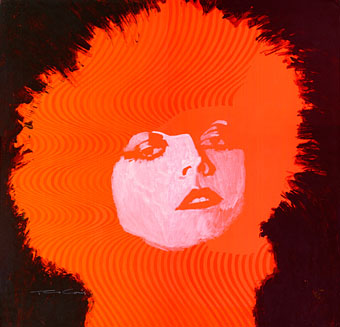
This poster for Massimo Dallamano’s 1970 updating of The Picture of Dorian Gray was featured here several years ago, and it’s taken me all this time to finally discover the name of the artist responsible, Ted Coconis. Better late than never. It could be argued that the illustrations below for Nabokov and Goldman tend more towards the artist’s own interests than representing the content of the books; I’ve not read Goldman’s novel (or seen the film) but online comments suggest that this was an unsuitable cover; Nabokov’s Ada is an erotic novel which presents its eros in a manner that’s a lot less direct than the painting implies. All I can say to this is that strict accuracy is for pedants; Aubrey Beardsley’s illustrations for Wilde’s Salomé aren’t in the least accurate yet they’re regarded as definitive. Sometimes illustrators are trying to convey in pictorial form an otherwise intangible impression of a book (or a film or play) which is what I see Ted Coconis doing here. There’s a lot more of his work at his website. It’s gorgeous stuff.
coconis1.jpg

Cover illustration for Ada by Vladimir Nabokov.
coconis2.jpg

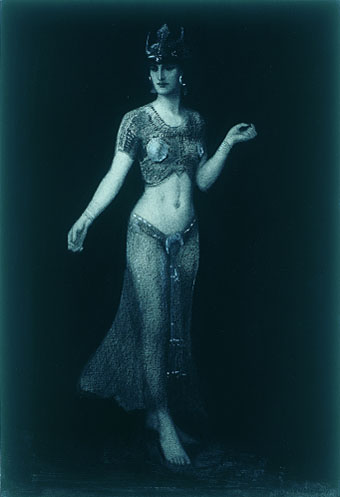
Pola Negri.

coconis3.jpg

Cover illustration for The Princess Bride by William Goldman.

Elsewhere on { feuilleton }
The illustrators archive

Weekend links 160

floyd.jpg

Collage by Jeneleen Floyd.

• “…slowly, block-by-block, pedestrians are starting to take back the streets.” Wayne Curtis on the hazards of being a pedestrian in a world of cars.

• Michael Hann looks back at LA’s Paisley Underground, and also talks to some of its key members.

Meighan O’Toole interviews JL Schnabel about her Blood Milk jewellery designs.

My central thesis is that camp was always a kind of signifying practice invented out of necessity (both for survival and for sheer creative pleasure) by “queer” (in the classic sense) outsiders – fags, drag queens, transsexuals, deviants, sexual renegades – and that it was always by its very nature deeply political and committed: Some people dedicated their entire lives to it! Sontag’s interpretation always seemed a bit dismissive to me somehow.

The seldom unprovocative Bruce LaBruce talking to Mark Allen about camp in the 21st century.

• Studiocanal launches an appeal to find the lost materials of The Wicker Man.

• At Flickr: Tales from a Parallel Universe and London’s Lost Music Venues.

Michael Wood tells us what we learn when we read Italo Calvino’s letters.

• Fragments of a Portrait: Francis Bacon and David Sylvester in 1966.

• An extract of a live session from Adrian Sherwood and Pinch.

• In Baba Yaga’s Hut: Amelia Glaser on Russian folk tales.

Buckminster Fuller Book Covers from the 1970s.

A Century of Proust.

The Real World (1982) by The Bangles | With A Cantaloupe Girlfriend (1982) by The Three O’Clock | Medicine Show (1984) by The Dream Syndicate | No Easy Way Down (live in Tokyo, 1984) by The Rain Parade

Several more Salomés

durnov.jpg

Cover of Salome by Oscar Wilde (1903) by Modest Alexandrovich Durnov.

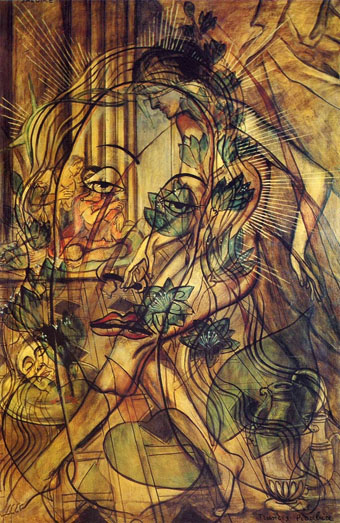
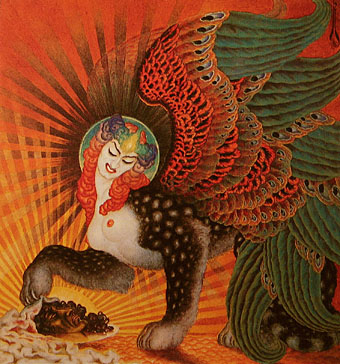
Gathering a few more Salomé renderings which have caught my attention recently. The biggest surprise is the one from Picabia since he’s an artist who these days is almost always associated with the Cubists and Dadaists. In the 1920s he returned to figurative painting and produced a number of pieces in this style. The overlaying of images reminds me of some of Hans Bellmer’s drawings.

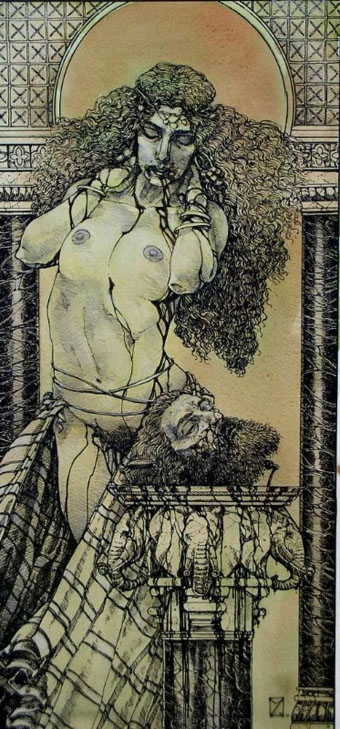
Michael Zulli is an American comic artist whose work I’ve always liked a great deal. No information about his drawing, unfortunately, so I can’t say whether it’s a one-off or part of a larger project.

wilmer.jpg

Salomé (1917) by John Riley Wilmer.

picabia.jpg

Salomé (c. 1928) by Francis Picabia.

kalmakov.jpg

Salomé Sphinx (1928) by Nicholas Kalmakoff.

zulli.jpg

Salomé (no date) by Michael Zulli.

Elsewhere on { feuilleton }
The Salomé archive

Tadanori Yokoo album covers

yokoo01.jpg

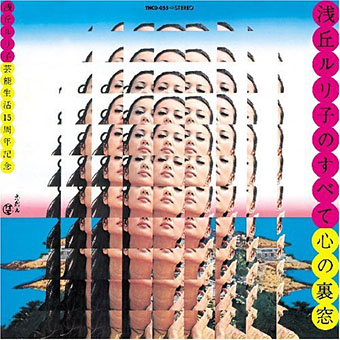
Kokoro No Uramado (1969) by Asaoka Ruriko.

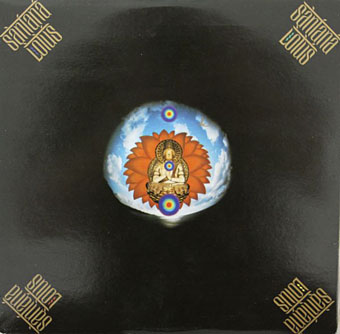
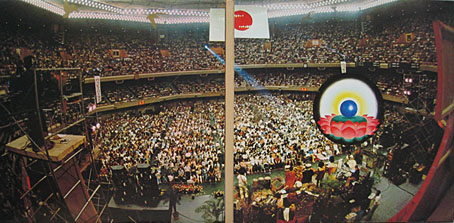
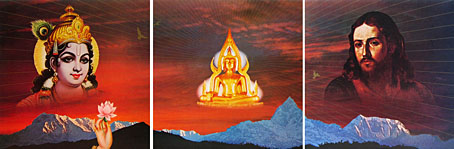
A few examples of Tadanori Yokoo’s earlier cover designs which are the ones I prefer. Although he’s continued to produce collage art for music releases, the CD format does his work few favours. I lose interest musically in Santana after about 1970 so I’d not looked properly at their triple-live set Lotus before, an album which is one of those worth having for the cover alone. Worth having for the cover and the music is Miles Davis’s thundering jazz-rock monolith Agharta which for some reason was given a different cover by Elena Pavlov on its US and European release. For Yokoo’s more recent cover art see his Discogs page.

yokoo02.jpg

Lotus (1974) by Santana.

yokoo03.jpg

Lotus (1974) by Santana.

yokoo04.jpg

Lotus (1974) by Santana.

Continue reading “Tadanori Yokoo album covers”

Weekend links 159

francov2.jpg

El Banquete Magnético (2011) by Cristina Francov.

Did Vertigo Introduce Computer Graphics to Cinema? asks Tom McCormack. He means Saul Bass’s title sequence which mostly uses still harmonographs but also features some animated moments by John Whitney.

•  Temple of the Vanities by Thomas Jorion. “Pictured here are political monuments and munitions depots, hulking concrete forms that marked the edges of empires.” Related: Paintings by Minoru Nomata.

• Musical reminiscences: Matt Domino on the Small Faces’ psychedelic magnum opus Ogden’s Nut Gone Flake, and Richard Metzger on the sombre splendours of Tuxedomoon.

Harrison is best known as one of the restless fathers of modern SF, but to my mind he is among the most brilliant novelists writing today, with regard to whom the question of genre is an irrelevance. To read his work is to encounter fiction doing what fiction must: carrying out the kinds of thinking and expression that would be possible in no other form. I pass through his novels feeling a mixture of wonder, calmness and disturbance; I end them brain-jarred and unsettled. Metaphysical echoes persist for days afterwards. It feels as if I have had a strabismus induced, causing illusions that slowly resolve into insights.

Robert Macfarlane on M. John Harrison and the reissue of Climbers.

• Divine Machinery: An Interview with Paul Jebanasam. Arvo Pärt, Cormac McCarthy and Algernon Blackwood are folded into his new album, Rites.

Autostraddle shows the evolution of twelve queer book cover designs. As is often the case in cover design, latest isn’t always best.

• “My Definition Of Hell? It’s Other People, At The Cinema!” Anne Billson on the very thing that finished me as a cinema-goer.

• “London in the 1830s was a truly weird and terrifying place.” Spring-Heeled Jack, The Terror of London.

• At Scientific American: The Reading Brain in the Digital Age: The Science of Paper versus Screens.

Van Dyke Parks: “I was victimised by Brian Wilson’s buffoonery.”

Colour film of London in 1927.

Abandonedography

Social Dead Zone

• Tuxedomoon: Tritone (Musica Diablo) (1980) | Desire (1981) | Incubus (Blue Suit) (1981)