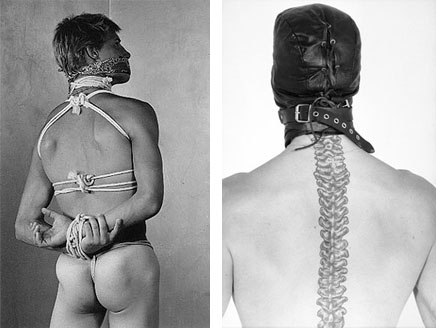
Fetish photographer Rick Castro

castro.jpg

Photographs by Rick Castro.

Presenting another guest post from John Wisniewski who back in May contributed an interview with William E. Jones about gay film director Fred Halsted. The subject this time is Rick Castro, pioneering bondage/S&M photographer, and also the proprietor of the Antebellum Gallery in Los Angeles which bills itself as the only fetish gallery in America. Castro has worked with Joel-Peter Witkin and Bruce LaBruce, and also photographed subjects as diverse as the Dalai Lama and Kenneth Anger, neither of them in bondage, unfortunately. As before, John offers a list of ten questions. Read on to discover why hustlers always used to wear white jeans (I have wondered about this)…

* * *

John Wisniewski: When did you begin photographing?

Rick Castro: 1986…around June…. My first photo was of my longtime friend (and former GF!), Odessa. I was a wardrobe stylist at the time, so I dressed her like Morticia Addams. Very high contrast/high shadowed B&W.

My second photo was of Tony Ward. I cast him for his first “mainstream” photo shoot. Editorial for a now defunct men’s magazine, INSTYLE, (published by porn mag IN TOUCH). We were working for photographer Albert Sanchez at the time. Between takes I’d dressed him up in full leather fantasy—leather hood, harness, gauntlets, codpiece, boots and horsetail!

JW: Whom are some of your influences in photography and art?

RC: I like the dead guys: Brassai, Pierre Moliner, F. Holland Day, Julia Margaret Cameron, Otto Dix, Paul Cadmus, Egon Schiele, Tennessee Williams, Pier Paolo Pasolini, Gilles De Rais.

JW: When did you meet fellow photographer Joel-Peter Witkin?

RC: Also during 1986, I bought Joel’s first book. At the back of the book was a request: “I am looking for people with physical deformations, amputees. Quadriplegics, burn victims, persons into extreme S&M, a woman with three breasts, geeks, pinheads, a woman with severe skin disease that will pose in an evening gown, anyone bearing the wounds of Christ, Christ.”

Later that year the new annex of Book Soup on Sunset Blvd hosted the first LA photo exhibit for Joel. I attended, introduced myself and gave him a stack of photos I had taken of my potential “models.” He called me the next morning. From then I worked with Joel on 13 of his most iconic photographs as a wardrobe stylist, costume designer, location scout, model scout, casting director, photo assistant, art director, make up artist and all around assistant.
Continue reading “Fetish photographer Rick Castro”

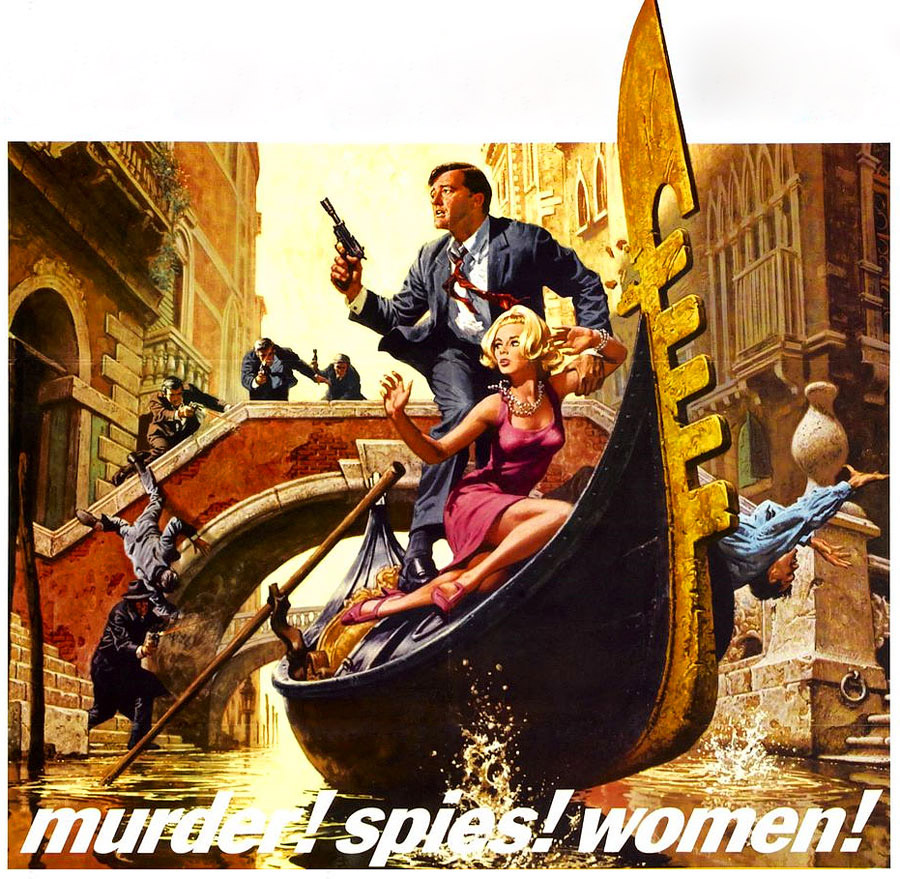
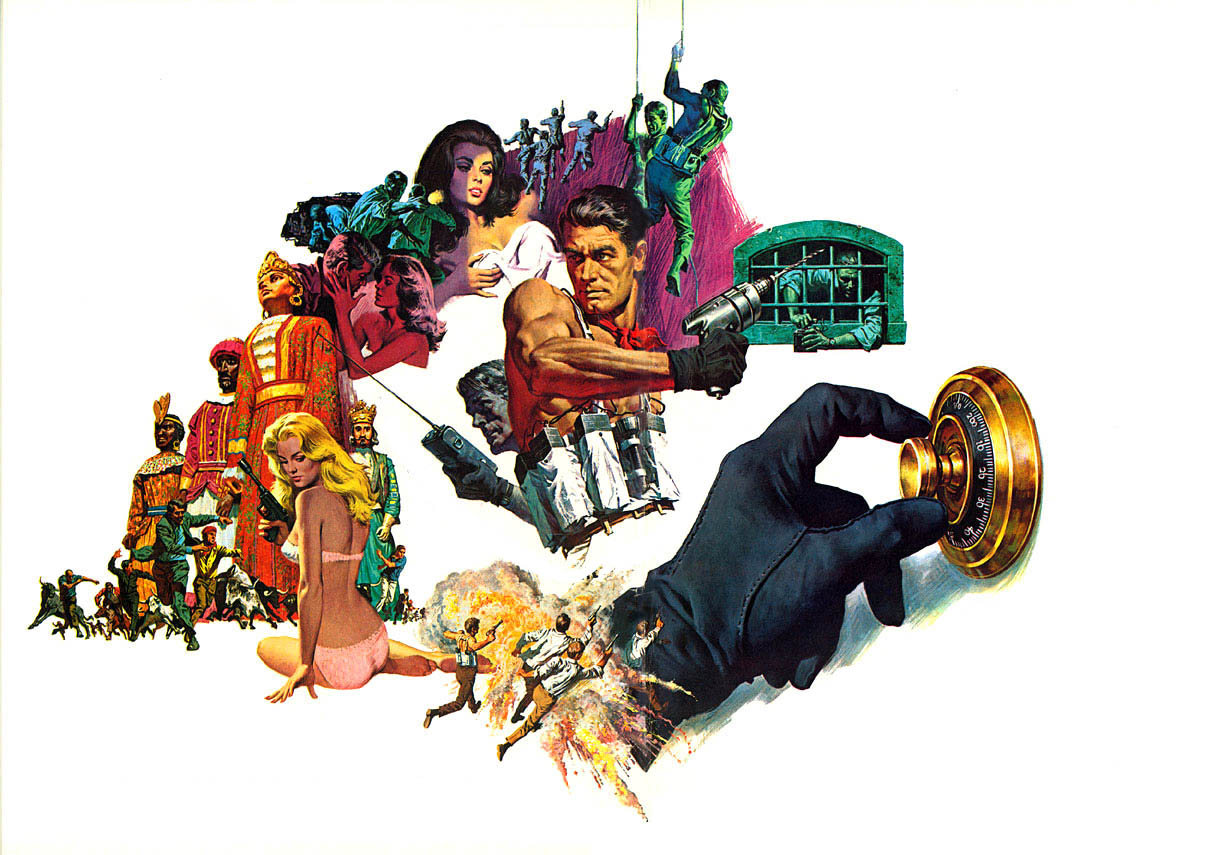
The poster art of Frank McCarthy

mccarthy06.jpg

The Venetian Affair (1967).

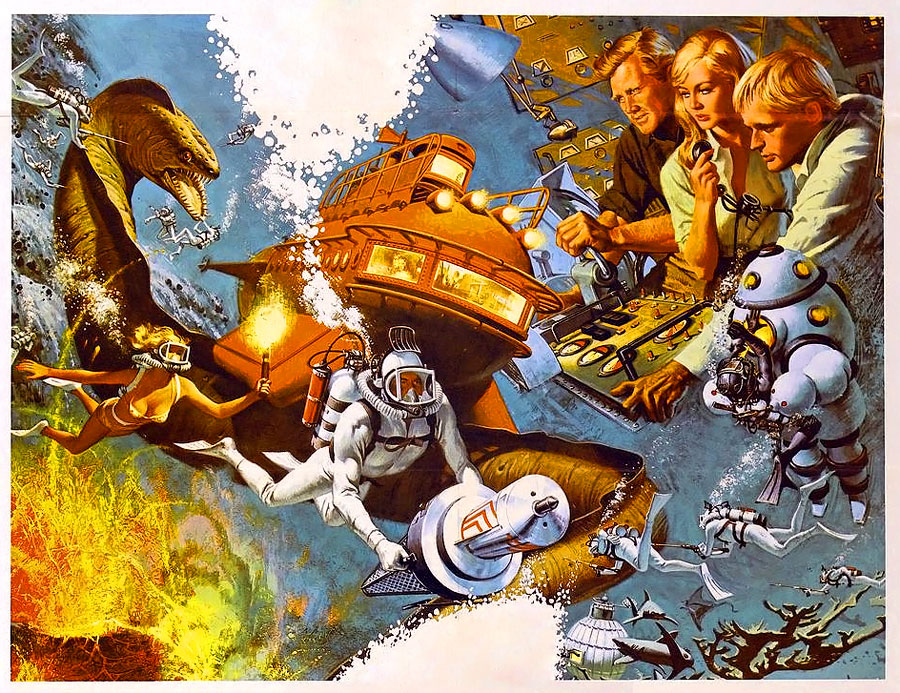
“Murder! Spies! Women!” If you added “guns” and “explosions” to that list you’d have the ingredients of the wild poster art of Frank McCarthy (1924–2002). I used to love posters like this when I was a boy, especially those from the everything-happening-at-once school which, by the look of these examples, was McCarthy’s specialty. Where action films are concerned the posters are often more exciting than the scenes they depict, in part because artists such as McCarthy were often working from their own imaginations as much as from any stills they’d been given.

mccarthy04.jpg

The Caper of the Golden Bulls (1967).

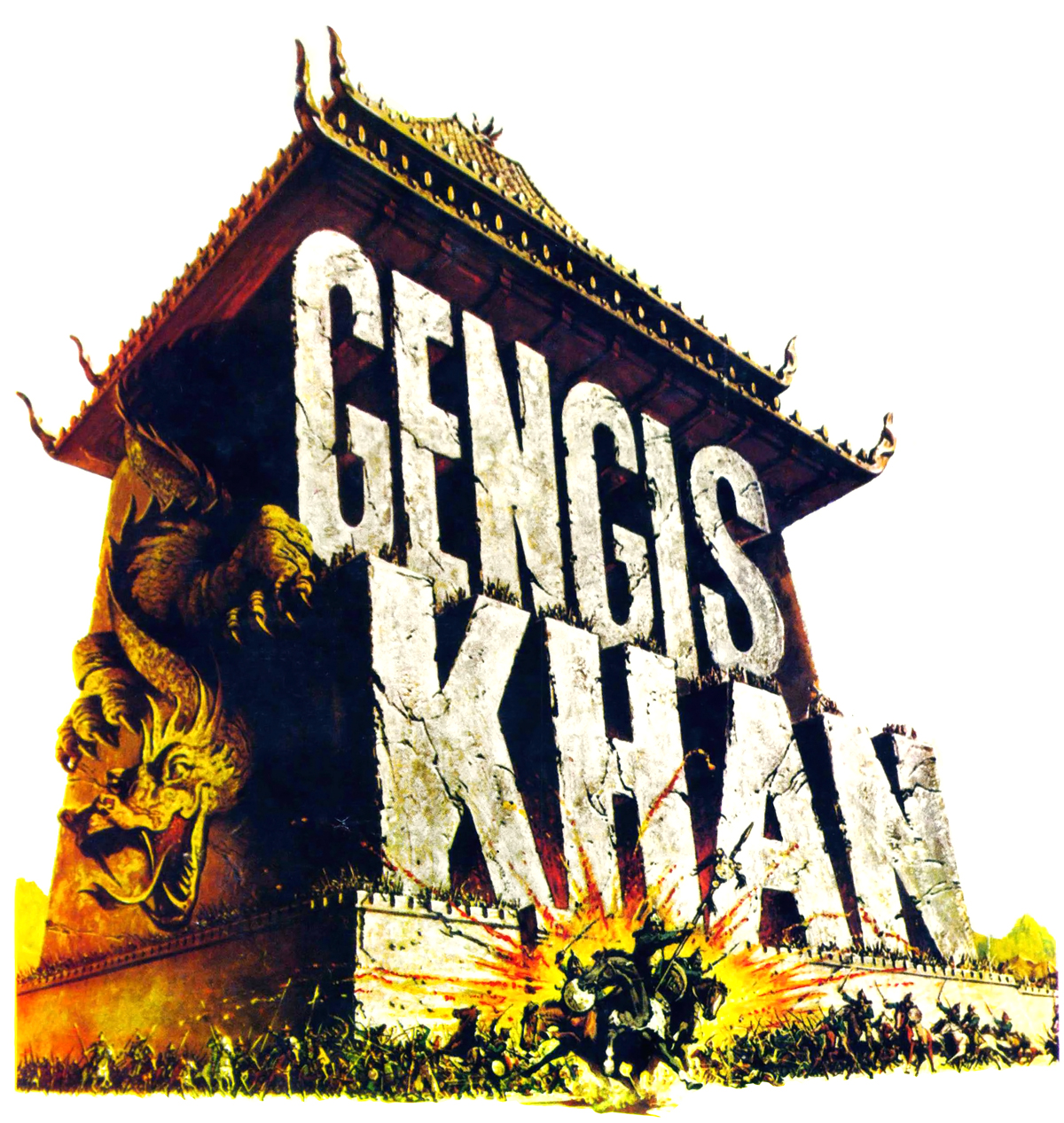
McCarthy had a career painting Western scenes which explains why his horses are so good. Some of his posters are for very well-known films, including a couple of Bond pictures, but I prefer those where he evidently had more of a free reign. The painting for The Caper of the Golden Bulls is a great composition with a use of colour you wouldn’t see today. Below there’s an example of the colossal title lettering that Terry Gilliam used to enjoy parodying. I still wonder which film did this first. Was it Ben-Hur? See more of Frank McCarthy’s poster art here.

mccarthy01.jpg

Genghis Khan (1965).

mccarthy02.jpg

Around the World Under the Sea (1966).

Continue reading “The poster art of Frank McCarthy”

Weekend links 167

field.jpg

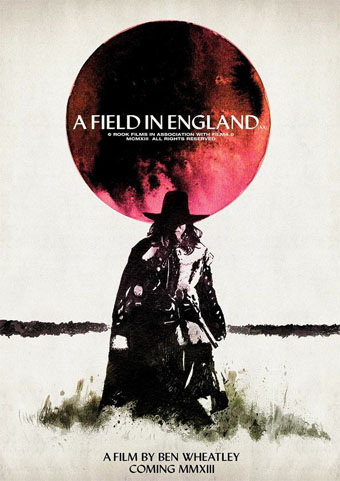
Poster by Luke Insect & Kenn Goodall.

In recent years I’ve had little patience for British cinema: too much dour “realism” with little of Alan Clarke’s vitality, too many comedies that aren’t funny, too many Hollywood calling cards, too much Colin Firth… So it’s been a pleasure to see Peter Strickland’s Berberian Sound Studio followed this month by Ben Wheatley’s A Field In England, a pair of films that stand out by daring to be different in a medium which seems to grow more creatively conservative with each passing year. A Field In England adds to the micro-genre of weird British films set around the time of the English Civil War. In place of witchfinders and devil worshippers we have magic, murder, madness, and a field of hallucinogenic mushrooms. Wheatley, like Strickland, takes risks that wouldn’t be allowed with a bigger budget which makes me excited to see what they’ll be doing next. A Field In England is already out on DVD & Blu-ray. The trailer is here. The director talked to Mat Colegate about the genesis of the film (spoiler alert). There’s more big hats and cloaks in this list of ten 17th century films.

• “I like to look at men…the way they look at women,” photographer Ingrid Berthon-Moine says about her pictures of sculpted testicles.

Roger Dean has finally sued James Cameron over the designs for Avatar. Will be interesting to see how this one turns out.

• Google has taken its Street View cameras to Battleship Island, “the most desolate city on earth“.

• The strange fantasy novels of Edward Whittemore are available again in digital editions.

Julia Holter talks about her forthcoming Gigi-inspired album Loud City Song.

• At Pinterest: Maneki-neko, the beckoning cat of good fortune.

Beautiful Books: Decorative Publishers’ Cloth Bindings.

• The abstract paintings of Hilma af Klint (1862–1944).

Lee Brown Coye illustrates August Derleth in 1945.

Bill Laswell’s discography intimidates the collector.

• Mix of the week: Kit Mix #23 by Joseph Burnett.

• The Soundcarriers: Last Broadcast (2010) | Signals (2010) | This Is Normal (2012)

Mistaken Memories Of Mediaeval Manhattan

eno1.jpg

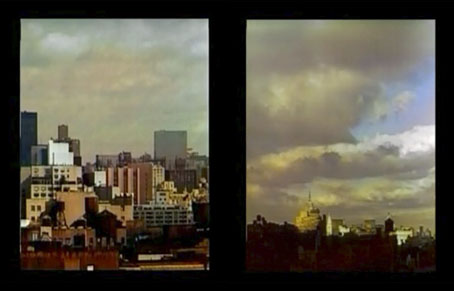
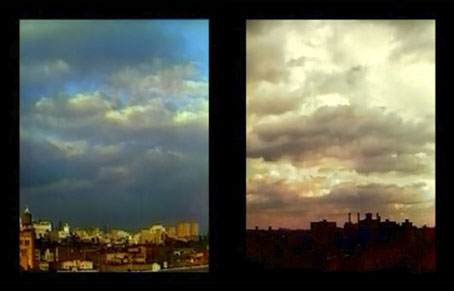
The first ambient film, at least in the Brian Eno sense of the term, although one can think of other examples prior to this, not least Andy Warhol’s Empire (1964) which is possibly alluded to in a sequence showing the Empire State Building in the distance. Eno filmed several static views of New York and its drifting cloudscape from his thirteenth-floor apartment in 1980–81. The low-grade equipment (and NTSC video) give the images a hazy, impressionistic quality. Lack of a tripod meant filming with the camera lying on its side so the tape had to be re-viewed with a television monitor also turned on its side. The assembled videos were later screened in galleries with music from some of the Ambient series of albums, and also two unique pieces.

eno2.jpg

An edited suite of seven pieces running 47 minutes was released on VHS tape in 1987. Like the original recordings, these could only be viewed by turning your TV on its side, something I used to think was a combination of the hazardous and foolhardy to all but the most diehard Eno aficionados. Television sets in the 1980s were either portable things in cheap plastic enclosures (some with curved sides), or cathode-tube monsters that would require two people two handle, assuming they weren’t screwed to a stand. I’ve yet to hear of anyone other than Eno himself who ever went to this trouble to watch a single video recording. It’s notable that recent DVD reissues of these videos, and the later Thursday Afternoon, have included horizontal as well as vertical versions.

The screen grabs here are from a 26-minute edit of the suite. The 14 Video Paintings DVD is currently out-of-print but a vertical copy can be found at Ubuweb.

Previously on { feuilleton }
Brian Eno: Imaginary Landscapes
Thursday Afternoon by Brian Eno
Moonlight in Glory
Tiger Mountain Strategies
Generative culture
My Life in the Bush of Ghosts

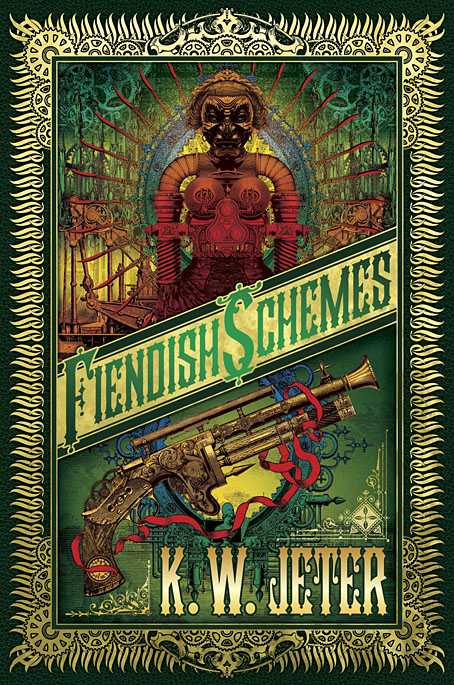
Fiendish Schemes

fiendish.jpg

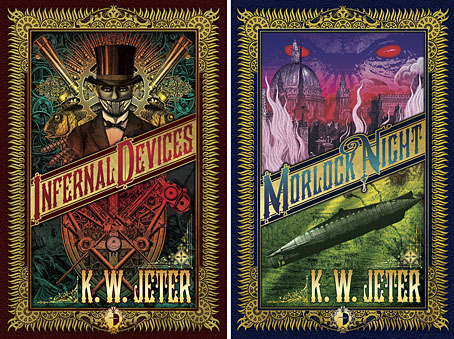
Now that this cover has appeared on Amazon I can mention it here. As usual, the machinery of publishing grinds slowly: this cover was commissioned in November last year, and worked on from the end of that month up to Christmas. Fiendish Schemes is a sequel by KW Jeter to his Infernal Devices, one of the original steampunk novels which was first published in 1987. In 2011 I created covers for reprints by Angry Robot of that title and the author’s earlier Morlock Night. Both those covers were very well received so Tor Books asked me to match their designs with a cover for the new book. This is quite unusual in publishing. Unless they make a real impact, cover designs seldom last beyond a couple of editions before being updated, and they rarely travel to other publishers.

jeter.jpg

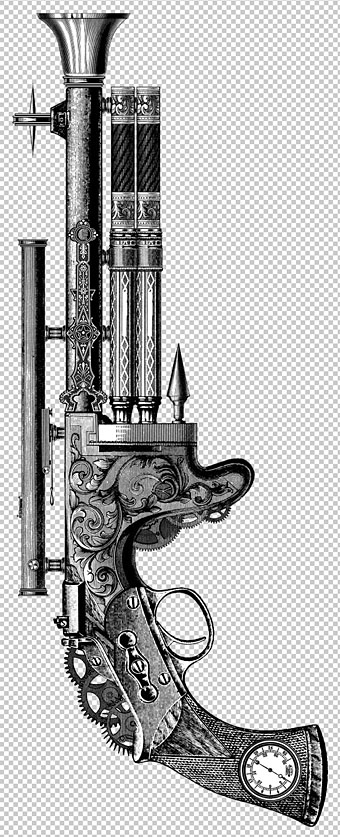
As with the earlier designs, the artwork is pieced together from very small pieces of period engravings, mostly from product catalogues or design books. In the novel, the steampunk weapon below is more alluded to than described but I was pleased with the way the illustration of it came together. Even though it’s composed of pieces of guns, fountain pens and clock parts it looks like something that could physically exist. One of the challenges I enjoy with this kind of collage illustration is trying to make something which doesn’t appear collaged at all.

Fiendish Schemes will be published on October 15th, 2013.

fiendish2.jpg

Previously on { feuilleton }
Ghosts in Gaslight, Monsters in Steam
Steampunk Revolution
The Bookman Histories
Aether Cola
Crafting steampunk illustrations
SteamPunk Magazine
Morlocks, airships and curious cabinets
The Steampunk Bible
Steampunk Reloaded
Steampunk overloaded!
More Steampunk and the Crawling Chaos
Steampunk Redux
Steampunk framed
Steampunk Horror Shortcuts