The art of Sergius Hruby, 1869–1943

hruby1.jpg

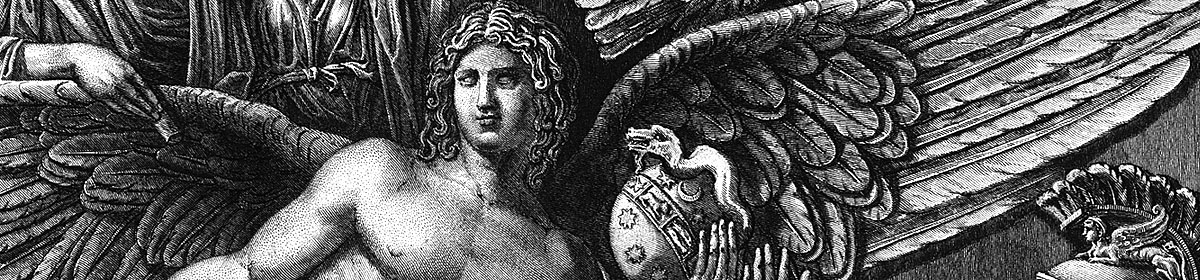
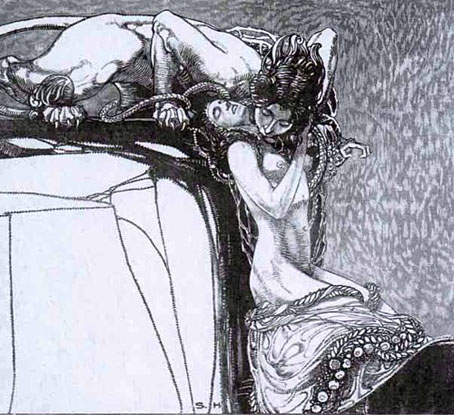
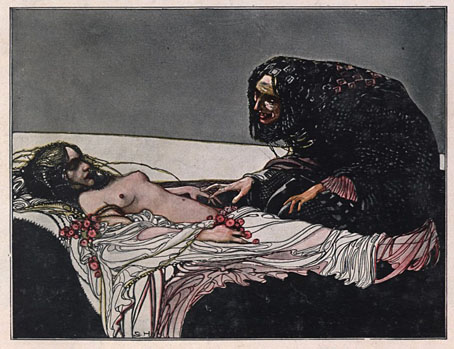
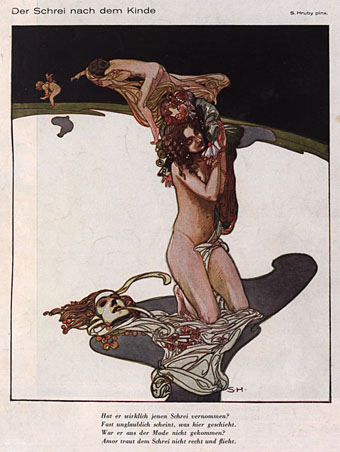
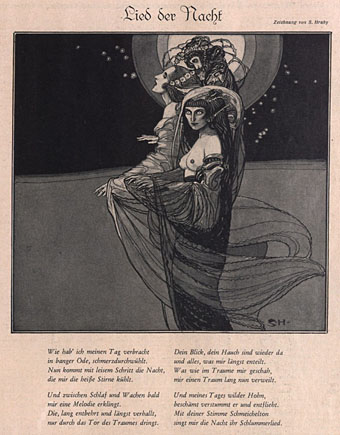
Sergius Hruby was an Austrian artist who specialised in that fin de siècle staple, the malevolent or sinister woman. Or so it would seem from these examples which, since I’ve chosen the more assertively Decadent fare, may be doing him a disservice. The style is very similar to another Austrian artist, Franz von Bayros, albeit without the overt pornography that’s a feature of Bayros’s drawings. What’s surprising about the Hruby pictures below is that they’re all from the pages of Die Muskete for 1933, a Viennese periodical which ran humorous articles, cartoons, and “glamour” pictures of a type which would have been far too risqué for a British magazine of the same period. Hruby’s work wouldn’t have seemed out of place in 1903 but in 1933 it looks somewhat old-fashioned. Another artist requiring further research, especially if there are more vampire sphinxes lurking somewhere. (And another tip via Beautiful Century.)

hruby2.jpg

hruby3.jpg

hruby4.jpg

Continue reading “The art of Sergius Hruby, 1869–1943”

Weekend links 166

foxxbelbury.jpg

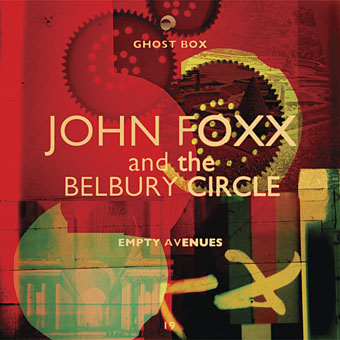
The Julian House cover art for the forthcoming collaboration between John Foxx and Belbury Poly (here renamed) has been revealed. Single no. 9 in the Ghost Box Listening Centre Study Series is now available.

• In addition to new Ghost Box records there’s more Hauntological (for want of a better term) cinema on the way this summer with the DVD/BR release of Ben Wheatley’s A Field in England. The potted description at Movie Mail is “a monochrome psychedelic trip into magic and madness set during the English Civil War”. Julian House has made a trailer. Meanwhile at Fangoria, there’s a PIF mixtape from The Advisory Circle. This accompanies an interview with John Krish, director of the most bizarre of the UK’s many strange and alarming public information films from the 1970s.

• More mixes: The hour-long OH/EX/OH show for The Geography Trip on Chorlton FM. “Expect slumber / tension / euphoria in almost equal measures.” It’s marvellous. At Self-Titled mag there’s DJ Food with O Is For Orange: Boards of Canada, Broadcast, The Books, etc.

Tangiers is a computer game based on the fiction of William Burroughs. Jim Rossignol talked to Alex Harvey about the development of the project.

walpurgisnacht.jpg

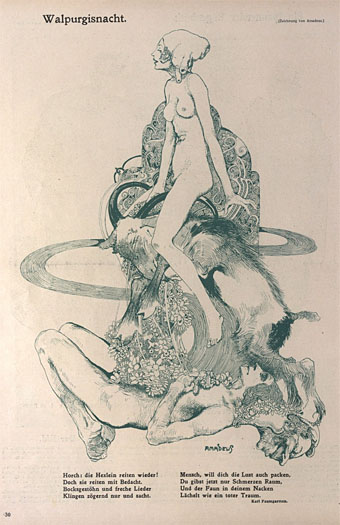
Walpurgisnacht (1917) by Amadeus. A drawing that could easily be from the late 1960s. If anyone knows the full name of the artist, please leave a comment. Via Beautiful Century.

Rebecca J. Rosen asks “What would the night sky look like if the other planets were as close as the moon?”

• The mystery of Charles Dellschau and the Sonora Aero Club.

The Surreal Cave Paintings Of Stockholm’s Metro Stations.

• At 50 Watts: More strange art from Marcus Behmer.

Ry Cooder in 1970. Directed by Van Dyke Parks!

The Post Office Tower: now you see it…

• At Little Augury: 99 Meninas.

Sartori In Tangier (1982) by King Crimson | City Of Mirage (2010) by John Foxx

Proverbial details

bruegel06.jpg

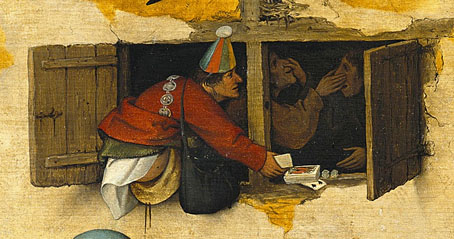
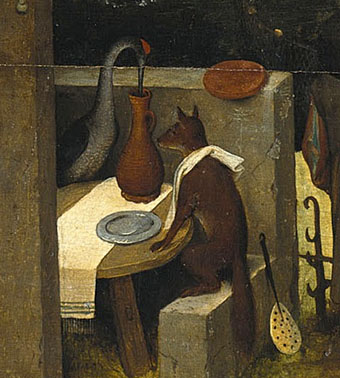
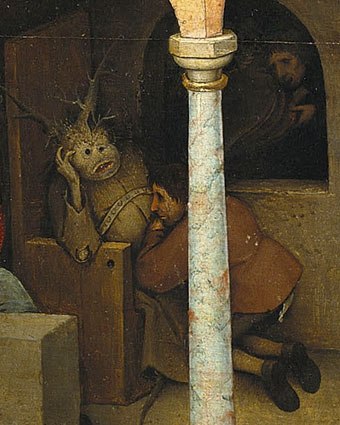
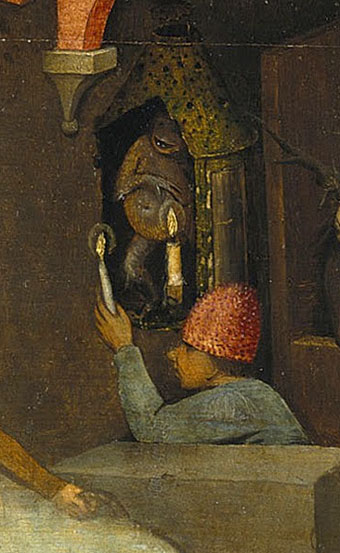
More Google Art Project details from the amazing Pieter Bruegel the Elder. The Netherlandish Proverbs (1559) is one of Bruegel’s many paintings which are crammed with curious incident; it’s also one of the more bizarre examples. In a crowded scene the artist depicts in a literal manner one hundred different proverbs or figures of speech. Wikipedia has a guide to the details but if you ignore that you can treat the whole thing as another example of Surrealism before its time. In addition to the usual complement of medieval grotesques there’s a fair amount of earthy humour of a kind which pretty much vanished from painting until the 20th century.

bruegel01.jpg

bruegel02.jpg

bruegel03.jpg

Continue reading “Proverbial details”

What Is A Happening?

technicolor.jpg

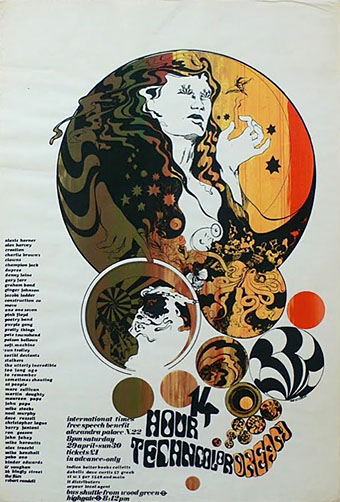
Poster for the 14 Hour Technicolor Dream (1967) by Michael McInnerney.

“The language of Mellow Yellow, the art of the Happening…”

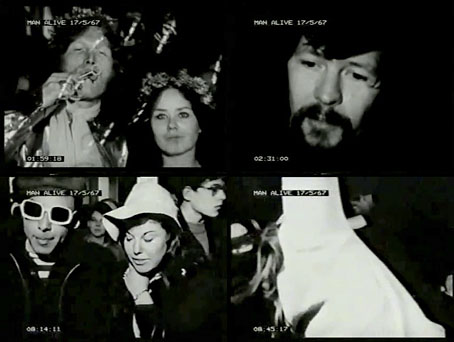
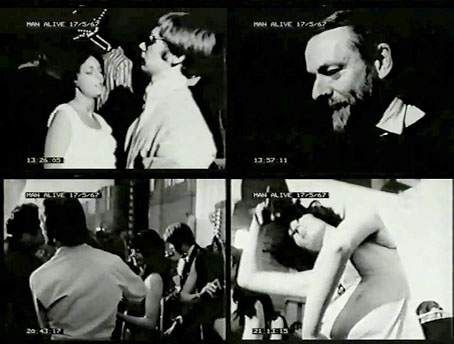
Yesterday’s story from International Times appeared in the same week in 1967 as this 30-minute BBC documentary shown as part of the Man Alive documentary strand. Taking them together you receive contrasting views of a major moment for London’s psychedelic underground, The 14 Hour Technicolor Dream, an all-night indoor arts-and-music festival staged at Alexandra Palace on 29th April, 1967. The event was a benefit to raise money for International Times following a prosecution for obscenity (Oz magazine later had to endure a similar, more notorious rigmarole). Alexandra Palace was an odd choice of location, being a huge Victorian exhibition space which had once served as the BBC’s main studios. (The first Quatermass serial was filmed there in 1953.) The venue was apparently chosen because it had previously hosted blues all-nighters but the acoustics are dreadful for live music, as the BBC’s documentary demonstrates. The film also shows that most of the audience wouldn’t have been too concerned; being there was more important.

manalive1.jpg

When you’ve been reading about an event like this for years it’s fascinating to get an extended view of the thing. The BBC were there all night, and capture many key incidents. The three interviewers are deeply sceptical of the whole business but that’s inevitable when they were making a film for a general audience. All the same, the repeated questions of “Why are you here? What’s this for?” are ones that would never be asked of a group of visitors to, say, Ascot, or the Henley Regatta. “It’s the audience which is the interesting part,” an upper-class Chelsea bookseller astutely declares, the interviewer seeming surprised that an older person might wish to be present. If the event looks trivial and even stereotypical today (tripped-out kids and blissful sentiments), it needs to be remembered that this was the very first time anything like this had been seen in Britain, hence the presence of the documentary crew. For sceptics and initiates alike the night was a glimpse of bright new territory opening up. The excitement of the moment still communicates itself.

What Is A Happening?: part one | part two | part three

The 14 Hour Technicolor Dream at UK Rock Festivals

manalive2.jpg

Previously on { feuilleton }
My White Bicycle

My White Bicycle

tomorrow1.jpg

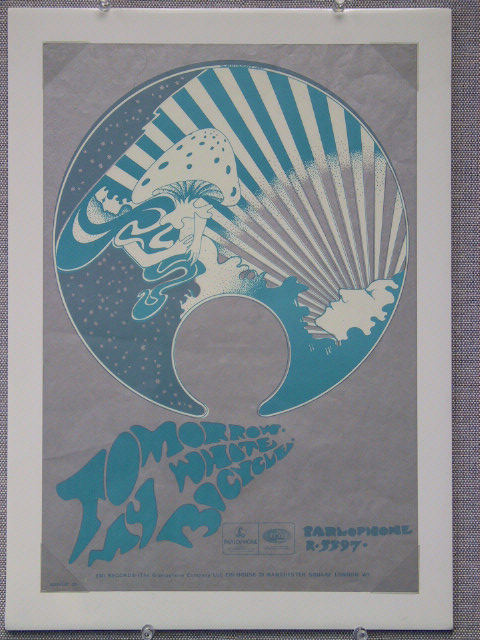
My White Bicycle (1967), poster by Hapshash and the Coloured Coat. Too risqué for EMI.

In what passes here for spare time I’ve been working on a private project that concerns events in London during a single week in 1967. I won’t elaborate for now but the research has been fun, and has led down byways where it’s easy to get lost in a profusion of historic detail. The International Times archive is a great time-sink if you want to see London’s psychedelic culture evolving from one week to the next. Oz magazine covered much of the same ground but in broader strokes; IT being a weekly paper was the closest thing the underground of the time had to a journal of record which means you’ll find things there which weren’t reported anywhere else.
tomorrow3.jpg

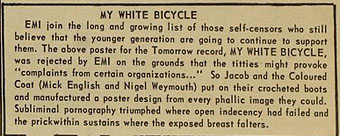
International Times, Volume 1, issue 13, 19/05/1967.

A brief item about a poster for the debut single by Tomorrow caught my eye, the artwork being an early piece by Hapshash and the Coloured Coat (Michael English and Nigel Waymouth) who we here discover were briefly known by another name:

MY WHITE BICYCLE

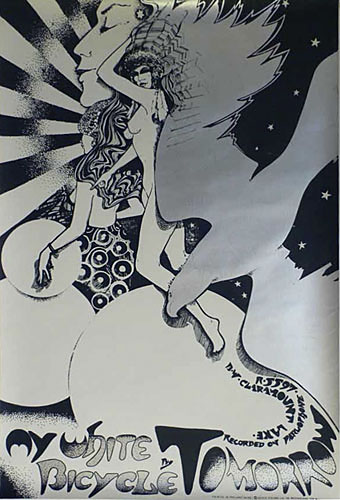
EMI join the long and growing list of those self-censors who still believe that the younger generation are going to continue to support them. The above poster for the Tomorrow record, MY WHITE BICYCLE, was rejected by EMI on the grounds that the titties might provoke “complaints from certain organizations…” So Jacob and the Coloured Coat (Mick English and Nigel Weymouth [sic]) put on their crocheted boots and manufactured a poster design from every phallic image they could. Subliminal pornography triumphed where open indecency had failed and the prick within sustains where the exposed breast falters.

Tomorrow were one of the first British psychedelic bands. My White Bicycle is their most memorable song but the rest of their self-titled debut album still holds up today. Ace guitarist Steve Howe became a lot more famous in Yes a few years later, while drummer Twink was in a host of bands in the late 60s and early 70s, Hawkwind included. My White Bicycle sounds superficially like a typical piece of psych whimsy à la Pink Floyd’s Bike (both songs were recorded at Abbey Road) but according to Twink there’s an anarchist subtext:

“My White Bicycle” was written out of what was actually going on in Amsterdam. One of the owners of Granny Takes a Trip, Nigel Weymouth [sic], had gone there and come back with a Provos badge which he gave to me. They were kind of like a student anarchist group that believed everything should be free. In fact, they had white bicycles in Amsterdam and they used to leave them around the town. And if you were going somewhere and you needed to use a bike, you’d just take the bike and you’d go somewhere and just leave it. Whoever needed the bikes would take them and leave them when they were done.

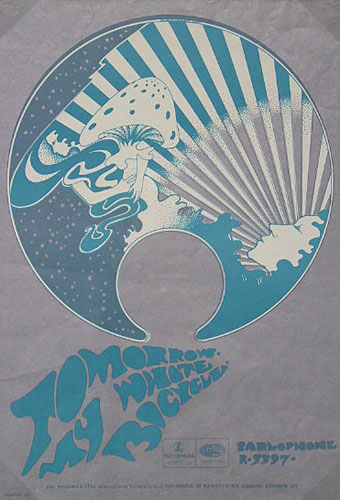
What would have been dismissed as pure utopianism now looks like prescience when bike-sharing schemes have become a reality. As to the redrawn poster, there’s a copy here which is described as very rare, hence its absence from other Hapshash galleries. Not really as phallic as the IT report implies; Aubrey Beardsley got away with a lot more priapic subterfuge in the 1890s when the strictures were also more severe.
tomorrow2.jpg

My White Bicycle (1967), the replacement poster by Hapshash and the Coloured Coat.

On the same page of IT there’s a brief announcement that The Beatles will have a new album out in June, something entitled Sgt. Pepper’s Lonely Hearts Club Band. That album also gave EMI a headache with both Lucy In The Sky With Diamonds and A Day In The Life being accused by “certain organisations” of promoting drugs. If the record company could have seen the greater headache that was coming less than ten years later from Malcolm McLaren and his King’s Road scallywags they might not have been so uptight.

Previously on { feuilleton }
Hapshash Takes a Trip
Michael English, 1941–2009
The Look presents Nigel Waymouth
The New Love Poetry