The Eerie Book

macdougall01.jpg

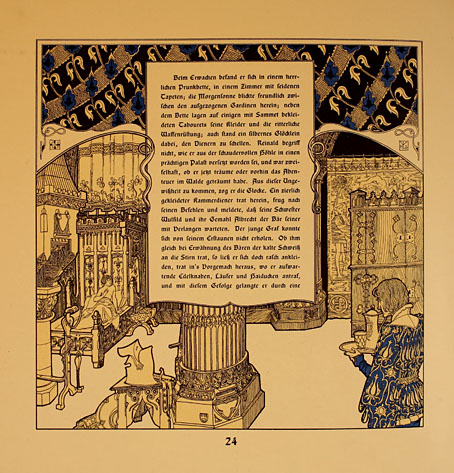
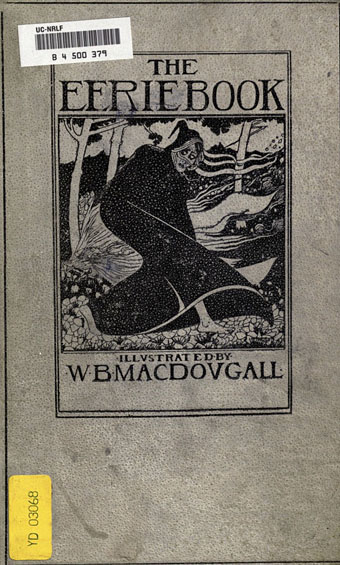
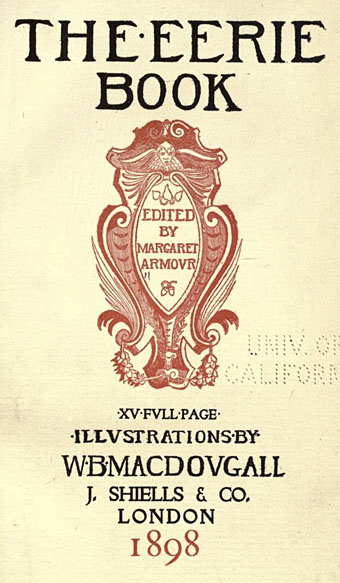
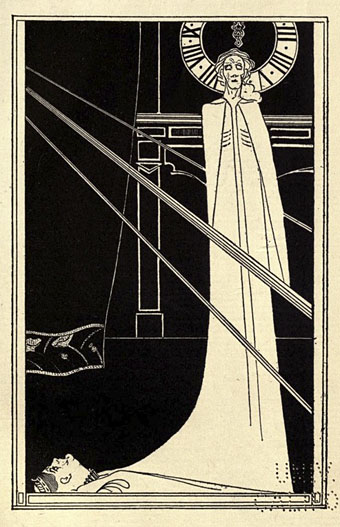
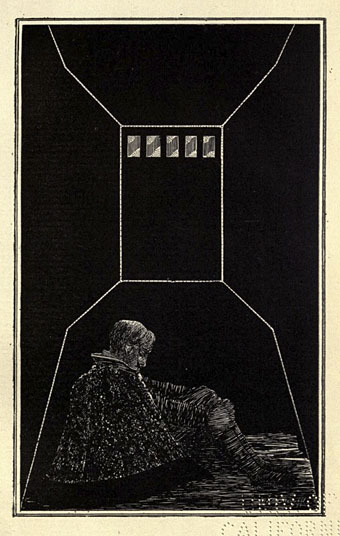
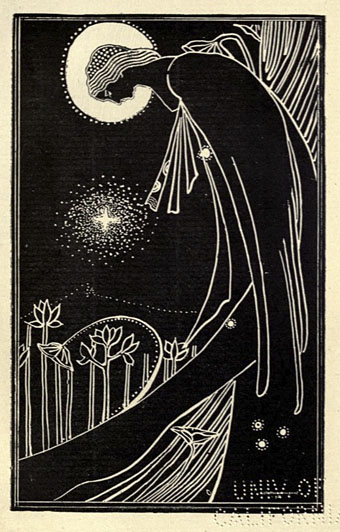
Work-wise, I’m still preoccupied with Edgar Allan Poe so I’ve been delving into the Internet Archive’s stock of scanned books more than usual. I’m not looking now for earlier Poe illustrations but a search last month turned up this collection of horror stories edited by Margaret Armour, and illustrated by William Brown Macdougall. Armour and Macdougall were married, and collaborated on several illustrated books; they also knew Aubrey Beardsley—Macdougall contributed to both The Yellow Book and The Savoy—so many of the illustrations in this volume are in the post-Beardsley manner. As Beardsleyesque drawings go they’re not as successful as, say, those of Will Bradley; some of Macdougall’s faces are rather dopey, and the cross-hatching doesn’t always work with this style of black-and-white art, as Beardsley himself discovered. But Macdougall’s drawing for The Masque of the Red Death is a better illustration than Beardsley’s own, horror not being one of Aubrey’s strengths. The Eerie Book may be browsed in full here.

macdougall02.jpg

macdougall03.jpg

The Masque of the Red Death.

macdougall04.jpg

The Iron Coffin.

macdougall05.jpg

The Mother and the Dead Child.

Continue reading “The Eerie Book”

Fritz Eichenberg’s illustrated Poe

eichenberg1.jpg

The Murders in the Rue Morgue.

My current workload is very Poe-oriented (about which more later) so I’ve been spending some time looking at earlier illustrators of the Boston maestro. Edgar Allan Poe’s stories don’t receive as much attention from illustrators as other popular works—horror and the macabre having a limited appeal—but there are nevertheless many illustrated editions, including this one from 1944 by Fritz Eichenberg which I hadn’t seen before. Eichenberg was a German who moved to America in the 1930s; his speciality was wood engraving, a technique particularly suited to Poe’s sombre dramatics. As always with illustrations of familiar stories, a large part of the interest lies in seeing how the artist has treated the work in their own manner. Several of the illustrations here show the climax of each story but The Pit and the Pendulum breaks with custom by showing the interrogation from the beginning (Harry Clarke showed both the beginning and the end). Also of note is the ape from The Murders in the Rue Morgue which for once looks like an orangutan rather than the unspecified simian monster seen in many other renderings.

Not all of Eichenberg’s illustrations are to my taste so this is a selection of favourites. You can see the rest at VTS together with more of the artist’s work.

eichenberg2.jpg

The Fall of the House of Usher.

eichenberg3.jpg

The Masque of the Red Death.

Continue reading “Fritz Eichenberg’s illustrated Poe”

Weekend links 348

wright.jpg

The Masque of the Red Death (1932) by John Buckland Wright.

• Thanks to MeadesShrine I’ve been working my way through Jonathan Meades’ television essays so this is timely: The Plagiarist in the Kitchen, an “anti-cookbook” by the man with forthright opinions.

• “‘Decopunk’ deserves to be bigger than Steampunk,” says Sam Reader. I consider my work on Bruce Sterling’s Pirate Utopia to be more Futurist than Deco but the period is right.

• “Celebrating the cinematically surreal, bizarre, cult, oddball, fantastique, strange, psychedelic, and the just plain WEIRD!”: 366 Weird Movies

But Fascism is also a political and economic system. Why, then, cannot we have a clear and generally accepted definition of it? Alas! we shall not get one—not yet, anyway. To say why would take too long, but basically it is because it is impossible to define Fascism satisfactorily without making admissions which neither the Fascists themselves, nor the Conservatives, nor Socialists of any colour, are willing to make. All one can do for the moment is to use the word with a certain amount of circumspection and not, as is usually done, degrade it to the level of a swearword.

George Orwell discussing the imprecise application of the “F” word

• At The Psychedelic Museum, a report on this month’s art show, Alice’s Adventures in Underground Culture.

M. John Harrison announces a new story collection which will be published later this year by Comma Press.

• Mixes of the week: Iceland: Foreboding Joy by Abigail Ward, and Secret Thirteen Mix 211 by Fluxion.

Daisy Woodward on how LSD adventures inspired John Waters’ Multiple Maniacs.

• More Moomins: Graeme Miller talks to Patrick Clarke about his soundtrack music.

• Some recent cultural highlights as chosen by Timothy J. Jarvis.

Benge presents a list of his favourite electronic albums.

Is this the underground Everest?

Strange Things Are Happening (1968) by Rings & Things | Strange Magic (1975) by Electric Light Orchestra | Strange (1977) by Wire |

Science Fiction Monthly

sfm01.jpg

Art by Chris Foss.

Recent uploads at the Internet Archive include an incomplete run of British magazine Science Fiction Monthly, a large-format collection of SF art and original fiction that ran for 28 issues from 1974 to 1976. Science Fiction Monthly was significant for my generation since it was the only regular British SF magazine available in the mid-70s. (Michael Moorcock and co. were still producing issues of New Worlds but the only ones I saw were the quarterly paperbacks). Science Fiction Monthly was published by New English Library which made it seem at first glance like a promotional tool for the publisher, even more so when most of the cover art and almost all the ads were for NEL titles. The early issues lean heavily on NEL content but later issues had a broader reach and contained all the features you’d expect from an SF magazine of the period: news columns, film reviews, interviews, a bad comic strip, and so on. The thing I liked most at the time was the reproduction of book cover art at a large size, with full-colour paintings filling the broadsheet pages or spreads, all printed with the intention of being removed and fixed to bedroom walls. The early issues were also unique in giving regular attention to the artists, running interviews and even showing photographs of the people responsible for all of that familiar paperback art. I didn’t see all of the early issues but the interviews were later collected in book form by NEL in Visions of the Future (Janet Sacks ed., 1976), a volume that made a considerable impression since it showed me that SF and fantasy illustration was a viable career rather than the product of remote and mysterious talents.

sfm02.jpg

Artist Bruce Pennington (see this post).

A few page samples follow. It’s a shame the collection at the Internet Archive is incomplete since the magazine’s contents were interesting to the end. The only copy I own today is the one for October 1975 (not currently available online) which is almost a JG Ballard special, with a feature on the writer, an interview about his new novel, High-Rise, and an original piece of fiction.

sfm03.jpg

Art by Bruce Pennington.

sfm04.jpg

Art by David Pelham.

Continue reading “Science Fiction Monthly”

Weekend links 340

zagorski.jpg

Fly Carefully (1969) by Stanisław Zagorski.

• Video of Tuxedomoon live in San Francisco, Rotterdam and Paris, 1983 (or try this copy), and a late-night German TV broadcast from 1985. The first Tuxedomoon album, Half-Mute, has been reissued by Crammed Discs with an accompanying album, Give Me New Noise: Half-Mute Reflected, featuring cover versions of the songs by various artists.

• More end-of-year reviews: Dennis Cooper’s recommendations are always eclectic (and thanks again for the blog shout!); not necessarily the best ambient and space music of 2016 by Dave Maier; a review of the year by graphic designer Jonathan Barnbrook; the 15 finalists of the 2016 Art of Building architectural photography competition.

The Complete Stories of Leonora Carrington will be published in April 2017 by Dorothy. Related: Letters, Dreams, and Other Texts by Remedios Varo will be published next year by Wakefield Press. Also of interest on that page is a new edition of Haschisch by Oscar AH Schmitz illustrated by Alfred Kubin.

• The week in Things (see this post): John Carpenter’s The Thing: The Story of an SF Horror Game-Changer. Ennio Morricone’s score will be infecting the vinyl world next year. Meanwhile, Matthew Thrift recommends “10 great films set in the Arctic and Antarctica”.

• Mixes of the week: FACT mix 581 by Pan Daijing, XLR8R podcast 468 by Jan Jelinek, and Secret Thirteen Mix 203 by Blood Sport.

A Year In The Country on Monumental Follies (1972), a book about architectural eccentricity by Stuart Barton.

• William Burroughs reads 23 random paragraphs from Naked Lunch each time you load this page.

• “The world is terrifying and destructive and dehumanising and tragic,” says Charlie Kaufman.

• Scents and sensuality: William Dalrymple on the perfumes of India, past and present.

• Brenda S G Walter on Hill House: The haunted soul of Shirley Jackson.

• A trailer for Dome Karukoski’s Tom of Finland. There’s more here.

Illustrating the Sixties: Paintings by Italian artists in London.

Michael Rother and Cavern Of Anti-Matter live in Berlin.

Cinemetal

Network 23 (1981) by Tangerine Dream | Exit 23 (1989) by Psychick Warriors Ov Gaia | Studio 23 (2012) by The Time And Space Machine