Men with snakes

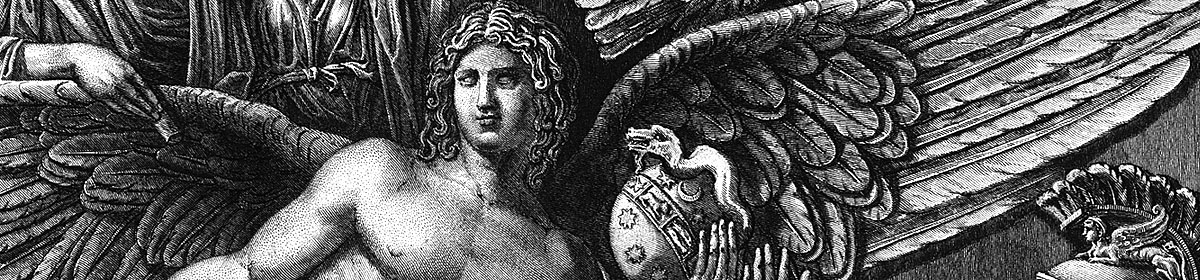
laocoon.jpg

Laocoön and His Sons attributed to Agesander, Athenodoros
and Polydorus of Rhodes (c. 160–20 BCE).

No jokes about snakes in a frame, please. Bram Dijkstra’s Idols of Perversity: Fantasies of Feminine Evil in Fin de Siècle Culture (1986) is a wide-ranging study of the “iconography of misogyny” in 19th century painting. Dijkstra examines the numerous ways that women were depicted in late Victorian and Symbolist art, with one chapter, “Connoisseurs and Bestiality and Serpentine Delights”, being devoted to representations of women with animals, especially snakes. The story of Eve and the Serpent prompts many of these latter images, of course, while scenes with other creatures seem intended to demonstrate the Victorian attitude that woman was closer to the brute beasts than man and could often be found conspiring with them to bring down her masculine masters. Continue reading “Men with snakes”

The art of John Bauer, 1882–1918

bauer1.jpg

A Young Prince Went Riding out in the Moonlight.

A Swedish artist whose fairytale illustrations were an influence upon later book illustrators from Arthur Rackham to Brian Froud. More pictures here and yet more at Art Passions.

Bud Plant’s John Bauer page
The John Bauer Museum

bauer2.jpg

Dragon.

Elsewhere on { feuilleton }
The illustrators archive

Octopulps

octopoidal.jpg

Pulps and octopuses! Octopuses and pulps! Not sure how this has evaded my attention until now but better late than never, especially when the contents are this er, pulpy. Francesca Myman, self-proclaimed Mistress of the Tentacled Oblivion (there’s a title to conjure with), has accumulated a stunning collection of octopoidal pulp madness. More goggle-eyed cephalopods than you can wave a blunt harpoon at. Hunks and babes alike, all must submit to the suckered demands of the tentacled menace!

Previously on { feuilleton }
Zeppelin vs. Pterodactyls
Coming soon: Sea Monsters and Cannibals!
Druillet meets Hodgson
It’s a pulp, pulp, pulp world
Davy Jones

Gods’ Man by Lynd Ward

ward1.jpg

I’ve never tried woodcut engaving—the closest was scraperboard and some linocuts when I was a teenager—but I’ve always admired the form and Lynd Ward (1905–1985) was one of its masters. Ward’s wordless “novels” were inspired by the similar work of Frans Masereel and you can see pages from two of these, Gods’ Man (1930) and Madman’s Drum (1930) at The Visual Telling of Stories. Ward’s work is frequently referred to as an inspiration by later illustrators, and comic artists especially have responded to these pictorial narratives. Woodcut illustration had a resurgence of popularity before and after the Second World War; most of MC Escher‘s early work is woodcut engraving, for instance. There are still a few contemporary practitioners, Clifford Harper being one of the most visible in the UK.

Bud Plant’s Lynd Ward page
A Lynd Ward site with examples from other books

ward2.jpg

ward3.jpg

Elsewhere on { feuilleton }
The etching and engraving archive
The illustrators archive

Weel done, Cutty-sark!

faed.jpg

Brad David wrote last week asking about the picture I used on the recent Jack Rose poster design. I’d seen this engraving for years in various books but was unsure of its provenance so the enquiry made me curious as well. The picture in question is an illustration for the poem Tam O’Shanter by Robert Burns and since it’s a depiction of cavorting witches and warlocks it turns up frequently in occult encyclopedias.

After a bit of searching it transpires that the engraving is based on a series of six paintings illustrating the poem by Scottish artist John Faed (1819–1902). Here we’re seeing the moment just before drunken Tam (his face visible at the window) shouts “Weel done, Cutty-sark!” to the young witch in the centre, whereupon the lights go out and a shrieking horde of angry witches chase him home.

Elsewhere on { feuilleton }
The etching and engraving archive