Huszti Horvath’s Three Dragons

horvath01.jpg

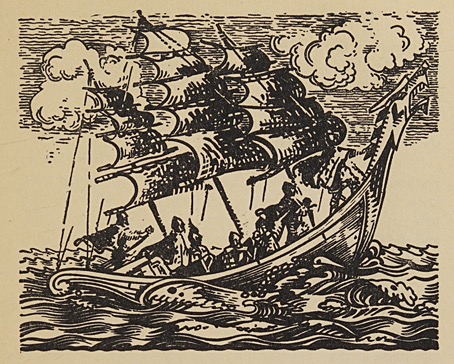
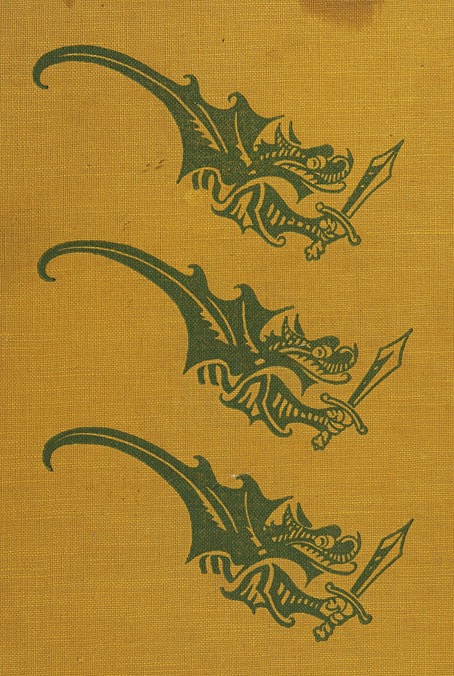
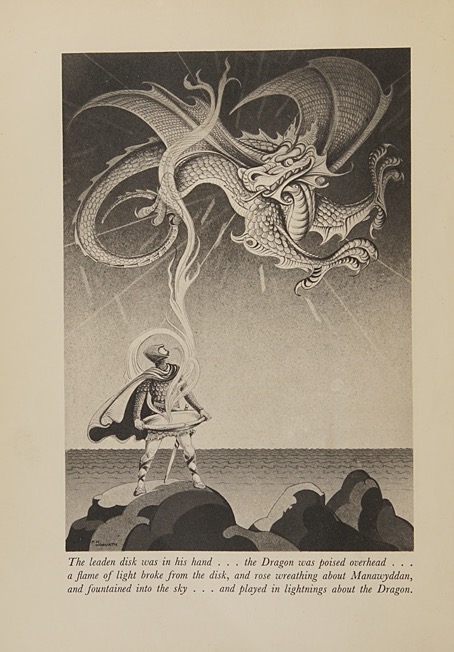
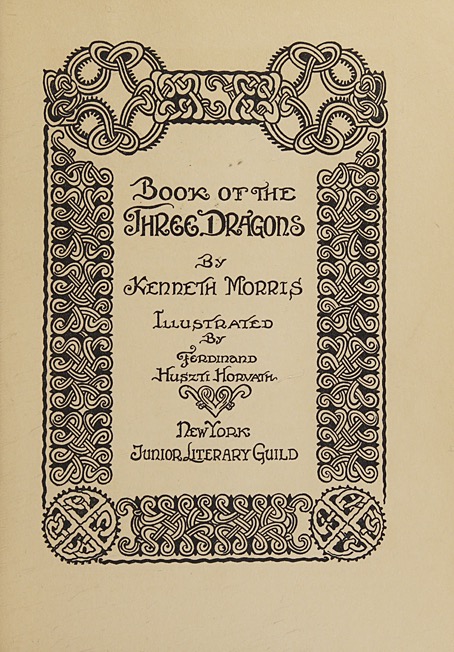
Book of the Three Dragons is an unusual illustrated volume, being an American edition of a retelling of Welsh myths by a Welsh writer, Kenneth Morris, with illustrations by a Hungarian artist, Ferdinand Huszti Horvath (1891–1973). Morris was, among other things, a Theosophist who was living in California when he wrote Book of the Three Dragons which no doubt explains the American publication. There doesn’t appear to be any Theosophy in this book at least. Dragons are an important symbol for the Welsh, with a red dragon being a prominent emblem on the flag of Wales. Morris’s book opens with a guide to the pronunciation of the Welsh names and words that appear in the text.
horvath02.jpg

Ferdinand Horvath, meanwhile, moved to the USA in the 1920s where he eventually found employment as an illustrator before working (without credit) for Disney. It’s at Disney-related websites that you’ll find most of the information about his life and work, where the discussion inevitably concerns his designs for animated films. A list of his other book productions would be welcome. There’s a very nice edition of The Raven that was published in the same year as Book of the Three Dragons but with art in much more of an Expressionist style.

I often wonder what Disney’s animations might have been like if the studio had given artists like Horvath and Kay Nielsen a freer rein. Disney only began to change its style in the late 1950s as a result of competition from other animation studios, and even then the results were compromised. Sleeping Beauty used the designs of Eyvind Earle to distinguish the film from the studio’s previous fairy tales but Earle was dissatisfied with the treatment his work received and he left the project before it was finished; the art direction for One Hundred and One Dalmatians was based on the cartoons of Ronald Searle but Walt Disney hated the results and refused to try anything similar again.
horvath03.jpg

horvath04.jpg

horvath05.jpg

Continue reading “Huszti Horvath’s Three Dragons”

Kay Nielsen’s Book of Death

nielsen-bd05.jpg

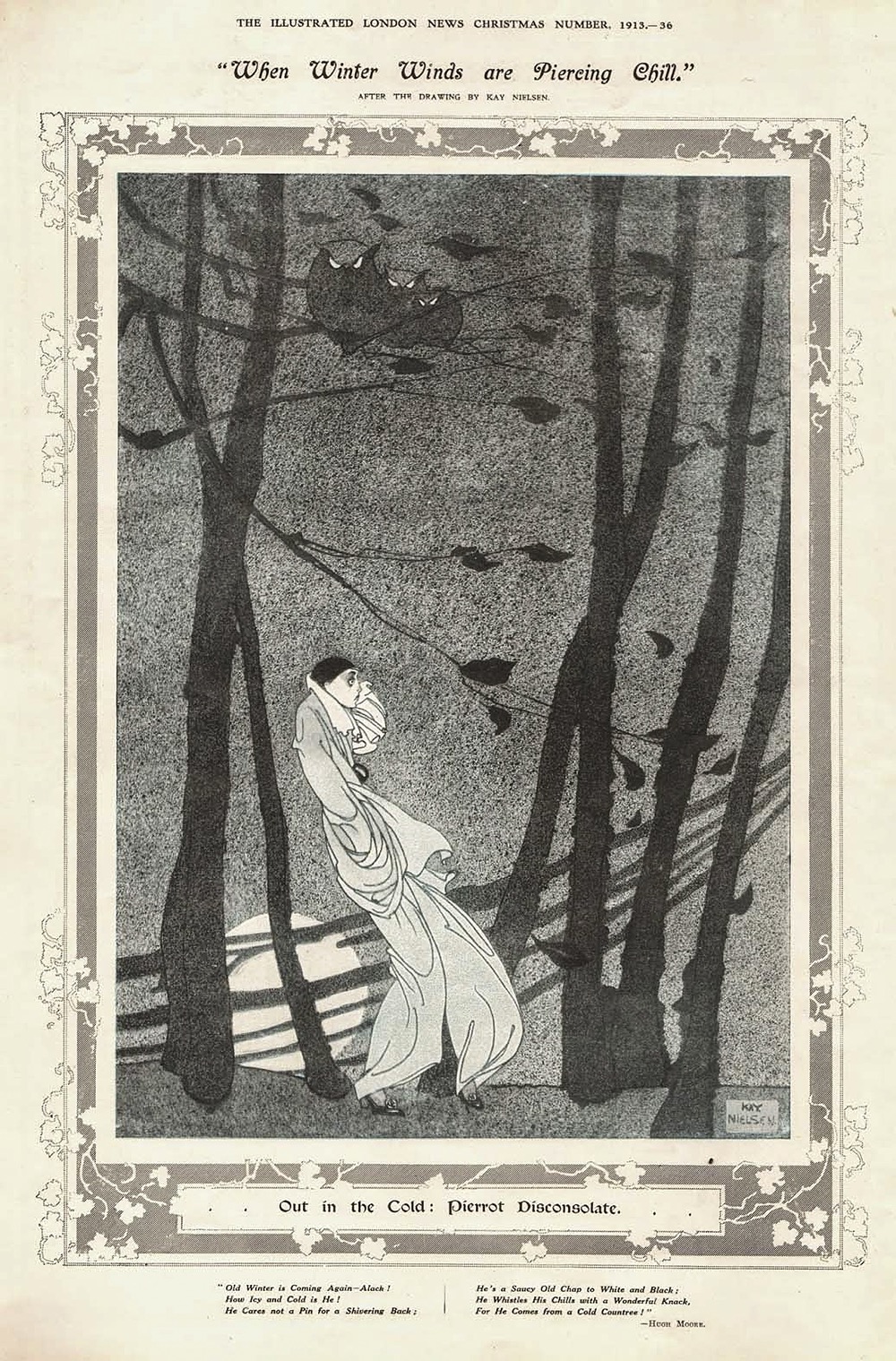
Disconsolate.

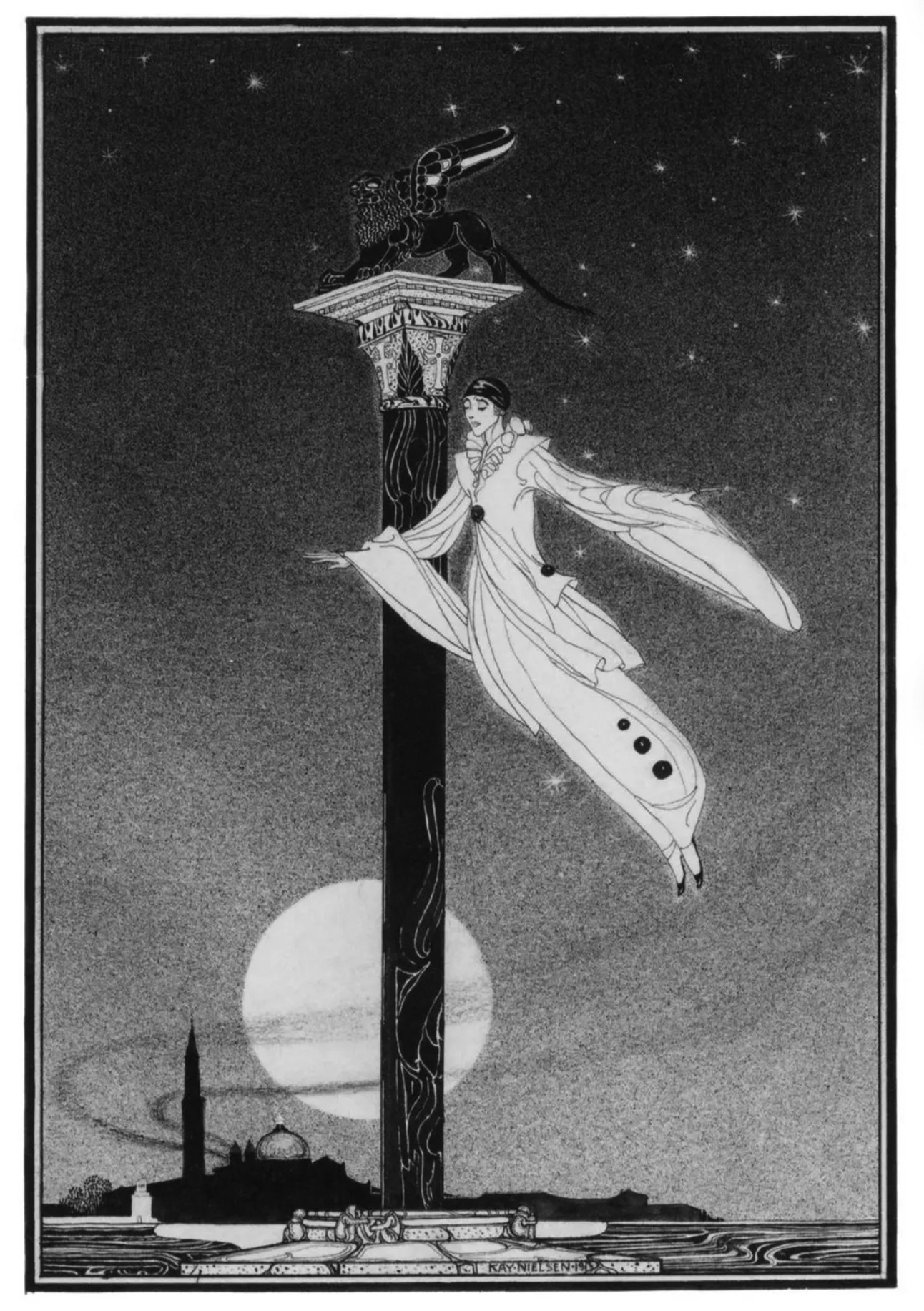
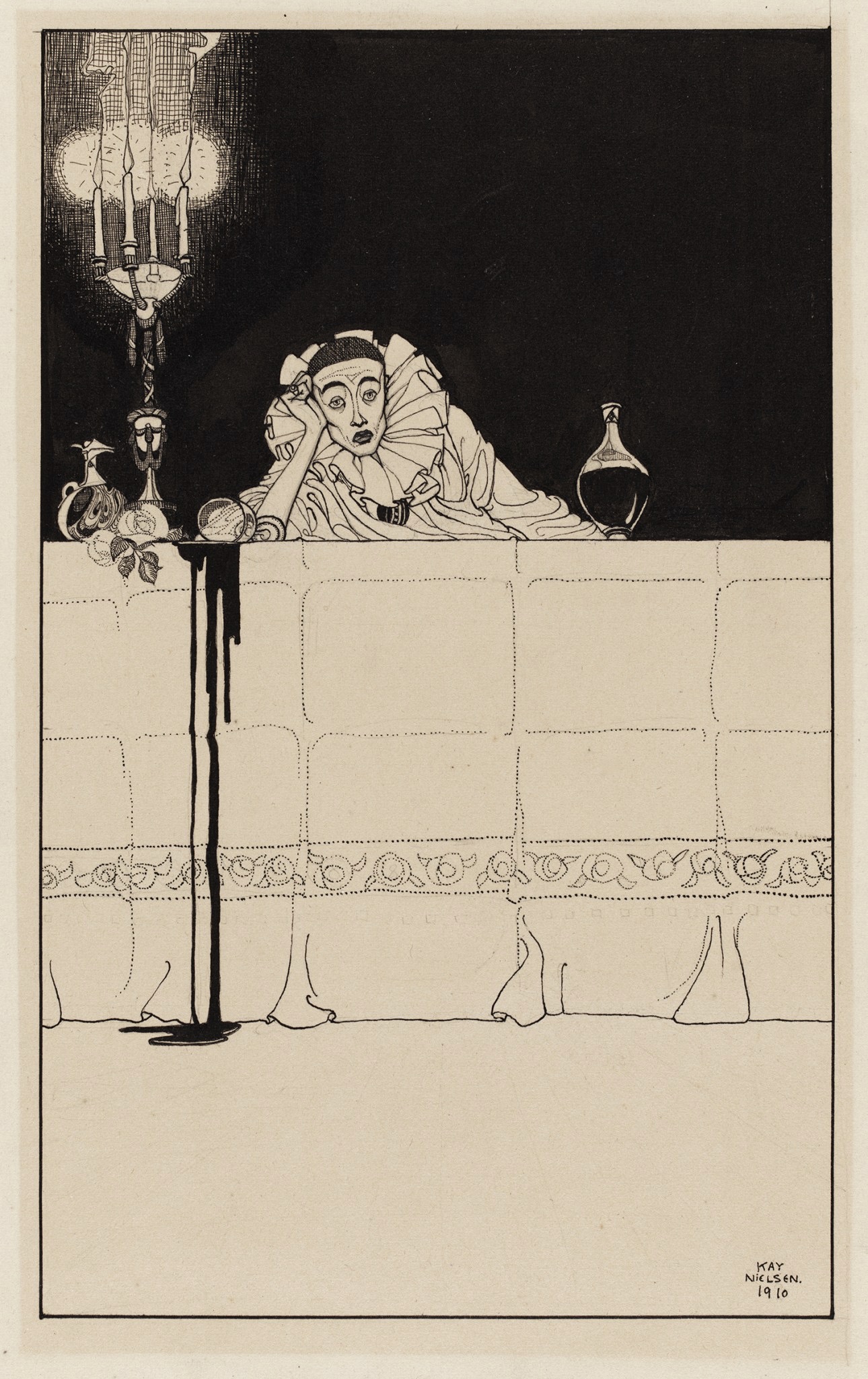
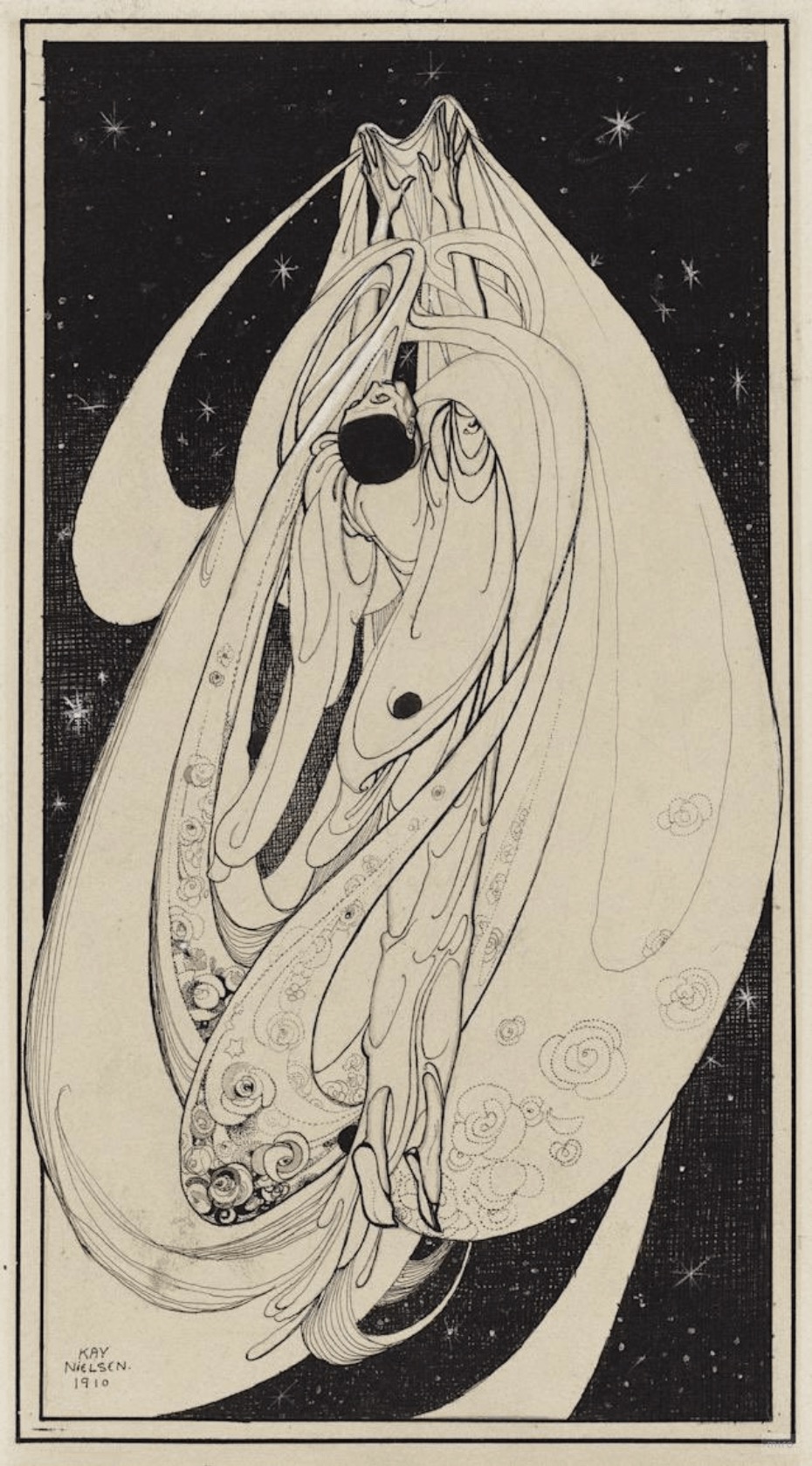
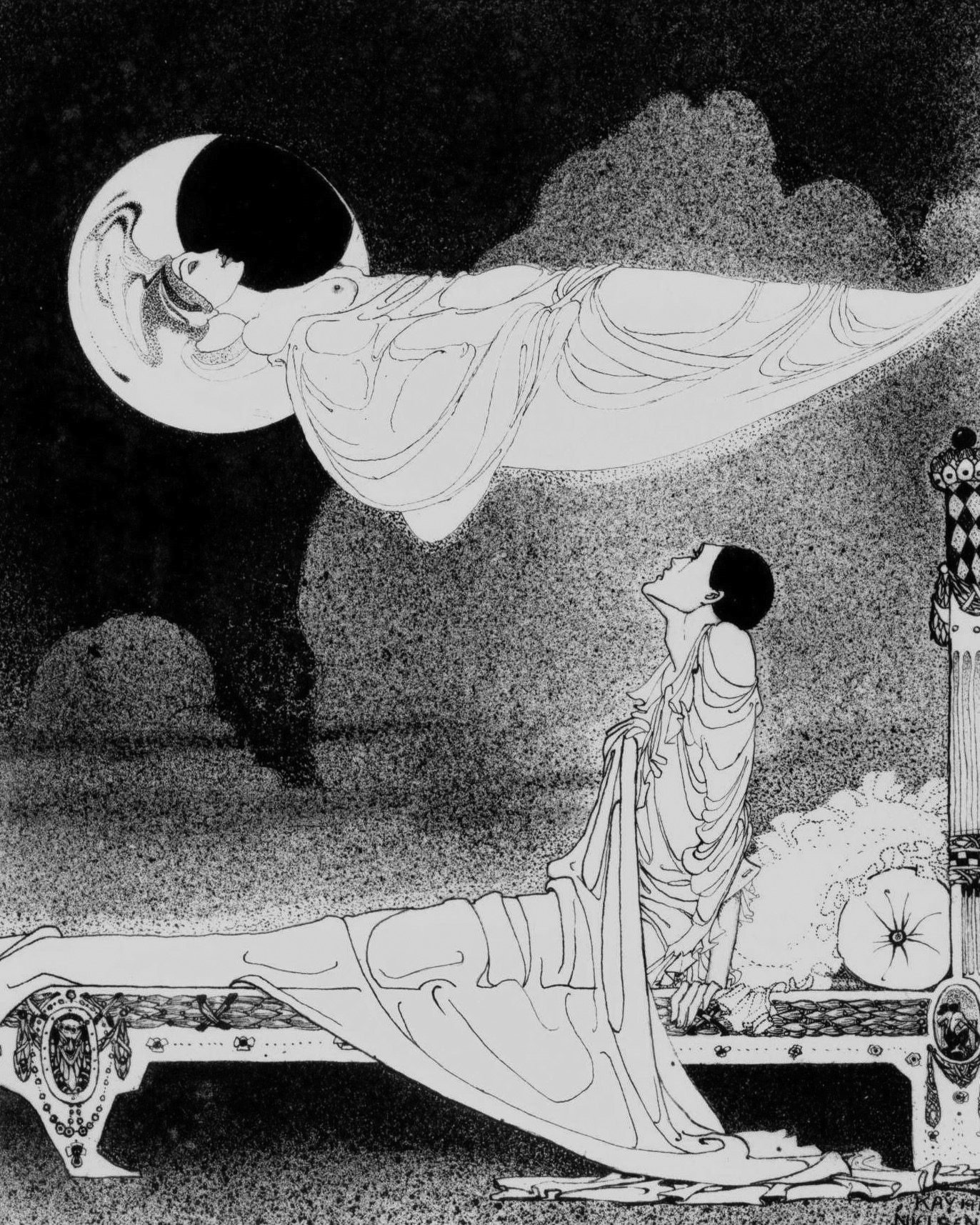
More unknown Kay Nielsen, although “little-known” would be more accurate since the sombre nature of these drawings has made them popular among the image-hoarders in the Tumblr labyrinth. Nielsen created the series known as The Book of Death around 1910 when he was an art student studying in Paris, the “Book” being a cycle of ten (or more?) drawings that chart the progress of one of those Pierrots who we find mourning a lost love. The series was exhibited in London but wasn’t published in full during Nielsen’s lifetime, although a couple of the drawings did see print a few years after their completion. The Illustrated London News published one of them in 1913 when Nielsen’s work was showcased in the magazine’s Christmas special; two more appeared a year later in The Studio where Nielsen’s work was analysed by Marion Hepworth Dixon.

nielsen-bd08.jpg

Consolation.

Information about the series is so scant my cursory searches haven’t been able to locate a reliable list of the pictures, or any idea of the order they might follow. The Studio, for example, mentions a picture labelled “Omen” but doesn’t say what the picture looks like. What you see here is a guess at the labelling and an attempt at an order. The problem is complicated by the fact that Nielsen was drawing other Pierrot figures at this time so I can’t be certain that all the pictures are part of the series. They are all Nielsen’s work, however.

nielsen-bd07.jpg

Desolation (or Solitude).

Of greater certainty is the way the series differs from Nielsen’s later illustrations, showing the artist proceeding in an opposite direction to that of his contemporary, Harry Clarke. Where Clarke’s illustration work evolved from delicate fairy-tale scenes to the horrors in Poe, Goethe and Swinburne, Nielsen abandoned fin-de-siècle morbidity for his meticulous blending of the art styles of the East and West. Marion Hepworth Dixon makes a great deal of the influence of Beardsley on Nielsen’s early drawings, something that’s most evident in his black-and-white art here and elsewhere. In 1910 he was still developing his own style so there may be other influences at work—Sidney Sime, perhaps—but without further research it’s difficult to say.

nielsen-bd06.jpg

Yearning.

nielsen-bd04.jpg

The Vision.

Continue reading “Kay Nielsen’s Book of Death”

Kay Nielsen’s Arabian Nights

nielsen01.jpg

Prologue.

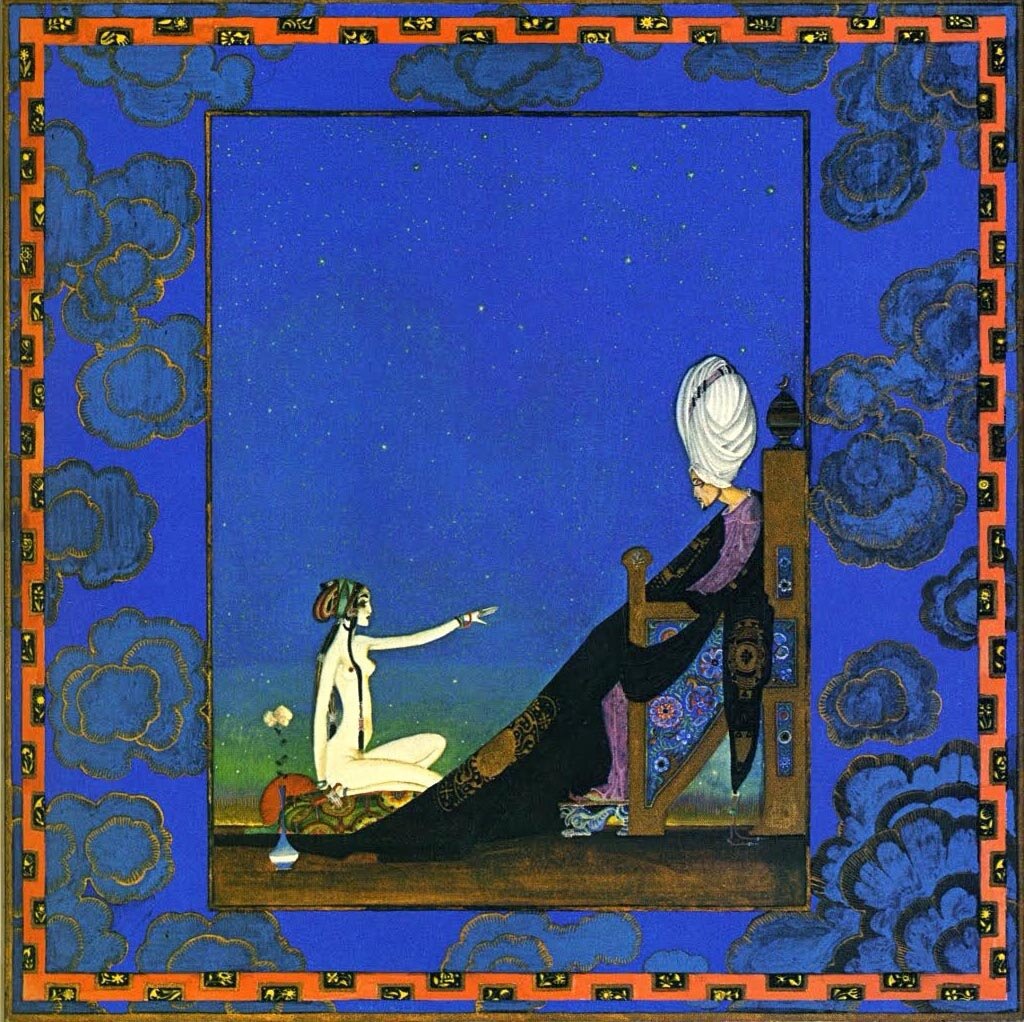
Last week a Kay Nielsen illustration passed through my RSS feed, a picture I thought for a moment I hadn’t seen before. A quick search revealed that the illustration is in fact present in a book on my shelves, The Unknown Paintings of Kay Nielsen (1977), one of the series of art books co-published by Pan and Ballantine in the 1970s. A selection of Nielsen’s illustrations had appeared in the series two years earlier in a book simply titled Kay Nielsen; the arrival of a follow-up made the Dane the only featured artist aside from Frank Frazetta to be the subject of multiple volumes.

nielsen02.jpg

Prologue.

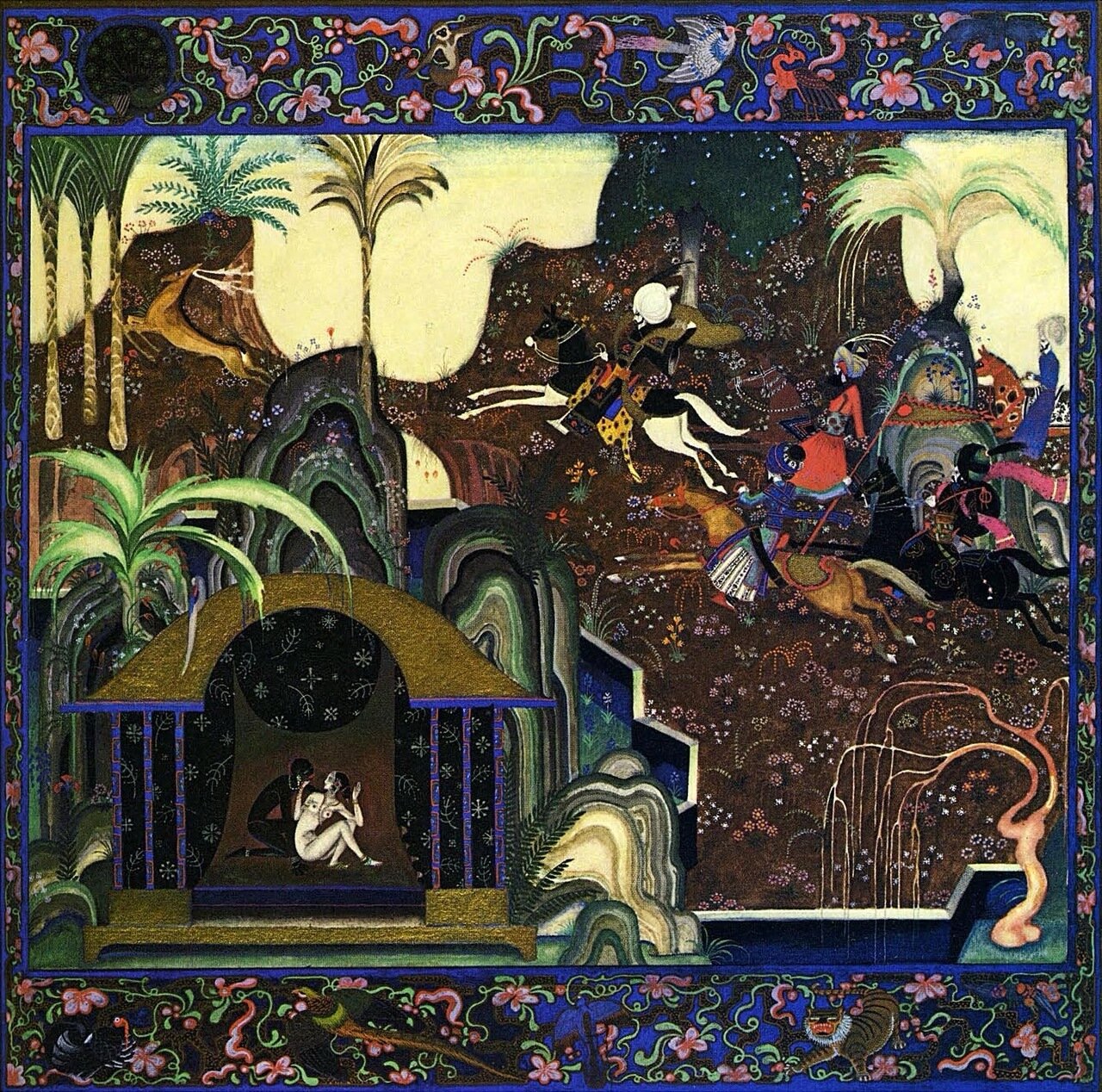
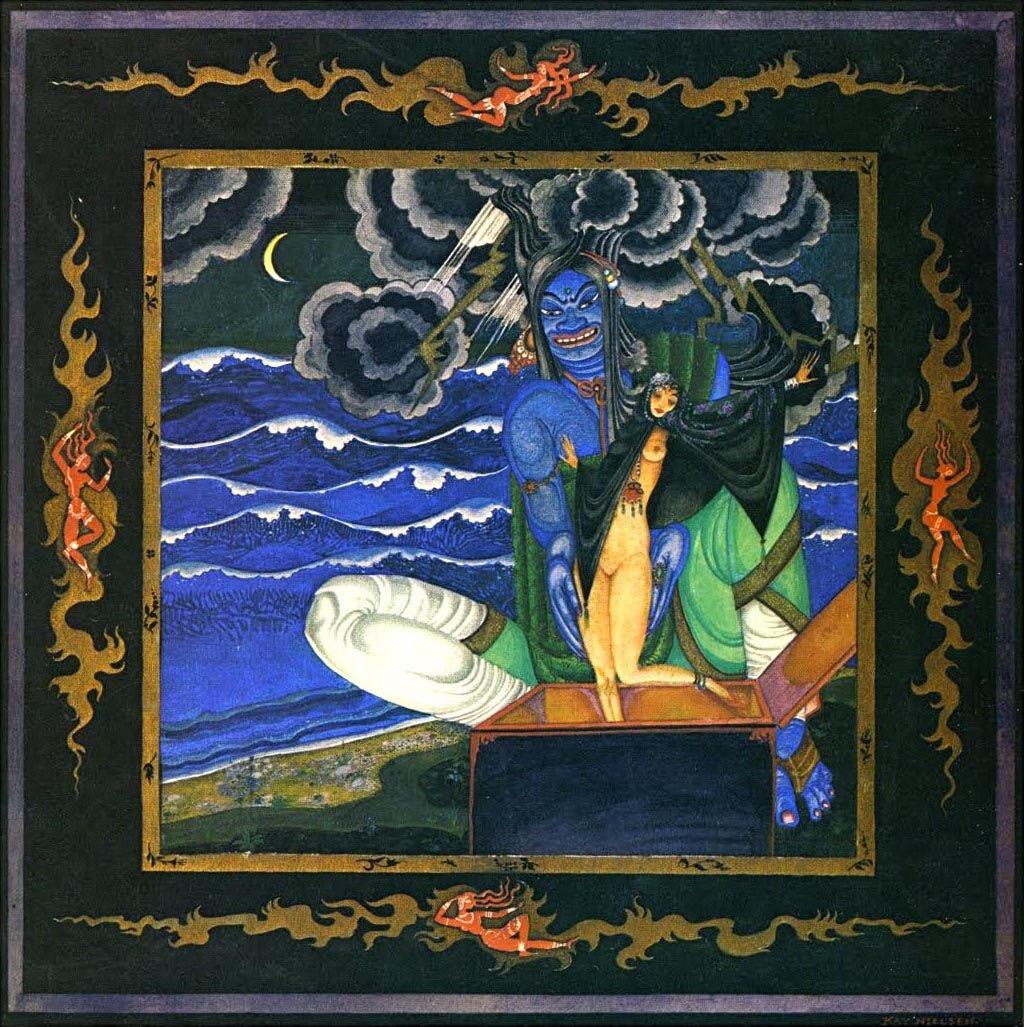
Nielsen’s illustrations in the second book were labelled “unknown” because they hadn’t been printed before, despite being commissioned for a new Danish translation of The Thousand and One Nights by Arthur Christensen. Hildegarde Flanner, a friend of the Nielsens when they were living in Los Angeles in the 1940s, writes in an introductory “elegy” that Nielsen worked on the illustrations from 1918 to 1922, but publication of the book was abandoned as a result of the economic climate in post-war Denmark. There were further difficulties later on. When Nielsen died in 1957 the illustrations still hadn’t been published. Nielsen’s widow, Ulla, passed them on to Hildegarde Flanner and Frederick Monhoff who subsequently tried to place them with museums in the USA and Denmark. None of the institutions they contacted were interested, an unthinkable situation today.

nielsen03.jpg

Prologue.

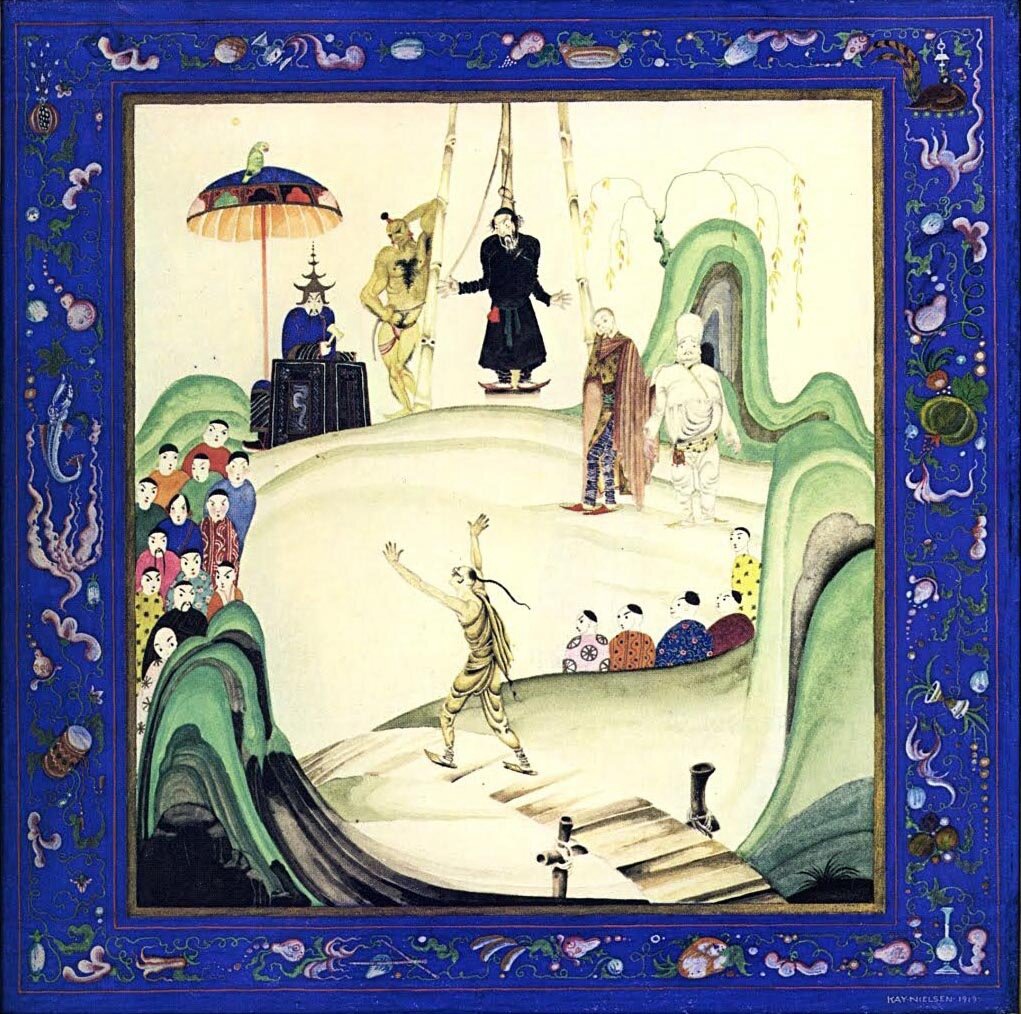
There’s more of an adult tone to Nielsen’s Arabian Nights than there is in his earlier works, a quality which suits the material but which may explain why they had to wait until the 1970s to see print. Simplified versions of the tales of Aladdin and Sin(d)bad have seen The Thousand and One Nights continually miscast as children’s fiction when the original stories were intended for adults; Scheherazade invents a new story each night to save herself from execution in the morning. Nielsen’s illustrations bring the stories closer to their origin while also maintaining the influence of Persian art on the style of his drawings.

nielsen04.jpg

The Tale of the Little Hunchback.

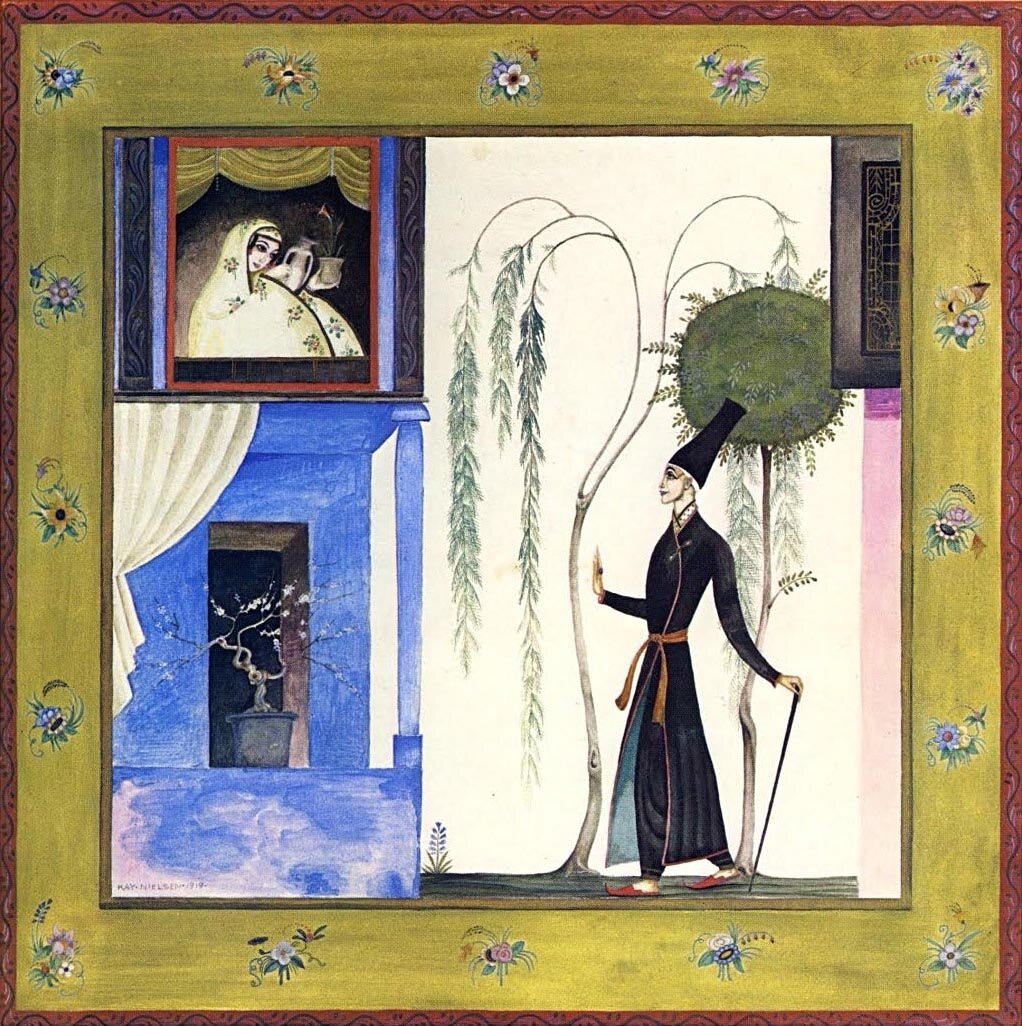
The copies you see here show the colour plates alone but Nielsen also created a number of monochrome vignettes and other pieces to be used as decoration elsewhere in the book. The Unknown Paintings of Kay Nielsen doesn’t reprint the stories so has to pad out its pages by combining details from the colour plates with the ink borders. More recently the illustrations were reprinted in one of Taschen’s expensive editions which is closer to Nielsen’s original plan for the book.

nielsen05.jpg

The Tailor’s Tale of the Lame Young Man.

Continue reading “Kay Nielsen’s Arabian Nights”

Fender guitar catalogue, 1976

fender01.jpg

Another post prompted by 70s Sci-Fi Art, and a publication that’s very typical of its decade. The Fender guitar catalogue for 1976 showcases its product range with a series of illustrations that carefully pastiche the kind of art you’d find in books of fairy tales. Selling rock’n’roll equipment in this manner wasn’t a trend-setting step by 1976, not with the punk hordes on the march, but corporations are seldom ahead of the general culture. The cover art by Ruby K. Lee is a copy of one of Kay Nielsen’s drawings for East of the Sun and West of the Moon. Lee also provides one of the interior drawings, with the rest of the art being the work of Bruce Wolfe. (There may be another artist involved since one of the illustrations lacks a credit.) This looks like a huge amount of effort for a small product catalogue but the illustrations were also part of an ad campaign with accompanying storybook copy. It’s good to see Busorama being used for all the headings. I’ve been using this font myself for its associations with the 1970s.

fender02.jpg

Since I keep borrowing tips from 70s Sci-Fi Art I’ll note again that Adam Rowe’s Worlds Beyond Time: Sci-Fi Art of the 1970s will be published by Abrams next month.

fender03.jpg

fender04.jpg

fender05.jpg

Continue reading “Fender guitar catalogue, 1976”

Jo Daemen’s The Sacred Flame

daemen00.jpg

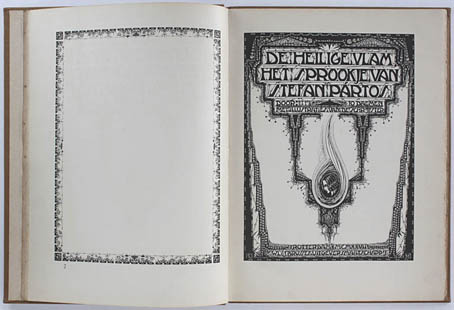
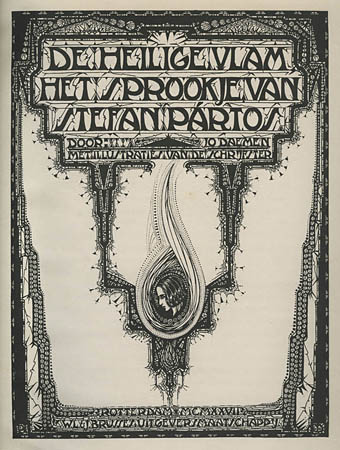
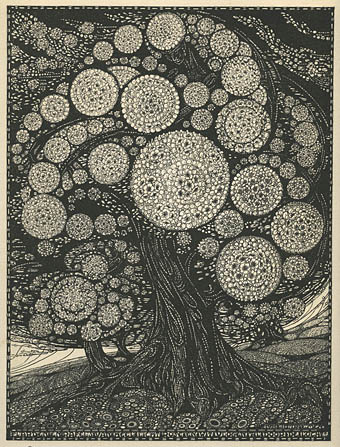
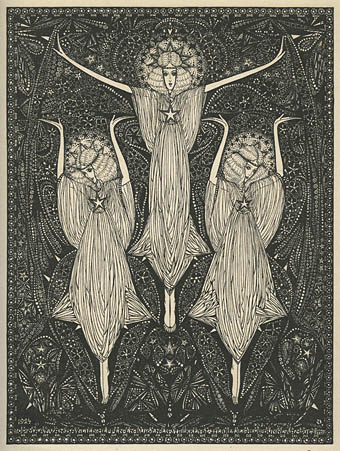
Johanna Maria Hendrika Daemen (1891–1944), credited here as “Jo”, wrote and illustrated The Sacred Flame: The Fairy-Tale of Stefan Pártos (1927), a tribute to a Hungarian violinist who died young. Daemen was a Dutch illustrator, graphic designer and glass artist who one suspects would be better known if she’d been British or American. The detail and composition of these illustrations is exceptional, falling somewhere between Kay Nielsen’s meticulous detailing and Harry Clarke’s stained-glass designs. This is another volume currently for sale at silver-gryph’s eBay pages where larger views of the drawings may be seen. (Thanks again to Nick for the tip!)

daemen12.jpg

daemen01.jpg

daemen02.jpg

Continue reading “Jo Daemen’s The Sacred Flame”